
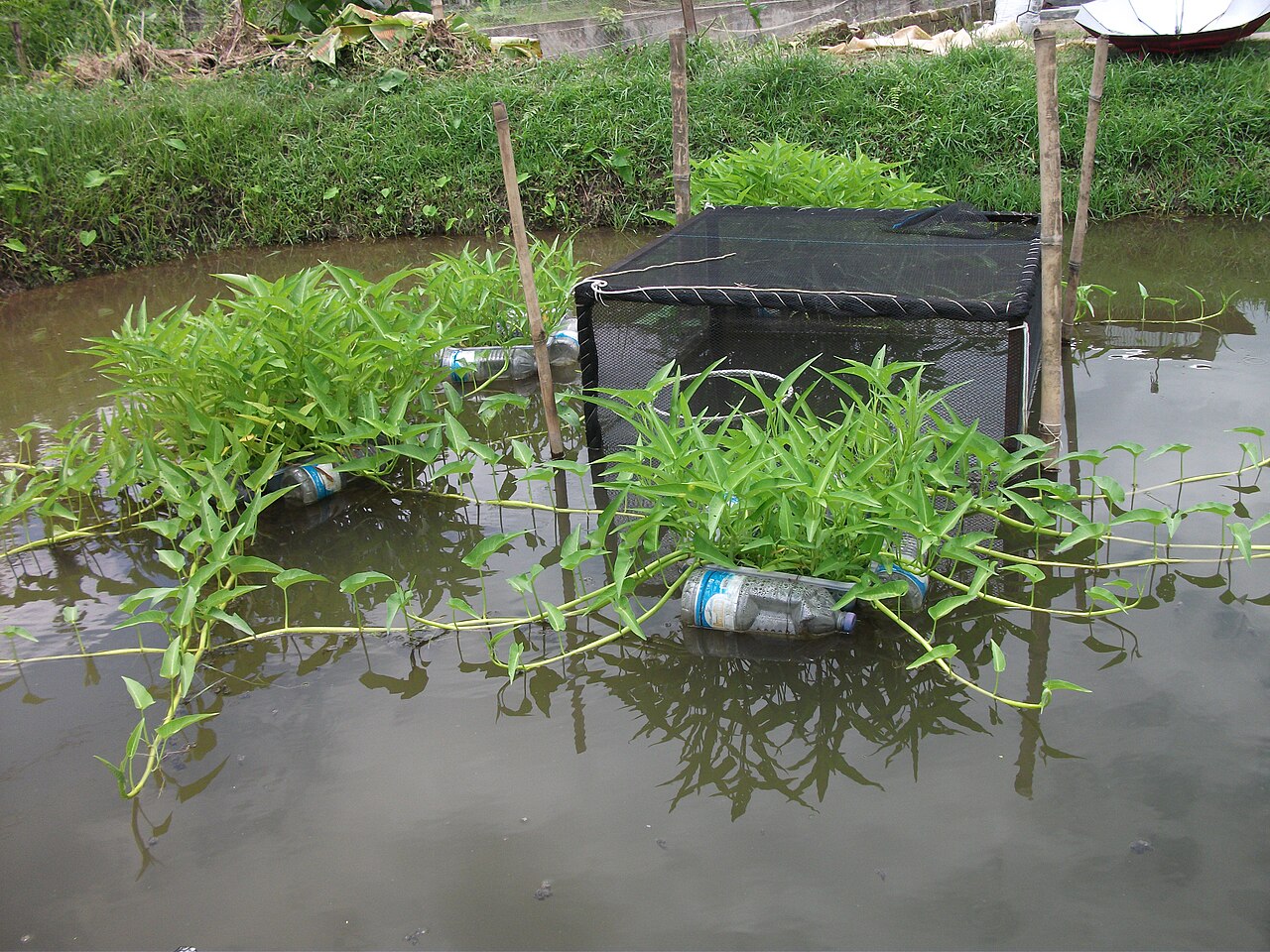
A mobile app called EcoFarm is giving small-scale fish farmers in Mandla, India, advice on stocking, feeding, water quality and disease risk drawn from their own pond data, CGIAR researchers report. The app is built for integrated multi-trophic aquaculture (IMTA), in which fed fish, filter-feeding shellfish and seaweed are grown together so that the waste of one species becomes food for another.
Such ponds generate a constant stream of linked data: water temperature, salinity, dissolved oxygen, pH and turbidity; the movement of nitrogen and phosphorus between species; and the growth, feeding, health and mortality of animals from different groups. The researchers say Mandla's small-scale fishers cannot interpret that data alone, and argue that a decision support system like EcoFarm should be developed with them from the start, together with the community, NGOs and government.
EcoFarm condenses the readings into standard indices of water quality, pollution risk and biological health, so that farmers can adjust feeding and stocking before stress builds in the pond. Where relevant it also monitors contaminants from feed, antifouling products and sediment as an early warning for the farm and its surroundings, and it tracks livelihoods, food security and income alongside the ecology.
The app combines four functions. Machine-learning models flag fish-disease risk from farm observations. A multi-criteria decision engine (TOPSIS) ranks each farm on crop diversity, organic fertiliser use, yield and animal husbandry, showing farmers what to improve next. Trained village field workers, called Gram Sahayaks, carry the app to farmers with low digital literacy, so one smartphone serves a community. And a one-time-password login removes the need for passwords, a common barrier for first-time users.
Farmers, women's groups and community institutions supply data as well as receiving advice, and local knowledge is combined with scientific analysis and expert advisories. Field NGOs provide trust and support, research bodies validate the results, and global institutes link the work to scale and policy, the authors write.
The next phase would expand EcoFarm from pilot villages to the whole of Mandla district and then to other agro-ecological and tribal landscapes, train and certify Gram Sahayaks as digital extension agents, and add offline, voice-based and satellite-based functions so the app works without connectivity and without reading. The team also plans an open-access impact evaluation with comparison groups, measuring yield, income, disease losses, nutrient-use efficiency and ecological health.
The researchers argue that most agritech is built for large, well-connected single-crop enterprises, while EcoFarm is designed for the small integrated farms that raise fish, crops and livestock together across much of rural India. The article was written by Ayan Samaddar, Subrata Saha, Nayan Malas, Abhishek Yadav, Sonika Chaudhari, Snehal Bhosale and Anoop Thakur for CGIAR's Multifunctional Landscapes programme.
Photo: Mmhaque74 / Wikimedia Commons (CC BY-SA 3.0)
Source: CGIAR
Comments
(0)