
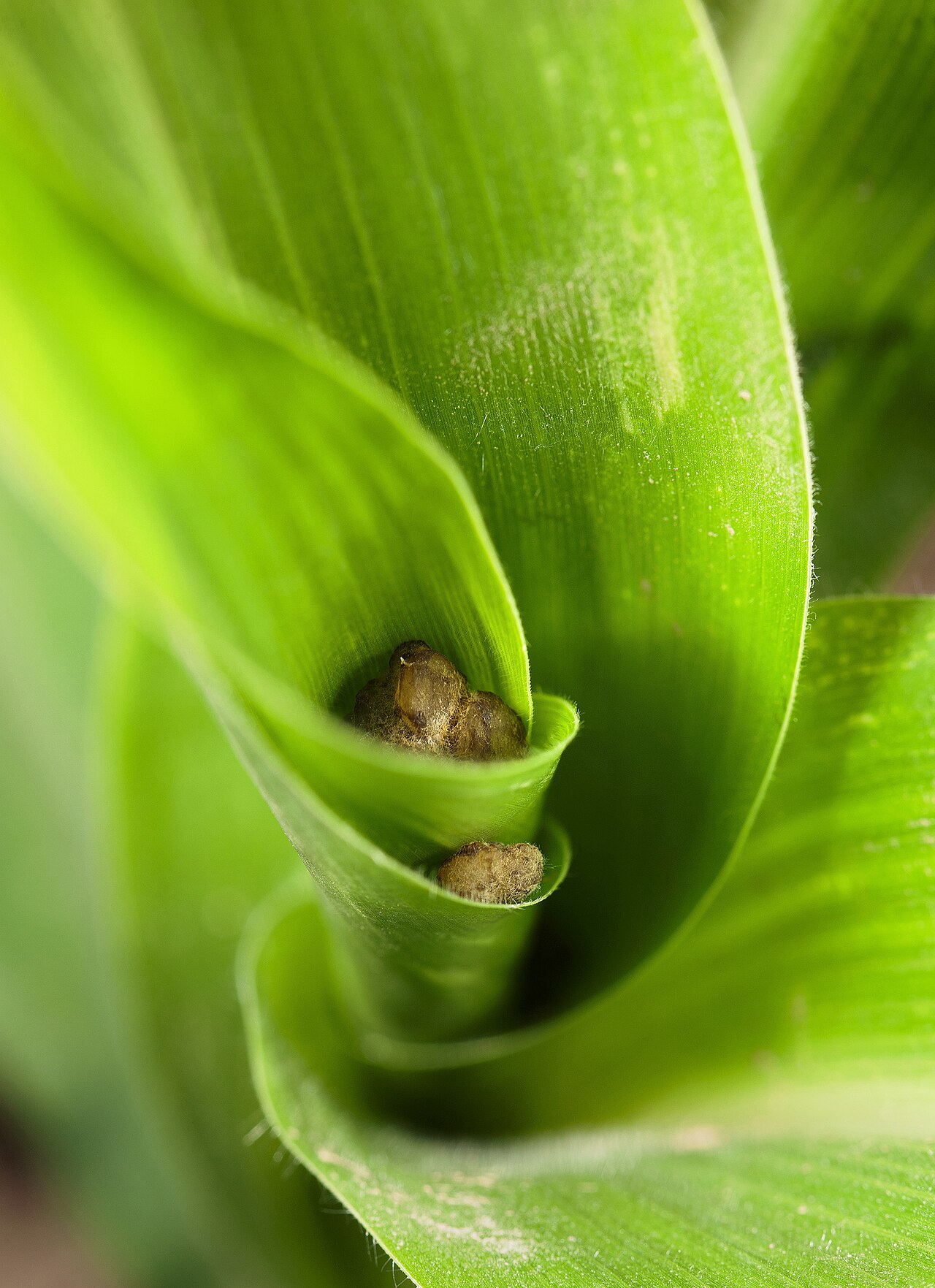
Researchers at Henan Agricultural University and the Shennong Laboratory in Zhengzhou, China, have identified 13 previously unknown regions of the maize genome that help the crop resist Aspergillus flavus, the mould that produces aflatoxin. The work, published in the Journal of Integrative Agriculture and announced on November 18, gives breeders DNA markers to screen maize lines for resistance without slow and costly infection trials.
Aflatoxin forms when the fungus infects maize kernels, usually in hot, humid conditions in the field or in storage. Chronic exposure is linked to liver damage and weakened immunity, and importers including the European Union and the United States enforce strict limits; contaminated shipments are routinely rejected or destroyed.
The team, led by Jihua Tang and Xuehai Zhang, inoculated a panel of 311 maize inbred lines with the fungus under controlled conditions, scored their resistance and ran a genome-wide association study. Zhang said the larger panel and denser genetic markers "improved the statistical power" to find genes smaller studies had missed. Lines bred for temperate climates were, on average, more resistant than tropical and subtropical material.
Each of the 13 regions explained between 8.22 and 27.71 percent of the variation in resistance. One, ZmAFR16, holds a single gene, ZmFUC1, that alone explained an average of 10.21 percent, a large effect for one gene in so complex a trait. ZmFUC1 makes an enzyme that removes the sugar fucose from larger molecules, and the genes in the resistance regions point to fatty acid synthesis, sugar breakdown and root growth. The team found signs that ZmFUC1 was selected twice in maize's history: during domestication from teosinte and as the crop moved from the tropics into temperate regions.
Lines carrying favourable versions of both ZmFUC1 and a second gene, elo1, resisted better than lines with only one. The group has developed molecular markers in the promoter region of ZmFUC1 so that breeders can pick out resistant material across large populations in the laboratory.
The work was funded by the National Natural Science Foundation of China, the China Postdoctoral Science Foundation and Henan provincial programmes. China's maize feeds both people and a large livestock feed industry.
Photo: USDA Agricultural Research Service / Wikimedia Commons (public domain)
Source: Global Agriculture

Comments
(0)