
Durbar Tarunya, a social and voluntary organisation in Chattogram, completed the current phase of its tree-planting programme 'Amra Mali' (We Are Gardeners) on the afternoon of Tuesday, 27 September 2022, by planting more than a hundred trees in the city's CRB area. The programme ran under the slogan 'Amar jotne, amar gachh' (My care, my tree), and its organisers said that its purpose was to persuade people to look after trees once they are in the ground, not only to plant them.
A planting at CRB under the slogan 'My care, my tree'
Jagonews24, which reported the event from Chattogram on the evening of 27 September 2022, described Durbar Tarunya as a popular social and voluntary organisation of the city. According to the report, the organisation's founder, Muhammad Abu Abid, chaired the programme, and the chief guest was Helal Akbar Chowdhury Babor, whom the report introduced as the inventor of a coronavirus protection booth.
The report called the afternoon's planting the completion of the programme's ongoing phase. It did not say how many phases 'Amra Mali' had, where earlier rounds were held or which species were planted at CRB, and those details are therefore not given here. What the report did record is the scale of the day's work, more than a hundred trees, and the place: the CRB area, the green, hilly railway quarter around the Central Railway Building in the middle of the port city.
The programme's name carries its message. 'Mali' is the Bengali word for a gardener, the person who waters, weeds and protects plants day after day. By calling the campaign 'We Are Gardeners' and pairing it with the words 'My care, my tree', the organisers placed the weight on the work that follows planting, which, as the founder explained in his speech, is the part he believed was being neglected in Bangladesh.
What the speakers said about planting and care
Speaking as chief guest, Helal Akbar Chowdhury Babor said that trees are called factories of oxygen. He described people, trees and animals as bound together in a relationship through the air, each serving the others, and said that for this reason there was no alternative to tree planting for protecting the environment. Everyone, he said, should take part in planned tree planting.
He went on to argue that planting trees and caring for them properly would do more than help keep the environment in balance and make the country self-sufficient in fruit and forest products. In his view it would also ease the finances of individual families and contribute to the country's overall development. To bring comfort to the economy and to people's lives, he said, each person should plant at least two trees every year and look after them properly.
Founder Muhammad Abu Abid called trees our greatest friends. Trees, he said, do not only add natural beauty: they check soil erosion, hold back floods and protect life and property by standing in the way of storms, and their role in regulating the weather is immense. Without trees, he said, the earth would turn into a desert; trees keep us alive by supplying oxygen, which is why they are called the forerunners of life.
He then turned to the reason for the campaign. The number of trees being planted in Bangladesh had increased, he said, but there was hardly any attention to caring for them afterwards. Through the 'Amra Mali' programme the organisation wanted to raise awareness among people. Everyone knows, more or less, that trees are needed, he said, but this much-needed thing has to be cared for if it is to grow properly.
Who attended
According to Jagonews24, those present also included Rabiul Hasan, Hridoy Hossain Mollick, Md Kamrul Islam, HM Alauddin, Md Emdadul Haque Maruf, HA Mobarak, Hakimul Islam Sakib, Safayet Morshed and Mobarak Ullah, along with other central and district leaders.
CRB, a green hill in the middle of Chattogram
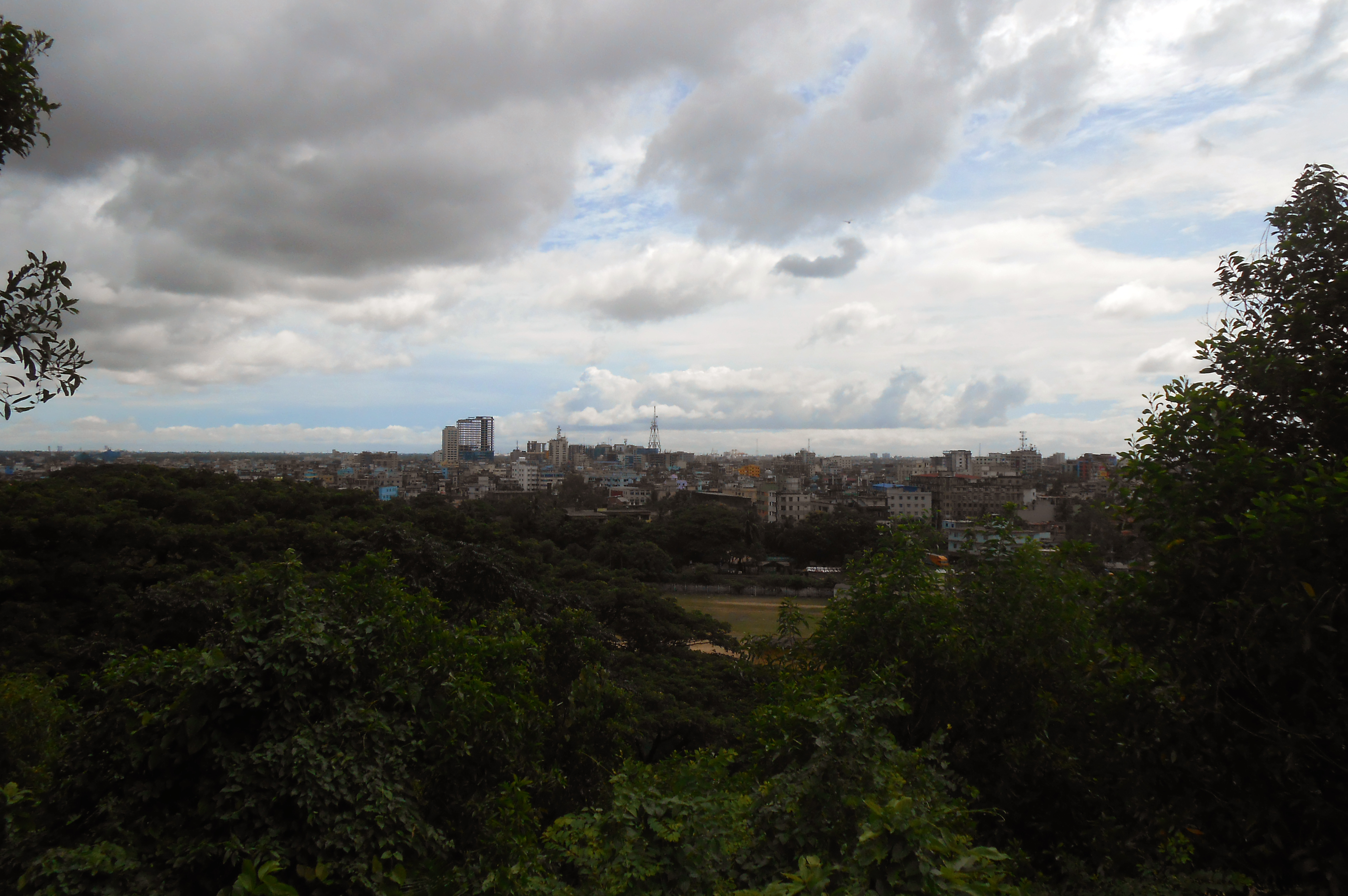
CRB stands for the Central Railway Building, the office of the general manager of Bangladesh Railway, which stands in a hilly part of Chattogram. Chattogram, Bangladesh's second-largest city, lies on the right bank of the Karnafuli River, and according to Banglapedia, the national encyclopedia, it is the headquarters of the Eastern Zone of Bangladesh Railway. The city's railway history goes back to the Assam Bengal Railway Company, formed in London in 1891; its first line linking the port to Assam opened in 1895.
The building's own entry in Wikipedia records that construction began in 1897, citing articles of that year in the journal Indian Engineering on the 'Assam-Bengal Railway Head Office Buildings, Chittagong'. Its south front is two storeys high and 360 feet long, with a large covered carriage porch in the centre, semi-octagonal towers at each end, a wide veranda along the front and a domed entrance hall. A residential area for railway officers surrounds it.
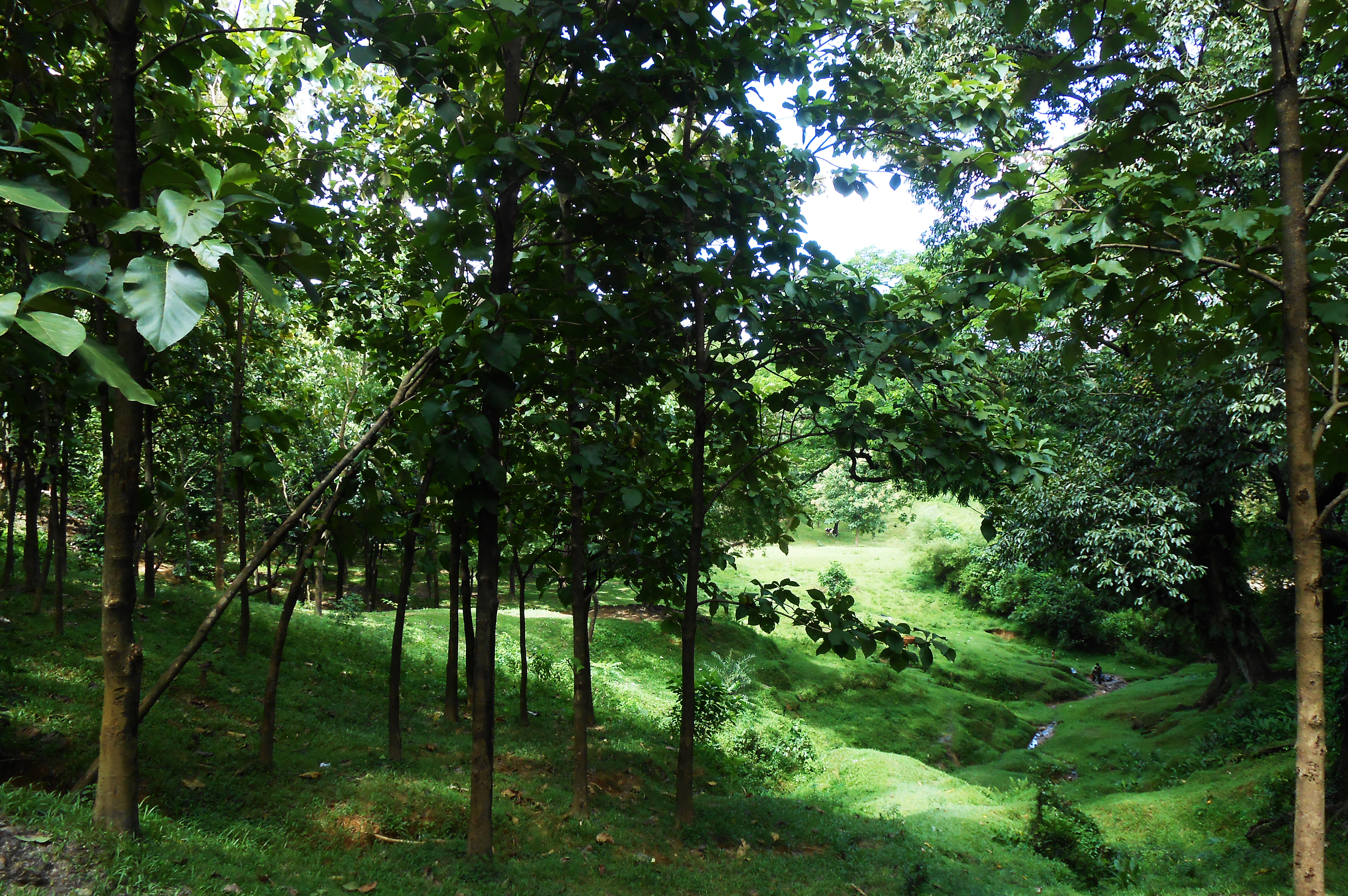
What made CRB a place for a tree-care campaign is the green setting around the building. In a July 2021 report, The Business Standard described the CRB as standing on a hilltop covered by several thousand trees, with 64 century-old trees among them, including garjan, shegun (teak), shirish, mahogany and koroi. The newspaper reported that the neighbouring hill was home to various birds and animals and that many city residents came every day for fresh air and the view.
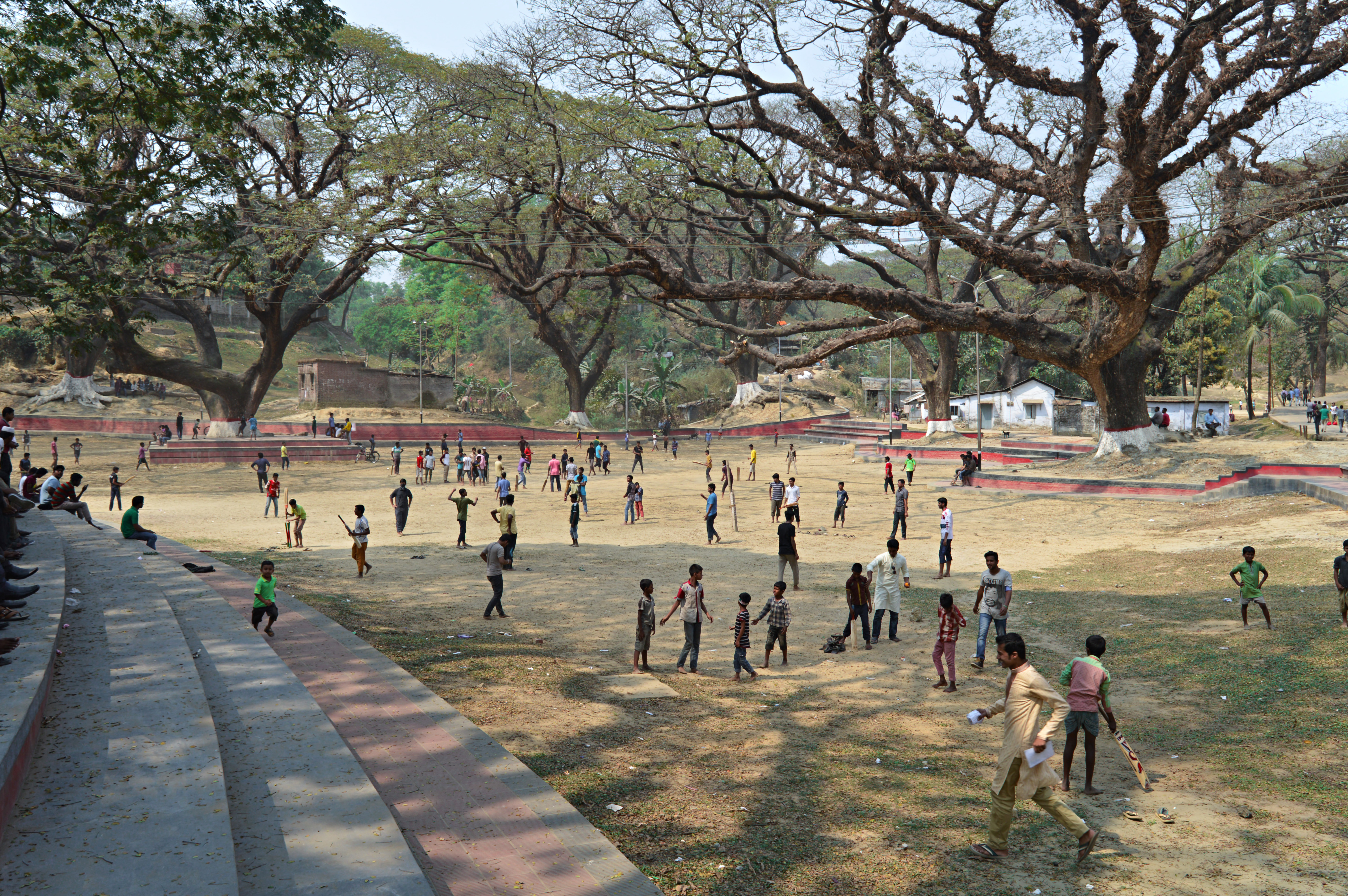
Inside the area is Shirishtala, an open stage ringed by old shirish trees (Albizia lebbeck), where crowds gather for celebrations such as Pahela Baishakh, the Bengali New Year, including the traditional Boli Khela wrestling contest. Newspapers in Chattogram have long called the CRB the 'lungs' of the city, a phrase The Daily Star's Bengali edition used again in May 2022.
Banglapedia also notes how the city's hills have been under pressure. It names Batali Hill, once the highest point of the town at 280 feet, as being levelled for construction, and lists other hills that carry public buildings, such as Fairy Hill with the court buildings and Rangmahal hill with the General Hospital. Green hills such as CRB are among the few large tree-covered spaces left in the city centre.
The 2021-22 dispute over a hospital at CRB
By the time of the 'Amra Mali' planting, the trees of CRB had been at the centre of a public dispute for more than a year. In July 2021, The Business Standard reported that Bangladesh Railway had started work on a 500-bed hospital and a 100-seat medical college on six acres in the CRB area, and that at least 300 trees, including a few century-old ones, would be felled. Cultural activists and members of civil society in Chattogram objected strongly and demanded that the construction be stopped to protect the environment.
The project's director, an additional chief engineer of Bangladesh Railway's east zone, told the newspaper at the time that the hospital would be built at Goalpara and not at Shirishtala, leaving the hills and valleys intact, and that there was only one century-old tree on the site. The newspaper also reported that some trees had already been cut, that about 100 feet of hill had been cut for a road and that eight families had been evicted, with a mosque, a temple, a club, a graveyard and the Muktijoddha Sangsad building on the eviction list. A former chief commandant of the railway told the paper that a hospital for railway staff already existed in the CRB area and that some 80 percent of its beds were empty; according to Wikipedia, that Railway Hospital was built in 1994 and stands east of the main building, across CRB Road. Railway workers' leaders said they had not been consulted and pointed to unused railway land at Kumira in Sitakunda, where a railway chest disease hospital once stood.
On 12 May 2022, The Daily Star's Bengali edition set out the project's history. It was planned as a public-private partnership medical college and hospital on about six acres beside CRB, to be built by United Enterprise & Company, with 250 beds in the first phase and another 250 in a second phase, at an estimated cost of Tk 398 crore 38 lakh, and railway employees were to receive a 20 percent discount on treatment. The Cabinet Committee on Economic Affairs had taken a policy decision on the project in 2013, the Law Ministry approved the draft contract in December 2018, the project was approved on 13 February 2020 and the Prime Minister gave final approval on 23 February 2020.
The same report said that protest groups had opposed a hospital at CRB for about a year. The issue was raised at the 20th meeting of the Parliamentary Standing Committee on the Ministry of Railways on 10 May 2022, where the abandoned railway TB hospital site at Kumira was discussed as an alternative. The committee's chairman told the newspaper that the Prime Minister would make the final decision and that no proposal or decision had been adopted. A manager of the company said the railway had not informed it of any change and that work was progressing at the site beside CRB. As far as these reports show, the question was still open when Durbar Tarunya planted its trees there in September 2022.
Bangladesh's tree cover in figures
The national figures behind the campaign were set out by the Forest Department in its 'Report on Bangladesh's Forest and Tree Resources 2019'. According to that report, as The Business Standard reported in June 2020, tree cover had reached 22.37 percent of the country's total area, against 10.9 percent in an earlier report of the UN Food and Agriculture Organization (FAO). The newspaper explained that the higher figure counted trees outside natural forests, including the canopy produced by social afforestation programmes.
Forest cover in the narrower sense was lower. In April 2022 the environment minister told Parliament, as UNB reported, that forest covered 14.10 percent of the country's land and tree-covered area stood at 22.37 percent. The government's plan, under the Eighth Five Year Plan, was to raise tree cover to 24 percent by 2025. For the 2021-22 fiscal year the Forest Department's target was 29,124 hectares of mangrove and block plantations and 1,574 km of strip plantations.
The same statement gave the totals of social forestry since fiscal 1980-81: by 2020-21, 102,229 hectares of woodlot and block plantations had been raised on Forest Department land, and 76,752 km of strip plantations on other land such as roads, highways, railway lines and embankments.
The trend in natural forest was less encouraging. The Business Standard's 2020 report cited a study by the National Remote Sensing Centre which found that 2006 to 2014 saw the highest loss of natural forest since 1930, with the largest losses in Chittagong and the Madhupur sal forest. The same report found that at least 3,090 of the Forest Department's 10,312 posts were vacant, which limited its ability to protect the forests it held.
From a one-day planting to social forestry
Organised tree planting in Bangladesh has a long history, and Banglapedia traces how its focus changed. From 1962-63 the Forest Department created two forest extension divisions, at Rajshahi and Dhaka, and introduced a tree-planting day on 1 June. The campaign later grew to a week, then a month and then three months. The early activities centred on nurseries and ceremonial planting at district headquarters, and the encyclopedia notes that they had little impact on people and did not involve the landless.
Chattogram has its own place in this story. In the Betagi and Pomora hills of Rangunia, entrepreneurs started a self-help project on two denuded hills, giving land to 101 selected families, with loans from Krishi Bank. Banglapedia records that the project was rated satisfactory in its second and third years, though the number of participating families fell to 83.
From 1982 to 1987 a Community Forestry Project financed by the Asian Development Bank, with UNDP support channelled through the FAO, worked in seven northern and western districts: Dinajpur, Rangpur, Pabna, Rajshahi, Bogra, Kushtia and Jessore. Its components included about 4,800 km of strip plantations along roads, railways and canal embankments, participatory fuelwood plantations on 4,800 hectares and a social forestry training institute at Rajshahi, and it was the first project to bring women into community forestry. A later Upazila Afforestation and Nursery Development Project set up upazila nurseries and trained village leaders, and from 1994-95 a Coastal Green Belt Project in ten coastal districts aimed to reduce the loss of life and property in cyclones by increasing vegetation cover.
The thread running through these projects is the one 'Amra Mali' picked up: planting succeeds when the people living beside the trees have a stake in them. Banglapedia quotes the FAO's description of social forestry as 'any situation which intimately involves local people in a forestry activity'.
Why aftercare decides whether a planted tree survives
The FAO's 'Guidelines on urban and peri-urban forestry' (FAO Forestry Paper 178, 2016) describe urban forestry as covering the assessment, planning, planting, maintenance, preservation and monitoring of trees, from single trees to whole landscapes. At the community scale, the guidelines say, it emphasises the engagement of citizens in the stewardship of private and public trees, educating them on the value of trees and supporting their full ownership and responsibility for the environment around them, which is close to what the 'My care, my tree' slogan asked of Chattogram's residents.
The guidelines list what a city's tree work involves after the planting ceremony: site and soil preparation, species selection, planting, nurseries and the early care of tree plantings, followed by tending, thinning and pruning, tree health management and risk management. They describe the 'right tree in the right place' as a simple but effective rule, starting from an understanding of a site's climate, soil and ecology, its relationship with buildings and infrastructure, and the needs and attitudes of the community. They also warn that trees are a long-term investment, that they can take years to respond to stress or to care, and that climate change may mean more watering during droughts.
According to the guidelines, well-managed urban forests make cities safer by reducing stormwater runoff and the impact of storms and by mitigating the 'heat island' effect; more pleasant by providing space for recreation and social events; and healthier by improving air quality. They cite an assessment of five cities in the United States which found that the benefits of urban trees outweighed their costs, including planting, pruning and repairs, by ratios of between 1.37 and 3.09, and a valuation in London which put the annual benefits of the city's 8 million trees at about 132 million pounds, mostly from the removal of air pollution. Another study they cite estimated that urban trees in the United States remove around 711,000 tonnes of air pollution a year, valued at 3.8 billion US dollars.
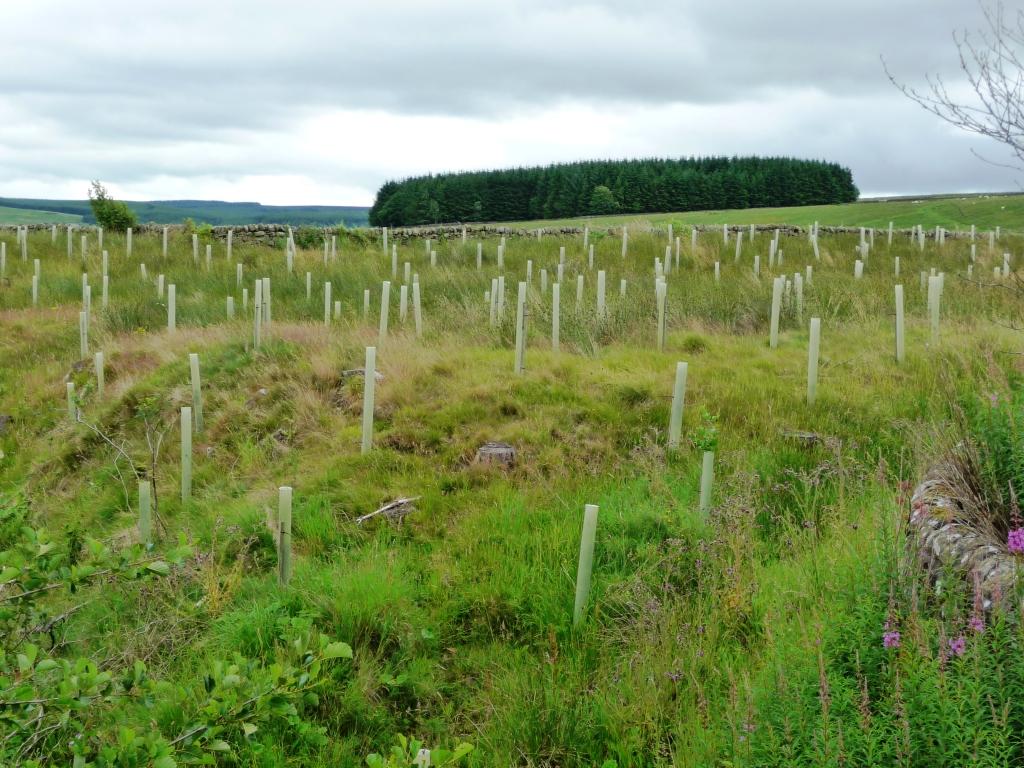
For a city like Chattogram, where Banglapedia records hills being levelled and newspapers in 2021 and 2022 reported a dispute over hundreds of trees at CRB, those points gave the 'Amra Mali' message its practical meaning: a sapling planted on a September afternoon becomes part of the city's green cover only if someone waters it, protects it and checks on it in the years that follow.
Photo: Moheen Reeyad / Wikimedia Commons (CC BY-SA 4.0)
Sources: Jagonews24, The Business Standard, The Daily Star (Bengali edition), UNB, The Financial Express, Banglapedia, Wikipedia, FAO (Guidelines on urban and peri-urban forestry, 2016)
Comments
(0)