
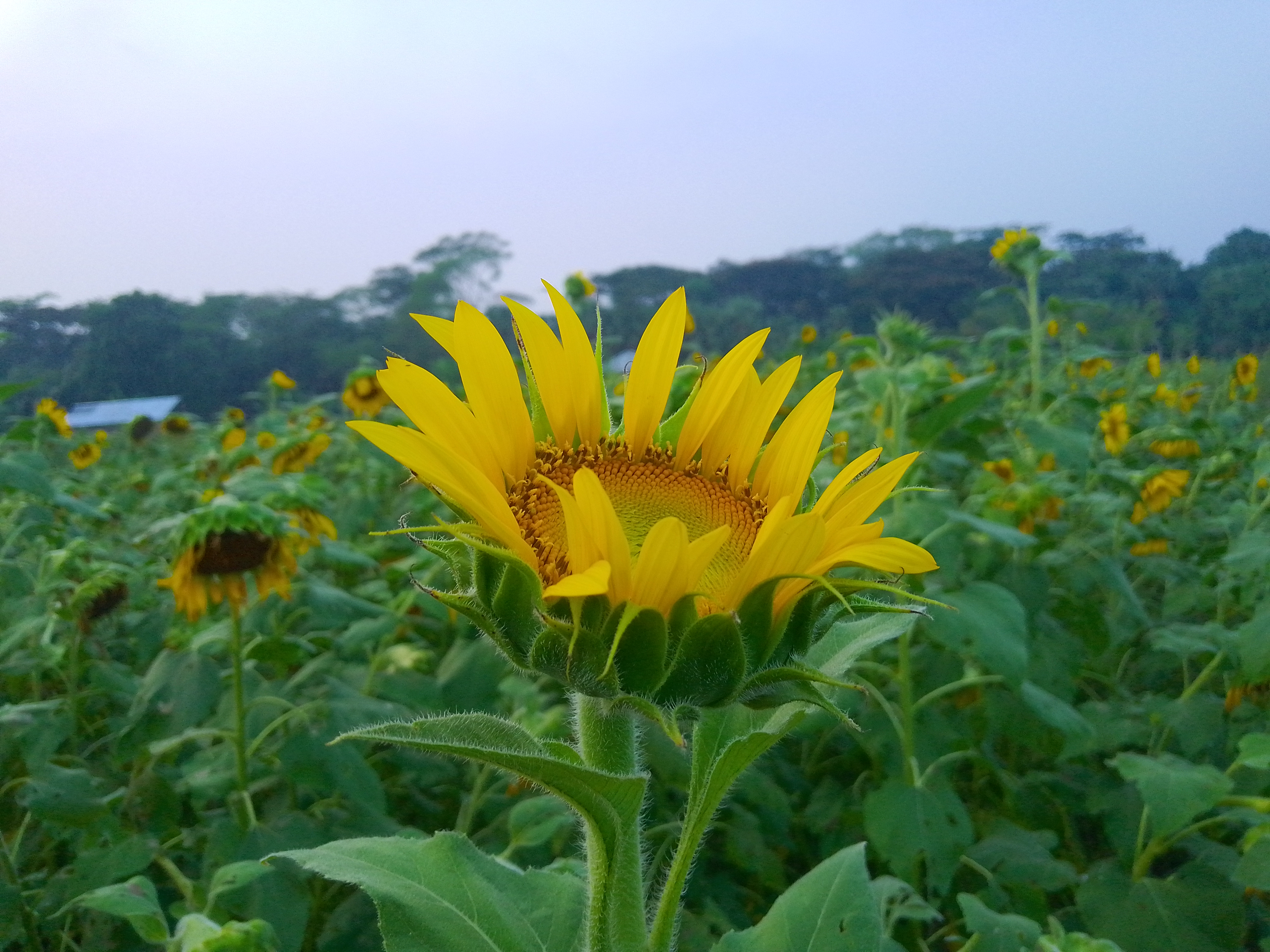
Sunflower was grown on more land than planned in Dinajpur in the 2025-26 winter season. On 13 March 2026, Jagonews24's Dinajpur district correspondent reported that the Department of Agricultural Extension (DAE) had set a target of 54 hectares for the crop in the district and that 55 hectares had been planted, one hectare more than the target. Farmers and the agriculture department were hoping for a bumper harvest if the weather stayed favourable, and the golden fields in Sadar and Biral upazilas had begun to draw visitors who came to walk among the flowers and take photographs.
Target passed by one hectare
The district's figures came from Md Anisuzzaman, additional deputy director (crops) at the DAE office in Dinajpur. He told Jagonews24: "This year 54 hectares of land were set for sunflower cultivation in Dinajpur. But 55 hectares have been achieved. Each hectare will produce 1.25 metric tonnes of seed. On that basis the district will produce 69 metric tonnes of sunflower seed this year."
The figure of 69 tonnes was an expectation, not a harvest: in mid-March the flowers were in bloom and the seed had not yet been gathered. The 1.25 tonnes per hectare was the yield the DAE official used for his estimate. Other sources give a wide range for sunflower yields in Bangladesh. Banglapedia, the national encyclopedia, puts the average yield of sunflower in the country at about 760 kilograms per hectare, while reports from farms that use hybrid seed and better management describe much higher yields, as the sections below show.
Fifty-five hectares is a small area for a district of Dinajpur's size. But the crop had been spreading in northern Bangladesh as part of a government push to grow more oilseeds at home, and the report described it as a crop that held out the prospect of good profit at low cost.
Farmers in Sadar and Biral
In Sadar upazila, Sohraf Ali of Bidyashwari village in Khamar Kantabari had planted sunflower on one acre. He told the paper: "I have been growing sunflower for seven years. This time I have grown it in a planned way. The flowers have come too. So visitors can enter the garden with a 50-taka ticket, walk around and take as many photos as they like."
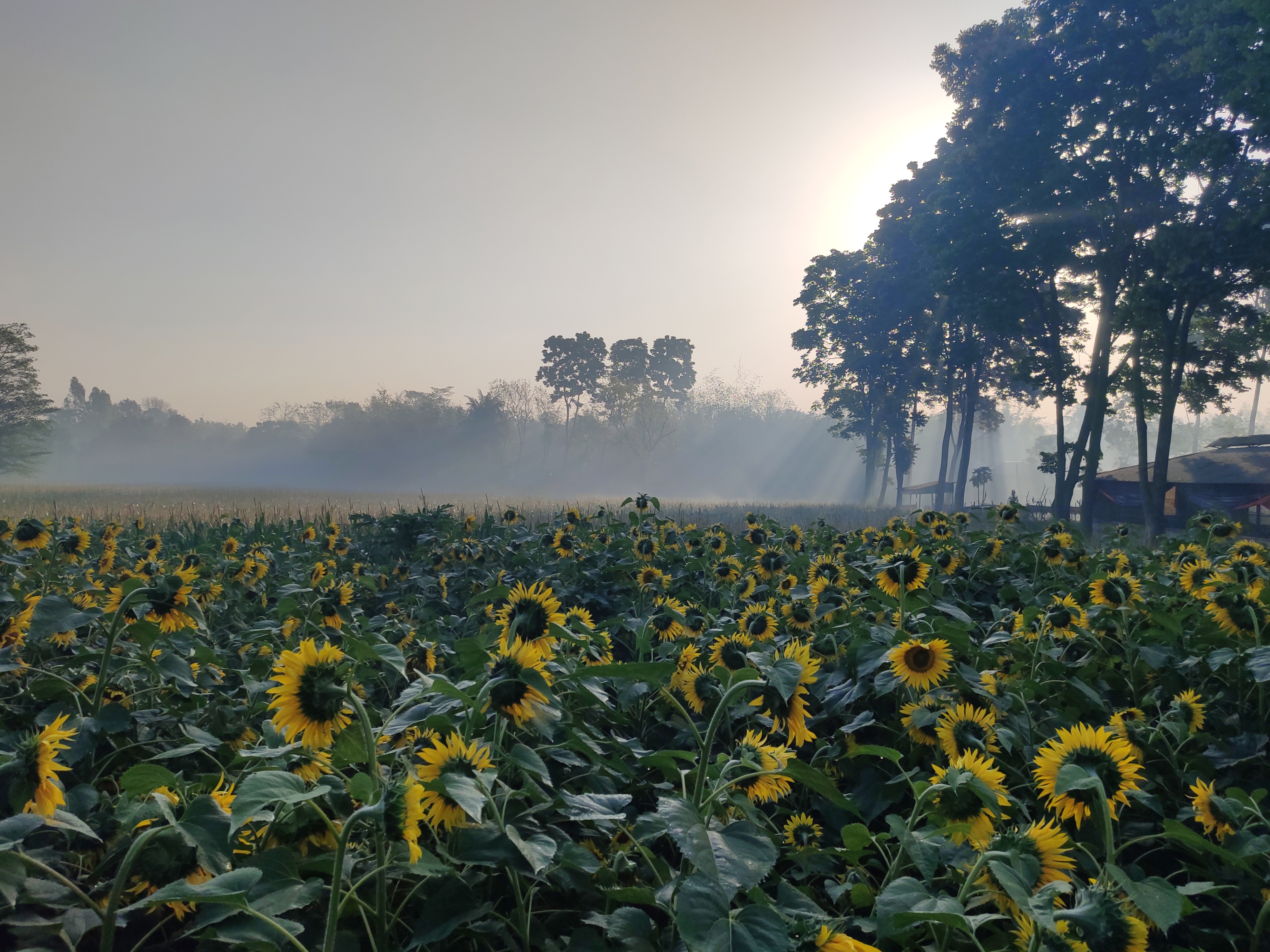
In Biral upazila, the fields of Garul village in Mangalpur union had turned into what the correspondent called a sea of gold, with the yellow heads swaying in a light breeze. The prospect of a good profit at low cost and the beauty of the fields had put smiles on the faces of the upazila's farmers, and villagers as well as visitors from far away were crowding in to see them.
Rabiul Islam, a farmer of Garul village, had grown sunflower on 48 decimals of land, and other farmers, encouraged by his example, were turning to the crop. According to the Biral upazila agriculture office, sunflower was grown on 4 hectares in the upazila that season. People came every day to take photographs and selfies, and the fields had become a small tourist spot.
Rabiul Islam said: "I first grew it last year on a trial basis. This time I have planted a little more land. If the weather stays favourable I will make a good profit. All kinds of support and regular advice from the upazila agriculture office are helping our cultivation a lot."
A visitor, Aktara Khatun, said: "I was going along this road. Suddenly I saw the sunflower garden. I stopped at once. It was as if a sea of golden sunflowers opened up before my eyes. Every corner is special for taking photos. It is truly an amazing experience!"
Biral Upazila Agriculture Officer Rumman Akter, an agriculturist, saw the crop as an opportunity for the district: "If cultivated with modern methods, sunflower can become a promising cash crop for the district. The government is giving farmers incentives to reduce dependence on imported edible oil. If the weather stays favourable, farmers will get good prices this season. In Biral upazila sunflower has been cultivated on a total of 4 hectares this season."
Dinajpur and Biral: a farming district on the border
Dinajpur is a district of Rangpur division in north-western Bangladesh. Banglapedia gives its area as 3,444.30 square kilometres, divided into 13 upazilas, with Thakurgaon and Panchagarh to the north, Rangpur and Nilphamari to the east and the Indian state of West Bengal to the west. The Punarbhaba, Atrai and Tulsiganga are among its rivers. Agriculture is by far the largest source of income: the encyclopedia records 63.90 percent of the district's households as depending on it, far ahead of commerce at 12.89 percent.
Biral, where the Garul fields lie, is one of the district's larger upazilas, at 353.98 square kilometres. It is a border upazila: Bochaganj and Kaharole upazilas lie to its north, Dinajpur Sadar and the Indian state of West Bengal to its south, and the Punarbhaba river to its east. The Punarbhaba and the Tangon flow through it, and the Nal and Karai beels are its notable wetlands. Mangalpur, the union of Garul village, is one of its unions. The 2011 census counted 257,925 people in the upazila. Banglapedia lists agriculture as the main income of 70.45 percent of its households, and names paddy, wheat, maize, sugarcane, potato, sesame, onion, oilseeds and vegetables as its main crops, and mango, banana, jackfruit, litchi and black berry as its main fruits.
Sunflower, in other words, was arriving in an upazila that already grew oilseeds such as sesame, and where paddy, wheat, maize and potato are among the main crops. That is why officials in the region speak of the crop as an addition that has to win its place in the field against well-established rivals.
What kind of crop the sunflower is
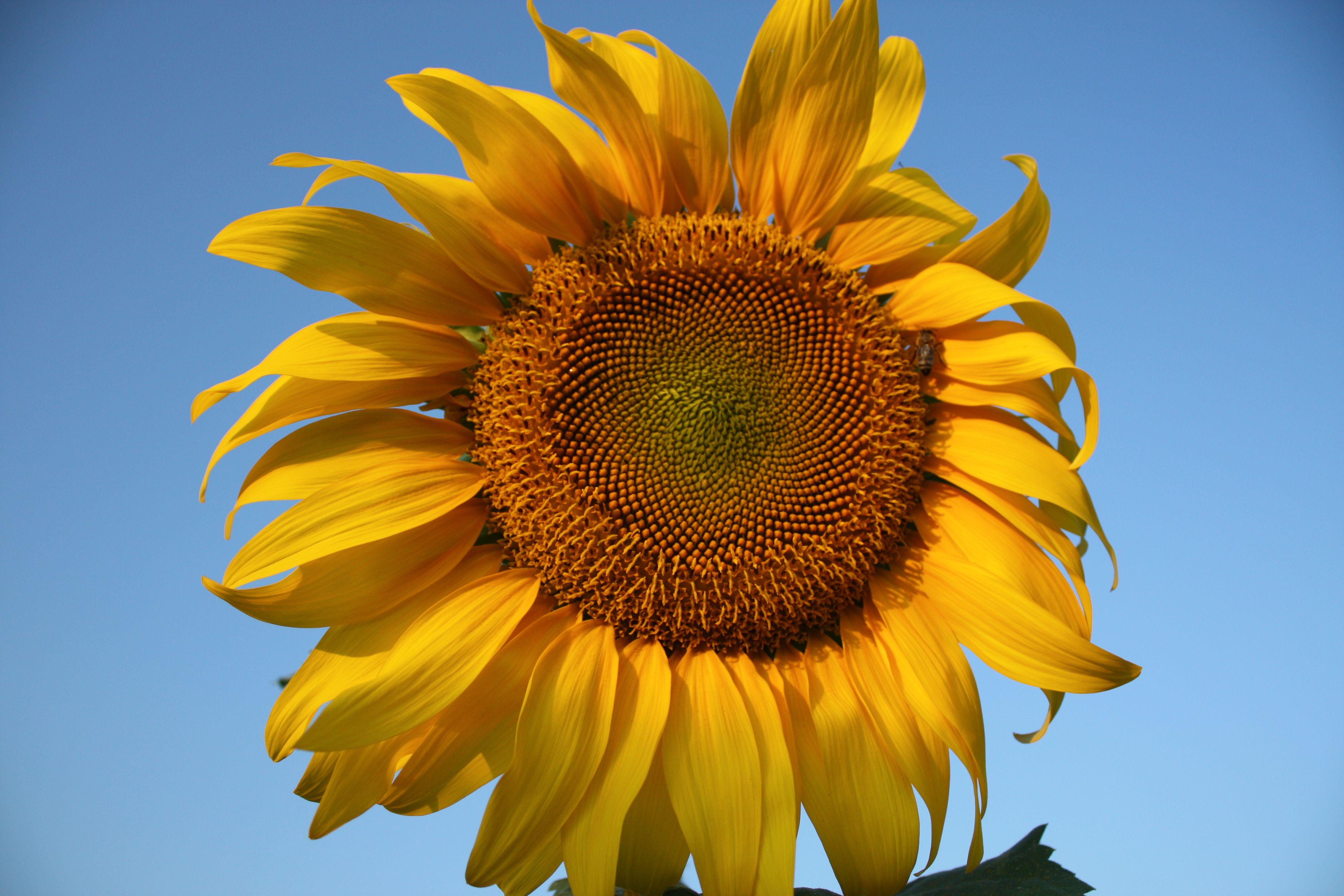
The sunflower, Helianthus annuus, belongs to the Asteraceae, the daisy family. Banglapedia describes it as an annual or perennial herb whose yellow-rayed flower heads can reach about 30 centimetres across, and notes that the cultivated sunflower probably originated in Mexico. The encyclopedia adds that the oil is regarded as a healthier cooking medium than many others and that it contains vitamins A, D and E.
In Bangladesh the sunflower was first grown as a garden plant. According to Banglapedia, dwarf varieties were introduced as an oilseed crop in the 1980s, and the crop is grown in some central and northern districts in both the rabi (winter) and kharif seasons, taking roughly 90 to 110 days from sowing to harvest. The seed is pressed for edible oil, the oil can replace groundnut oil in making vanaspati, and the cake left after pressing is fed to livestock. The seeds are also used as poultry feed.
The poetic image of flowers "turning to face the sun" has a basis in plant science, but only for young plants. In a study published in the journal Science on 4 August 2016, researchers at the University of California, Davis and the University of California, Berkeley showed that young sunflower plants track the sun from east to west during the day and turn back to the east at night, steered by their internal circadian clock. Once the plants mature, the clock stops this movement and the heads stay facing east. The researchers found that east-facing heads warmed up faster in the morning and attracted five times as many pollinating insects as heads turned to the west.
Season, varieties and yield in Bangladesh
In Bangladesh sunflower is mainly a winter crop. The United States Department of Agriculture's Foreign Agricultural Service (USDA FAS), in its Bangladesh oilseeds report of 18 March 2025, describes the rabi season from November to March as the main season for mustard and rapeseed, soybean and sunflower. Reports from the field fit that calendar. In January 2023 The Daily Star's Bangla edition described a sunflower field at the Bangladesh Agricultural Development Corporation (BADC) seed processing and storage centre in Faridpur, sown on 5 and 6 November with the variety BARI Surjomukhi-2. In February 2024 the same paper reported that farmers on the river chars of the Rangpur region sowed in mid-November and that the crop took 100 to 110 days.
Two kinds of seed are common. The Bangladesh Agricultural Research Institute (BARI) has bred open-pollinated varieties such as BARI Surjomukhi-2, and imported hybrids are also widely grown: in May 2021 The Daily Star named Haisan-33 and RDS-265 as the two popular varieties. In a peer-reviewed study published in November 2023 in Acta Universitatis Agriculturae et Silviculturae Mendelianae Brunensis, BARI scientists compared BARI sunflower 2 with another variety, SVS 00901, on salt-affected land at Benarpota in Satkhira over the 2014-15 and 2015-16 rabi seasons. BARI sunflower 2 yielded about 10 to 15 percent more, and the best management practices, based on BARI's recommendations, gave 25 to 30 percent more seed than the moderate practice farmers commonly followed. The authors listed the problems that hold the crop back in the coast: soil salinity at sowing time, a lack of fresh water for irrigation, a shortage of quality seed of high-yielding varieties and limited knowledge of the best practices.
Yields reported from the field vary widely. The BADC farm in Faridpur reported about 800 kilograms of seed per acre in 2023. Farmers on the Rangpur chars in 2024 spoke of 2,100 to 2,400 kilograms per hectare, at a cost of 65,000 to 70,000 taka per hectare. In May 2025 an agriculture extension officer in Dashmina upazila of Patuakhali told The Daily Star's Bangla edition that the crop yielded at least 2 tonnes per hectare there, and that a kilogram of sunflower seed gave about 400 grams of oil, the highest of the oilseeds. Against these, the DAE's planning figure of 1.25 tonnes per hectare for Dinajpur is a cautious estimate.
Because the seed sets only where pollen reaches the florets, pollination matters. Tamil Nadu Agricultural University in India advises keeping about five bee hives per hectare to improve seed set, and, where insects are few, gently rubbing the heads by hand with a soft cloth, or rubbing two heads face to face, in the morning between 9 and 11 o'clock during mid-flowering. The same university advises harvesting when the bracts on the back of the head turn lemon yellow and the head hardens, then drying the heads in the sun before threshing. Fertiliser, irrigation and pest control depend on soil and season, and farmers in Dinajpur are best advised by their upazila agriculture officer.
Edible oil imports and the government's oilseed push
Rumman Akter's remark about imported edible oil points to the reason behind the government's support for the crop. Bangladesh buys most of the cooking oil it consumes from abroad. The USDA FAS report of March 2025 estimated that the country needs about 3.4 million tonnes of edible oil a year, of which palm oil makes up 50 percent, soybean oil 28 percent, mustard oil 19 percent and other oils 3 percent. Domestically produced oilseeds met only about 15 percent of the requirement, and the rest was imported as crude oil or as oilseeds. Among the oilseeds grown in Bangladesh, the report noted, only mustard and sunflower are crushed for edible oil.
The same report said that the DAE recorded 1.3 million hectares under oilseeds in fiscal year 2024-25, producing an estimated 1.7 million tonnes, down 4.1 percent in area and 4.7 percent in production from the previous year, mostly because farmers had shifted from mustard to potato. It also recalled that in 2022 the Ministry of Agriculture adopted a three-year action plan aiming to produce 40 percent of the country's edible oil demand at home by 2025.
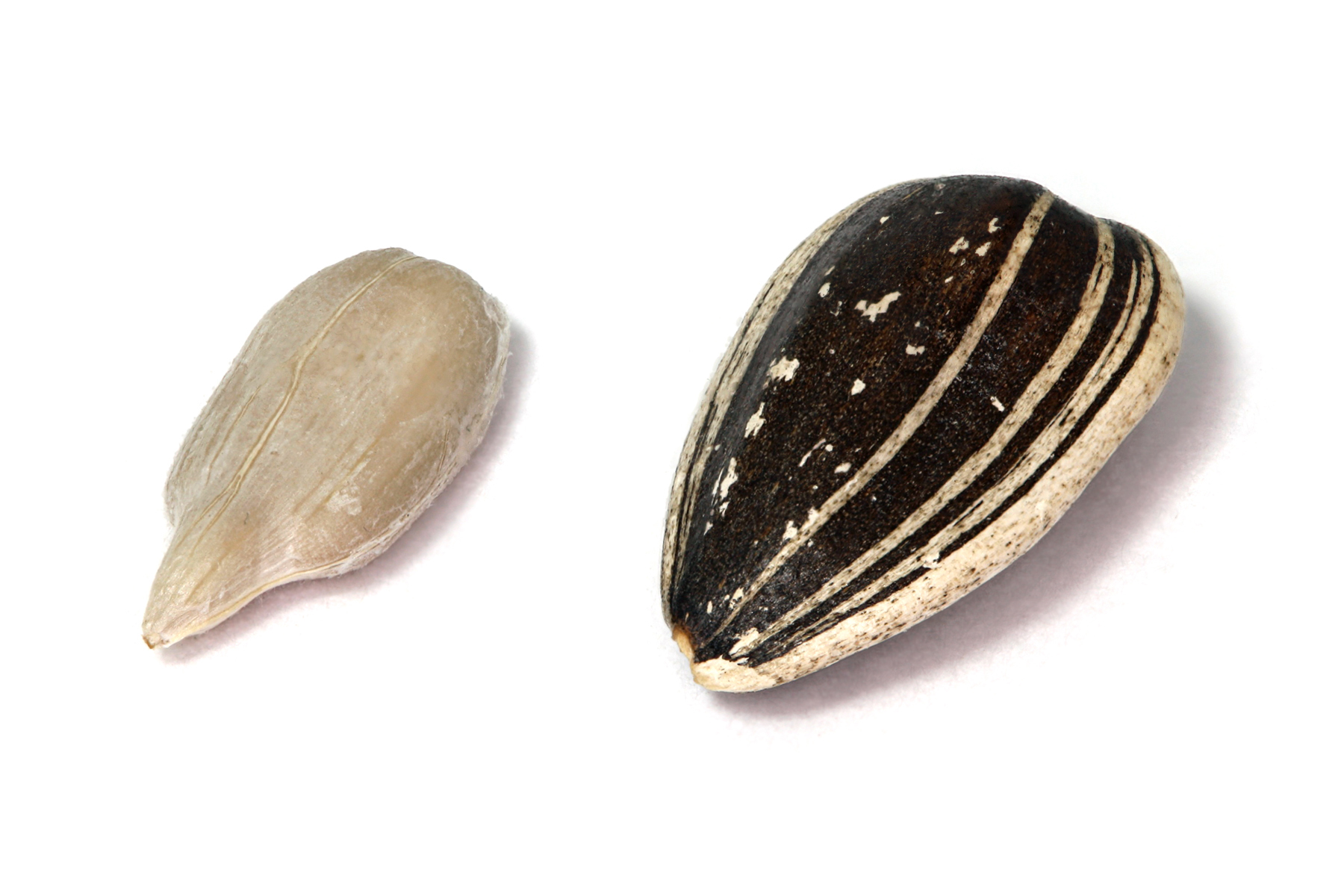
Bdnews24 reported in May 2023 on the DAE's oilseed production enhancement project (Teljatiyo Fosoler Utpadon Briddhi Prokolpo). According to that report, the country's annual edible oil demand was 2.4 million tonnes, 88 percent of it imported, and edible oil imports in fiscal 2021-22 cost 2.53 billion US dollars. Sunflower had been grown on 14,700 hectares that year, and the project's target was to bring 34,600 hectares, including coastal land, under sunflower by fiscal 2024-25. The report also noted that oil recovery depends on the seed: quoting 42 to 43 percent for imported hybrid seed and 32 to 35 percent for poorly managed local seed.
A crop spreading across the country
Sunflower had grown quickly in Bangladesh in earlier years. In May 2021 the then director general of the DAE, Md Asadullah, told The Daily Star that sunflower had been grown on 15,403 hectares across the country that year, three times the target, and credited promotion and incentives such as free seed and training. Patuakhali had the largest area, at 3,263 hectares. The paper reported then that about 90 percent of the country's edible oil demand was met by imports, and that 10 kilograms of sunflower seed gave about 4 litres of oil.
The north has followed the coast. In February 2024 The Daily Star's Bangla edition reported that 620 farmers had grown sunflower on 229 hectares in five districts of the Rangpur region, Lalmonirhat, Kurigram, Rangpur, Nilphamari and Gaibandha, up from 195 hectares the year before, with about 70 percent of it on the chars of rivers such as the Brahmaputra, Teesta and Dharla. The DAE's additional director for the Rangpur region, Obaidur Rahman, said seed and fertiliser were being given to farmers as incentives. The farmers called the crop profitable but said selling the seed was harder than selling other crops, and the upazila agriculture officer at Rajibpur said the department had put farmers in touch with oilseed buyers.
Dinajpur's 55 hectares in 2025-26 should be read in that light: a modest area, still small next to the coastal districts, in a district where the DAE was trying to add an oilseed alongside cereals and potato, and where officials such as Rumman Akter described sunflower as a possible cash crop rather than an established one.
Fields that draw visitors
The 50-taka ticket at Sohraf Ali's field in Sadar is part of a pattern seen in other districts. In January 2023 The Daily Star's Bangla edition reported that the BADC sunflower field in Faridpur, where the crop had been grown for 15 years, was drawing several thousand visitors a day, rising to 18,000 to 20,000 on Fridays and Saturdays, and that the number had grown over the previous five or six years.
For farmers such as Sohraf Ali, an entry fee during the few weeks of bloom offers a small second income from the same field before the seed is harvested. The crop itself remains an oilseed: the DAE's expectation for Dinajpur that season was 69 tonnes of seed from 55 hectares, and the Biral upazila agriculture officer expected farmers to get good prices if the weather held.
Photo: Yahya / Wikimedia Commons (CC BY-SA 4.0)
Sources: Jagonews24, Banglapedia, USDA Foreign Agricultural Service, The Daily Star, The Daily Star Bangla, bdnews24.com, Acta Universitatis Agriculturae et Silviculturae Mendelianae Brunensis, University of California, Berkeley, Tamil Nadu Agricultural University
Comments
(0)