
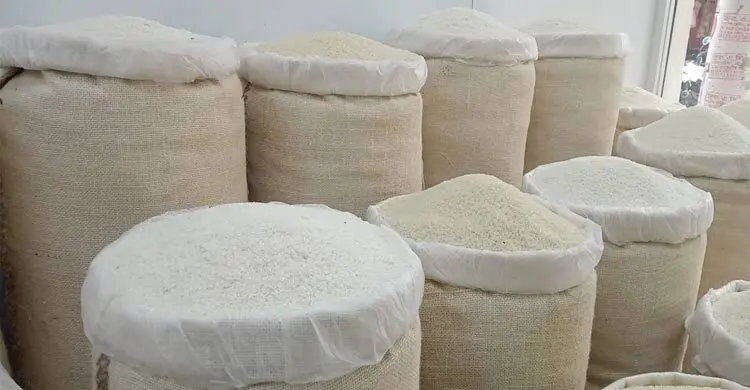
Sales of aromatic rice have collapsed in Dinajpur, the district that pioneered it. Having failed to sell their rice over the last aman and boro seasons, traders are sitting on hundreds of tonnes of unsold stock.
The aman season's aromatic rice will reach the market in just a month. Millers and rice traders in Dinajpur are therefore demanding that the ban on aromatic rice exports be lifted. They fear the aromatic rice trade will collapse unless the stored rice can be sold before the coming aman season.
Prices down, sales flat
Talking to Dinajpur's aromatic rice market, millers and traders shows that trade has hit rock bottom; many millers and big traders cannot even carry on. A maund (40 kg) of aromatic Chinigura rice sold for up to Tk 5,000 in the last aman season, then for Tk 4,000 a maund in the boro season. That same Chinigura now sells wholesale at Tk 3,300. 90 Zira is selling at Tk 2,400 and Katari at Tk 2,300 to 2,350.
Over the two seasons, aromatic rice has fallen by Tk 1,000 to 1,700 a maund depending on the variety, and still there are no sales. Millers and wholesalers cannot sell rice even on credit. Shopkeepers are not buying aromatic rice.
Biswajit Kundu Bishu, owner of M/s BK Traders, a rice trader at Bahadur Bazar, said that given the country's overall situation, fewer events are being held and there are hardly any weddings. Fewer foreigners are coming, so Chinese and biryani restaurants have fewer customers. The previous government also stopped aromatic rice exports. As a result, prices of both loose and packaged aromatic rice have fallen.
Abdur Rashid trades aromatic rice at the Pulhat rice hub. He said his mill has every kind of aromatic rice, but it is not selling because there is no demand, and he will take a loss this time. If the rice is not sold within a month, the new crop will arrive and the market may get even worse. Even at a loss, the rice is not selling on credit.
A decade of growth
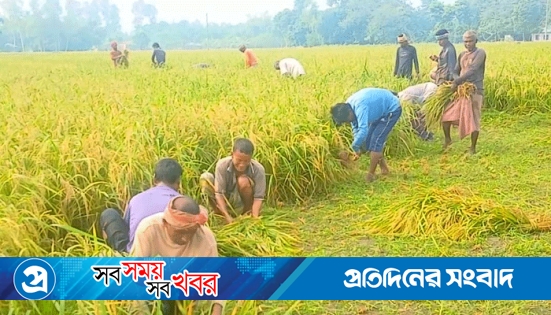
Aromatic paddy cultivation has changed greatly in the district in recent years. The paddy and rice fetch good prices and yields are high, so aromatic paddy cultivation in Dinajpur has grown by more than 150 per cent in 10-11 years. Most aromatic paddy is grown in Sadar, Biral, Chirirbandar, Parbatipur, Phulbari and Birampur upazilas.
According to the Department of Agricultural Extension (DAE), aromatic paddy cultivation in Dinajpur began rising from the 2012-13 fiscal year, when it was grown on 41,000 hectares in the district, producing 86,994 tonnes of aromatic rice. Area and output have risen every year since. In 2017-18 aromatic paddy was grown on 90,440 hectares, producing 2.16 lakh tonnes of rice. In 2018-19 it was grown on 1.06 lakh hectares, producing 2.23 lakh tonnes. Last boro season it was grown on 1.10 lakh hectares, producing more than 2.5 lakh tonnes of rice. Aromatic paddy has been widely grown this aman season too, with a production target of 2.5 lakh tonnes of rice.
Export ban
Millers and traders said the government allowed 28 firms to export 25,000 tonnes of aromatic rice in July 2021, then stopped exports in February 2022. Exports were later allowed again, but from June 2023 the government again banned aromatic rice exports. Traders are counting losses every day, and farmers are not getting a fair price for fine aromatic paddy.
Musaddek Hussain, president of the rice mill owners' association, said many millers and rice traders run their businesses on large bank loans. If they cannot sell their rice, the mills will go bankrupt under their debts.
Reza Humayun Faruk Chowdhury, president of the Dinajpur Chamber, the leading business body, wants the ban lifted and exports allowed to end the traders' crisis.
DAE deputy director Nuruzzaman, an agriculturist, said farmers are turning to aromatic paddy because it fetches double the price, and Dinajpur meets the bulk of the country's demand for aromatic rice. But the government has kept aromatic rice exports closed in the country's interest.
He said that this time more than 2.5 lakh tonnes of aromatic rice will be produced, including the GI-recognised aromatic Chinigura rice.
Source: Jagonews24. First published in Bengali on The Agro News.
Comments
(0)