
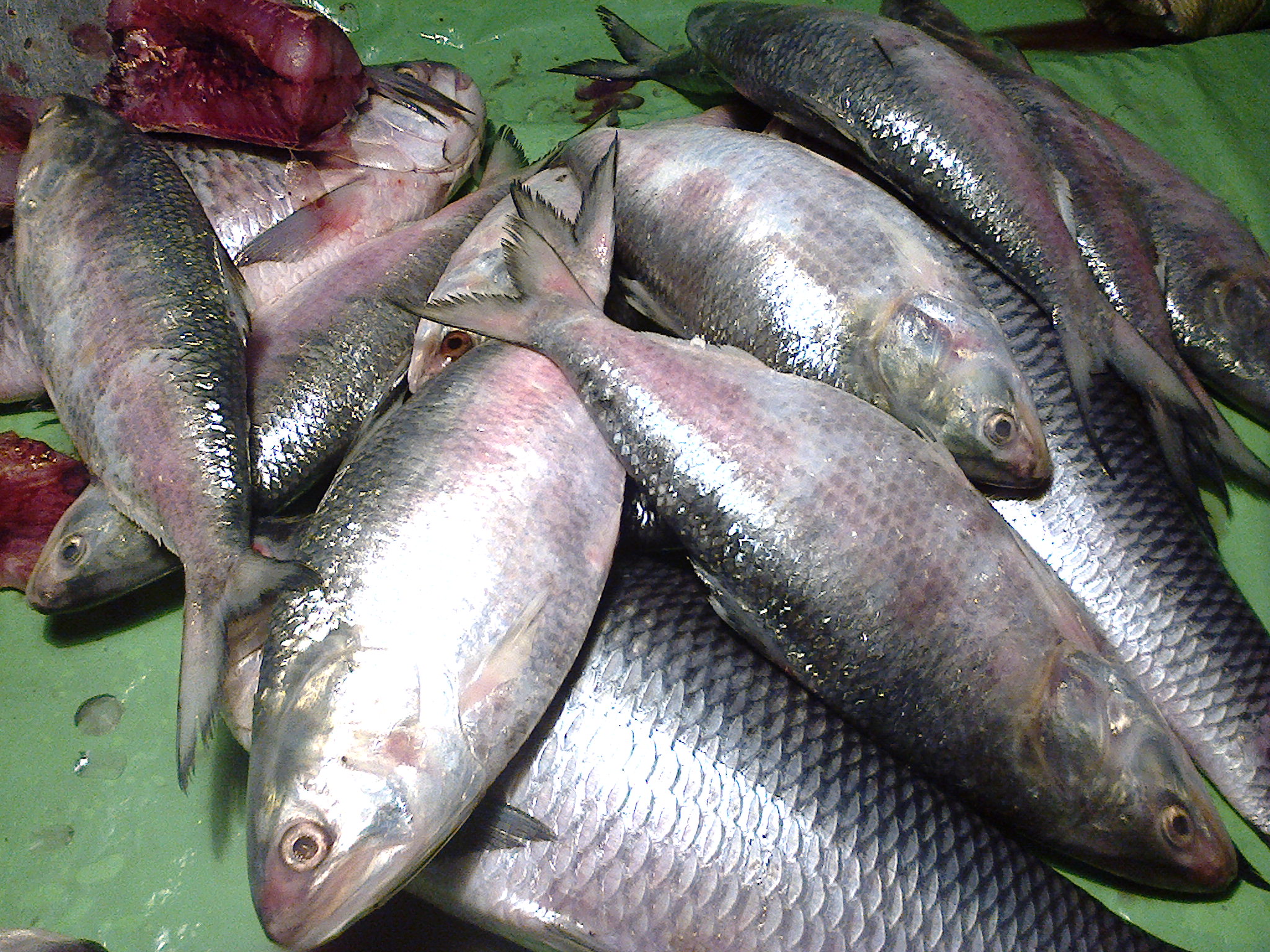
Anyone in Dhaka who wanted a hilsa of a kilogram or more on Sunday, 13 April 2025 had to go round two or three markets, Jagonews24 reported that day. Large hilsa were in short supply, and where they could be found, a fish of a kilogram or slightly more had climbed to Tk 3,400 to 4,000. The next day, Monday 14 April, was Pahela Baishakh, the Bengali New Year, and the report tied the high prices in the capital to the festival. The reporter's round of several markets that morning found large fish very thin on the ground.
Buyers and traders explained the prices in opposite ways. Buyers complained that wholesale and retail fish traders were cashing in on what the report called the "city-centred" demand for hilsa, the main item of the panta-ilish meal eaten at the festival. Traders said demand had also risen in Barishal and the other southern markets around Baishakh, while the bans then in force had stopped hilsa fishing at many river mouths, cutting supply and lifting prices in both retail and wholesale markets.
What each size of hilsa cost in Malibagh, Rampura and Middle Badda
The Jagonews24 reporter recorded these retail prices in the Malibagh, Rampura and Middle Badda markets that day:
- Hilsa of a kilogram or slightly more: Tk 3,400 to 4,000
- Hilsa of 700 to 800 grams: Tk 2,000 to 2,400
- Hilsa of 500 to 600 grams: Tk 1,300 to 1,500 a kilogram
- Hilsa of 400 to 500 grams: Tk 1,000 to 1,200 a kilogram
- Small hilsa of 200 to 250 grams, four or five fish to the kilogram: Tk 700 to 800 a kilogram
At the Badda market, seller Jamal Hossain was asking Tk 10,000 for a hali, or four fish, of 700-gram hilsa. Asked about the price, he said that a week earlier these fish had been under Tk 2,000 apiece; the report put the rise at more than Tk 2,000 a hali.
Asked why so few large fish were on the stalls, a seller named Elias Hossain pointed to his own risk. A one-kilogram hilsa, he said, cost Tk 3,200 to 3,500 wholesale. "At what price would I sell it after buying it? What if it doesn't sell?" he said, adding that selling hilsa would be banned after Baishakh.
Wholesale depots near Tk 1 lakh a maund
Prices had also risen in the wholesale market. At the depots of Karwan Bazar, Jatrabari and Merul Badda in Dhaka, supply shortages had pushed a maund of hilsa to Tk 1 lakh, and even a maund of small hilsa had passed Tk 50,000, the report said. The maund is the old trade measure still used in the fish business; a Daily Star report from the same week took it as 40 kilograms.
Hilsa seller Farid Hossain said the price per kilogram had risen by Tk 200 overnight compared with the day before, and that it was higher even at the Barishal and Chattogram landing centres the fish was coming from. A man named Bijon Kumar said there was no Barishal fish to be had. Fishing had been banned for two months in the Meghna river sanctuary, he said, and hilsa and other fish were scarce in all the other rivers as well. The report noted that more of the fish reaching the market was from Chattogram in particular.
Altaf Hossain, a fish seller at Rampura market, described a squeeze from both sides. With jatka fishing banned, fishing had stopped in many places, he said, and from the day after Baishakh no fish would be available, so a shortage had built up just as demand rose for the festival.
Buyers' complaints and a slower trade after Eid
A buyer at the Badda market had little patience with such reasons. "It's nothing but the sellers striking while they can," he said. "Some rich people are buying. But people like us who run our households on a budget won't get fish this Baishakh." That was his complaint; the report put no figure on traders' margins and carried no official finding on them.
Yet the high prices were not bringing a brisk trade. Wholesale fish seller Saiful Islam said hilsa sales were lower that year, both because of the prices and because Baishakh came straight after Eid. "People have no money after Eid, so sales are not good," he said. Eid-ul-Fitr had been celebrated in Bangladesh on Monday 31 March, after the Shawwal moon was sighted on 30 March.
The same week's prices at Karwan Bazar, Mirpur and Barishal
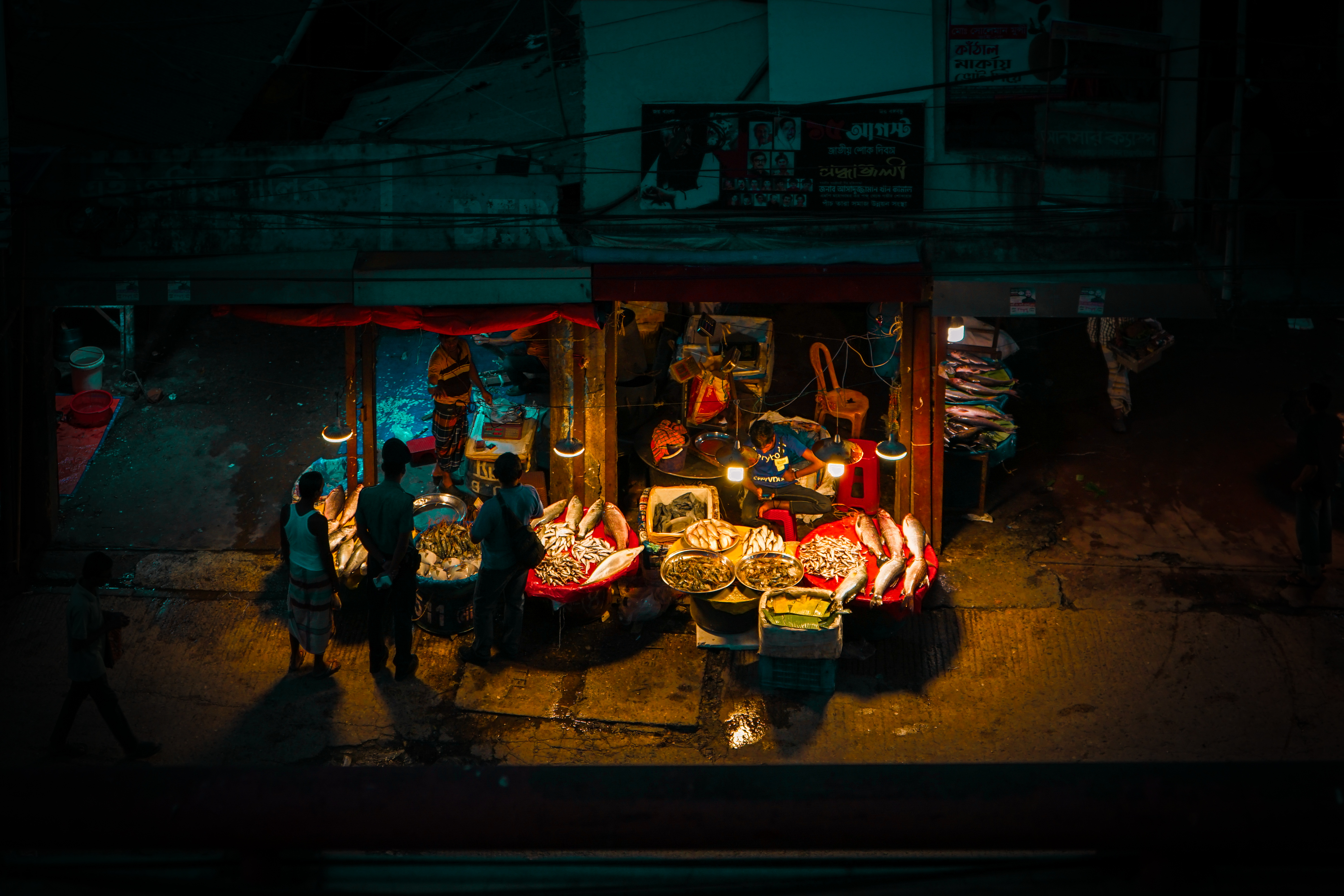
Other reports from the days before the festival showed the same pattern. The Daily Star, in a report of 11 April 2025, said demand for hilsa starts rising about a week before Pahela Baishakh and prices rise with it. At Karwan Bazar, it found cold-stored hilsa of 1 to 1.5 kilograms at Tk 1,800 to 2,200 a kilogram, while fresh fish of that size cost at least Tk 3,000 a kilogram wholesale and were hard to find. Most fresh hilsa in Dhaka's markets weighed 450 to 650 grams; fish of 450 to 500 grams cost Tk 1,400 a kilogram and fish of 550 to 650 grams cost Tk 1,700 to 1,800. A supermarket at Farmgate was selling fresh hilsa of 1 to 1.5 kilograms at Tk 3,200 a kilogram.
A Karwan Bazar vendor with 30 years in the trade told the paper that demand and prices rise every year ahead of the festival, and that buyers prefer fresh fish to fish kept on ice. A shopper from East Rajabazar said buying at those prices was very hard for a middle-class family, though he had bought two 600-gram fish for the holiday. In Barishal, the president of the Barishal Fish Wholesale Market Association linked the high prices to the ban on hilsa fishing in the sanctuaries; hilsa of a kilogram and above were selling there at Tk 1.3 lakh a maund and fish of 500 to 600 grams at Tk 60,000 to 70,000 a maund.
At the Mirpur 1 kitchen market, Dhaka Tribune reported on 11 April that hilsa ran from Tk 650 to Tk 2,800 a kilogram depending on size and quality: Tk 650 for 350-gram fish, Tk 1,300 for 600 grams, Tk 1,800 for 850 grams, Tk 2,000 for a one-kilogram cold-stored fish and Tk 2,800 for a one-kilogram fish that had not been in cold storage. The paper noted that sales had picked up with the festival two days away, but also that the prices were keeping some buyers away.
Three bans that shaped the April supply
The sellers' explanations rested on real restrictions, though three separate rules were running together that month, and they are easily confused.
The first protects jatka, the young hilsa. Jatka are fish of up to about 10 inches, or 25 centimetres, and catching them is banned for eight months each year. That same week the fisheries ministry was holding Jatka Conservation Week, from 8 to 14 April 2025, under the theme "If catching jatka stops, hilsa will fill the nets". Announcing it on 7 April, the fisheries and livestock adviser said that saving jatka would greatly increase hilsa output, raise supply and help keep prices under control.
The second is the sanctuary ban. All fishing is prohibited each year on set river stretches for two months, from 1 March to 30 April, to protect jatka. The Daily Star listed six sanctuaries covering 432 kilometres in a 2021 report:
- Shatnal in Chandpur to Char Alexander in Lakshmipur, 100 kilometres
- Char Ilisha to Char Pial in Bhola, 90 kilometres
- Char Bheduria in Bhola to Char Rustam in Patuakhali, 100 kilometres
- Barishal Sadar to Mehendiganj, 82 kilometres
- Naria to Bhedarganj in Shariatpur, 20 kilometres
- The Andharmanik river in Kalapara, Patuakhali, 40 kilometres
The Andharmanik stretch has run on a different calendar: Dhaka Tribune reported in 2018 that it closes from November to January, while the others close in March and April. In 2025 the Bangladesh Sangbad Sangstha (BSS) reported the March-April ban covering a 190-kilometre stretch of the Meghna and Tentulia in Bhola, with one to two years in prison, a fine of up to Tk 5,000, or both for offenders. In Lakshmipur, it said, catching, hoarding, carrying and marketing all species were barred along about 100 kilometres of the Meghna, and 43,000 registered fishers were to get 80 kilograms of rice each for the two months.
The third was the sea ban due to begin two days after the market round. On 17 February 2025 the fisheries and livestock adviser had announced that the yearly fishing ban in the Bay of Bengal would be cut from 65 days to 58 and would run from 15 April to 11 June. It covered all fish, shrimp, crab, lobster and other crustaceans. A technical committee chose the dates as the breeding period of most commercially important fish in the Bay, after fishers' organisations complained that boats from neighbouring countries were taking advantage of the ban. The sellers spoke of hilsa disappearing from the market after Baishakh; the announcement itself concerned fishing in the Bay, for all species, and the sellers' worry about the days after the festival came from this date.
A smaller catch behind the festival prices
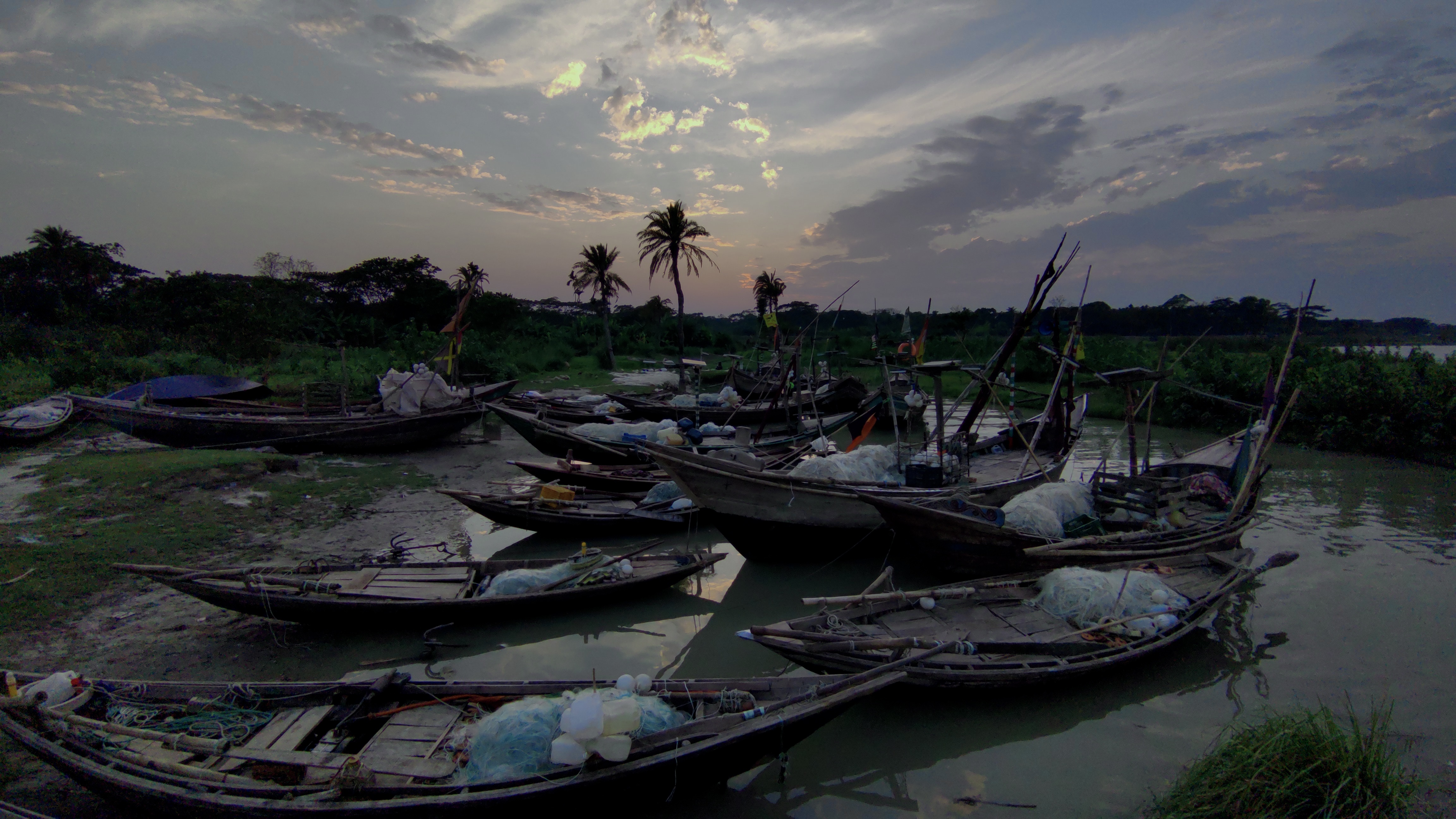
The bans came on top of a falling catch. Days before the market round, on 7 April, The Daily Star reported that hilsa output had dropped in 2023-24 to its lowest level in seven years, according to Department of Fisheries data. The Barishal divisional fisheries office put production at 5.29 lakh tonnes, about 42,000 tonnes below the year before. The paper gave the earlier yields as 5.32 lakh tonnes in 2018-19, 5.50 lakh in 2019-20, 5.65 lakh in 2020-21, 5.66 lakh in 2021-22 and 5.71 lakh in 2022-23. Going further back, the figure given to parliament in May 2024 for 2008-09 was 2.99 lakh tonnes.
A scientific officer at the Bangladesh Fisheries Research Institute's riverine station in Chandpur told the paper that bad weather had kept many fishers ashore the previous year, and that water on routes such as Meghna-Tetulia, Payra-Bishkhali and the Sundarbans had dropped to two or three metres, when hilsa typically prefer more than five metres. He also said overfishing had passed sustainable limits. A fisherman in Bhola Sadar said it had been years since he netted more than two maunds in a single trip, and a fisherman in Kuakata said spending over Tk 2 lakh on a trip had left fishers in debt.
At Barishal's Port Road market, the same report found hilsa of about 500 grams at around Tk 1,100 a kilogram and fish over a kilogram at over Tk 3,000, more than double the rate of a couple of weeks earlier. Small hilsa of 200 to 300 grams had risen at least 50 percent from the period before Eid. Even so, hilsa remained one of the country's main fisheries: the figures given at the 7 April briefing put it at about 11 percent of Bangladesh's fish production and more than 1 percent of GDP, and said Bangladesh takes more than 80 percent of the world's hilsa catch, first among 11 producing countries.
The fish at the centre of the festival
Hilsa (Tenualosa ilisha), ilish in Bengali, is Bangladesh's national fish, and it was registered as a geographical indication product of the country in 2017, the second after Jamdani saris. Banglapedia describes a strongly compressed, silver fish that can reach 60 centimetres, though most are 35 to 40 centimetres; at the April 2025 briefing a one-kilogram hilsa was put at 40 to 50 centimetres and a fish of over 2 kilograms at about 60 to 62 centimetres. Females are usually larger than males.
Hilsa is anadromous: adults leave the sea and swim up rivers such as the Padma, Jamuna and Meghna to breed, and the young grow in the river channels before going down to the sea. A large female may carry up to 2 million eggs. Spawning goes on through the year, with a minor season in February and March and a major one in September and October, according to Banglapedia. Adults are caught in estuaries and river channels mainly from May to October, so the festival in mid-April falls outside the main catching season. The fish are taken with gill nets such as chandi jal, and at sea from mechanised boats and trawlers. In 2016-17, about 65 percent of the catch came from marine waters, and about half a million fishers depended directly on hilsa and about two million indirectly, Dhaka Tribune reported in 2018.
How a hilsa passes from the boat to a Dhaka stall
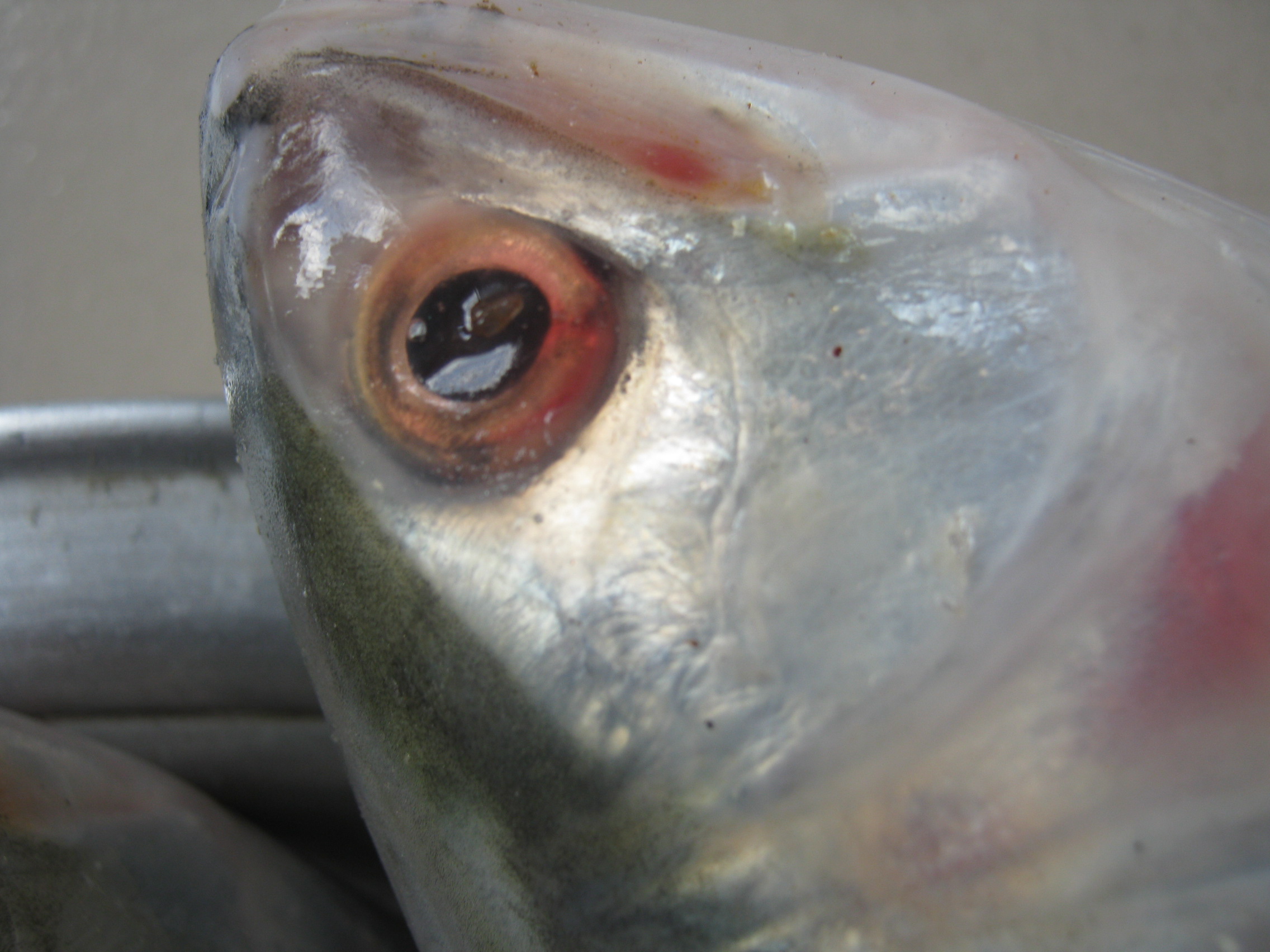
A working paper from the International Institute for Environment and Development (IIED), published in December 2016 and based on interviews along the chain, helps explain why festival prices move as they do. Fishers bring their catch to an arat, a landing centre that is also a wholesale market, where it is auctioned. Beparis, paikars and farias buy it there and box it for bigger markets such as Dhaka, Barishal, Chandpur and Patuakhali, where aratdars auction it again to wholesalers, retailers and hawkers. Local retailers then buy from the wholesale market and sell to the public. Karwan Bazar, the study said, was one of the biggest wholesale fish markets in the country, with more than 300 fish aratdars charging suppliers a commission of 5 to 8 percent.
The study found that many fishers must sell their whole catch to a pre-agreed buyer, often one who has advanced them a loan, or dadon, which left them almost no bargaining power. Fishers received the lowest prices in its sample, Tk 275 a kilogram across the seasons, and some intermediaries earned about five times what fishers did. Its price analysis found that the quantity of fish was not a significant factor through the year; the main determinants were linked to demand, such as festivals. Aratdars told the researchers that prices rise sharply on the eve of religious and cultural festivals, and that some fish is kept in cold storage to meet that demand. Intermediaries with cold storage could freeze hilsa in the high season and sell it in the low and ban seasons.
That matches the cold-stored fish the Daily Star found at Karwan Bazar in 2025. In a Prothom Alo column of October 2024, a deputy director at Sher-e-Bangla Agricultural University wrote that hilsa passes through four or five hands, each taking about 10 to 15 percent, and blamed weak oversight of the market, along with river damage and the cost of sea trips, which he put at Tk 2.5 to 3 lakh or more for a trawler.
Panta-ilish and the Baishakh prices of earlier years
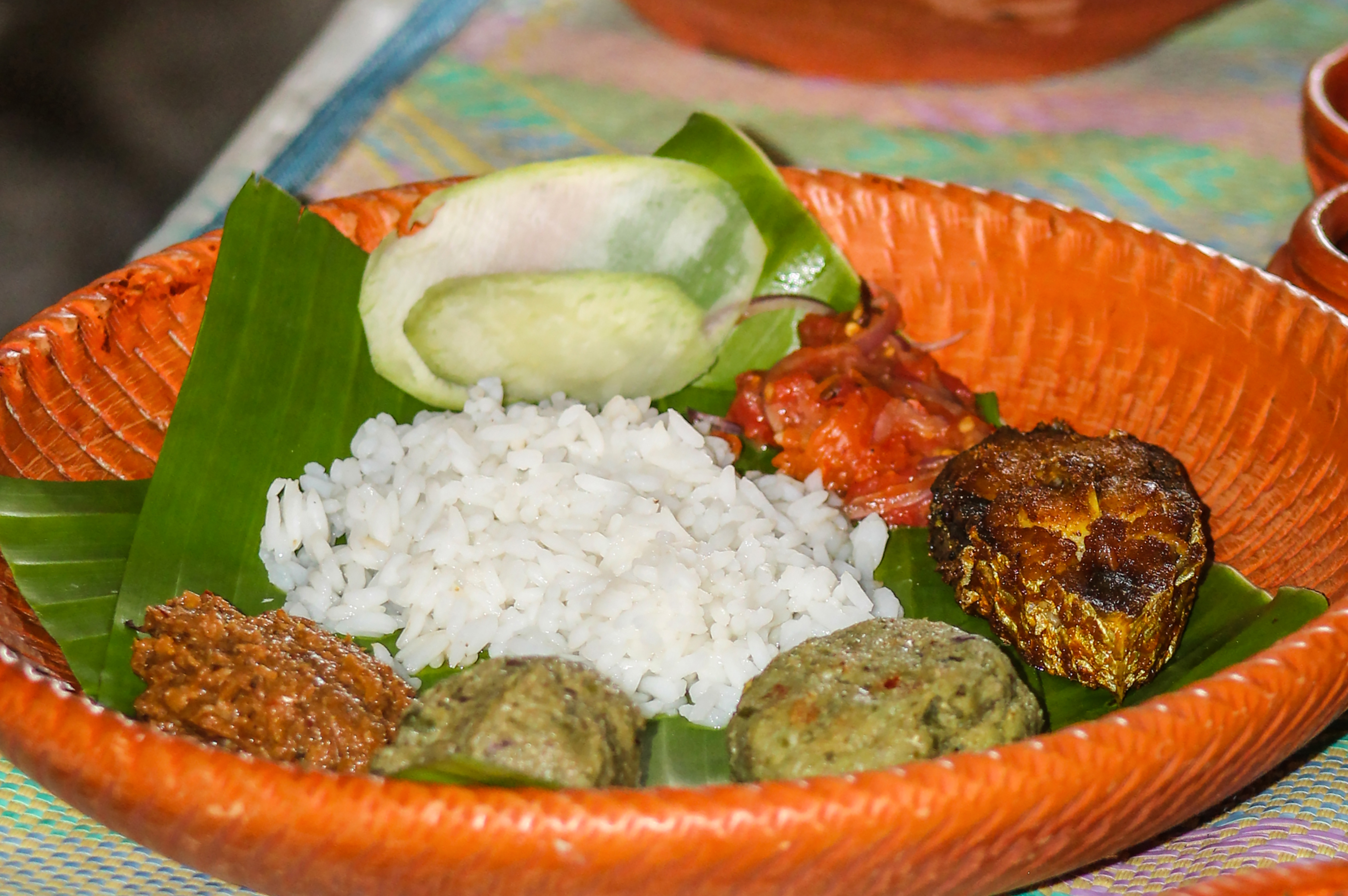
Pahela Baishakh is the first day of the Bangla calendar, which Banglapedia traces to the reform ordered by the Mughal emperor Akbar so that land taxes could follow the farming year. The day is known for halkhata, when traders open new account books and offer sweets to customers, and for Baishakhi fairs. The panta-ilish plate, soaked rice served with fried hilsa, has its critics. Asked about the custom in 2010, the then director-general of Bangla Academy told The Daily Star's weekend magazine: "Panta-ilish is, I think, an unfortunate joke towards the poor."
The squeeze before the festival was not new. In April 2024, when Eid-ul-Fitr and Pahela Baishakh fell two days apart, The Daily Star found one-kilogram hilsa at Karwan Bazar at Tk 2,000 to 2,200 against Tk 1,800 to 2,000 a week before, and the Mirpur branch of a supermarket selling hilsa at Tk 3,095 a kilogram. A shop owner estimated that about 80 percent of the hilsa on sale then came from cold storage, and a trader in Kazipara said about half of his 26 kilograms of small hilsa was still unsold by the afternoon. In Barishal that week, Prothom Alo reported wholesale rates of Tk 1 lakh a maund for 1.5-kilogram fish and Tk 85,000 for one-kilogram fish, with only 100 to 150 maunds reaching the Port Road market each day, about one-sixth of the normal volume.
Photo: Gouriband / Wikimedia Commons (CC BY-SA 4.0). The top picture shows hilsa at Charu Market in Kolkata, India, as background.
Sources: Jagonews24 (13 April 2025), The Daily Star (7 and 11 April 2025; 10 April 2024; 29 April 2021; 7 August 2017; 16 April 2010), Dhaka Tribune (11 April 2025; 30 March 2025; 17 February 2025; 25 June 2018), The Financial Express (18 February 2025), The Business Standard (7 April 2025), Bangladesh Sangbad Sangstha (26 February and 1 March 2025; 6 May 2024), Prothom Alo (9 October 2024; 11 April 2024), Banglapedia (Hilsa; Pahela Baishakh), International Institute for Environment and Development (December 2016)
Comments
(0)