
Living a healthy, normal life in the capital Dhaka is a big challenge. Rapid urbanisation is shrinking trees and green space day by day, while food prices, adulteration and chemical use keep rising. Against this backdrop, rooftop gardens have become an effective and sustainable answer for city dwellers. Using little space, they can meet a large part of a family's daily food needs, while also bringing peace of mind, protecting the environment and saving money.
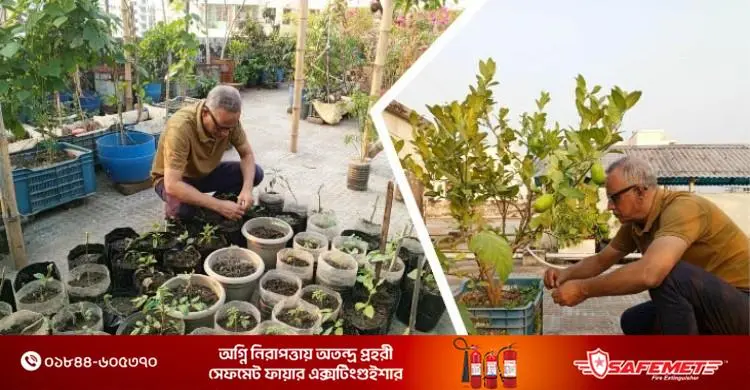
Khan Mohammad Abu Sayeed and Nazmun Nahan live in a flat they bought in Dhaka's Bashundhara area. About five years ago, Nazmun Nahan set up a garden on the roof as a hobby, inspired by her mother. One part of the roof has various flowers, the other vegetables. She grows tomatoes, chillies, aubergines, bottle gourd, lemons, drumstick, okra and other vegetables as the family needs them, along with a few fruit trees including hog plum. She grows vegetables by season.
Safe food from the roof
The garden has reduced the family's reliance on the market and ensured fresh, poison-free food. Its biggest contribution is a supply of safe food: there are complaints of excessive pesticides and chemical fertilisers on many vegetables and fruits sold in markets, whereas on a home rooftop such inputs are easy to control.
Nazmun Nahan told Jago News: "The taste of rooftop vegetables is unmatched because they are grown organically. To grow seasonal vegetables all year round, I irrigate through a pipe as needed. After meeting our own needs, I give the surplus to neighbours and acquaintances. At first I used to discuss growing with my mother. Now I get the information and solutions I need from videos and farming Facebook groups."
For organic fertiliser she uses kitchen scraps, rotten leaves and vermicompost, so her vegetables are entirely free of poison and safe. The family now gets fresh vegetables from the roof almost every day.
Her husband, Khan Mohammad Abu Sayeed, helps with heavy work such as bringing in large pots and collecting soil, and tends the plants when he has time despite a busy job. Caring for the plants, watering them and watching new leaves and fruit appear bring peace of mind to Nazmun Nahan and her family.
Neighbours and relatives inspired
"All the flat owners in this building have the right to use the roof. I made the garden with everyone's permission," Nazmun Nahan said. "In their free time, residents of other flats come up to see the garden, praise it, take photos and spend time. Guests like to spend time here too. Seeing my garden, many relatives have also started rooftop gardens."
In her view, a rooftop garden needs no special land, only planning and regular care. Choosing the right pots or drums, good soil, organic fertiliser and enough sun and air make success easy. The roof's load-bearing capacity, drainage and safety must also be considered carefully. Vertical gardens or hanging pots can give more yield in a small space.
Khan Mohammad Abu Sayeed told Jago News: "I use my free time to look after the plants. I try to come up to the roof at least once every day. If I cannot, it feels as if the day did not go well. The joy of eating fruit and vegetables from your own plants after hard work is different. I like helping my wife with the garden. On holidays we sit on the roof with the family."
Good for the city
Rooftop gardens play an important role in protecting the environment. Plants help lower temperatures, increase oxygen and absorb carbon dioxide. A rooftop garden keeps the building's temperature in check and, by holding rainwater, helps reduce waterlogging.
A rooftop garden is not just a hobby; it is an effective and sustainable way to meet a family's food, health and economic needs. Awareness is growing through social media and training workshops. If government and private initiatives encourage it further, its role in urban food security and environmental protection will widen.
Source: Jagonews24. First published in Bengali on The Agro News.

Comments
(0)