
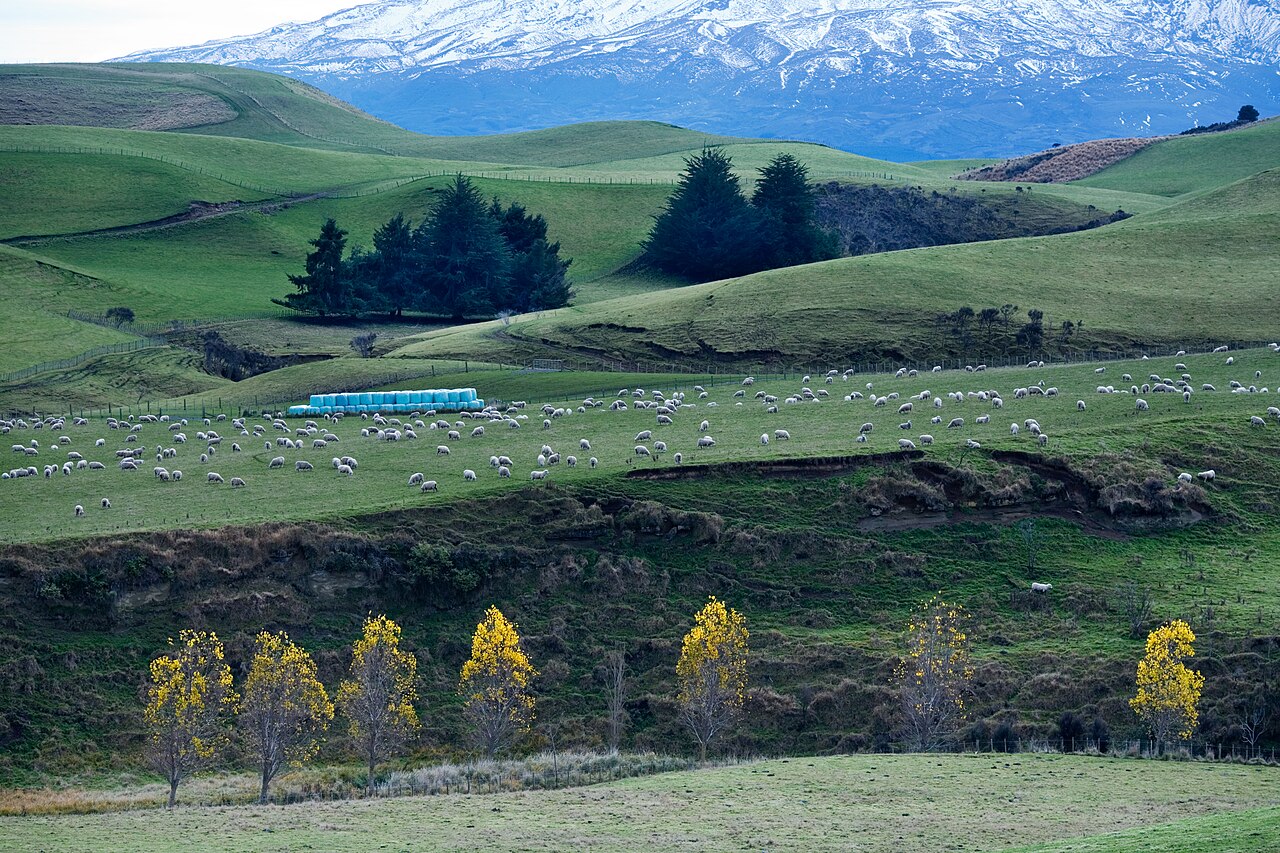
A New Zealand sheep and beef farm that once spent a "couple of hundred thousand dollars" a year on fertiliser now buys none, after its owners switched to brewing their own soil microbes, Farmers Weekly NZ reported.
Amanda and Adrian Currie, both chartered accountants, bought the 750-hectare Tinwald Farm in 2012 intending to hire a manager and advisers and let it largely run itself. In 2018 their cattle were caught up in the Mycoplasma bovis outbreak and had to be culled. "That was a moment I just thought, 'Right, we just should not be farming this, we just don't know what we're doing'," Amanda said. The couple parted ways with their advisers, took a hands-on role alongside one manager and went through the costs line by line.
Amanda said that when she dug up the soil it "just didn't have anything in it. It was dead", which she attributes to years of conventional farming and fertiliser. She now makes a natural soil and plant fertiliser from materials on the farm, breeding bacteria, fungi, protozoa and nematodes twice a year and spraying them on the paddocks.
Grazing has changed too, with set stocking of about 100 cows to a paddock and adaptive grazing, moving stock according to the condition and growth of the plants rather than a fixed timetable. "The best thing for the soil is rest," she said, adding that trampling and dung help reseed pastures. The farm has also brought in thousands of dung beetles, which are not native to New Zealand, to bury manure about 30 cm below ground.
Amanda said the grass is growing better than before and that testing of the farm's beef shows higher omega-3 levels, with an omega-3 to omega-6 ratio close to 1 to 1.05, against the one to three or four she said is typical of grass-fed beef. With 600 cattle, 1,300 sheep and 20 hectares of grapevines, the farm is starting to pay its way, and the savings have funded 12 Clydesdale horses for planned farm tourism alongside an on-farm laboratory.
"I did think if this doesn't work, I'm happy to admit it doesn't work," she said. "But I think if anybody was interested, what we do is working."
Photo: Jorge Royan / Wikimedia Commons (CC BY-SA 3.0)
Source: Farmers Weekly NZ
Comments
(0)