
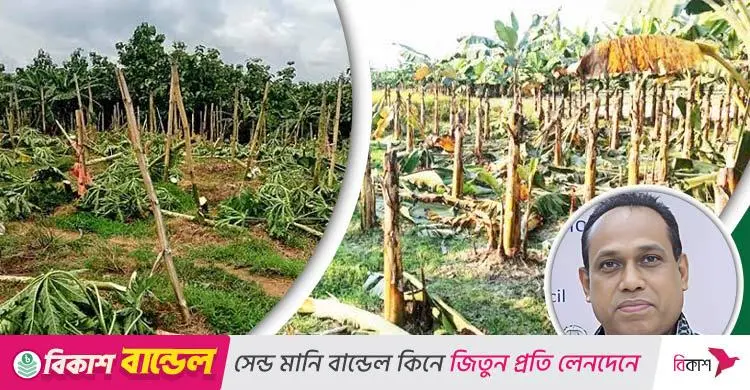
Social and moral decay is on the rise around the world. Because of a crisis of morals, greed, political instability and personal revenge, human cruelty towards innocent trees, crops and the environment is increasing day by day. On one side, natural disasters such as floods, drought and climate change threaten agriculture; on the other, people's self-serving actions are causing even greater damage to farmland and the environment.
Why crops are destroyed
- Greed: farmland is being grabbed, illegal buildings put up and forests cleared for personal and group interest. As land prices rise, many unscrupulous groups are deliberately damaging farmland.
- Political instability: crops may be destroyed to weaken a person, group or rival. In political revenge and struggles for dominance, rivals' farmland and orchards are being ruined. This is not only a personal loss but also affects the country's food security.
- Social decay: because of lax law enforcement, a lack of exemplary punishment and a decline in values, many people attack trees and crops indiscriminately.
- Personal enmity and revenge: crop fields are often ruined, orchard trees cut down and crops even poisoned to settle personal scores. This threatens not only the victim but the whole farm economy.
- Wrong policies and ill-considered decisions: sometimes farmers' crops are lost because of wrong decisions by the government or organisations, such as illegal seizure of farmland, not paying farmers a fair price, or import-export policies taken at the wrong time.
- Farmers' protests: sometimes farmers are forced to destroy their own crops because they do not get a fair price or to protest against government policy, a harsh reality in which the fruit of their labour loses its value.
- Climate change and environmental neglect: pollution and deforestation are changing the climate, and drought, floods, excess rain or lack of rain are destroying crops.
- Misuse of modern farming and technology: excessive pesticides and chemicals, the effects of genetically modified (GM) crops and wrong technology often reduce soil fertility, harming future production. If farm output falls, the country's food security will be under threat. Tree felling has a long-term negative effect on the climate, raising the risk of landslides, drought and floods.
When farmers suffer financial losses, the wider economy is hit. If such crimes go unpunished they will breed more disorder in society. Deliberately destroying another person's crops is an offence, and different countries have different punishments for it.
What the law says
Bangladesh's Penal Code, 1860, has several sections on the destruction of crops. Under section 427 (mischief causing damage), anyone who deliberately destroys another person's property or crops causing loss of Tk 50 or more can be jailed for up to 2 years, fined, or both. Under section 430 (damage to irrigation or farming systems), anyone who damages a water source or system used for farming can be jailed for up to 5 years, fined, or both. Under section 431 (damage by grazing or through roads), anyone who deliberately lets cattle loose on another's land to ruin crops can face up to 1 year in jail or a fine.
In special circumstances, if someone burns or completely destroys crops out of revenge or enmity, it is treated as a serious offence punishable by up to 7 years in jail.
Lately, cruelty towards innocent fruit, crops and trees has been rising in the country out of greed, political instability, social decay, personal enmity and revenge, a sign of dire consequences for the country. It is time for the ministries concerned and the government to ensure exemplary punishment under the law to protect against this man-made disaster.
The government must enforce strict laws and people must become more aware so that a liveable, agriculturally rich country can be secured for future generations. The media and educational institutions have an important role in raising public awareness.
Source: Jagonews24. First published in Bengali on The Agro News.

Comments
(0)