
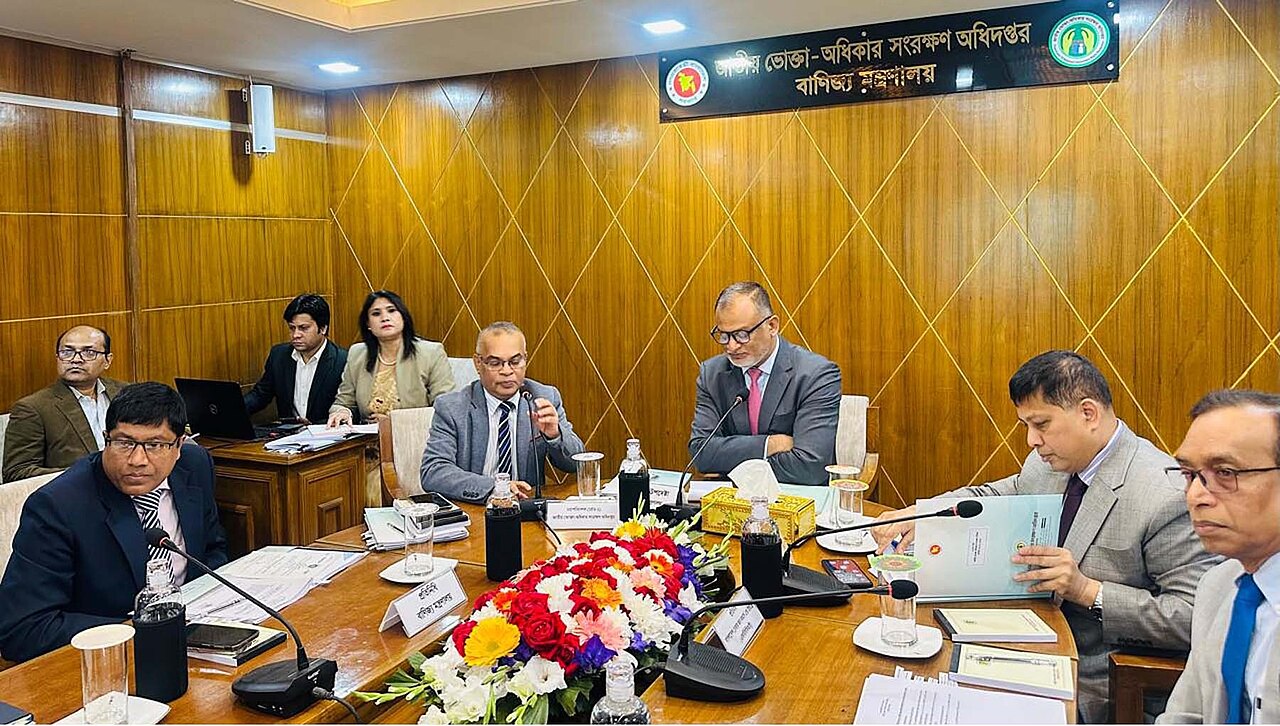
The 2026 draft of the Consumer Rights Protection (Amendment) Act widens the law somewhat: health care is added, the list of services is longer and digital commerce comes under the law. In a column on Ajker Patrika's op-ed page, M M Musa argues that three big questions are still unanswered. The views are the writer's own.
The first concerns free digital services. The draft defines a consumer by payment or a promise of payment, and free services fall outside the definition of a service. Millions of people, the writer notes, use social media, search, maps and messaging apps that cost no money but take personal data; fraudulent apps, debt traps and "free trials" that turn into charges are left outside the law. Pointing to the European Union's digital content directive and to the action Italy's competition and consumer authority took against Facebook in 2018, he proposes defining a consumer as someone who pays with money or personal data.
The second is health care. Redress for inflated bills, unnecessary tests and patients held hostage by private hospitals and clinics is a fair expectation, he writes, but section 20 (Ḍa) of the draft makes any harm caused by a provider's negligence, irresponsibility or carelessness an offence against consumer rights. He fears doctors may then avoid high-risk patients or order defensive tests. Citing the Indian Supreme Court's Jacob Mathew judgment (2005) and the no-fault compensation schemes of New Zealand and Sweden, he proposes itemised bills, a patients' charter, independent complaint handling and expert panels, with criminal penalties kept for gross negligence, fraud and unlicensed treatment.
The third is vulnerable consumers: older villagers, women with little schooling, children, people with disabilities and migrant workers' families. The writer found no separate provision for them in the draft. He proposes tighter limits on pressure selling aimed at them, rules for digital advertising to children, information in plain Bengali, audio and sign language, a cooling-off period of a few days for doorstep and telephone sales, and complaint routes through union digital centres, a telephone hotline and post for people without smartphones.
The column also notes that online banking and financial services are excluded from the definition of digital commerce, although mobile financial fraud, app-based loan traps and failed refunds of mistaken transfers are common problems; it calls for a clear referral arrangement between Bangladesh Bank and the directorate and room for a financial ombudsman. Keeping people who buy a sewing machine or a van to earn a living within the definition of a consumer is, he writes, a welcome step.
The column was written by M M Musa and published on Ajker Patrika's op-ed page.
Photo: Press Information Department / Wikimedia Commons (public domain)
Source: Ajker Patrika




Comments
(0)