
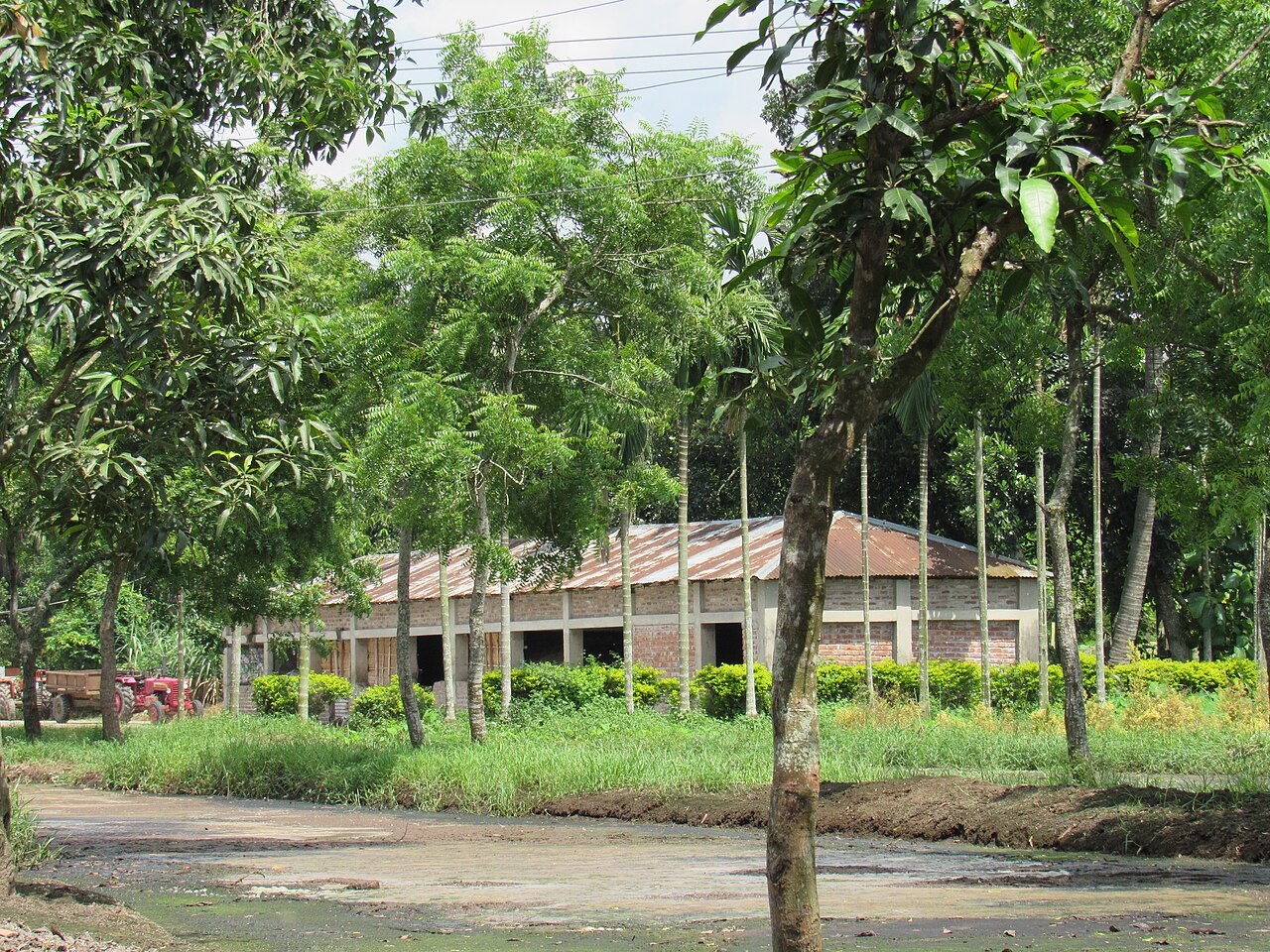
Cut feed costs while raising milk and meat output, make biogas from dung and organic fertiliser from the slurry: the "4F model" (Feed, Food, Fuel, Fertilizer) puts the four into one production cycle. It is described in a signed article in Krishi Sangbad by Dr Mohammad Khairul Bashar, senior scientific officer at the Bangladesh Livestock Research Institute (BLRI) and acting director of its "IoT-based 4F model livestock development" project. The views are the writer's own.
He writes that the high price of concentrate feed is a main worry for farmers, while drought, salinity, rising temperatures and scarce irrigation water make livestock production harder. BLRI is running a project, funded by the Bangladesh Climate Change Trust, to build climate-resilient livestock farming in drought-prone and coastal areas through the 4F model.
The first step is cheap, nutritious fodder. More than two years of research found that young Napier grass cut at 8-9 leaves carries 16-17 percent crude protein and 8.5-9.5 megajoules of metabolisable energy. In the writer's view, a cow giving 8-10 litres of milk a day could be kept without concentrates on such a ration, bringing the cost of a kilo of milk down to Tk 20-22, though breed, condition and a balanced diet still matter.
The project's research puts output at 55-60 tonnes of dry matter per hectare a year at Tk 12-15 a kilo, and suggests milk and meat yields could rise 20-30 percent with proper feeding. Dung and other farm waste then go into a biogas plant for fuel, and the plant's bioslurry goes back on the land as organic fertiliser.
The model is being tested by 56 farmers in 14 upazilas of seven drought-prone and coastal districts. Success, he writes, depends on salinity and fresh water on the coast, water for fodder in drought areas, the farmer's upfront investment and upkeep costs, and the skill to run a biogas plant.
He adds his own caution: before any national roll-out, field results, real production costs, farm incomes and environmental effects should be assessed independently, and long-term measurement is needed to know how much the model actually cuts emissions.
Photo: Ibrahim Husain Meraj / Wikimedia Commons (CC BY-SA 3.0)
Source: Krishi Sangbad

Comments
(0)