

Decomposed organic material made from waste is called compost, or mixed organic fertiliser. Fertiliser made from crushed sugarcane, rice straw, weeds and other plants and waste is compost. It contains on average 0.5 percent nitrogen, 0.15 percent phosphorus and 0.5 percent potassium. Its quality can be improved by mixing 10-15 kg of superphosphate or rock phosphate per tonne of raw material into the compost pit at the start. Compost made from city sewage, dustbins and street rubbish contains 1.4 percent nitrogen, 1 percent phosphorus and 1.4 percent potassium.
To make compost, farm waste is placed in a pit four and a half to five metres long, one and a half to two metres wide and one to two metres deep. The waste is laid in layers, and each layer is moistened with cow-dung slurry or water. The pits are filled up to 0.5 metres above ground level. The compost is ready for use within five to six months. Making compost is essentially a process of decomposing rural and urban organic residues with microbes.
Three methods
Three methods are described here.
In the first, organic waste is spread like bedding in the cowshed. Each day, the urine-soaked waste and dung are removed and laid in a 15 cm layer at a set place. Urine-soaked soil from the cowshed is collected, soaked in water and spread on the waste layer two or three times a day. This goes on for about 15 days. Then some very good-quality compost is spread on the waste layer and the whole mass is turned. The old compost helps the whole mass decompose. It is then left the same way for another month, by which time it becomes fully moist. It is turned once more, and within another month the new compost is ready for use.
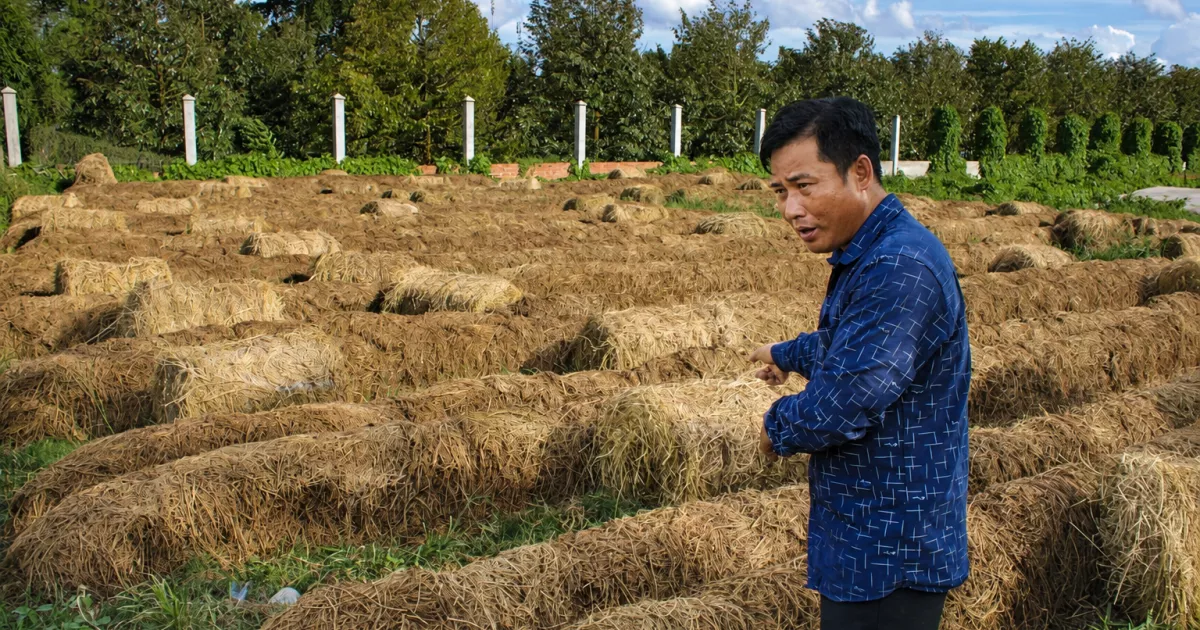
In the second, dry waste 25 centimetres thick is spread in a pit, and watery cow dung is spread over it to moisten it. Another layer of dry waste is placed on the wet layer. Layer by layer, dry waste followed by cow-dung solution, the pit is filled to 0.5 metres above ground. It is left uncovered for 15 days. The material is then turned, plastered with mud and left the same way for five months, or until it is used.
In the third, compost is made in pits of various sizes depending on the waste available. A layer of waste is first made in the pit, and a mixture of 5-10 kg of cow dung in 2.5-5 litres of water and 0.5-1 kg of bone meal is spread evenly over it. Layers are built one after another until the material reaches 0.75 metres above ground. It is then covered with mud and left for 8-10 weeks. After that, the whole mass is taken out, moistened, turned and made into a rectangular heap, which is kept in the shade until it is used.
In the Coimbatore method, anaerobic decomposition comes first, followed by aerobic decomposition, the reverse of the Bangalore method. In the Bangalore process, compost is not decomposed as in the Coimbatore or Indore methods, but it is the heaviest.
The problem of animal waste
Where there are animals, there is also their waste. Since livestock rearing took on the shape of an industry, the number of animals on farms has grown many, many times more than the number of farms. As a result, huge amounts of animal waste are produced even in very small spaces. When so much waste is produced in one place, it is hard to use it safely, cheaply and effectively, and hard to dispose of it. Government rules and better waste-management methods could change the situation somewhat, and care should be taken that farms apply them. But as long as we depend for our food on raising large numbers of animals industrially in small spaces, the problem of animal waste will remain.
On farms where animals graze on grassland, much of the waste, if not all, goes directly onto the land, where it acts as fertiliser and its nutrients are cycled back into the soil. On industrial livestock farms, animals excrete where they are kept. The waste has to be collected, moved elsewhere and stored, and each step can harm the environment. Simply washing out livestock houses takes a great deal of water. In dairying, even where there are automatic systems for flushing out waste, 150 gallons of water are used per cow per day.
Industrial livestock operations pollute the air in various ways and release more than 400 gases, mostly because of the huge quantities of animal waste. The main gases released include hydrogen sulphide, methane, ammonia and carbon dioxide. These gases are dangerous air pollutants and very harmful to both the environment and public health. Industrial farms also release large amounts of nitric oxide because of the waste, one of the main causes of acid rain.
Source: Staff Correspondent. First published in Bengali on The Agro News.
Comments
(0)