
Cold has gripped the country for several days, and there is no sign of it easing in the next day or two. In many areas fog has kept the sun from appearing. The bitter cold is causing hardship for people and is also hurting crop production in the northern region and other parts of the country. Livestock and poultry farmers are in trouble too.
The agriculture department says boro seed has been sown in seedbeds at this time; seedlings are uprooted and transplanted to the field when they are 40 or 45 days old. Potatoes and other winter vegetables, pulses, wheat and oilseed crops such as mustard are also in the fields, and they are being damaged by the dense fog. Various diseases have begun to attack winter crops, and agriculture officers are advising extra care and measures to protect them immediately.
Boro seedbeds worst hit
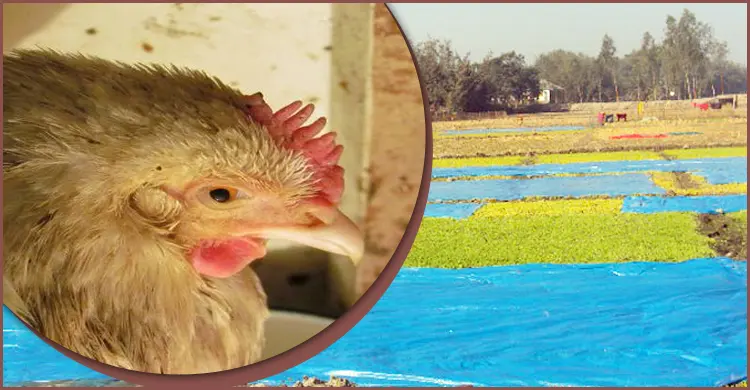
Boro seedbeds are suffering most from this cold. Dense fog is causing foot and leaf rot, and seedlings are turning yellow and dying. Gradually the seedbeds are turning reddish, drying up and dying. Farmers have tried various measures to save them, but the adverse weather has made them ineffective.
To protect seedlings from the cold and help them grow normally, the agriculture department has advised covering seedbeds with clear polythene at night, draining the water in the morning and adding fresh water, and shaking off the dew that settles on the seedlings every morning.
Farmer Karim Uddin of the Kola area in Naogaon said the advice was not working because the cold kept getting worse. "We have spent a lot covering them with polythene. We have applied pesticide as advised. Still the results are not good. On one hand production costs are rising; on the other, if we cannot save the seedlings, boro farming will become uncertain."
Potatoes at risk
After boro, potatoes are at risk. Enamul Haque, a farmer in Shibganj, Bogura, told Jagonews that late blight had struck about 11 bighas of his land. Spraying fungicide was not helping because the weather had not improved; if anything, temperatures in the area were falling and the fog was getting thicker day by day.
Md Matlubar Rahman, deputy director of the Department of Agricultural Extension (DAE) in Bogura, told Jagonews that the weather had hurt all potato-growing districts. In Bogura, 119 hectares had so far been affected by late blight. "To prevent blight in this weather, we are advising farmers to spray Mancozeb fungicide at 3 grams and metalaxyl at 1 gram per litre of water. Leaflets are being handed to every farmer."
DAE director Tajul Islam Patwari told Jagonews that the directorate has instructed its staff to help farmers build polythene shades over rice seedbeds and potato fields wherever needed. Farmers are also being advised to take extra care and manage their crops properly, and work is under way to ensure the supply and availability of pesticides.
Several scientific officers working in agricultural science said that when the temperature falls below 13 degrees, rice seedlings may turn yellow, stop making food and die. When night temperatures drop below 20 degrees and foggy weather pushes humidity to 80 or 90 per cent, winter crops come under attack from various diseases, and this is the situation in most areas now. Cold, wet weather also favours the spread of disease in the pulse and oil crops grown at this time.
They said lentils are affected by foot rot at this time, while mustard gets stem rot and Alternaria blight. Various fruit trees suffer different diseases, and winter vegetables such as chilli, cauliflower, cabbage and tomato die.
Ministry's advice
In this situation, the Ministry of Agriculture says:
- In fog and mild or severe cold, keep 3-5 centimetres of water in boro seedbeds.
- To protect seedlings from the cold and help them grow normally, cover seedbeds with clear polythene at night, drain the water in the morning and add fresh water, and shake off the dew that settles on the seedlings every morning.
- The present weather may bring late blight to potatoes. To prevent it, spray a Mancozeb-group fungicide at the approved dose every 7-10 days.
- Alternaria blight may appear on mustard. As soon as it appears, spray an Iprodione-group fungicide at the approved dose three to four times at 10-12 day intervals.
- Give fruit trees light irrigation regularly, and cover young fruit trees with straw or polythene sheets to protect them from cold wind.
Poultry and livestock hit
Meanwhile, farmers say chicken production has fallen significantly over the past week and a half. As the cold has grown in various places, chicken and egg prices have also risen at the market.
The cold is bringing malnutrition, Ranikhet disease, mycoplasmosis, fowl typhoid and water in the abdomen (ascites) to chickens, and malnutrition-related problems in particular have become acute.
Bangladesh Poultry Association president Sumon Howlader said the poultry sector, like everything else, has been affected by the cold. Disease has increased and production has fallen.
Many people in the coastal region rear ducks. Several farmers said ducks are also suffering various diseases at this time, with plague, cholera and botulism on the rise because of the cold.
In districts of the north, north-west and south-west, livestock have been suffering cold-related illnesses during two weeks of severe cold. Pneumonia in cattle and goats and, locally, foot disease have reportedly increased. Besides disease, animals are suffering malnutrition due to a shortage of feed, so they are losing weight and producing less milk.
Aminur Rahman, a farmer from Shathibari in Rangpur, said: "Within a few days, three of my cows have come down with foot disease. I am worried about the other eight. I cannot take them outside. The cost of feed and medicine has risen abnormally, and on top of that the milk has fallen to half of what it was."
Source: Jagonews24. First published in Bengali on The Agro News.
Comments
(0)