
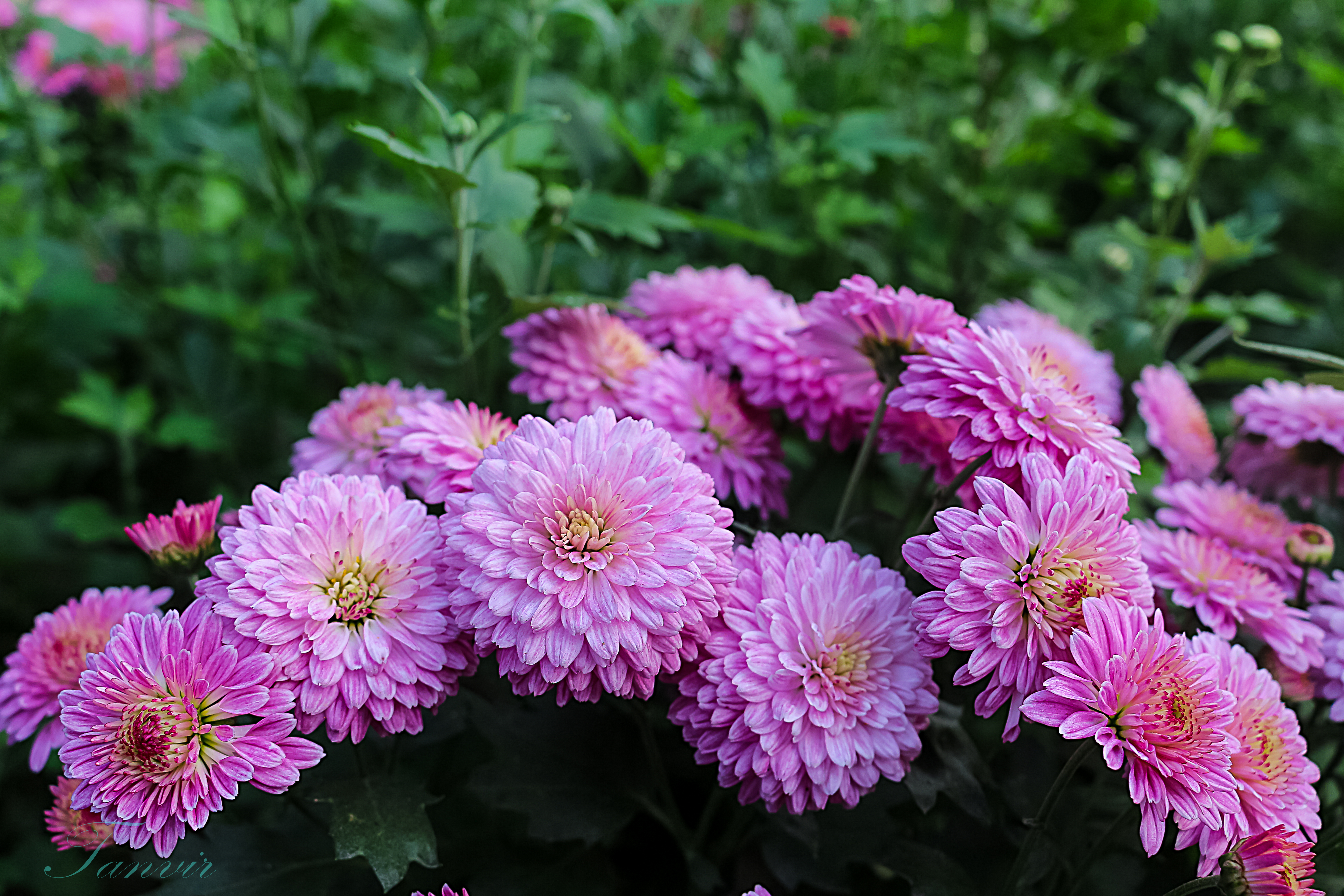
In early 2019 a farmer from Domar upazila in Nilphamari wrote to Krishi Kotha, the monthly magazine of the government's Agriculture Information Service (AIS), with a plain question: what diseases usually attack chrysanthemums, and what is the remedy? The magazine printed the answer in its February 2019 issue and ran the same question and answer again in January 2022. Many growers ask the same each winter, when chandramallika, as the flower is called in Bengali, fills nurseries and rooftop gardens.
This guide, published on 8 December 2024, sets out what Bangladesh's agricultural authorities advised up to that date, chiefly the Bangladesh Agricultural Research Institute (BARI), which has bred chrysanthemum varieties for the country, and AIS. It covers the plant, its place in the flower trade, varieties, propagation, fertiliser for the field and pots, shaping the plants, and control of aphids, powdery mildew and leaf spot.
What the chrysanthemum is and where it came from
Chrysanthemums are flowering plants of the genus Chrysanthemum in the daisy family, Asteraceae. They are native to East Asia and northeastern Europe; most species come from East Asia, and China is the centre of the genus's diversity. The name comes from the Ancient Greek words chrysos, meaning gold, and anthemon, meaning flower.
China cultivated the chrysanthemum as a flowering herb as far back as the 15th century BCE. More than 500 cultivars had been recorded there by 1630, and by 2014 it was estimated that the world had over 20,000 cultivars, about 7,000 of them in China. The flower reached Japan from China in the 5th century, and the Imperial Seal of Japan is a chrysanthemum. Most garden and florist chrysanthemums today belong to the hybrid Chrysanthemum × morifolium, which North Carolina State University's extension service describes as a complex hybrid involving five Chinese species.
What looks like a single chrysanthemum flower is in fact a head made of many small flowers, or florets. In wild plants a single row of ray florets, white, yellow or red, surrounds a centre of yellow disc florets; cultivated varieties have been bred to carry many rows of ray florets in a wide range of colours and shapes, from daisy-like singles to tight pompons and balls. This structure matters at harvest time. A 2018 growing guide in Jagonews24 noted that the flower is also called "sharat rani", the queen of autumn, in Bengali, and that it can be grown in courtyards, on verandas and on rooftops.
Besides the traditional yellow there are white, purple and red chrysanthemums, and the North Carolina extension service mentions brownish shades, pastels and bright yellows, some flowers in two colours.
Chrysanthemum in Bangladesh's flower trade
Banglapedia, the national encyclopedia, describes floriculture in Bangladesh as still at an early stage, with demand for cut flowers and the seed of seasonal flowers growing slowly. It notes that BARI opened a Floriculture Research Centre to promote commercial flower growing, and it lists chrysanthemum among the locally produced cut flowers traded regularly on a commercial scale, naming the varieties 'Biarritz Yellow', 'Ellen' and 'Euro'.
An article in Krishi Kotha in May 2015, written by a sub-assistant agriculture officer in Rupsha, Khulna, named rose, tuberose, dahlia, chrysanthemum and marigold as some of the country's popular flowers and listed chrysanthemum among the winter seasonal flowers. It described commercial flower farming in Jhikargachha, Sharsha, Chaugachha and Sadar upazilas of Jashore, and rose growing around Savar, Gazipur and Kaliakair. The article said Bangladesh had begun exporting flowers to London, Singapore, Saudi Arabia, Holland and Abu Dhabi, and it cited one estimate that about 25 billion dollars' worth of flowers is traded around the world each year.
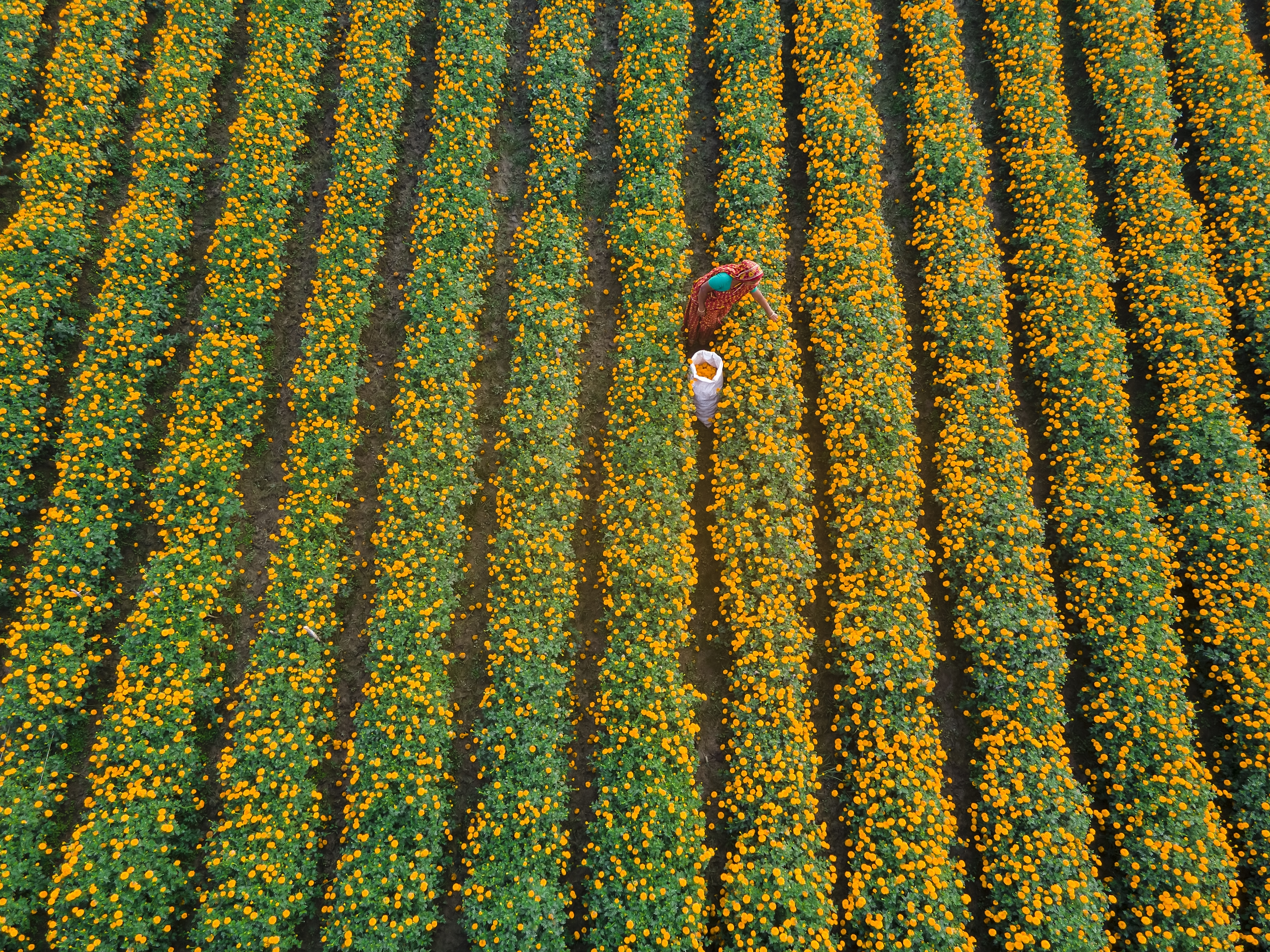
The heart of the trade is Godkhali in Jashore's Jhikargachha upazila, which growers and traders call the country's "flower capital". In February 2023 the Jhikargachha upazila agriculture officer told bdnews24.com that flowers were grown commercially on about 630 hectares across six unions of the upazila, involving about 6,500 farmers and about 100,000 workers. Gladiolus, tuberose, rose and marigold took most of that area.
In October 2024 Krishi Kotha advised that September and October are the right months to start winter flowers, chrysanthemum among them, with seedlings from government horticulture centres or trusted nurseries.
BARI's chrysanthemum varieties
By 2015, according to AIS, BARI had developed two chrysanthemum varieties, BARI Chandramallika-1 and BARI Chandramallika-2. BARI's technology database describes both as winter seasonal flowers grown in the rabi season, with a life of 120 to 150 days. Both are mostly used as pot plants, though they can also be grown as cut flowers, and BARI's descriptions put the number of flowers at about 20 to 30 per plant.
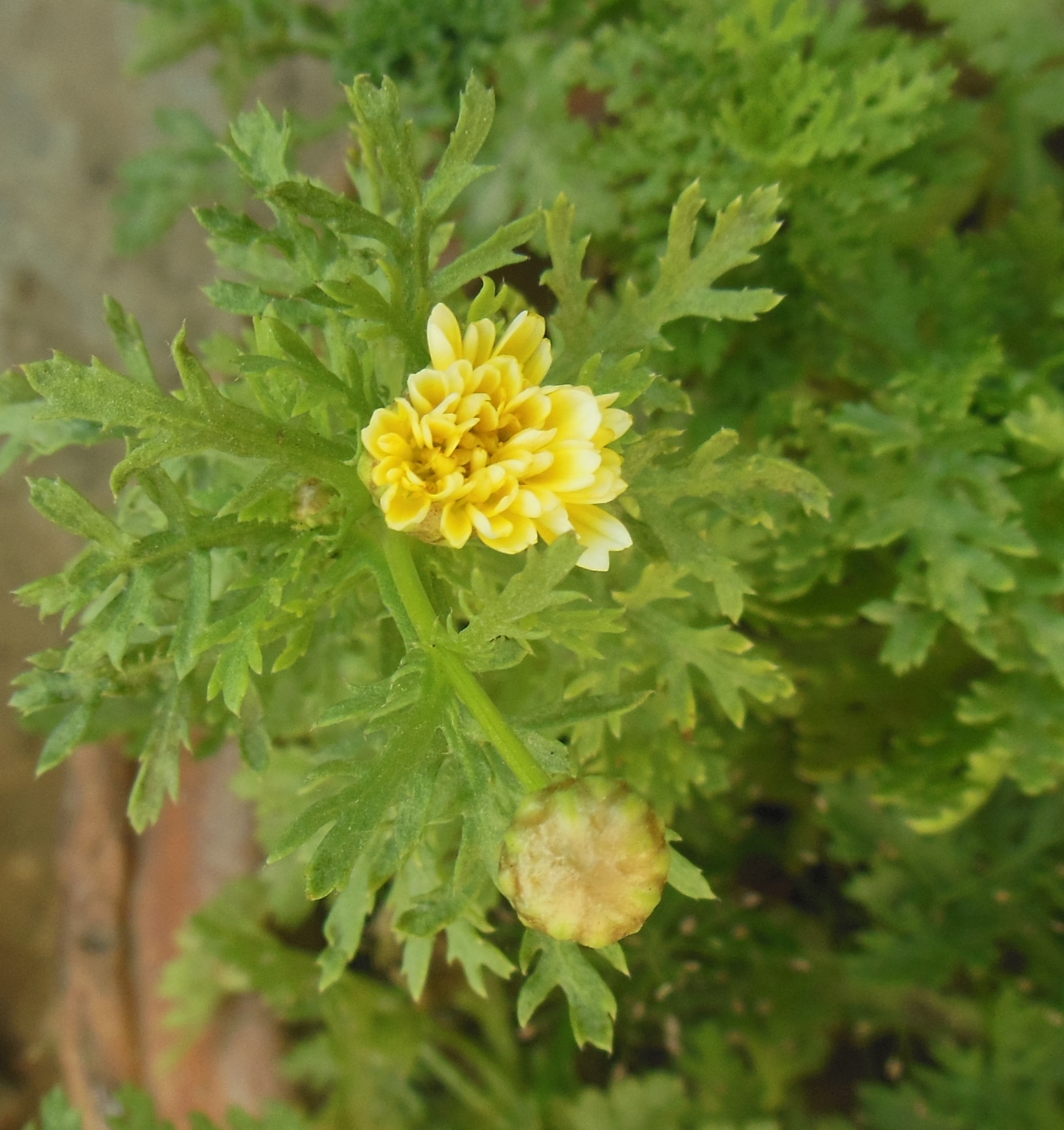
- BARI Chandramallika-1 has yellow flowers that last 9 to 10 days in a pot. BARI says it can be grown across the country but does especially well in Rajshahi, Jashore, Rangpur, Bogura and Savar. Flowers can be picked 60 to 70 days after planting.
- BARI Chandramallika-2 has white flowers that last 12 to 14 days in a pot. It does especially well in Rajshahi, Jashore, Dhaka, Gazipur, Pabna, Rangpur, Bogura and Savar. Flowers can be picked 70 to 75 days after planting.
For both varieties BARI gives the same calendar: raise seedlings from suckers or stem cuttings in July and August, and plant the 20 to 25 day old seedlings in the field or in pots in September and October. BARI advises picking the flowers when they are fully open.
Climate, soil, day length and planting time
AIS's growing guide says the chrysanthemum prefers relatively cool weather and a sunny spot, and that winter is the best season to grow it in Bangladesh. Well-drained loam and sandy soils rich in organic matter suit it, and the soil pH should ideally be between 6.0 and 7.0. The North Carolina extension service also recommends full sun and well-drained soil and warns that too much shade makes the plants sprawl instead of growing upright.
Day length explains the flowering season. The University of Florida's extension service says chrysanthemums set buds and flower when the days are short, and a University of Arkansas extension horticulturist wrote in 2003 that they set buds as the days get shorter. This fits the Bangladesh calendar: plants raised in the monsoon flower in late autumn and winter.
AIS gives October and November as the right time to plant in the field or in pots, at a spacing of 30 x 25 depending on the variety (the guide does not state the unit), while BARI's variety descriptions give September and October for its two varieties. AIS advises planting in the afternoon, firming the soil and watering lightly.
Raising plants from cuttings and suckers
Chrysanthemum plants can be raised from seed, suckers or stem cuttings. AIS explains that plants grown from seed do not give good flowers and take a long time to bloom, while cuttings and suckers do not have this problem; in Bangladesh plants are usually raised from stem cuttings. The University of Florida's extension service adds that garden chrysanthemums can also be propagated by dividing the clump. AIS describes the steps as follows:
- From the middle of July, cut pieces 8 to 10 cm long at a slant from fresh, vigorous stems about one year old, and set them in a bed or a bucket, where they will root.
- Around February, when flowering is over, cut the old plants back, leaving 15 to 20 cm above the soil.
- After some time suckers sprout from the base of the cut stems. When they are 5 to 7 cm long, separate them from the mother plant and plant them in a shaded seedbed or in pots.
- From May to July protect the young plants from rain and strong sun.
- Before the final planting in the field or in pots, the seedlings can be moved once to separate beds or pots; AIS says this improves their flowering.
- Plant out seedlings 20 to 25 days old raised from suckers or cuttings, as BARI's variety descriptions advise.
Fertiliser in the field and in pots
AIS notes that the chrysanthemum draws heavily on soil nutrients and responds well to organic and chemical fertiliser. Its guide gives the following amounts per hectare: 10 tonnes of rotted cow dung or compost, 400 kg of urea, 275 kg of triple superphosphate (TSP), 300 kg of muriate of potash (MoP), 165 kg of gypsum and 12 kg of boric acid, along with zinc oxide, for which the guide gives no separate figure.
On timing, AIS says the rotted manure or compost should be mixed into the soil 10 to 15 days before planting the suckers, and all the other fertilisers except urea 7 to 10 days before. Half the urea goes on 25 to 30 days after planting and the other half 45 to 50 days after planting, spread around the plants a little away from the base. After each top-dressing the fertiliser should be mixed into the soil and the bed watered.
BARI's technology database gives a lighter schedule for its varieties: after land preparation, mix 8 to 10 tonnes of rotted cow dung, 100 kg of phosphorus and 100 kg of potash per hectare into the soil, then top-dress 150 kg of urea, half about one month after planting for vegetative growth and half when the flower buds appear. Because the two published schedules differ, a grower planning a commercial field can ask the upazila agriculture office which suits the local soil.
For pots, BARI recommends a mix of 2 parts soil, 2 parts cow dung, 1 part leaf compost and 1 part bone meal, with 3 grams of TSP and 3 grams of MoP. Of 8 grams of urea, half should be top-dressed 25 to 30 days after planting the sucker or cutting, during vegetative growth, and the rest when the flower buds appear.
Pinching, disbudding, staking and watering
Pinching means cutting off the tip of the stem. BARI says that pinching 25 to 30 days after planting makes the plant bushy and gives more flowers, and AIS likewise advises cutting the tips about a month after planting so that the plant branches out instead of growing tall. AIS also advises keeping beds weed-free and removing at once any flowers that appear too early on young plants.
Disbudding is the removal of unwanted, immature flower buds. BARI says that keeping the crown buds and removing the rest gives large flowers. AIS puts it in practical terms: for large flowers keep the central bud and cut off the two side buds; for medium-sized flowers remove the central bud instead.
Staking is needed because chrysanthemum flowers are large and heavy compared with the branches. AIS advises pushing a firm bamboo stick into the soil from the base of the plant up to the bud, chosen to match the height of the variety, so that the flower does not bend over. Put it in once, at planting time, a little away from the base: pushed in at the base or later, it can wound the roots and let disease in.
AIS warns that the plant cannot tolerate too much water: water should never stand at the base, but measured daily watering before and after planting is essential.
Pests and diseases, and what BARI and AIS advise
The North Carolina extension service lists aphids, thrips, spider mites and lace bugs as occasional pests of chrysanthemum, and powdery mildew, rust, leaf spot, stem and root rots among its diseases. In Bangladesh, BARI and AIS concentrate on aphids, a tiny sucking pest, powdery mildew and leaf spot. The products and doses below are given as these bodies published them.
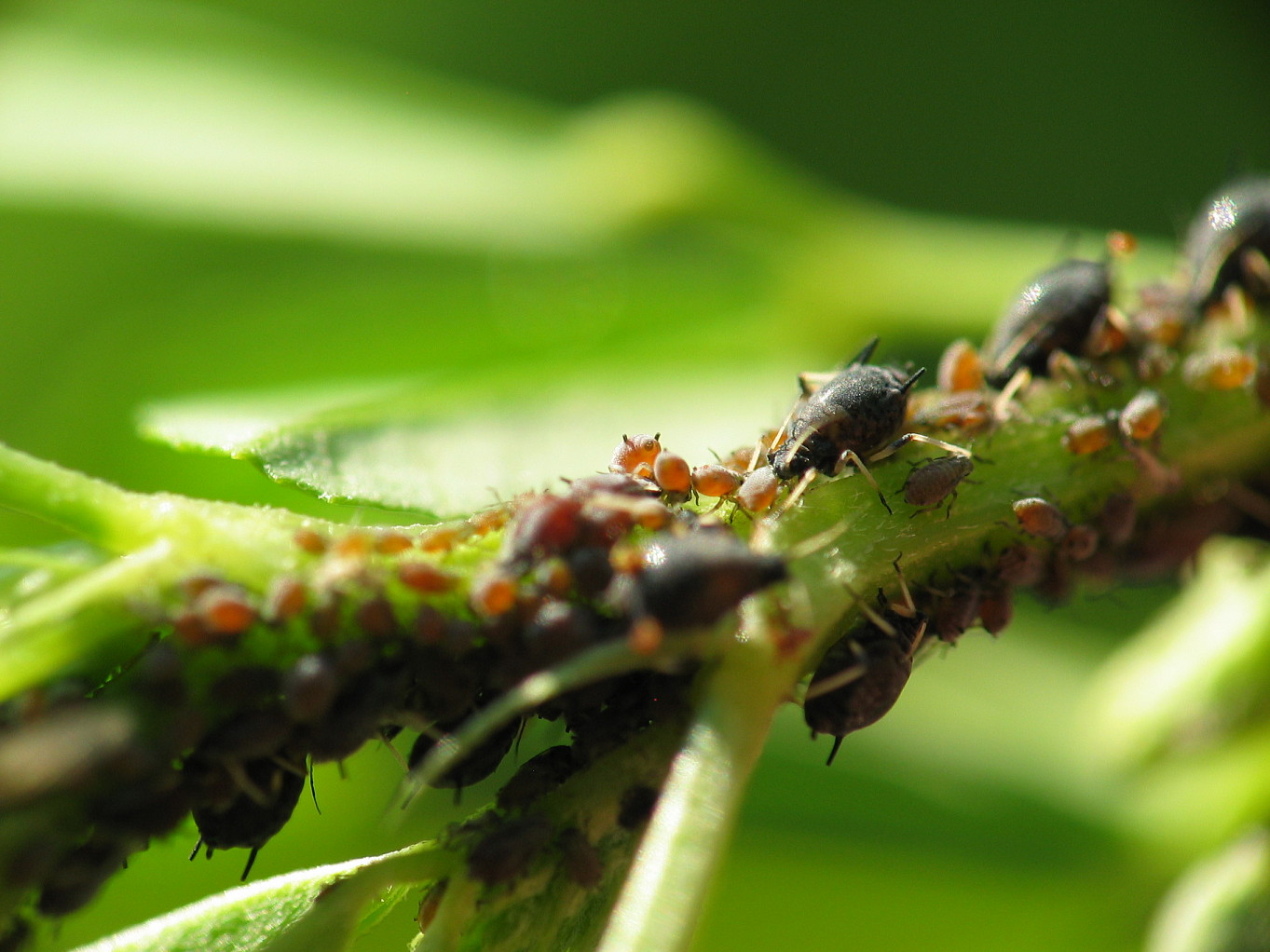
Aphids. BARI describes the aphid as very small, soft and blackish-green, and says it becomes much more common in winter. It sucks sap from the leaves, shoot tips and flowers, and infested new buds and leaves curl up; AIS calls it the main harmful pest of the flower and notes that aphids may be dark green, purple or black. BARI's advice runs in steps:
- In the early stage, pick off infested leaves or flowers and destroy them together with the insects.
- Use yellow sticky traps, which BARI says also give good results.
- Spray powdered soap at 5 grams per litre of water two or three times at intervals of 7 to 10 days.
- If the attack is heavy, spray a dimethoate insecticide (BARI names Perfekthion, Sungor and Tafgor 40 EC) at 2.0 ml per litre of water two or three times at 10-day intervals.
A tiny sucking pest. AIS's guide also describes a sucking pest so small and ash-coloured that it cannot be seen with the naked eye. It sucks sap from the leaves and flowers, leaving spots; leaves and flowers dry up, and in a heavy attack the whole plant dries. AIS advises spraying malathion at 2 ml per litre of water every 7 to 10 days.
Powdery mildew. In this fungal disease a white to grey powdery coating forms on the leaves, which slowly curl and become deformed; in a heavy attack the leaves dry and the plant dies. BARI and the Krishi Kotha answers both say it spreads fastest in hot, humid weather, so the first defence is the correct planting distance, which lets light and air reach the plants. Depending on how severe the attack is, BARI recommends spraying Bavistin (0.1%), Calthane (0.1%) or Saltaf (0.2%) every 7 to 10 days. AIS's growing guide gives Tilt 250 EC at 0.5 ml or Thiovit at 2 grams per litre of water, sprayed every 7 to 10 days.
Leaf spot. Yellow spots appear first on the lower leaves and, as the attack grows, turn brown and then black. BARI recommends spraying Bavistin or Benlate (0.1%), and the Krishi Kotha answer gives a carbendazim fungicide such as Bavistin at 1 ml per litre of water, sprayed in the correct manner.
The AIS answers stress spraying "in the correct manner", and BARI's database tells growers to consult a specialist when needed; it is worth checking a product with the upazila agriculture officer before buying it. Home gardeners should also know that the North Carolina extension service lists the garden chrysanthemum as having low-severity poison characteristics: it can cause skin irritation (contact dermatitis) and is listed as a problem for cats, dogs and horses.
Picking the flowers, yield and where to get help
AIS warns that chrysanthemums picked in bud will not open. They should be cut when the outer petals (the ray florets) have fully opened and the central ones have started to open, very early in the morning or in the afternoon, with a sharp knife and a long stalk.
Yield varies by variety: AIS puts the average at 30 to 40 flowers per plant per year, BARI about 20 to 30 per plant for its two varieties.
Growers with questions can contact their upazila agriculture office, part of the Department of Agricultural Extension, or call the AIS Krishi Call Centre on 16123, and buy seedlings from government horticulture centres or trusted nurseries, as Krishi Kotha advises.
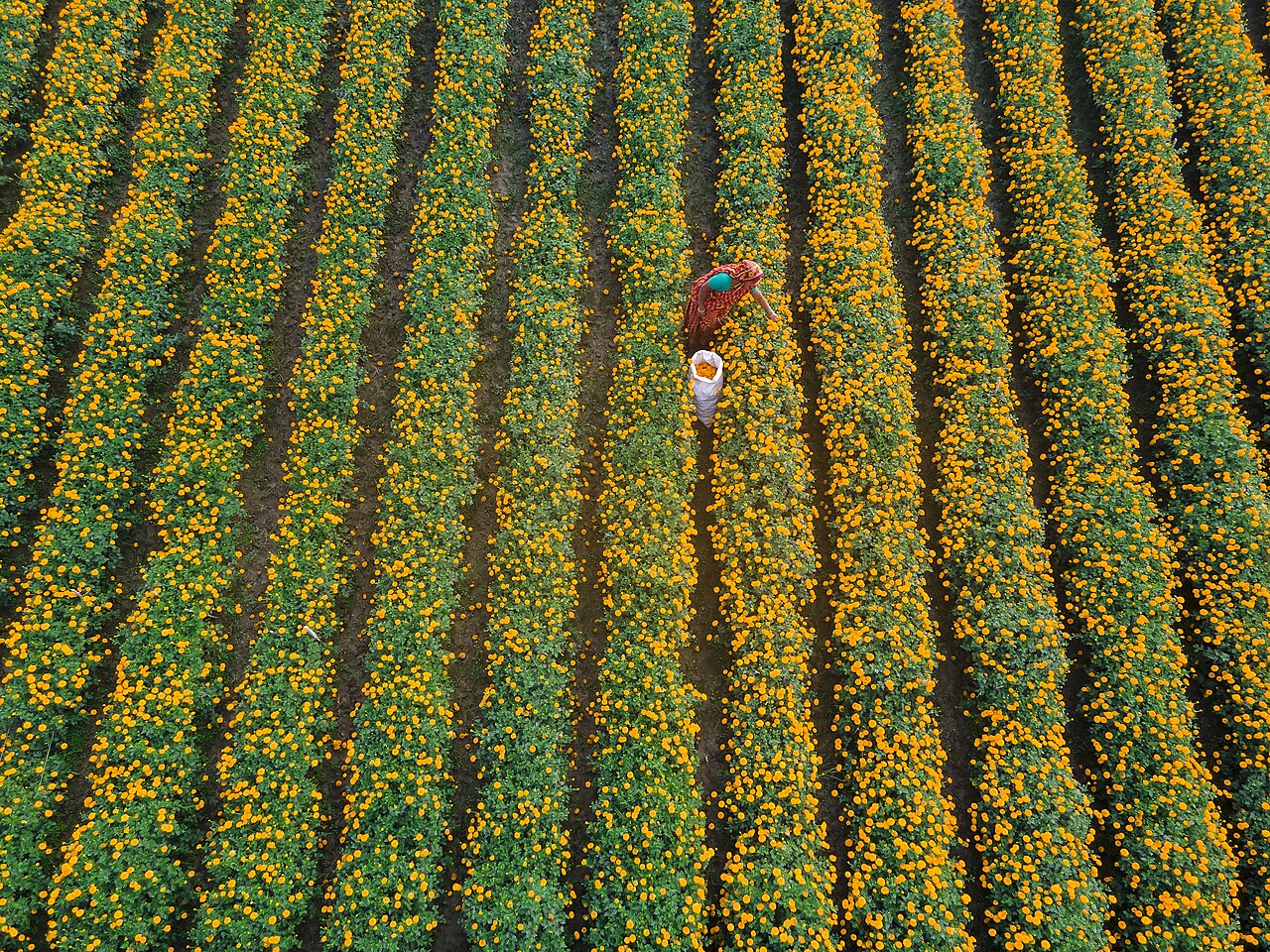
Photo: Tanvirislam6350 / Wikimedia Commons (CC BY-SA 4.0)
Sources: The Agro News (Staff Correspondent), Bangladesh Agricultural Research Institute (BARI technology database), Agriculture Information Service (AIS growing guide and Krishi Kotha), Banglapedia, bdnews24.com, Jagonews24, North Carolina State University Extension, University of Florida IFAS Extension, University of Arkansas Cooperative Extension, Wikipedia

Comments
(0)