
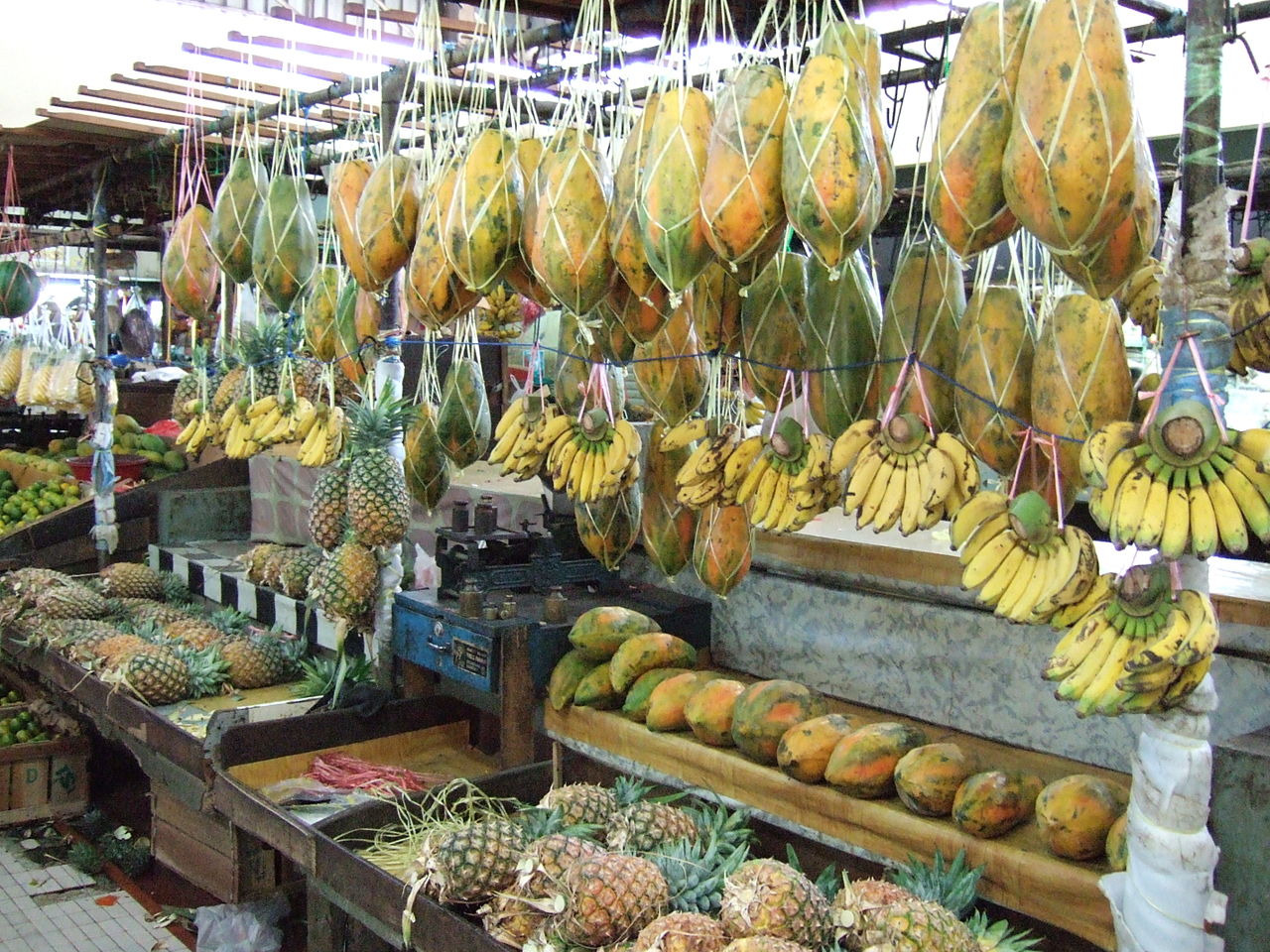
Many shoppers bring home a papaya that looked ripe but tastes bland. Mizan Mia from Brahmanbaria has sold fruit at Agargaon Taltala in Dhaka for 30 years; he showed Prothom Alo how to spot a sweet, ripe one.
Colour and ridges: an all-green papaya will not ripen. Sellers speak of a papaya "ripe at the ridges": the raised strip between two of the shallow grooves on its skin is where ripening starts. Choose one with deep yellow or yellow-orange spreading over it; a faint green tinge means it will ripen in a day or two. Avoid fruit whose colour is perfectly even all over.
Thumb and stalk: press gently with your thumb. Very hard means unripe or picked too early; very soft means it is starting to rot. The right papaya gives slightly and springs back. A grooved, reddish-yellow area round the stalk is a good sign of sweetness. A lot of white latex on the skin suggests it was picked early and ripened artificially.
Smell, spots and shape: a light sweet smell near the stalk means it is ripe; no smell, or a sharp or rotten one, means leave it. Many dark spots or small holes can mean insects or rot inside. Within one variety, pick slim or medium fruit; fat ones are often hollow and heavy with seeds.
Variety and origin: Thai Red Lady is the sweetest, followed by Shahi and other sweet local varieties. According to Mizan Mia the sweetest papayas in the country come from Madhupur in Tangail, Gazipur and Naogaon.
You can also grow your own. Julhash Ahmed Rubel of Dinajpur, who has grown the Shahi variety for 10 years, says papaya does well on a sunny balcony or roof in a large tub, grow bag, half drum or bed. Plant a seedling in sandy loam mixed with vermicompost, water regularly and feed with organic fertiliser, and fruit comes within 90 to 120 days. The report is by Prothom Alo's M A Hannan.
Photo: papayas on a fruit stall, Midori / Wikimedia Commons (CC BY-SA 3.0)
Source: Prothom Alo


Comments
(0)