
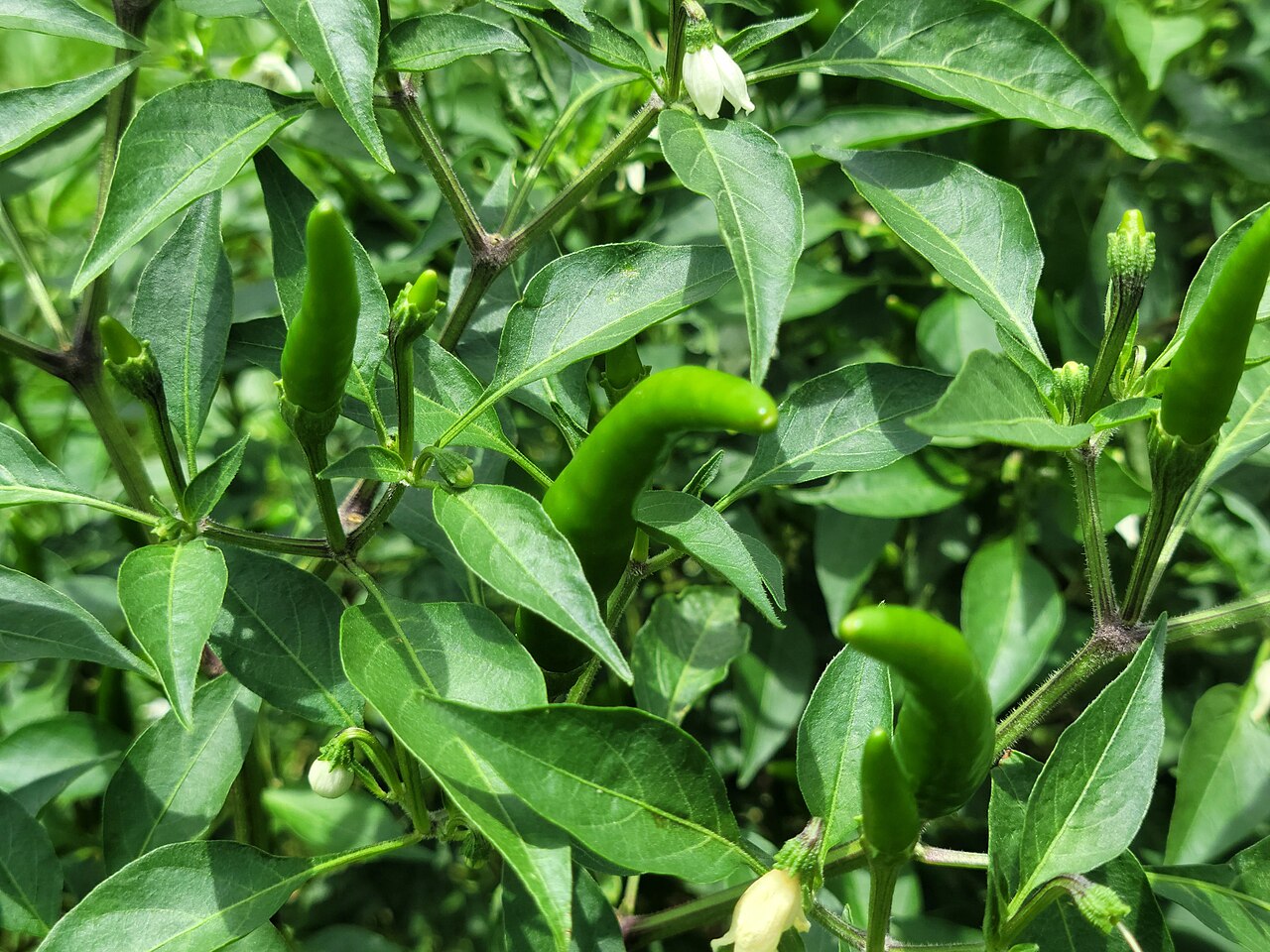
Dried chilli is rich in protein, calcium and vitamin C, and a daily green chilli is an old remedy against mouth ulcers. Beyond the kitchen it is the base of pickles and a cash crop for thousands of farmers.
Land and varieties
Loam with good light, air, irrigation and drainage suits chilli. Among the hot varieties are Bogura, Chandpuri and Faridpuri; Kamranga, Akali and the black chilli are hotter still; sweet types are grown too.
Nursery and transplanting
Sow in a 3 m × 1 m seedbed — in Bhadra–Ashwin (August–September) for the winter crop, Falgun–Chaitra (February–March) for the monsoon crop. Transplant 30–35-day seedlings into land ploughed four or five times, 60–70 cm between rows and 30–40 cm between plants.
Fertiliser
Per hectare: 10 tonnes of cow dung, 250 kg urea, 200 kg TSP and 150 kg MoP. All the dung and TSP and a third of the urea and MoP go in at land preparation; the rest of the urea and MoP in two top-dressings.
Water and weeds
Irrigate when the soil dries and keep drainage open; weed at each top-dressing and loosen the soil.
Pests
Whitefly lays minute eggs under the leaf; the nymphs suck sap and spread leaf curl. Use yellow sticky traps and a 5 g/litre soap spray, and approved insecticides only at the recommended dose. Thrips are too small to see until the damage shows — inspect the field regularly and act early.
Harvest green or red as the market wants; a well-managed field is picked many times over.
Photo: A chilli plant in the field — Pascal Kings / Wikimedia Commons (CC BY 4.0)
Comments
(0)