
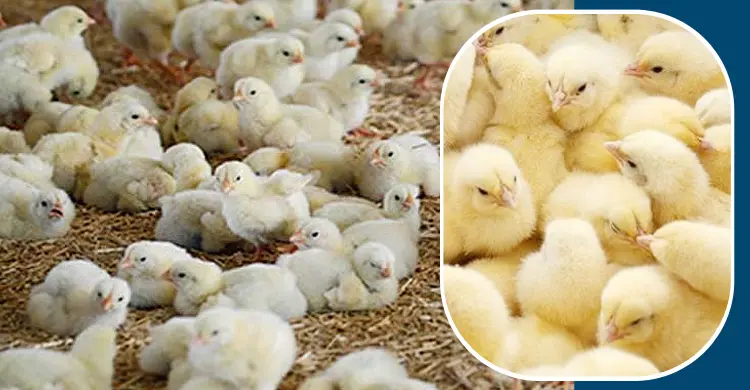
To earn more from a poultry farm, chicks need special care. The more they are cared for using modern, scientific methods, the better the birds they grow into and the higher the price they will fetch in the market. Keeping the temperature of the chick house right is very important for their health, so here is how to judge the temperature from the chicks' behaviour.
If the temperature is too low or too high, chicks can suffer cold- and heat-related and various other diseases, and they often fail to gain weight properly. The matter should therefore be taken very seriously.
Experts say a chick's body temperature should be 103 degrees Fahrenheit and an adult chicken's 107 degrees Fahrenheit. A thermometer should always be kept on the farm to measure temperature.
If there is any doubt or question about the birds' body temperature or the house temperature, farmers should go to the nearby upazila livestock office. Livestock officers are posted at every upazila to advise farmers, so it is best to take advice from the government livestock officer.
Signs to watch
If the temperature is low, the chicks will crowd together under the brooder and chirp. If it is too high, they will gather against the chick guard, breathe with their beaks open, and their heads and wings will droop.
If the temperature is right, the chicks will be spread out and lively, breathe gently and eat and drink normally. Farmers should watch very carefully whether the chicks are moving about comfortably.
The normal temperature in the first week is 95 degrees Fahrenheit or 35 degrees Celsius; in the second week 90 degrees Fahrenheit or 32 degrees Celsius; in the third week 85 degrees Fahrenheit or 29 degrees Celsius; and in the fourth week 80 degrees Fahrenheit or 26 degrees Celsius.
Source: Jagonews24. First published in Bengali on The Agro News.

Comments
(0)