
From dawn, boats loaded with fish tie up at the Ganjer Ghat landing of Bilkujain, in Radhanagar union of Gomostapur upazila, Chapainawabganj, and auctioneers call out prices as traders crowd round. Buyers come from three or four nearby districts by bicycle, motorbike, bhotbhoti and auto-rickshaw. One end of the wetland lies in India, the other in Bangladesh.
Local traders reckon that from Asharh to Falgun-Chaitra, roughly June to April, fish worth Tk 7 to 8 crore is traded here each year. The livelihoods of about 70 villages in four unions of Gomostapur and Porsha in Naogaon are tied to the beel's rice and fish. Yusuf Ali, a former member of the Radhanagar union council, adding up every mouza of the beel, said that although it varies from year to year, Tk 7 to 8 crore of fish is caught in a single season.
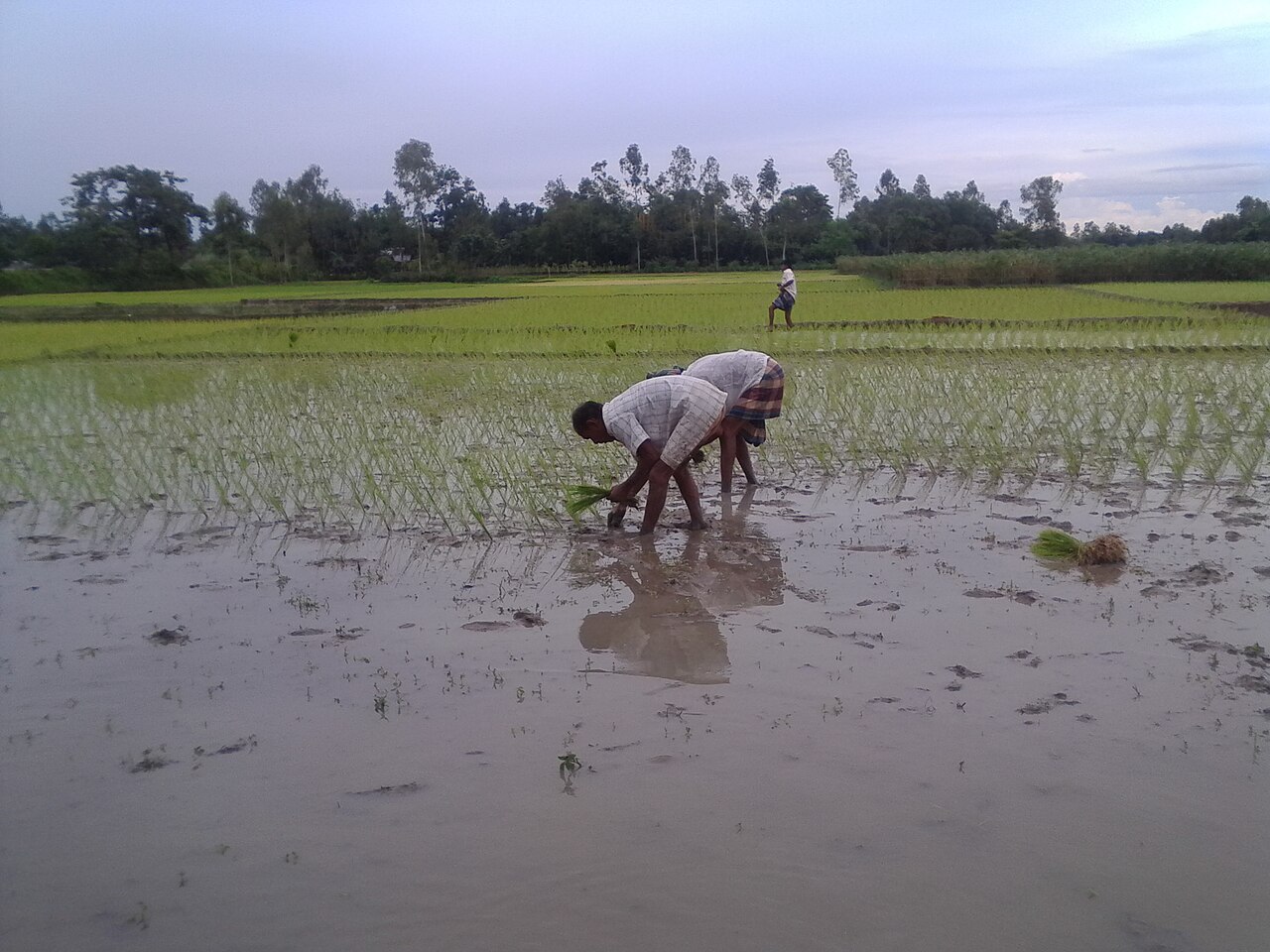
Bilkujain is the name of one part of the wetland, leased out as a government water body. The beel stretches under six other names: Chonsoda, Telkuch, Gumroil, Dobolainda, Ruhimari and Shukduba. In the dry season the land grows boro rice; for the rest of the year it lies under water, and the paddy fields yield fish. As the water falls, part of Bilkujain emerges first and the fish market moves there from the Islamganj playing field. Because the mud-built shops and warehouses at the landing go under in the monsoon, they are rebuilt every year.
The government leases 83 acres of Bilkujain for three years at a time by competitive tender. This time the lease went for Tk 1.35 crore, to Noman Ali, who said Tk 45 lakh is paid in the first year and the remaining Tk 90 lakh in instalments over the next two.
Asmaul of Roknapur village shares the fishing with 20 partners; their eight boats and 100 nets had been set in the beel overnight. His catch included tengra, puti, kantapatasi, guchi, boal, baim, air, gothi and shrimp. The boats come in by way of the Punarbhaba river, and ice plants have been set up near the landing to keep the fish fresh.
Lutfar Rahman of Islampurganj village owns 20 bighas of paddy land in the beel, and the rice from it keeps his household. For most of the year, he said, they get fresh fish from the beel every morning.
For visitors who want to buy fresh fish: the 9:15am commuter train from Rajshahi reaches Rohanpur station in about two hours; from there an auto-rickshaw to Adda bazar in Gomostapur costs Tk 60, and a rickshaw for the 16 kilometres on to Ganjer Ghat Tk 50. The 5pm commuter train goes back to Rajshahi, and buses also run.
Written from a report by Abul Kalam Muhammad Azad published in Prothom Alo.
Source: Prothom Alo

Comments
(0)