
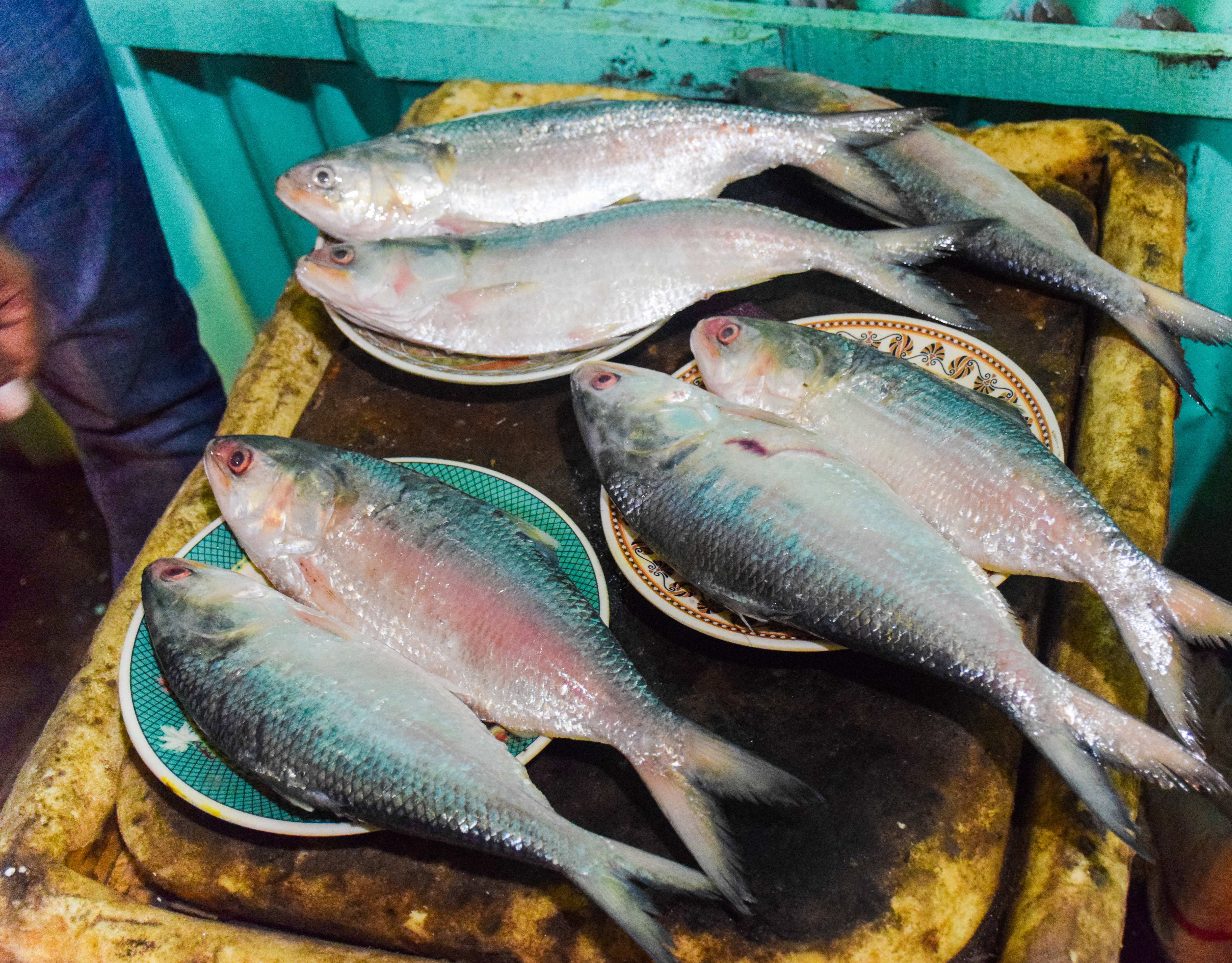
Hilsa at the Boro Station fish landing in Chandpur reached prices on Friday, 12 December 2025, that sent many buyers home with nothing. A hilsa of about one kilogram was selling for between Tk 4,000 and Tk 4,500, Jago News reported from the landing, and people in the trade said prices had risen almost threefold as supply fell. That was the rate for fish of that size, not for every hilsa on the landing: a seller put smaller fish at Tk 3,500 to Tk 3,700, and said only two or three large fish were being sold in a whole day.
A holiday at the landing with very little fish
Friday is the weekly holiday, and buyers had come to the landing from different parts of the country. Many of them heard the price and left without buying. Buyers complained that the prices being charged were excessive and had put hilsa beyond the reach of ordinary people.
Fahim Hasan and Nur Uddin, who had come from Dhaka, said the price bore no relation to ordinary market rates. Many people had expected that supply would rise on the holiday and prices would ease a little, they said, but the opposite happened: hilsa was scarcer and dearer. From morning to noon, no more than one to one and a half maunds of hilsa arrived. The maund is the trade's traditional unit of weight, 40 kg in Bangladesh.
The size of that delivery is easier to judge beside what the same landing handled in other months. A wholesaler at Boro Station told The Financial Express in September 2024 that daily intake had fallen to 500 to 700 maunds from 1,500 to 2,000 maunds a year before. In May 2025, just after the spring fishing ban, Ittefaq reported about 50 maunds a day, and in late September 2025, Dhaka Tribune reported 1,000 to 1,200 maunds a day.
What a seller and an entrepreneur said
Hilsa seller Samrat told Jago News that fewer hilsa were being caught in the river because it was not the hilsa season, and that this had created a shortage in the market. Sales had dropped because of the higher price, he said, and only two or three large hilsa were sold all day. A one-kilogram fish sold for more than Tk 4,000, he said, and the ones below that size for Tk 3,500 to Tk 3,700.
Entrepreneur Iqbal Bahar said hilsa supply had been very low throughout the year. Prices had gone up from the start and had not come down, and hilsa was now at a record price, he said. Not everyone had the means to pay it, and buyers were coming to the landing and still could not buy. Fresh hilsa from the Padma and the Meghna was now almost absent in Chandpur, he said, and prices might fall once the season began again.
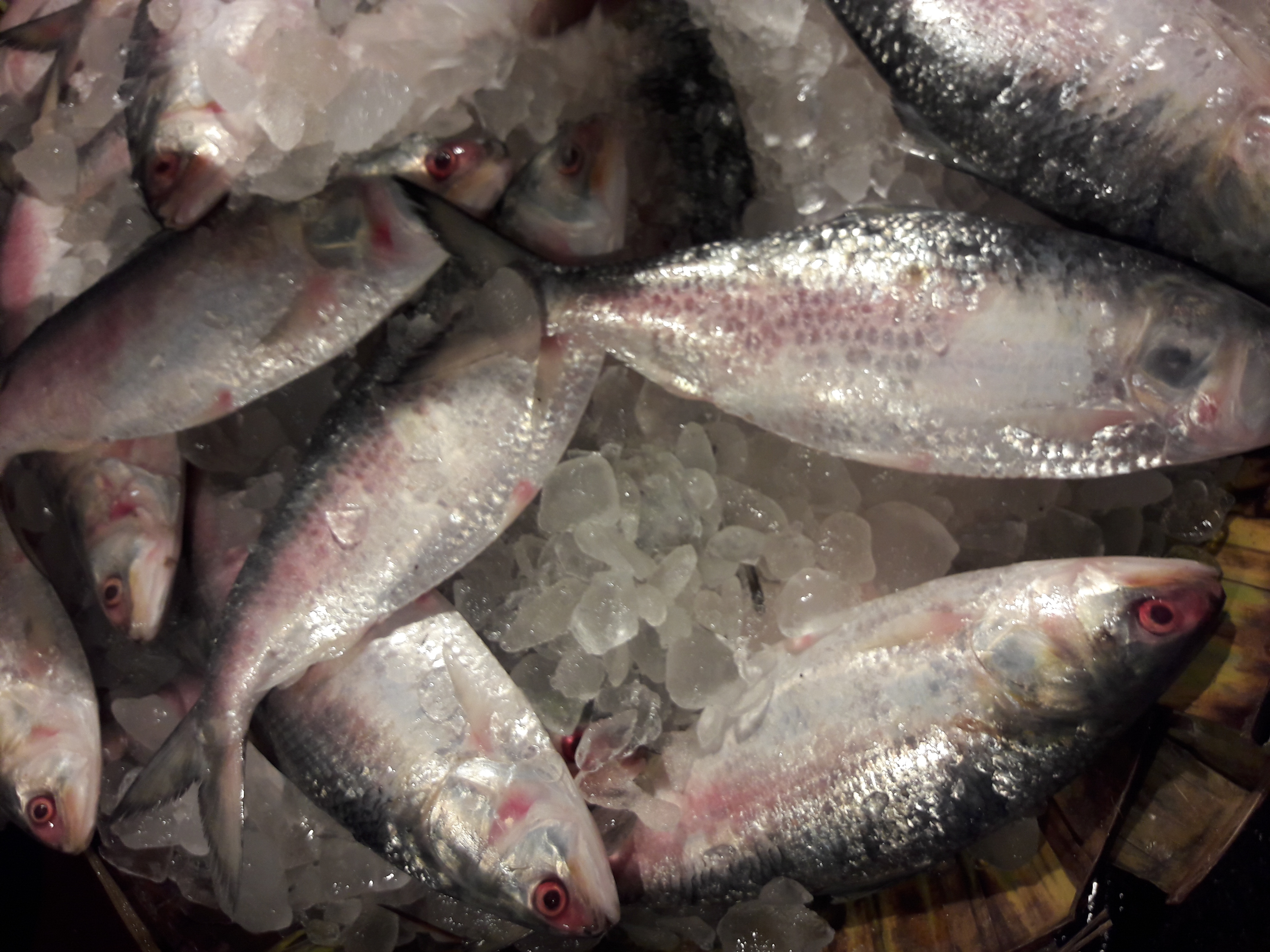
How the December price compares with earlier reports
Earlier reports from the same landing show how the price of a large hilsa had moved. Each one is a snapshot of a particular day and size of fish, and they are given here as they were published, not as a continuous price series.
In October 2022, when fishing resumed after that year's breeding-season ban, Prothom Alo, citing UNB, reported that a 900 g fish sold for Tk 900 at Boro Station, and that fish of 1 kg and 2 kg sold for Tk 1,100 to Tk 1,500. In September 2024, in the peak season, The Financial Express reported fish of more than 1 kg at Tk 2,000 to Tk 2,100 per kg. A month later, just before that year's ban, hilsa of 1 to 1.2 kg sold for Tk 2,800 to Tk 3,000 per kg there. The Financial Express and Dhaka Tribune reported that traders called this an all-time high, and two veteran traders said they had not seen such prices in more than 50 years.
In May 2025, Ittefaq reported that a one-kilogram hilsa in Chandpur's markets had been priced at Tk 3,000 a few weeks earlier and had come down to about Tk 2,500. In June 2025, Prothom Alo reported that hilsa of about 1 kg were trading at the landing at Tk 90,000 to Tk 95,000 a maund, and hilsa of 500 to 600 g at Tk 65,000 to Tk 70,000 a maund. In late September 2025, with much more fish arriving before the October ban, Dhaka Tribune reported that prices had fallen, although traders said low-income buyers still could not afford the fish.
Prices elsewhere were rising too. The Trading Corporation of Bangladesh reported hilsa in Dhaka at Tk 900 to Tk 2,200 per kg in September 2025, against Tk 800 to Tk 1,600 a year earlier, according to The Daily Star. A consumers' association, cited by Prothom Alo in October 2025, put the price per kilogram at Tk 417 in 2010, Tk 789 in 2019 and Tk 3,000 to Tk 3,500 in 2025. The chairman of the Bangladesh Trade and Tariff Commission said in September 2025 that one kilogram of hilsa cost as much as three kilograms of beef.
Boro Station and Chandpur's place in the hilsa trade
Chandpur is a district of Chattogram division covering 1,645 square kilometres, with the Meghna on its western side and the Dakatia and Gumti among its other rivers, according to Banglapedia. The Padma meets the Meghna near Chandpur, in a confluence about 11 km wide in the rainy season, and from there southward the river is called the Lower Meghna. The river's flow at Chandpur changes greatly with the season: Banglapedia puts the winter flow at roughly one-eighth of the June to October average.
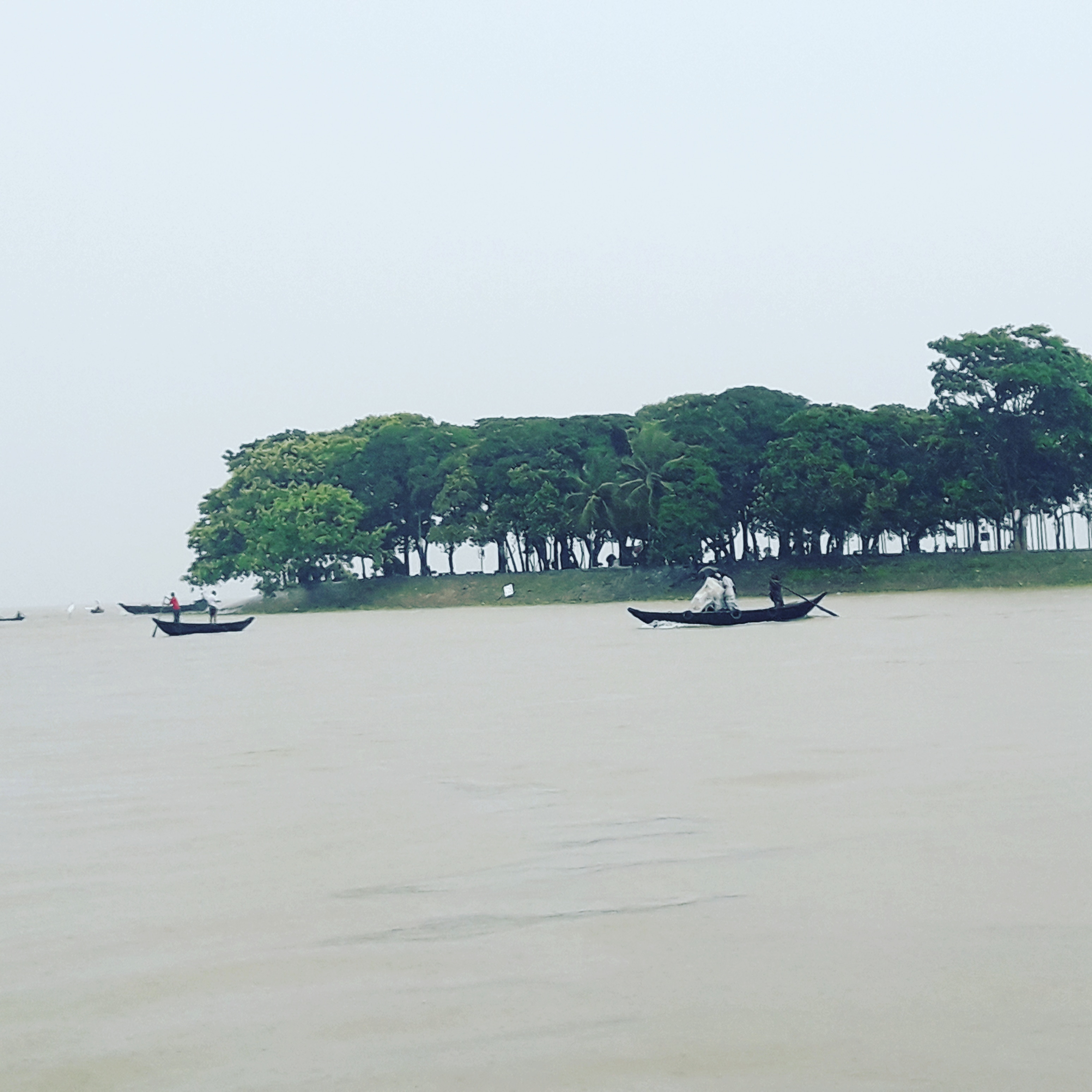
The state news agency BSS described Boro Station Mach Ghat in August 2025 as Chandpur's largest hilsa landing station, and a 2022 report called it the country's biggest hilsa market. Around 100 traders worked there in 2024, according to the general secretary of the local fish traders' association, quoted by The Financial Express.
Much of what is sold at the landing does not come from Chandpur's own rivers. Dhaka Tribune reported in September 2025 that fresh hilsa arrived from the Padma and Meghna and from southern coastal areas including Hatiya, Sandwip, Ramgati, Charfesson, Barguna and Bhola, by trawler, pick-up and truck, and went on to Dhaka, Gazipur, Tongi, Jamalpur, Kishoreganj, Manikganj and Savar. Traders told Ittefaq in May 2025 that coastal hilsa was cheaper than Padma hilsa, with a 1 kg fish at Tk 1,700 to Tk 1,800 per kg against Tk 2,200 to Tk 2,500 for a Padma fish of that size, while many buyers said the coastal fish lacked the Padma fish's taste and aroma.
Chandpur has also traded on the fish's name. A letter from the district administration, reported by Prothom Alo in June 2025, noted that the district was recognised as "Home of Hilsa" in 2017. In the same year, the hilsa was registered as a Geographical Indication product of Bangladesh, after Jamdani, with the certificate going to the Department of Fisheries.
Why the fish is scarce in December
The hilsa, Tenualosa ilisha, is the national fish of Bangladesh and belongs to the family Clupeidae. It can reach 60 cm, though it commonly measures 35 to 40 cm, and large fish weigh about 2.5 kg, according to Banglapedia. It matures in one to two years, and a large female can produce up to two million eggs.
Hilsa are anadromous: adults move from the sea up into fresh water to breed, and the young grow in river channels and then go down to the sea to feed. Banglapedia describes spawning throughout the year, with a minor season in February and March and a major one in September and October. A study by the Department of Fisheries, the Bangladesh Fisheries Research Institute and WorldFish found that adult hilsa return from the sea to the rivers where they were born, Prothom Alo reported in 2020. The institute, established in 1984, has its Riverine Station in Chandpur.
Samrat's explanation fits that calendar. December falls after the major spawning season, and the fisheries officials quoted by Ittefaq in May 2025 looked to July through September for abundant catches. Winter supply is not fixed, however. In January 2020, The Business Standard reported unexpectedly large hilsa catches in the Meghna off Lakshmipur, where a 1 kg fish sold for Tk 700 to Tk 800. A fisherman there said winter usually brought more of other fish than of hilsa, and that he had not seen such a catch in the last five seasons.
A national catch that had been falling
Bangladesh accounted for 86.7 percent of the world's hilsa catch, ahead of India at 8 percent and Myanmar at 4 percent, according to a peer-reviewed study published in Frontiers in Marine Science in January 2025. The fish made up about 12 percent of the country's annual fish production, about half a million people depended on it directly, and about 2.5 million more worked in processing, transport and marketing, the study said.
The catch had recovered from a low of 199,032 tonnes in 2002 to 533,000 tonnes in 2019, the study said, with the average fish growing from 535 g in 2015 to 915 g in 2019. It then turned down. Prothom Alo reported in October 2025 that production fell from about 571,000 tonnes in 2022-23 to about 529,000 tonnes in 2023-24, and that the catch in July and August fell from 40,291 tonnes in 2024 to 29,519 tonnes in 2025.
The same report gave the reasons cited by officials and researchers: pollution and warmer water from industry and power plants, silt and sandbars that had made the southern rivers shallower, migration routes blocked at 17 points in the Meghna-Tentulia estuary and nearby rivers, 14 of them on the Meghna, illegal fine-mesh nets, overharvesting of larger fish and low monsoon rainfall. The Patuakhali district fisheries officer told The Daily Star in September 2025 that frequent low pressure and bad weather had kept boats from deep-sea fishing, and a trawler owners' leader in Cox's Bazar said fine-mesh nets were destroying young hilsa.
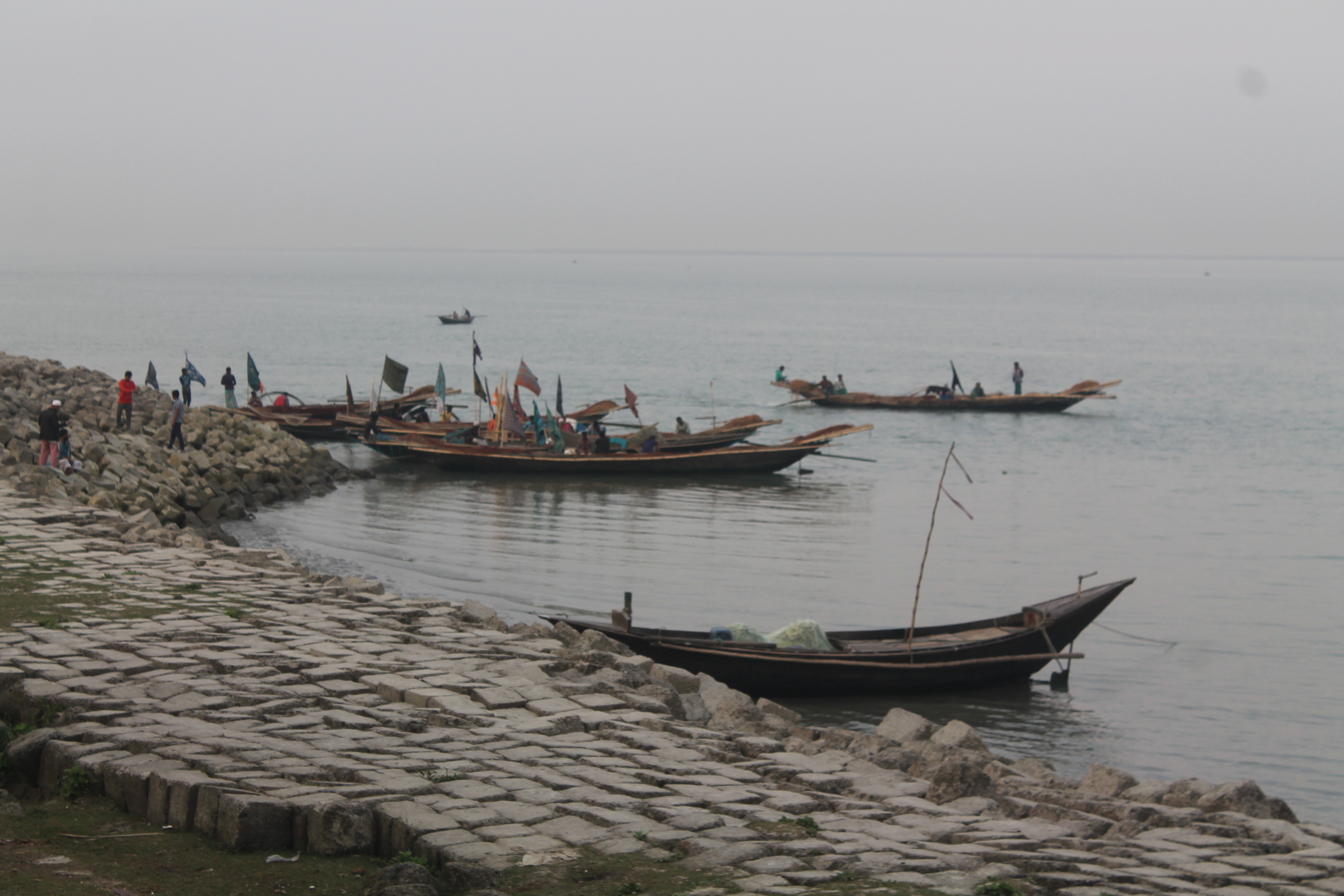
From the net to the buyer
Scarcity is only part of the explanation for what buyers pay. A survey by the Bangladesh Trade and Tariff Commission, released in September 2025, found that a hilsa changed hands four to six times before it reached the consumer, with the price rising about 60 percent at each stage. It put the cost of catching a kilogram of hilsa at Tk 487, and in August 2025 it found fish of 250 to 450 g selling at Tk 700 to Tk 850 per kg, 500 to 750 g at Tk 1,200 to Tk 1,400, and over 1.5 kg at Tk 2,500 to Tk 3,000, bdnews24.com reported.
Fishermen commonly take advance loans, known as dadon, and the local businesspeople who provide the credit set minimum prices at landing stations, The Daily Star reported from the survey. It also described a section of traders storing fish in cold storage and selling when supply was short. UNB reported in October 2025 that fishermen received about Tk 800 per kg for large hilsa while the same fish reached Dhaka markets at Tk 3,000. Among the 11 causes the commission listed were hoarding and syndicates, fuel and transport costs, illegal nets, fishing during bans, the dominance of middlemen and export pressure. Bangladesh allowed 1,200 tonnes of hilsa to go to India for the Durga Puja in 2025, at a minimum export price of $12.50 a kilogram, Prothom Alo reported.
The commission recommended fixing maximum retail prices by size, reducing the number of middlemen and creating an online platform for direct sales. In Chandpur, the district administration had already proposed an official hilsa price in a letter to the fisheries ministry, Prothom Alo reported in June 2025. The deputy commissioner said traders and wholesalers were setting prices at will. On 24 August 2025, the Directorate of National Consumer Rights Protection ran a drive at Boro Station, checking traders' documents and warning that anyone manipulating prices or creating artificial shortages would face legal action, BSS reported.
The conservation rules in force in December
The December shortage came during the country's annual protection of young hilsa. An eight-month nationwide ban on juvenile hilsa, known as jatka, had begun on 1 November 2025 and was to run until 30 June 2026. Hilsa under 25 cm could not be caught, transported, marketed, sold or stored, and violators faced up to two years in prison, a fine of up to Tk 500,000, or both, under the Protection and Conservation of Fish (Amendment) Ordinance 2025, Bonik Barta reported. The fisheries ministry said eggs released during the October campaign had hatched and that the fry were in coastal rivers and estuaries.
That campaign, a 22-day ban on catching, selling and transporting hilsa, ran from 4 to 25 October 2025. In Chandpur it covered a 70 km sanctuary on the Meghna and Padma, and it kept about 43,000 fishermen off the water, according to a UNB report carried by Ittefaq. Patrols held 64 mobile courts, seized about two tonnes of mother hilsa, destroyed more than 550,000 metres of illegal nets, filed 77 cases and jailed 119 fishermen. Each out-of-work fisherman received 25 kg of rice, and many said it was not enough, one asking for at least Tk 3,000 in cash as well.
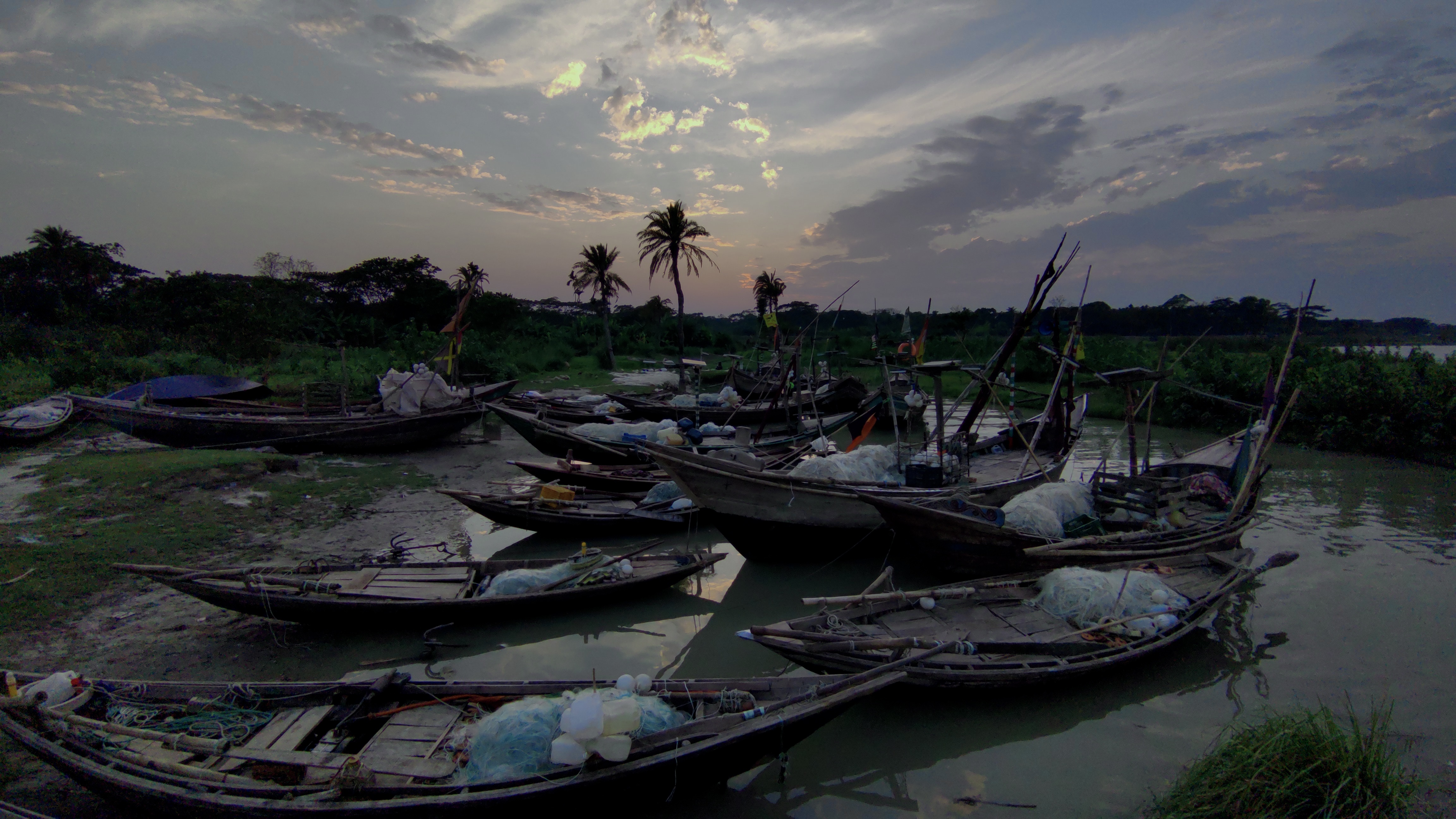
The brood ban, extended from 11 to 22 days in 2016, is one part of a management plan launched in 2005 that also created hilsa sanctuaries, the Frontiers study said. There are six, covering 432 km: from Shatnal in Chandpur to Char Alexander in Lakshmipur (100 km), in Bhola (90 km), from Bhola to Patuakhali (100 km), in Barishal (82 km), in Shariatpur (20 km) and on the Andharamanik in Patuakhali (40 km), The Daily Star reported in 2022. Fishing in the sanctuaries is stopped for two months a year, from 1 March to 30 April in the ministry's 2021 announcement, and in 2022 fishers in the six districts were to receive 40 kg of rice per card for the closure, an amount they said was too little.
Photo: Fahad Faisal / Wikimedia Commons (CC BY-SA 4.0). The top picture shows hilsa from the Padma on plates at a fish stall, as background, not the fish in this report.
Sources: Jago News (12 December 2025), Prothom Alo (17 June, 22, 28 September and 4 October 2025; 12 September 2020; 29 October 2022), The Daily Star (21 and 28 September 2025; 27 February 2022), Dhaka Tribune (12 October 2024; 25 September 2025), The Financial Express (3 September and 12 October 2024; October 2017), Ittefaq (17 May and 25 October 2025), UNB (18 October 2025), bdnews24.com (29 September 2025), BSS (24 August 2025), Bonik Barta (1 November 2025), The Business Standard (30 January 2020; 28 February 2021), Frontiers in Marine Science (January 2025), Banglapedia, Wikipedia
Comments
(0)