
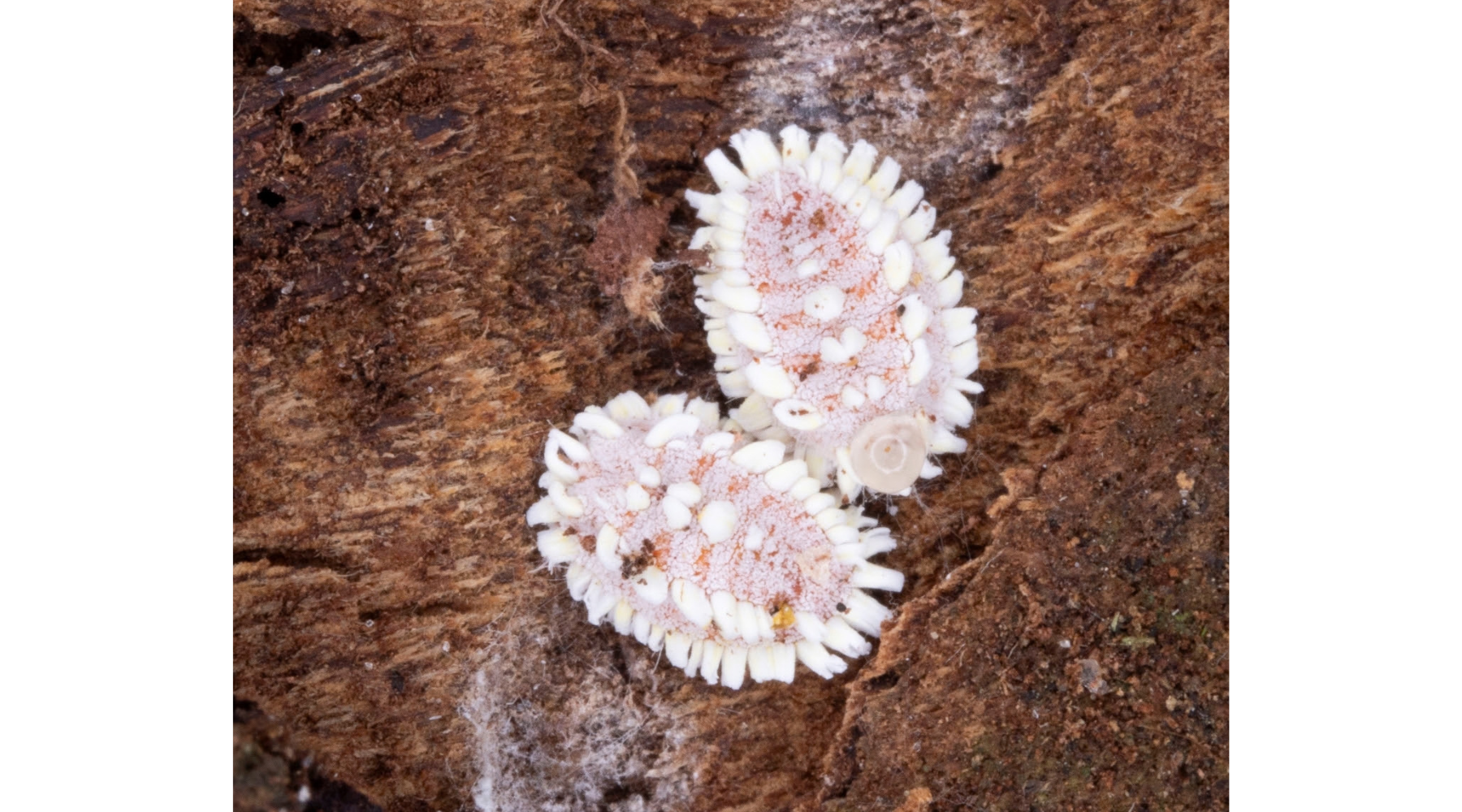
US Customs and Border Protection agriculture specialists at Detroit Metropolitan Airport have intercepted giant scale insects of a kind never before encountered at a US port of entry.
The insects, about 5 millimetres long, dark and covered in waxy light-coloured protrusions, were feeding on fresh pine bark carried for medicinal purposes by a passenger travelling from Cameroon to Illinois. They were found during a routine baggage examination. CBP and US Department of Agriculture officials tentatively identified them as giant scale in February, and USDA confirmed on 7 August that they belonged to the genus Aspidoproctus.
The African genus includes some of the world's largest scale insects, with some species growing to nearly 1.5 inches. Sap-sucking relatives feed on a range of shrubs and trees and can cause costly damage; females can lay more than 5,000 eggs, and the tiny nymphs spread easily on the wind. A heavy infestation can harm trees, shrubs and other vegetation.
The bark and insects were seized for analysis, and the traveller, a citizen of Cameroon, was advised of the rules and released without incident.
"There is no such thing as a small threat," said Marty C. Raybon, CBP's director of field operations. Port Director Fadia Pastilong said the specialists are on the front line of protecting Michigan's lumber industry, and that pests like this can threaten natural resources and important economic sectors.
It is the second first-in-the-nation pest find disclosed by the Detroit airport team this month, after a straw crest moth found in corn and seeds from Ghana. CBP urges travellers to declare all agricultural items, including plant material carried for traditional medicine.
Source: Morning Ag Clips



Comments
(0)