
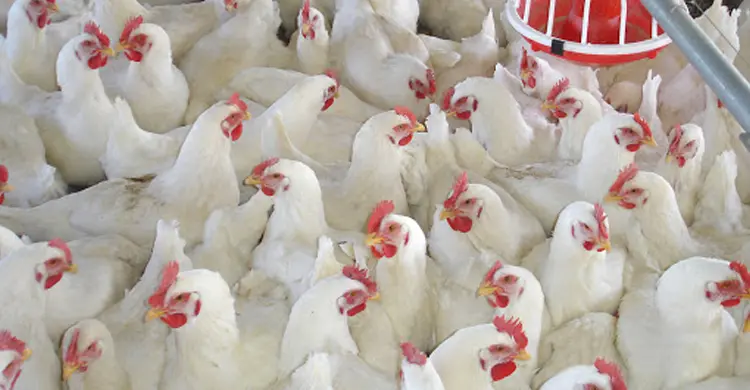
Broiler chicken, whose price rose abnormally before Eid, fell by up to Tk 40 a kg the day after Eid. Birds that sold for Tk 200 a kg the day before Eid are now selling for Tk 160 in various markets of the capital.
Traders say demand for broilers has fallen since Eid, so they are selling at lower prices to avoid losses, because broiler chickens cannot be kept for long.
When the coronavirus outbreak began, broiler prices had dropped to Tk 110 a kg. From the start of Ramadan, however, prices began to rise and, after repeated increases, reached Tk 200 in some markets on the day before Eid.
Why prices rose before Eid
Explaining that abnormal rise before Eid, traders had said demand for broilers had grown because of Eid while supply had fallen. Because of the coronavirus, many farm owners had not restarted production, so the number of broilers had dropped, and many farms had even closed. That pushed the price up.
Visits to several Dhaka markets on Tuesday (26 May) found broilers selling at Tk 160–170 a kg, against Tk 180–200 on the day before Eid. While broiler prices fell, prices of red layer and Pakistani cock chickens were unchanged: red layers sold as before at Tk 210–220 a kg and Pakistani cocks at Tk 230–240.
Traders sell at cost
Mithu, who sold broilers from a van in Khilgaon at Tk 200 a kg on the day before Eid, was seen selling at Tk 160 today. "All my chickens were bought before Eid. Eid was yesterday, so there is no demand for broilers today. Broilers cannot be kept for long either, so I am selling at cost price to avoid a loss," he said.
Azizur, who sold broilers in Khilgaon at Tk 180 a kg on the day before Eid, said the price today was Tk 160. "We think broilers will not sell much for the next few days, so we are selling at cost to recover our capital."
The trader said that although demand would be weak for a while, it would rise again after eight to ten days, and the price could then go past Tk 200 a kg, because most farms now have no broilers. It will take at least a month to raise new chicks and increase supply, meaning prices would fall after a month. How far prices fall will depend on the farms; if production stays low, prices are unlikely to fall soon.
Source: Jagonews24. First published in Bengali on The Agro News.

Comments
(0)