
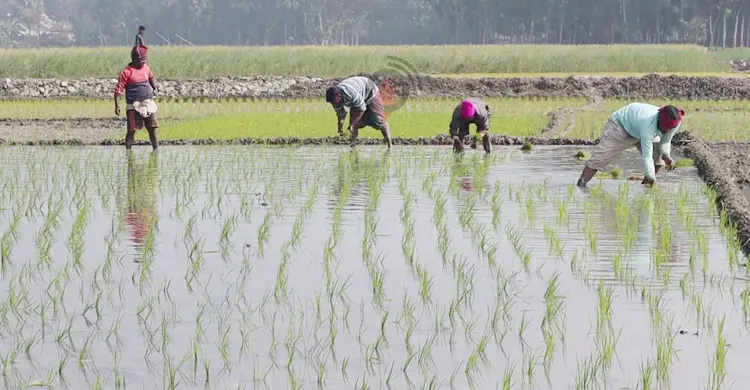
Seedbeds above target, progress about 112 per cent, and output expected to exceed 2.15 crore tonnes.
Dense fog at the start of the month caused problems for Boro seedbeds in some parts of the north, but a quick change in the weather limited the damage and farmers' fears have passed. There is bigger good news nationally: farmers have prepared more Boro seedbeds this year than the target. If all goes well, Boro production should rise this season.
Citing the Department of Agricultural Extension (DAE), the agriculture ministry says Boro seedbeds had been prepared on 270,000 hectares by 17 January, against a target of 241,000 hectares, meaning progress of about 112 per cent.
Target of 2.15 crore tonnes
The Boro season is under way. In some places seedlings are being transplanted; in others farmers have raised seedlings and are waiting to plant them. This year the target is to grow Boro on 49.77 lakh hectares nationwide, and 12.14 lakh hectares have already been planted.
Data show that in the 2021-22 fiscal year, 2.09 crore tonnes of Boro rice was produced on 49.51 lakh hectares. This year the target has been raised to 2.15 crore tonnes, though people in the sector expect production to go higher.
DAE Director General Badal Chandra Biswas told Jagonews that 2.15-2.20 crore tonnes of Boro is expected this year, the highest of any year.
He said paddy prices, improved technology and seed, and a large government incentive had made farmers keen on Boro. "They are growing Boro with real care this year. The reluctance that built up in other years is not there at all."
Badal Chandra Biswas said he had been out in the fields. "There was fog in places. Farmers covered their seedbeds with polythene so they would not be damaged. Their dedication will bring great success in Boro this time."
Tk 170 crore in incentives
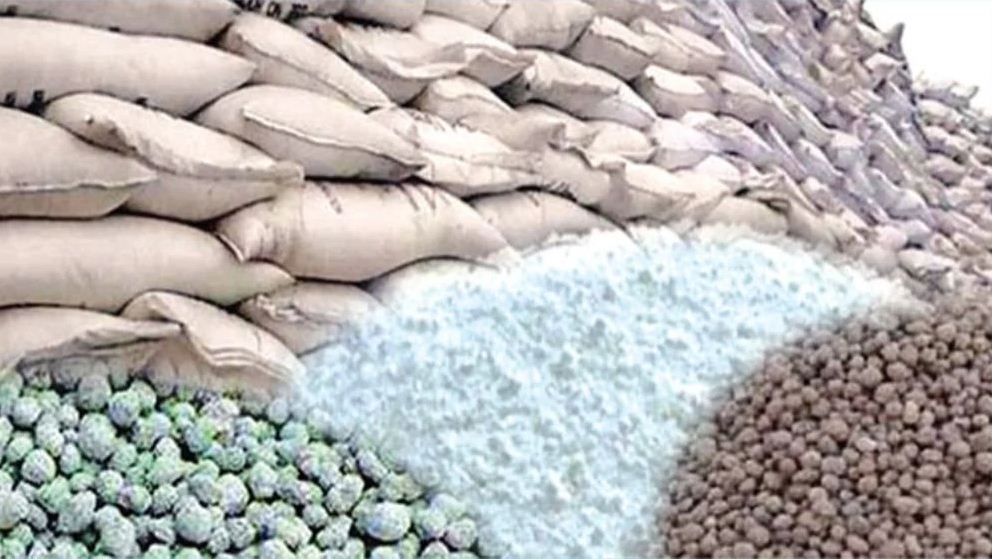
The government is also keen to raise Boro output this year. It is giving about Tk 170 crore in incentives this season to increase Boro cultivation and production, under which 27 lakh farmers across the country are receiving free seed and fertiliser.
The agriculture ministry says the incentive is given in three categories. To boost hybrid rice, about Tk 82 crore is providing 2 kg of free paddy seed to each of 15 lakh farmers. To boost high-yielding varieties, an incentive of about Tk 73 crore covers 12 lakh farmers; each farmer gets, free, the 5 kg of seed, 10 kg of DAP and 10 kg of MOP fertiliser needed to cultivate one bigha.
In addition, Tk 15 crore is being given so that paddy can be planted and harvested at the same time across a single field, to make it easier to use farm machinery. Under this, 110 blocks or demonstrations will be set up in 61 districts. Each demonstration will cover 50 acres and cost Tk 13.70 lakh.
Balai Krishna Hazra, additional secretary (fertiliser management and inputs) at the agriculture ministry, told Jagonews that the ministry wants to raise Boro output this year by any means, which is why a large incentive is being given from the ministry's regular budget under the agricultural rehabilitation assistance head. Distribution in the field is almost over, and the incentives allocated for seed and fertiliser have already been handed out.
Diesel costs worry Barind and char farmers
Checks in various areas found that, with seedbeds ready, farmers are now preparing for Iri-Boro cultivation. Some are preparing land, some transplanting seedlings, some irrigating fields and some spreading fertiliser.
But farmers in the Barind and char areas are somewhat anxious. They say Boro has become expensive because diesel prices have risen. The Tk 15 a litre rise in diesel will push up production costs, and farmers are paying more per hectare for irrigation and threshing this season than last year.
Kader Bepari, a farmer in Manda upazila of Naogaon, said a hectare of Boro needs 10 to 15 irrigations. With the higher fuel price, irrigation costs Tk 400 more per acre, tillage Tk 300 more and threshing Tk 300 more. Fertiliser and other inputs are also expensive.
He said Boro cultivation has not fallen because of this; everyone is interested since paddy prices are good, but they are struggling to cope with the costs.
Meanwhile, cold is still reported to be holding up Boro planting in some areas. Dinajpur, another northern district, is shivering in severe cold, with a cold wave since the start of the year. Farmers there have not yet been able to prepare land for transplanting, and many seedbeds have been damaged by fog, so planting is behind.
However, Md Nuruzzaman, deputy director of the agricultural extension office in Dinajpur, said almost all land in the district is ready. As soon as the cold eases, all farmers will be in the fields, and transplanting will be in full swing within the next week. Seedlings can be planted until the second week of February, so there is nothing to worry about, he said.
Source: Jagonews24. First published in Bengali on The Agro News.
Comments
(0)