
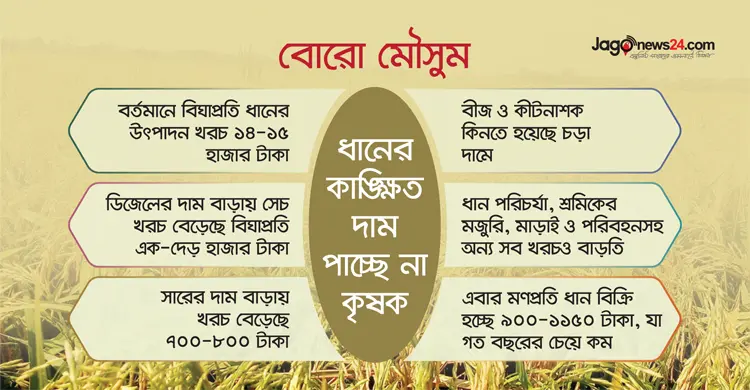
This year's boro season was the costliest ever for farmers. Diesel and electricity for irrigation pumps were at record prices, and drought meant much more irrigation. Fertiliser, pesticide and labour costs also rose. Yet at the end of this season of soaring costs, farmers are not getting the paddy price they hoped for. They say they cannot even recover production costs.
According to various government agencies, producing a maund of boro paddy cost more than Tk 1,150 this year. But enquiries in different parts of the country show that boro paddy is selling at Tk 900 to 1,020 a maund (coarse paddy) depending on the area, and unripe paddy for even less. Fine varieties are fetching Tk 1,100 to 1,150. Farmers say they make no profit at these prices. Last year at this time paddy was dearer.
Farmers say that last boro season it cost Tk 10,000-11,000 to grow boro on a bigha (33 decimals), but this year higher irrigation, fertiliser, pesticide and wage costs have pushed it to Tk 14,000-15,000. The rise in diesel prices added about Tk 1,000-1,500 a bigha to irrigation costs, and dearer fertiliser added Tk 700-800. Seed and pesticide also cost more, as did tending, harvesting labour, threshing and transport. Despite repeated price rises for everything, they are not getting a fair price and are having to sell below cost.
Farmers count the cost
Enamul Haque, a farmer from Shanta village in Joypurhat's Akkelpur upazila, told Jagonews that high fertiliser and irrigation costs forced him to borrow to grow paddy this year. Fertiliser took Tk 2,000 more a bigha and irrigation another Tk 1,000. Selling the paddy is not paying off the debt, and pressure from creditors is forcing him to sell cheaply.
He said a harvesting labourer costs Tk 800-1,000 a day plus three meals, while a maund of coarse (unripe) paddy sells for Tk 900 in the area. At that price production costs are not covered, and he is losing money.
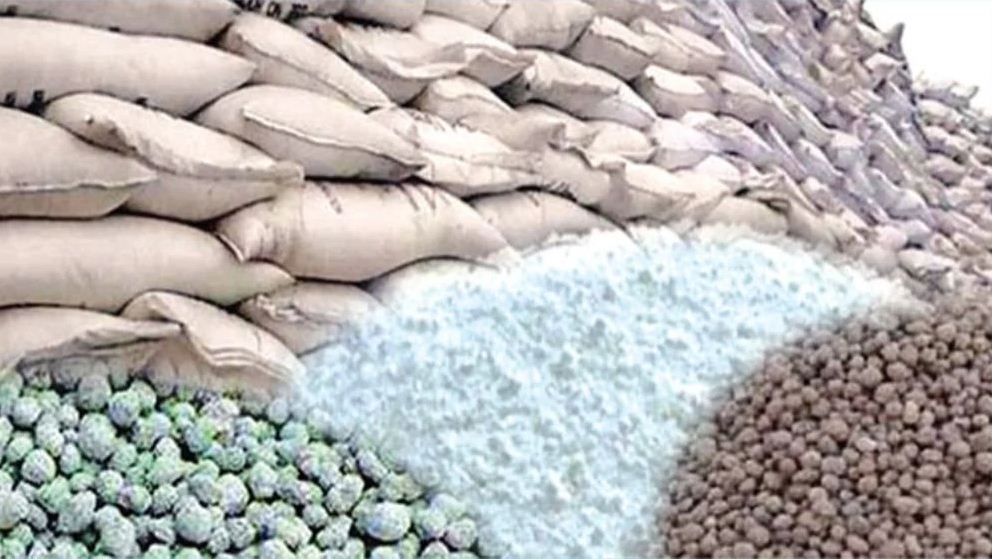
Harunur Rashid, from Hoglabari in neighbouring Naogaon Sadar, grew boro on six bighas this year and kept track of how much the fertiliser price rise added. Harun said fertiliser for a bigha used to cost Tk 2,990 in total, but since the April price increase it costs Tk 3,645.
He said urea, DAP, TSP and MOP prices rose by Tk 5 a kg. Per bigha, 40 kg of urea now costs Tk 1,080, 30 kg of DAP Tk 630, 25 kg of MOP Tk 475, 20 kg of gypsum Tk 750, 3 kg of magnesium Tk 350, 1 kg of zinc Tk 210 and 1 kg of boron Tk 150.
Firoz Hossain of Chakprasad village in the same district said he had a bumper boro yield this year and so had everyone around him, yet nobody is happy because of the costs: paddy prices have not risen in line with costs but have fallen.
He said that besides cultivation costs, harvesting costs Tk 4,000 a bigha, bringing the paddy home another Tk 1,000 and threshing another Tk 500. From planting to storing, his cost is about Tk 15,000.
"Last year I got Tk 1,200 a maund for coarse paddy," he said. "This year costs are higher but the price is Tk 980 to 1,000 a maund. I am losing money selling paddy."
Belu Mia of Abadpukur village in Raninagar said he had to irrigate every two days this year for fear of the grain turning chaff in the heat, raising costs far more than in other years. He said each bigha needs about 20 litres of diesel for irrigation and ploughing, and the diesel price rise added Tk 500 a bigha this year.
Drought, blast and labour shortages
Farmers in Rajshahi, Dinajpur, Mymensingh, Bhairab and several other areas described the same situation: costs are up but prices are not matching them. Extreme drought added 15-20 percent to the cost of paddy this year, and drought also pushed up labour costs. In some areas drought turned grain to chaff and cut yields somewhat, and in parts of the north blast disease damaged paddy, making their losses even bigger.
Shamsul Haque, a farmer in Rajshahi's Paba upazila, said growing BRRI dhan28 cost him Tk 14,000 a bigha this year. With some grain turning to chaff in the heat, he got 18 maunds a bigha. With labour and transport, he will make no profit selling at current prices.
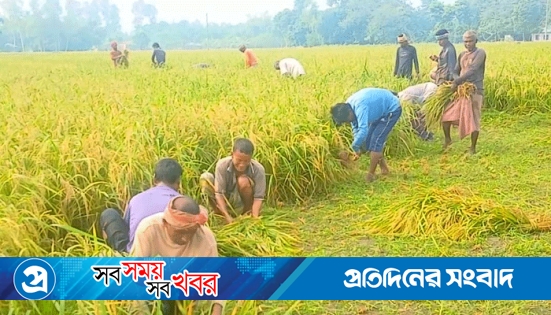
In many parts of the country labourers can be paid in paddy instead of cash. Abdul Majid, a farmer in Rajshahi's Godagari upazila, said that in other years six or seven labourers harvesting and threshing a bigha would get about two and a half maunds of paddy. This year they are asking for four and a half, because paddy is cheap and labour is in demand. Even so, harvest labourers are hard to find.
According to the Department of Agricultural Extension (DAE), about 60 percent of the country's paddy comes from the boro season, and 21.5 million tonnes of rice are expected this season. So far almost all the paddy in the haor areas and about half nationwide has been harvested.
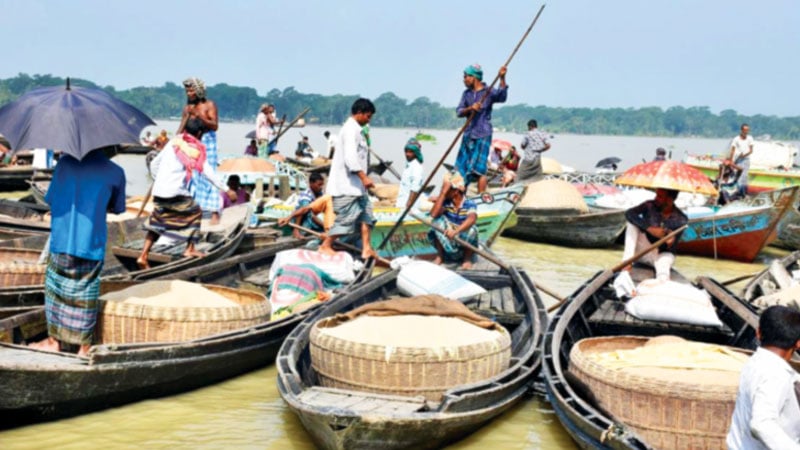
Most haor paddy is traded at the Bhairab wholesale market, where prices were a little higher at first but are now falling steadily. Helal Mia, owner of paddy and rice wholesaler Helal Traders, told Jagonews that prices were good at the start but are now falling, so farmers have cut back sales, and traders cannot sell the paddy they have bought to city markets.
What officials say
The government, however, says it is buying paddy at a higher price this year in farmers' interest. The food minister said so at a press conference after virtually opening the Boro Procurement Drive 2023 in his office at the Secretariat last Sunday. "Let farmers get a good price for their crop. We are happy if farmers get a good price, and we are working to ensure that," he said.
Sadhan Chandra Majumder said the government is buying paddy at a higher price this time after considering everything, in the interest of farmers, so that farmers do not suffer when they come to sell.
DAE director general Badal Chandra Biswas told Jagonews that although farmers are getting a slightly lower price, there has been a very large harvest across the country this year, which largely makes up for it. It is not the case that current prices do not cover costs, he said, but if prices were higher farmers would be keener to grow paddy.
Nirodh Baran Saha Chandan, president of the Naogaon Paddy-Rice Wholesalers and Traders Association, believes prices are low because of high yield and supply. He told Jagonews that prices are lower than last year because yields are much higher, by about two and a half to three maunds a bigha, and there is a large supply of paddy in the market.
The government has decided to procure 400,000 tonnes of boro paddy this season, but if farmers do not get a fair price it will buy 700,000-800,000 tonnes if needed, plus 1.25 million tonnes of rice. The prices of boro paddy, rice and wheat were set at a meeting of the Food Planning and Monitoring Committee (FPMC) in the cabinet meeting room on 13 April.
This season the procurement price of boro paddy is Tk 30 a kg and parboiled rice will be bought at Tk 44. In 2022 paddy was procured at Tk 27, parboiled rice at Tk 40 and wheat at Tk 28.
Although the boro procurement drive has been opened virtually, buying has not yet started anywhere, and many farmers complain that this is keeping market prices down.
When prices fall, rice mill owners buy and stock paddy early. So even when rice prices rise, farmers get no share. Paddy sells below cost, yet consumers pay high prices. Farmers are losing interest in growing paddy, while buyers struggle with prices at the market.
Source: Jagonews24. First published in Bengali on The Agro News.
Comments
(0)