
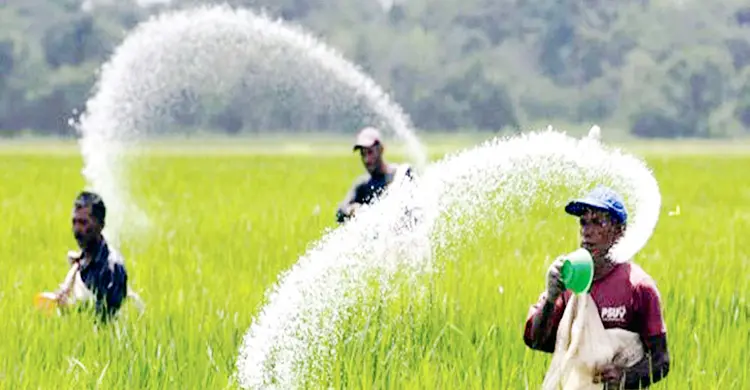
The Department of Agricultural Extension (DAE) has told farmers what they need to do for the Boro rice crop. The agency says the required fertilisers must be applied in the right doses on land being prepared for Boro transplanting.
Farmers should transplant seedlings in lines. Instead of planting them too densely, seedlings should be set eight inches by six inches apart.
To kill weeds (grasses) in the field, any one of the herbicides Commit, Superhit Crear or Refit-500EC should be applied at 134 ml per bigha within six days of transplanting.
Fertiliser doses
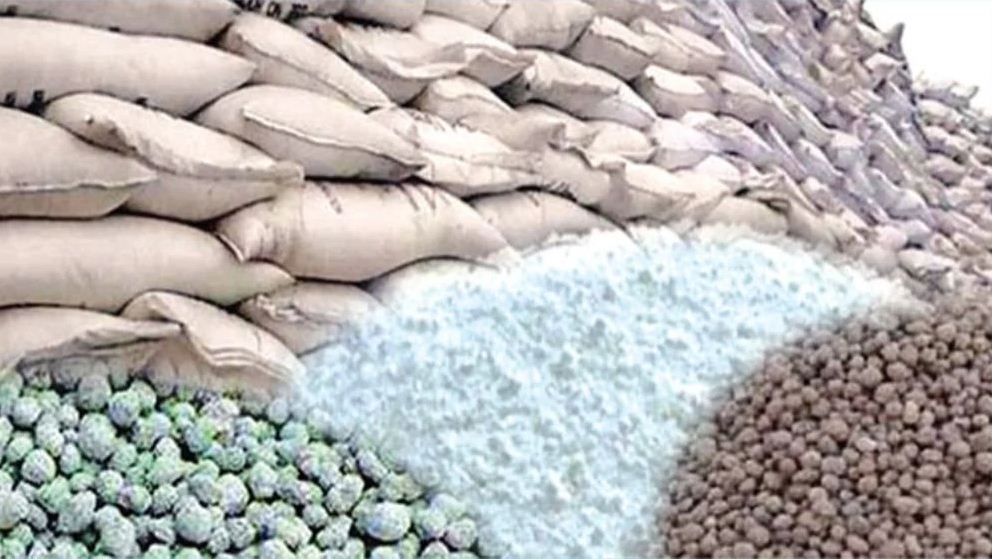
Boro needs 30-35 kg of fertiliser per bigha. In addition, it needs 12-14 kg of DAP, 15-20 kg of MoP (potash), eight kg of gypsum and one kg of zinc sulphate.
The agency says that too much urea makes the plants grow excessively and lodge, invites more disease and pest attacks, and reduces the yield. For this reason, it says, "biyar" fertiliser (as the original text puts it) should be used.
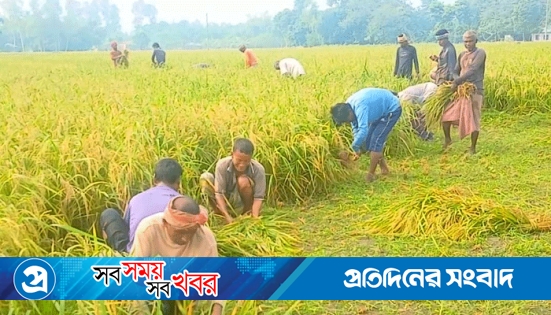
What to do from transplanting to harvest
- Keep the field free of weeds for 40-50 days after transplanting.
- Within a week of transplanting, set four to five good bamboo sticks in each bigha.
- Walk through the field regularly and keep an eye on how severe pest and disease attacks are.
- From the time the panicle starts to form, get help from the sub-assistant agriculture officer to use light traps to detect brown planthopper (current poka).
- To prevent pest attacks, spray a systemic insecticide once when the seedlings are 30-35 days old and twice right after the rice flowers.
- Get help from the sub-assistant agriculture officer to identify diseases.
Source: Jagonews24. First published in Bengali on The Agro News.

Comments
(0)