
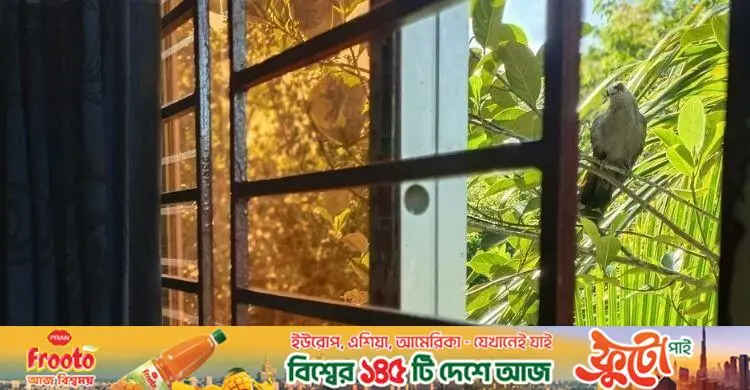
Birds are a symbol of boundless beauty. The familiar picture of childhood in rural Bengal is the sweet whistle of the magpie robin (doyel) at dawn, or kites and mynas spreading their wings across the reddish sky at dusk. Birds make a special contribution to protecting the environment, and their calls create an enchanting atmosphere in green forests.
But in today's grey cities and mechanical din those songs seem to be fading day by day. Amid walls of brick, wood and glass and a jungle of concrete, the free birds of the sky are silently disappearing. Birds are not just part of nature's beauty; they are among the main ornaments of our ecosystem. Yet human carelessness and the harshness of modern life now threaten their reign over the blue sky.
More than beauty
The contribution of birds goes beyond beautifying nature: they help keep the whole environment alive and play a huge part in filling nature with flowers and crops. Their contribution runs from pollinating plants to spreading new forests. Pollination, put more broadly, plays a special part in reproduction and production, which matters economically.
Birds also protect crops by eating the harmful insects that are the farmer's chief enemy, and they clear waste from nature, preventing the spread of disease. In short, it is impossible to keep the Earth's green balance without birds. Yet humans are gradually wiping out this great benefactor for their own needs, which is in a sense nothing short of self-destruction.
Alarming declines
A survey by the environmental organisation BirdLife International found worrying results. The report says 45 per cent of common birds in Europe have vanished. The figures for Australia are even more alarming, with 80 per cent of birds gone. It also says that over the past 26 years at least 56 of 124 bird species in 20 European countries have disappeared. Researchers say hunters' greed is not the only cause of the destruction of birds; the destruction of biodiversity is one of the main reasons.
Researchers say lack of habitat and suitable environment, unplanned urbanisation and indiscriminate felling of trees are gradually wiping out the world's common birds, with dire consequences. In addition, countless birds die after eating insects poisoned by excessive chemical pesticides on farmland. Every day countless birds are entangled in sharp glass-coated kite strings or crash into transparent glass walls in cities that reflect light. Wild birds are still being caught, caged and sold, evading the law.
Simple steps anyone can take
Saving birds is not complicated; a little humanity can save thousands of birds' lives. There are some simple steps we can take in our daily lives.
Many birds die for lack of water in the summer heat. A clay pot of clean water and some grain placed in a corner of a roof or balcony can be a life-saving relief for them.
Plant native fruit and flowering trees in your yard or on your roof instead of foreign ornamental plants. These provide birds with natural food and safe places to nest. In a natural setting, if one spot has 10 species of trees, large and small, and 10 species of animals live around each tree, about 100 species of animals will be found there. We may never stop to think how many species live off the leaves, flowers and fruit of a single native tree or creeper.
It is essential to stop using glass-coated kite string and to put light curtains or stickers on windows. Keeping wild birds in cages must be prevented, and communities must build social resistance against bird hunters. Saving birds is not merely kindness to nature but a necessity for securing our own future, because if the sky becomes empty of birds, that silence will one day bring our own lives to a standstill. So let us, with love and awareness, give the birds back their own sky.
Source: Jagonews24. First published in Bengali on The Agro News.

Comments
(0)