
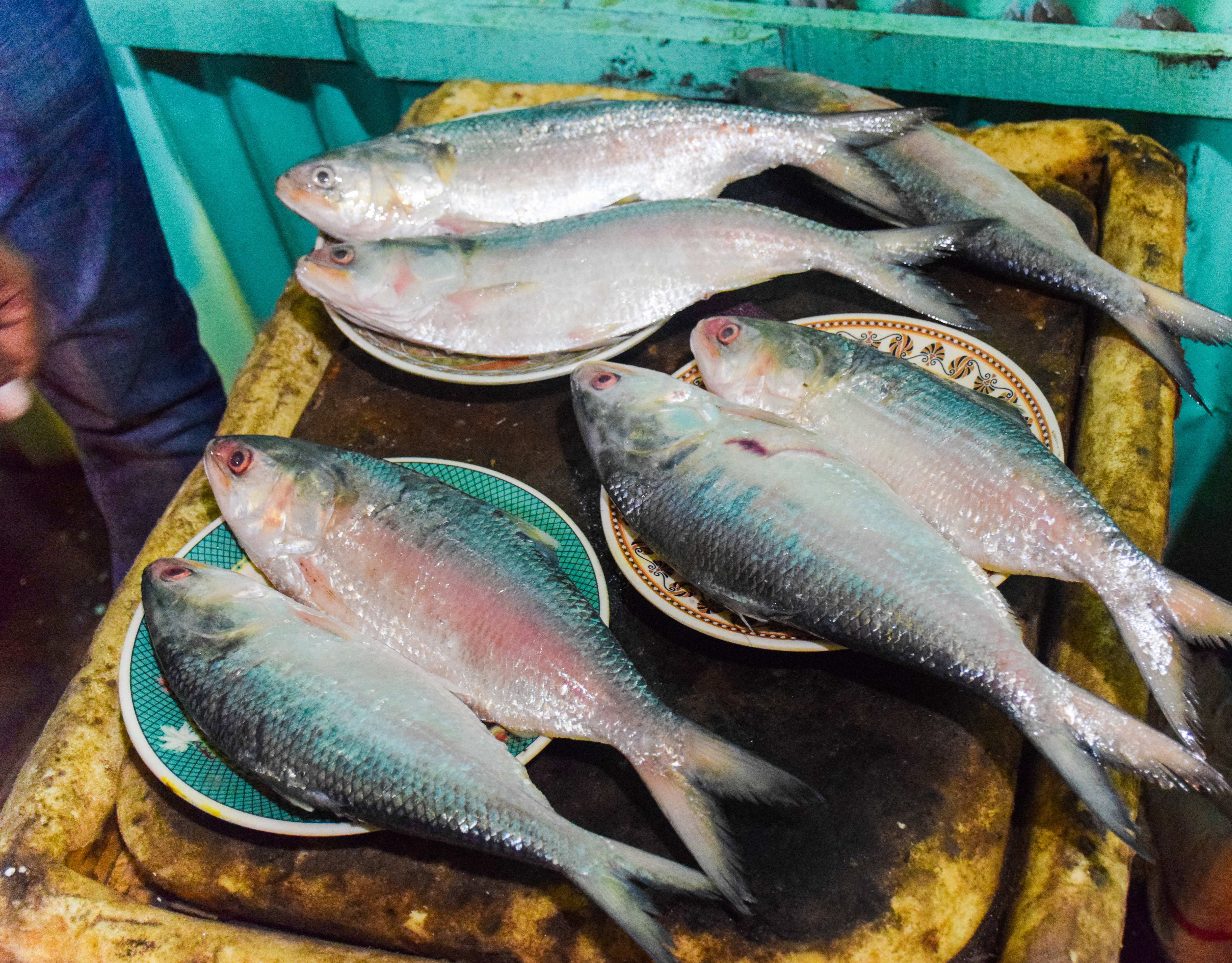
A "king hilsa" weighing two kilograms was sold for Tk 9,300 at around 6pm on Monday, 29 June 2026, at the Ramnewaj fish ghat in Monpura union of Monpura, the island upazila of Bhola district, Jagonews24 reported that evening. The fish was bought at an open auction by Momin Talukder, a wholesale fish trader (arotdar) at the ghat, who supports Brazil at the football World Cup then being played in North America. He planned to send it to New Market in Dhaka the next day with the rest of his hilsa.
A catch from the Meghna and an auction at Ramnewaj ghat
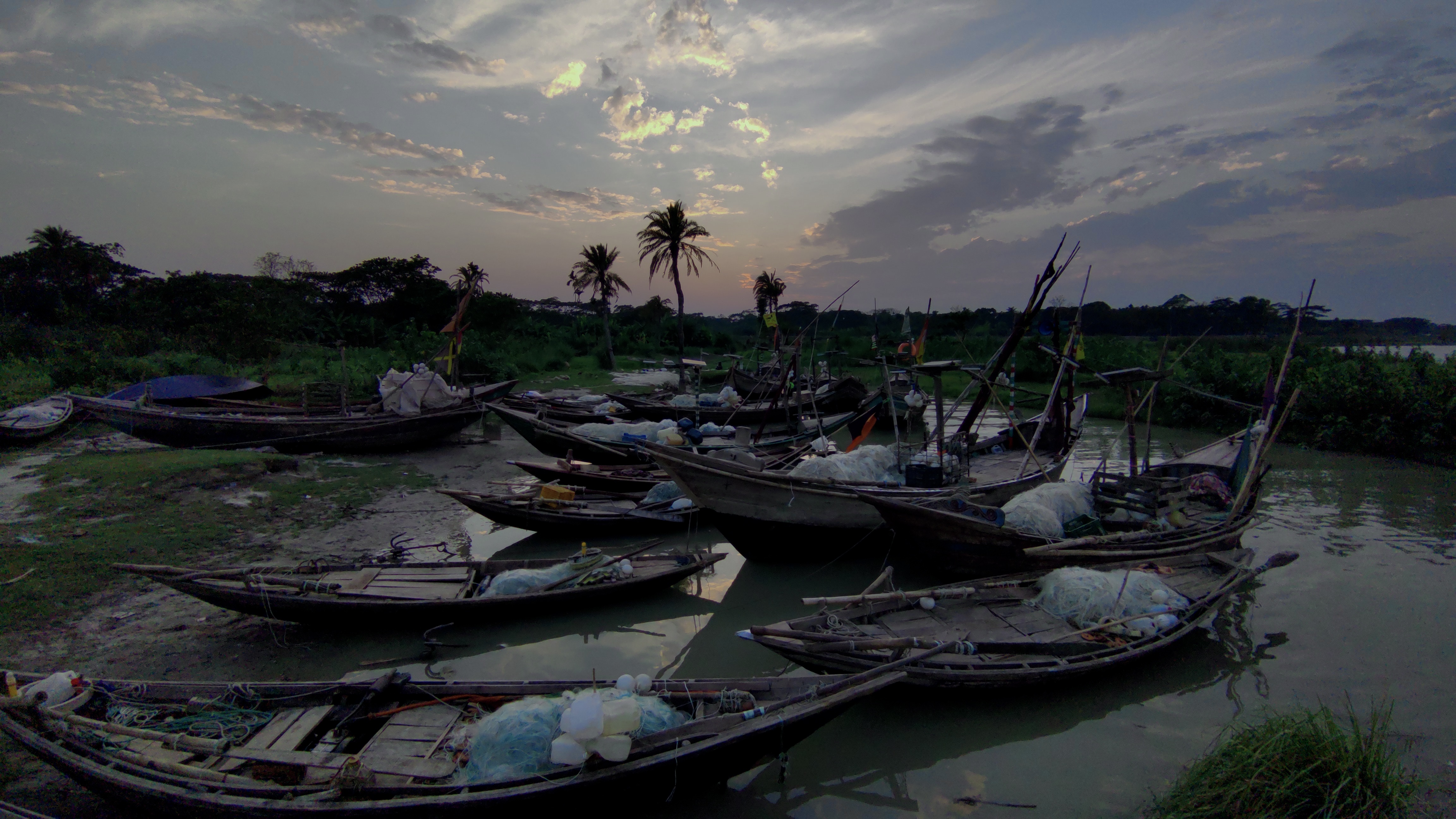
Momin Talukder told Jagonews24 that the fish had been caught around midday in the net of a fisherman, Ismail Majhi, in the Meghna river next to Kalatali union of the upazila. Ismail Majhi and his fellow fishermen had spent the whole day fishing from a trawler. At around 6pm he brought the large hilsa to Momin Talukder's stall at the ghat, together with hilsa of various other sizes from the day's catch.
As is the custom at the landing ghats of the coast, the fish was put up for auction on the spot. According to the report, 17 or 18 wholesale traders were present, some of them supporters of Brazil and some of Argentina, along with a few retail buyers. Traders who support Argentina kept raising the bids, the report said, but in the end Momin Talukder took the fish with the highest bid of Tk 9,300.
Momin Talukder said the king hilsa would go to New Market in Dhaka at around midday on Tuesday, 30 June, packed with the other hilsa he was sending to the capital. He hoped to sell it there for Tk 10,000 to Tk 10,500.
The football rivalry at the ghat had a background that week. The 2026 FIFA World Cup, the first to be played by 48 teams and the first hosted by three countries, the United States, Mexico and Canada, had opened on 11 June 2026, with the final scheduled for 19 July.
What the district fisheries officer said
Bhola district fisheries officer Md Iqbal Hossain told Jagonews24: "The peak hilsa season has begun. Rainfall has also increased, so big hilsa are coming up from the sea into the rivers and getting caught in fishermen's nets."
In the market, hilsa weighing from about one and a half kilograms up to two kilograms or more are usually called "king hilsa" (raja ilish), Jagonews24 noted. Large hilsa are found mostly in the estuaries of the Padma, the Meghna and the Tentulia, and big fish from the deep water of the Padma in particular always fetch very high prices.
Researchers explain why large hilsa are prized. A study of hilsa from the Padma and from the Hooghly in India, published in Food Research International in 2018 by scientists of India's Central Inland Fisheries Research Institute, described hilsa as a fish rich in oils with a unique flavour. It found a water-holding capacity above 80 percent, which the authors said accounts for the juicy, tender flesh, a protein content of 18 to 21 percent, and a fat content of 9.94 percent in Hooghly hilsa and 7.84 percent in Padma hilsa. It also found a predominance of amino acids with umami and sweet tastes, which the authors suggested could contribute to the fish's flavour. A 2021 study in Heliyon by researchers of Bangladesh Agricultural University and Patuakhali Science and Technology University wrote that hilsa owes its soft texture and flavour to its very high lipid content, and that the lipids are the reason for its tastiness.
The second king hilsa at Ramnewaj in ten days
The sale of 29 June was not the first of its kind at the same ghat that month. On Saturday, 20 June 2026, a large hilsa caught at dawn in the Meghna near the Abason canal at Kalatali char in Monpura was brought to the Ramnewaj ghat, where it drew a crowd of traders, fishermen and curious onlookers, Prothom Alo reported that day.
Reports of its weight and price differed. Jugantor reported on 20 June that the fish weighed two kilograms 800 grams and sold for Tk 9,000. Prothom Alo quoted the trader in whose stall it was auctioned as saying that posts on Facebook had given weights of 2.8 or 3 kilograms and a price of Tk 9,000, but that the fish actually weighed two kilograms 400 grams and sold for Tk 8,100. The state news agency BSS also gave 2.4 kilograms and Tk 8,100 in its report of 21 June.
Bhola district fisheries officer Md Iqbal Hossain gave Prothom Alo a biological and seasonal explanation for such fish. Hilsa of that size are usually older, he said: the fish caught on 20 June could be more than two years old and perhaps close to three. It was carrying roe and could have been moving upriver to prepare for spawning. Hilsa can spawn throughout the year, he said, but when rainfall increases in the Bengali months of Bhadra and Ashwin and the rivers rise and run faster, they come in large shoals, and spawning increases.
He also linked the big fish to the conservation drives. Regular drives to protect jatka (young hilsa) and brood hilsa were letting some fish grow larger, he said, but if indiscriminate catching of small fish did not stop, the chances of getting such large hilsa in future would fall.
BSS reported on 21 June that while sea-going fishermen of Bhola were returning disappointed after the 58-day ban on fishing in the Bay of Bengal, fishermen in the district's rivers were getting satisfactory catches, including large king hilsa in the Meghna, the Tentulia, the Kalabadar, the Bura Gauranga and the Ilisha. Fishermen told the agency that these fish weighed two and a half to three kilograms and were being priced at Tk 3,000 to Tk 3,500 a kilogram. The same report said that many trawlers back from the sea were moored at Monpura's Ramnewaj, Hajirhat, Sakuchia and Pancha Koralia ghats as the monsoon made the bay rough.
Monpura and Bhola, the island district of the hilsa
Bhola is a coastal island district of Barishal division. Banglapedia, the national encyclopedia of the Asiatic Society of Bangladesh, gives its area as 3,403.48 square kilometres and describes it as bounded by the Meghna river and the Shahbazpur channel on the east, the Tentulia river and Patuakhali and Barishal districts on the west, and the Bay of Bengal on the south. The Meghna and the Tentulia are its main rivers, and the district has seven upazilas.
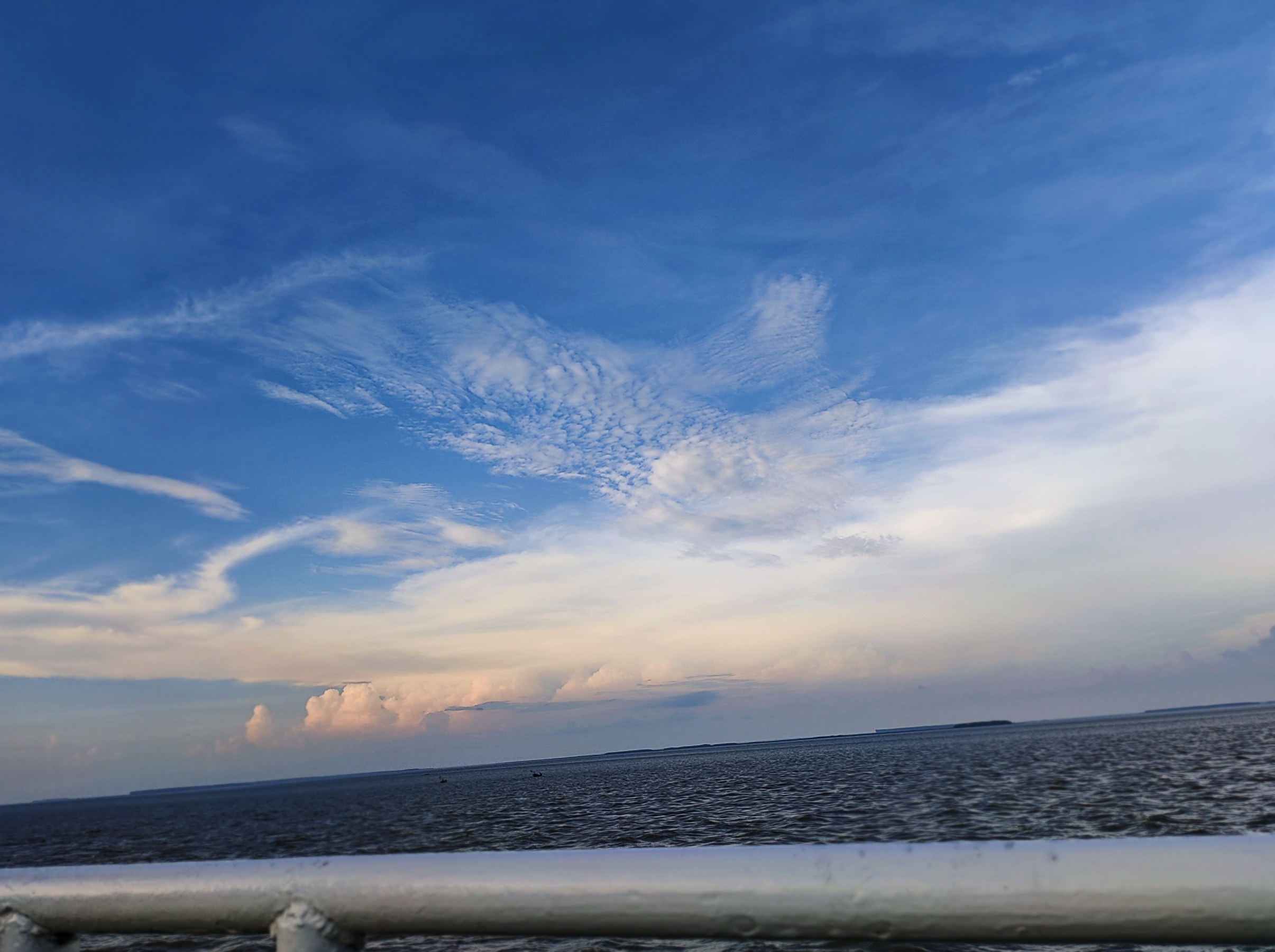
Monpura (also spelt Manpura) is the most isolated of them, an island in the Meghna estuary. According to Banglapedia it covers 373.18 square kilometres and is bounded by Tazumuddin upazila on the north, the Bay of Bengal on the south, Hatiya upazila on the east and Lalmohan and Char Fasson upazilas on the west. The Meghna and the Shahbazpur channel are its main waters. Monpura thana was formed on 25 December 1970 and became an upazila on 7 November 1983. The 2011 census counted 76,582 people in its four unions. Many of its people were victims of the cyclone and tidal surge of 12 November 1970.
Bhola's rivers and estuaries supply a large share of the country's hilsa. In August 2024 the then district fisheries officer told BSS that the district had produced 1.84 lakh tonnes of hilsa in the 2023-24 financial year, against a target of 1 lakh 82,500 tonnes, that this was 32 percent of the country's total hilsa production, and that the catch was worth Tk 7,000 crore to Tk 8,000 crore. The district's target for 2024-25 was 1.85 lakh tonnes. Hilsa landed in Bhola is sent to Hatiya, Lakshmipur, Chandpur, Barishal, Dhaka and other parts of the country, he said.
Fishing is the livelihood of a large part of the district. The daily Ittefaq reported in February 2026 that Bhola had about 1.67 lakh registered fishermen and about two lakh more who were unregistered.
The hilsa: the national fish and its life cycle
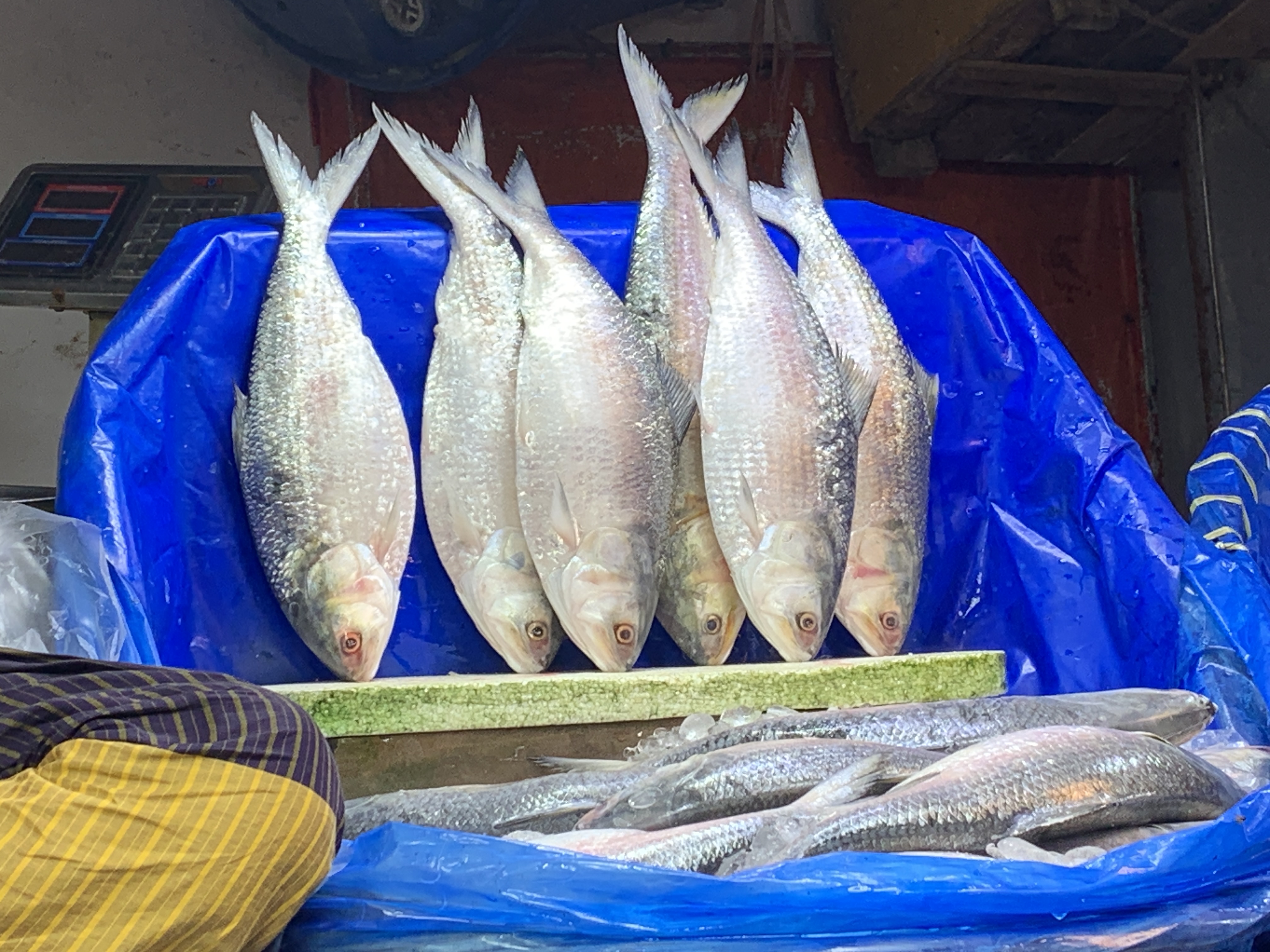
The hilsa, locally ilish, is Tenualosa ilisha, a member of the herring family Clupeidae, and it is the national fish of Bangladesh. Banglapedia describes a strongly compressed body covered with regular, medium-sized scales of metallic silver. The body may reach 60 centimetres in length, although most specimens measure 35 to 40 centimetres, and a large hilsa weighs about two and a half kilograms. Females grow faster and are usually larger than males. The hilsa is a fast swimmer and matures in one to two years.
The species lives in the sea, in estuaries and in rivers, from the Persian Gulf, the Red Sea and the Arabian Sea to the Bay of Bengal and the seas of Vietnam and China. In Bangladesh it is found in the Padma, the Jamuna, the Meghna, the Karnaphuli and other coastal rivers. It is anadromous: adults migrate from the sea up into fresh water to breed, the eggs float freely, and the young grow in the river channels before going down to the sea to feed and grow, then return as breeding adults. A large female can produce up to two million eggs. Hilsa spawn more or less throughout the year, Banglapedia says, with a minor season in February and March and a major season in September and October. They feed mainly on plankton: blue-green algae, diatoms, copepods, rotifers and similar organisms.
Hilsa officials and experts told BBC Bangla in June 2026 that after spawning in October hilsa stay in the rivers for six or seven months and move to the sea at the end of April or the first week of May, when the river water turns turbid. The main hilsa grounds they named are Chandpur Sadar and Haimchar, the Padma from Lohajang in Munshiganj to Zajira, the Gazaria river at Mehendiganj, some rivers of Barishal and Barguna, and the Tentulia in Bhola.
Hilsa is also a registered geographical indication (GI) of Bangladesh. In August 2017 the Department of Patents, Designs and Trademarks granted hilsa GI status on an application by the Department of Fisheries, after no objection had been raised in the two months the application was open, Deutsche Welle reported at the time. In its application the Department of Fisheries said hilsa had been tied to Bangladesh's heritage and culture since 1822, and that it plays a role in the economy, in employment and in the protein in people's diet.
National hilsa production before the 2026 season
The big fish at Ramnewaj came at a time of concern about the national catch. BBC Bangla reported on 22 June 2026 that after nearly two decades of continuous growth, hilsa production had fallen for three years in a row and the average weight of the fish had also begun to fall. According to the Department of Fisheries, production was 1.99 lakh tonnes in 2002-03 and rose on average every year after that. Officials told the BBC that production was 5.71 lakh tonnes in 2022-23, 5.29 lakh tonnes in 2023-24 and 5.04 lakh tonnes in 2024-25, and that, although official figures for 2025-26 were not yet available, their estimate was below five lakh tonnes.
The project director of the Department of Fisheries' hilsa resource development and management project told the BBC that production had kept rising because of measures such as the ban on fishing in the breeding season, but had stumbled from the 2022-23 financial year. He said that while large hilsa were still caught now and then, lighter fish were now arriving more often. He named loss of navigability and pollution in the rivers as the main causes, said chars had damaged migration routes, breeding grounds and nursery grounds, and said young hilsa were being caught in the estuaries on their way from the rivers to the sea. Experts quoted in the same report said current nets were catching small hilsa in the rivers, and that there were allegations that commercial trawlers were coming into water shallower than 40 metres to catch small hilsa at sea.
According to the Bangladesh Fisheries Research Institute (BFRI), quoted by the BBC, hilsa provides about 12 percent of the country's total fish production, and about 60 percent of the world's hilsa is produced in Bangladesh; the Ministry of Fisheries and Livestock puts Bangladesh's share at 70 to 80 percent. In 2018 scientists of Bangladesh Agricultural University announced that they had decoded the fish's complete genome.
Prices had risen with the shortfall. In the week before the BBC report, a buyer said he had paid nearly Tk 3,500 a kilogram for hilsa of 900 to 950 grams at a wholesale market in Chandpur, and at Karwan Bazar in Dhaka sellers were asking more than Tk 2,000 a kilogram on average for hilsa of 800 to 900 grams.
The fishing bans in force in 2025-26
The government protects hilsa through a calendar of bans run by the Ministry of Fisheries and Livestock and the Department of Fisheries. At the time of the Monpura sale, the 2025-26 cycle stood as follows.
- Brood hilsa ban: to protect hilsa in the main breeding season, catching, transporting, storing and selling hilsa was banned for 22 days, from 4 to 25 October 2025, in rivers and the sea, as Bangla Tribune reported in October 2025.
- Jatka ban: from 1 November 2025 to 30 June 2026, catching, transporting, marketing, buying, selling and storing hilsa smaller than 25 centimetres (jatka) was banned across the country. The ministry said a breach could bring up to two years' rigorous imprisonment, a fine of up to Tk 5 lakh, or both. The ban was still in force on the day of the Monpura sale.
- Sanctuaries in Bhola: from 1 March to 30 April 2026, all fishing was banned for 61 days in the sanctuary stretches of the Meghna and the Tentulia, 190 kilometres of river in Bhola, to let jatka grow and other fish breed, Ittefaq reported.
- Jatka conservation week: the government observed jatka conservation week from 7 to 13 April 2026 in 20 hilsa-rich districts, under the slogan that if jatka fishing stops, rivers and sea will fill with hilsa, the ministry announced on 6 April.
- Bay of Bengal ban: all fishing in the Bay of Bengal and adjoining waters was banned for 58 days, from 15 April to 11 June 2026. Bhola's sea-going fishermen returned to the sea from the night of 11 June, BSS reported.
The sea ban once had different dates. From 2015 the government banned fishing in the Bay of Bengal every year from 20 May to 23 July; in 2025 the period was moved to 15 April to 11 June, BBC Bangla reported. The country has five hilsa sanctuaries, according to the same report: two in the Padma and the Meghna and one each in the Tentulia, the Gazaria and the Kalabadar, while a sanctuary in the Andharmanik river at Kalapara is no longer effective.
When the bans end, the Bhola fishermen's season begins in earnest. The fisheries department told BSS on 11 June 2026 that, apart from isolated incidents, the drive in Bhola during the sea ban had been successful, and that it expected the hilsa catch to rise well above the previous year's. The district fisheries officer told the agency that fishermen had a chance of a large catch of hilsa and other fish in Bangladesh's exclusive economic zone in the Bay of Bengal, which extends 200 nautical miles from the baseline, and that the government would give the fishermen of the Bhola coast full security there.
Photo: Fahad Faisal / Wikimedia Commons (CC BY-SA 4.0)
Sources: Jagonews24; Prothom Alo; Jugantor; Bangladesh Sangbad Sangstha (BSS); BBC Bangla; Bangla Tribune; The Daily Ittefaq; Deutsche Welle Bangla; Banglapedia (Asiatic Society of Bangladesh); S. Ganguly and colleagues, Food Research International (2018); A. A. Nowsad and colleagues, Heliyon (2021); Wikipedia (2026 FIFA World Cup).
Comments
(0)