
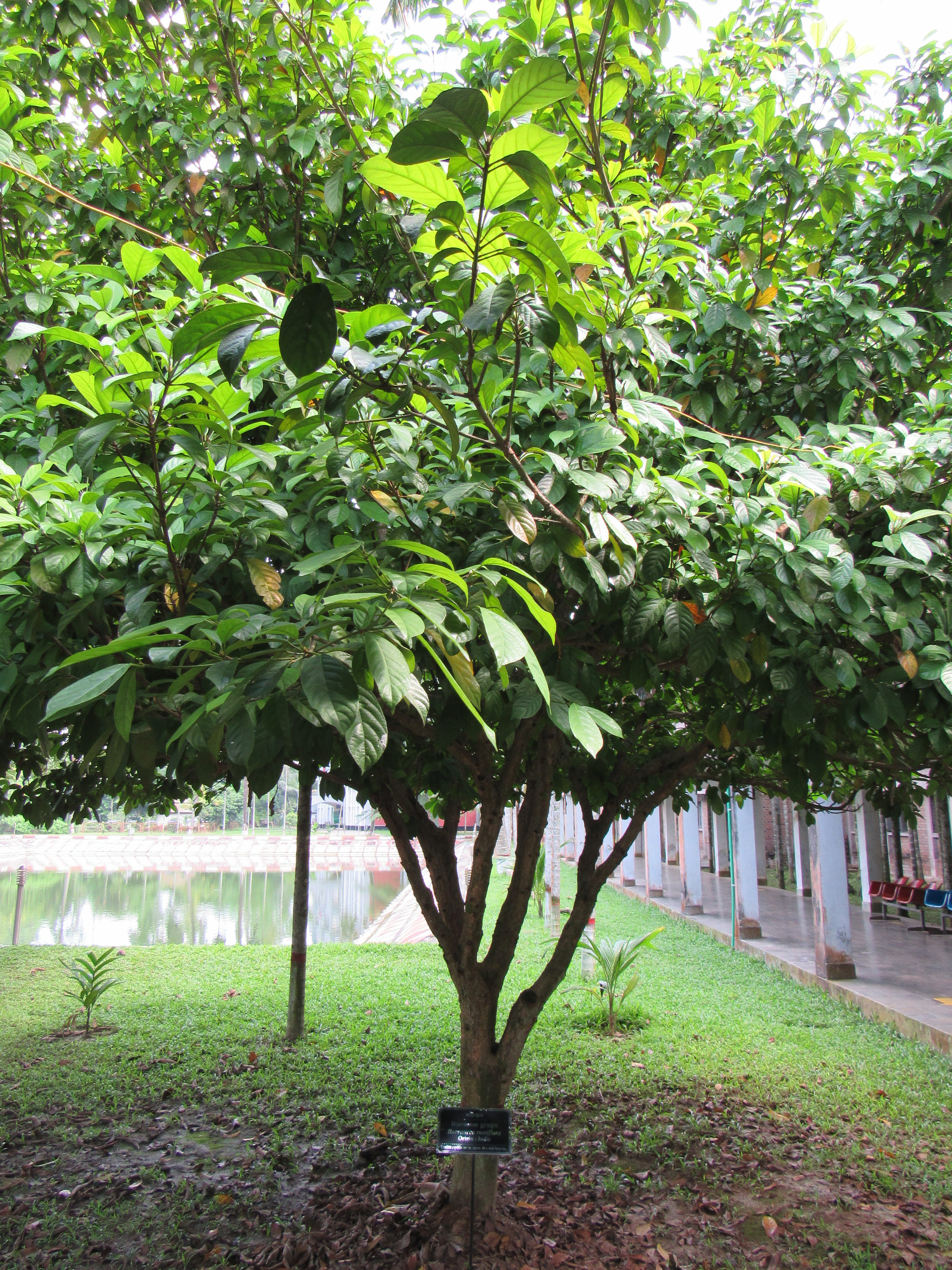
Latkan farming has changed the life of Hafez Rokonuddin of Nayanpur village in Bhaluka upazila of Mymensingh. He once made his living leading prayers as an imam at mosques in different parts of the country; by the 2026 fruit season he had built two commercial orchards of latkan, the fruit widely called lotkon in Bengali, on about four bighas of land. Besides selling the fruit, he raises grafted saplings of improved varieties and sells them to other growers, and one superior selection he developed over several years has come to be known locally as "Nayanpuri latkan". In July 2026, as the season opened, rows of his trees stood bent under the weight of fruit, with bunches of ripe lotkon hanging among the green leaves; wholesalers from several districts were already coming to buy, and farmers were crowding in for his grafts.
From thirty saplings to two orchards
Bhaluka is an upazila of Mymensingh district, and Muktagachha, where Rokonuddin bought his first saplings, is another upazila of the same district, so he began with planting material from his own area.
Rokonuddin said he started in 2018 with just 30 latkan saplings bought from Muktagachha in Mymensingh. He later added an old orchard and began commercial farming with about 200 trees. At first, however, many of the trees turned out to be male and bore no fruit, and he did not get the yield he had hoped for. Rather than give up, he taught himself the technique of grafting, selected the trees that fruited best and began raising new plants from them, working towards a variety of his own. After long trials, success began to come from 2023, and by the 2026 season it had become clearer still, with both his orchards in heavy bearing.
"Over the past eight years I have worked with eight to ten varieties, and after long trials two of them seemed the best," Rokonuddin said. "One has large fruit, tastes very sweet and is in strong demand in the market. I failed at first but did not give up. I want the people who take saplings from me to profit too, so I make grafts only from tested trees."
The story behind the name
There is a story behind the selection's name. In 2026 Shykh Seraj, the presenter of the farming television programme Hridoye Mati O Manush, visited the orchard and suggested naming the variety "Nayanpuri latkan" after Nayanpur village. The name has stuck, and growers in the area now ask for Nayanpuri latkan by that name. For a fruit that has long been sold simply as lotkon, a recognised local name is itself a small step towards giving a regional selection an identity of its own.
Grafts and fruit sales
Rokonuddin said he sells a one-year-old grafted sapling for about Tk 100, and a one-and-a-half- to two-year-old graft for Tk 200 to Tk 250. Every year, he said, farmers and would-be growers come from different districts to collect them, and from grafted saplings alone he earns roughly Tk 7 lakh to Tk 8 lakh a year. The fruit brings a separate income. This season, he said, lotkon from his orchard was selling at about Tk 3,500 a maund, and in the opening days of the season he had already sold around Tk 70,000 to Tk 80,000 worth, with more expected as the season ran on. Besides his own trees, he buys fruit from several neighbouring orchards and markets it wholesale.
These income and price figures are Rokonuddin's own account of his orchard. They give a sense of what a well-run, mature latkan orchard can return rather than a district-wide average, and they rest on his statements to the reporter who visited the garden.
Buyers and neighbours
Md Enamul Haque, a farmer who came from Gafargaon to see the orchard, said: "I came after seeing videos of the orchard on social media. I liked the fruit when I tasted it, so I bought 32 grafts. If the yield is good, I will also set up a commercial latkan orchard." A local farmer, Abdus Salam, said: "Rokonuddin's latkan fruit is large, tasty and attractive, so people have come to trust the saplings he produces."
Bhaluka Upazila Agriculture Officer Nusrat Zaman said: "Latkan is currently grown on about 5 hectares in the upazila. Rokonuddin is producing high-quality latkan saplings, and his fruit is very tasty. If new orchards are set up with good-quality saplings, Bhaluka's latkan could in future meet domestic demand and also create export potential."
What latkan is
Latkan, widely known in English as Burmese grape, is a native seasonal fruit whose botanical name is Baccaurea ramiflora, a member of the family Phyllanthaceae. It is a slow-growing evergreen tree that can reach up to 25 metres in favourable conditions. The species grows naturally across India (including Assam and the Andaman and Nicobar Islands), Nepal, Bangladesh, Myanmar, Thailand, Laos, Cambodia, Malaysia, Vietnam and southern China, and it tolerates a wide range of soils. In the wild it is a tree of evergreen forest, but across South Asia it is mostly planted in homestead corners and fruit gardens, and it carries different local names from region to region; in Assam, for instance, it is known as leteku.
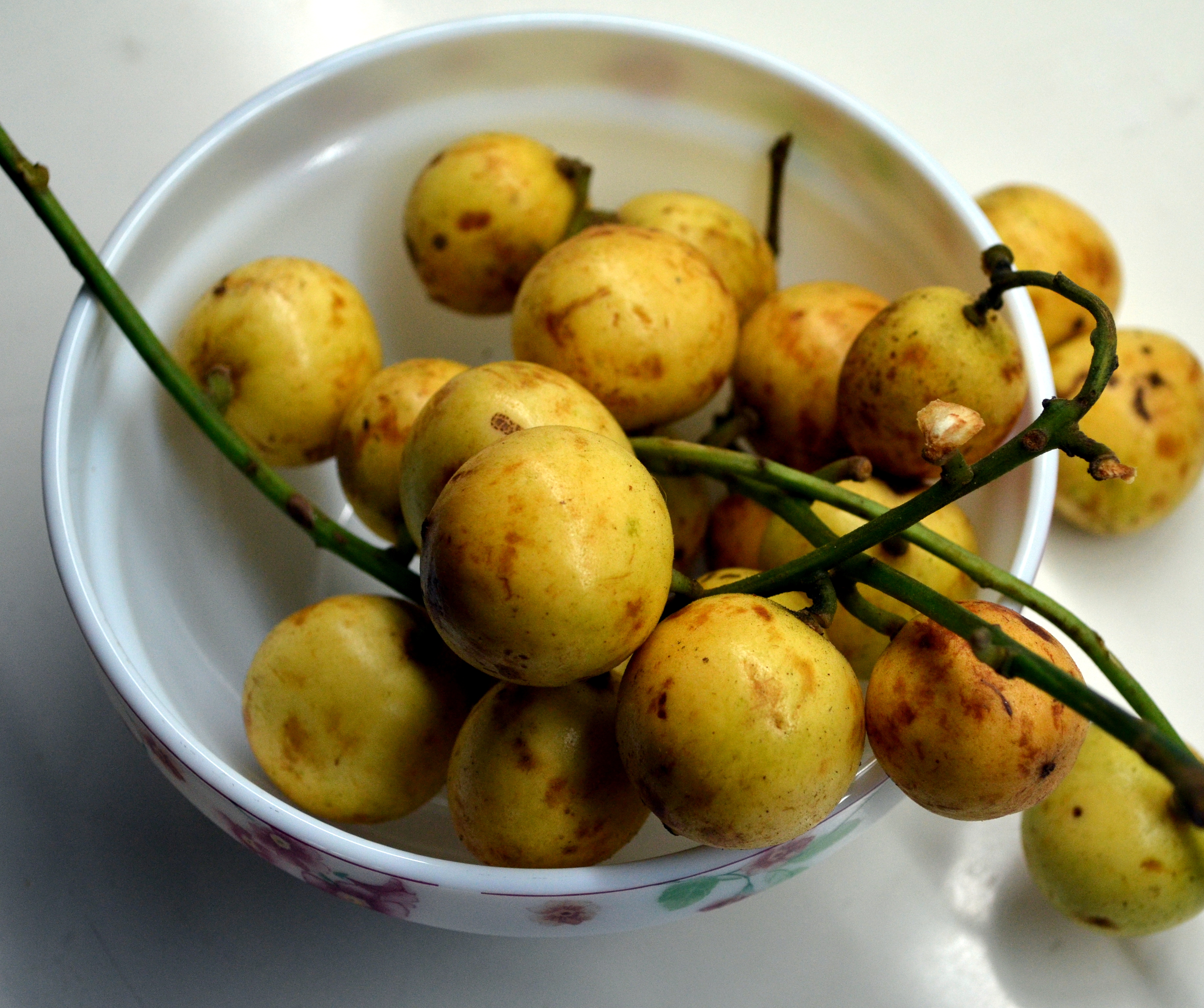
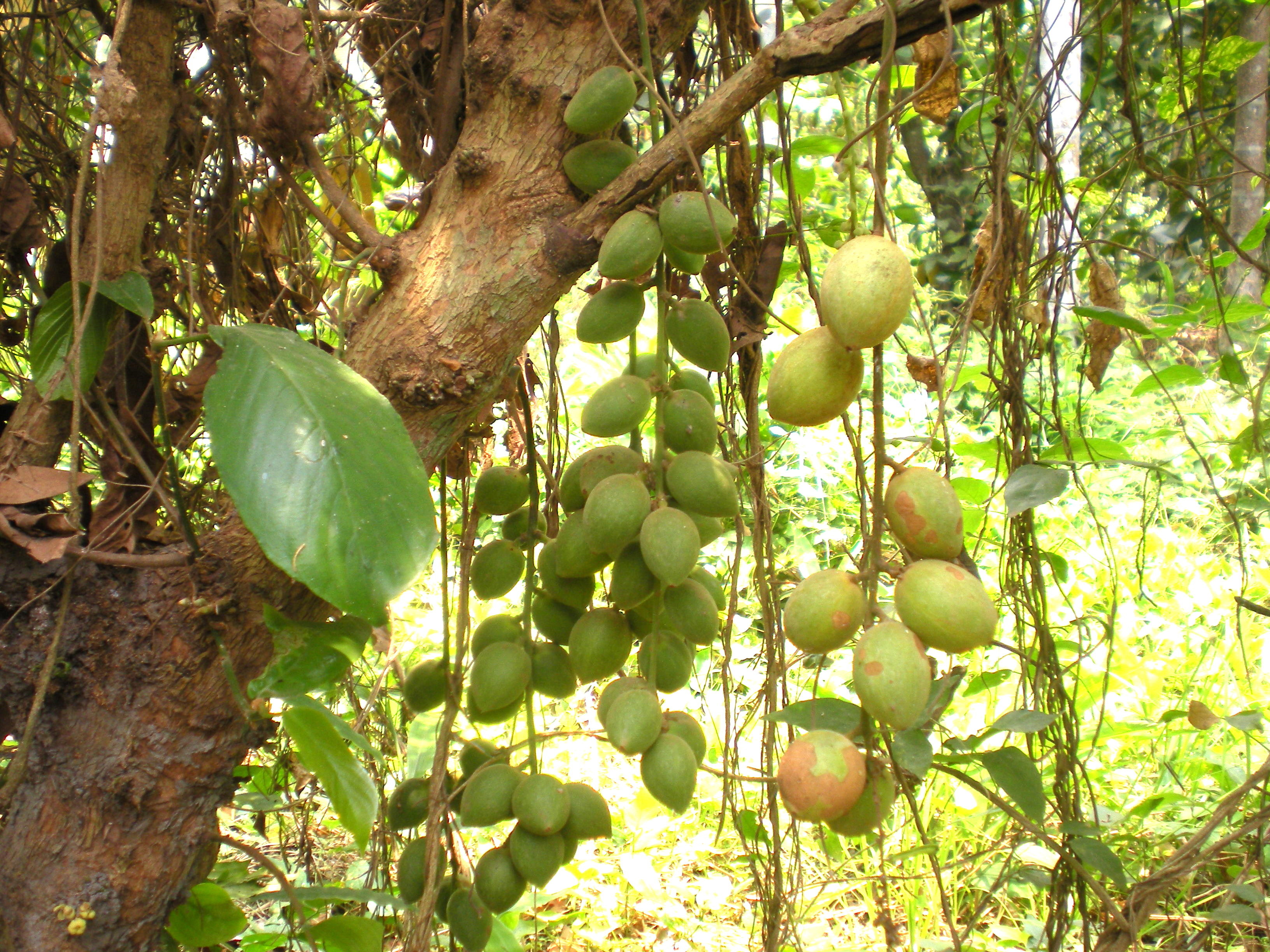
The fruit is oval and about 2.5 to 3.5 centimetres across, with a smooth skin whose colour ranges from yellowish to pinkish, red or purple. Inside each fruit are two to four large seeds, each wrapped in a juicy, sweet-and-sour white aril that is the edible part; to eat it, the skin is peeled away and the soft aril is sucked off the seeds, which are discarded. A striking feature of the tree is that its flowers and fruit are borne not at the tips of the branches but in bunches directly on the trunk and older limbs, a habit botanists call cauliflory. The fruit usually ripens in June and July and keeps about four to five days when fresh. The species is listed as Least Concern on the IUCN Red List. The fruit is eaten fresh, is sometimes stewed, and in places is made into a drink. The genus Baccaurea sits in the order Malpighiales, and the fruit takes roughly three months to develop from flowering to full ripeness, which is why the trees flower well before the midsummer harvest. The tree is slow-growing but long-lived, and besides the fruit its wood and bark have traditionally been put to various uses.
Why grafting matters for latkan
Latkan is a dioecious plant, which means its male and female flowers grow on separate trees. An orchard needs male trees for pollination, but only the female trees bear fruit. When plants are raised from seed, there is no way to tell which seedling is male and which is female until it flowers after several years; a seed-grown orchard can therefore end up with a large share of fruitless male trees. This is exactly the problem Rokonuddin ran into at the start, when many of his trees turned out to be male and set no fruit. For this reason experienced growers keep a few male trees in the orchard for pollination alongside the fruit-bearing female trees.
Grafting, or vegetative propagation, removes much of that uncertainty. In grafting, a shoot (scion) cut from the selected tree is joined onto a rootstock seedling so that the new plant grows with the parent's wood and bears its kind of fruit. A graft taken from a proven, heavy-bearing female tree produces a plant that is certain to be female, keeps the parent tree's fruit qualities such as size and sweetness, and tends to come into bearing sooner. Latkan generally starts to fruit three to four years after planting. It is for these reasons that the Department of Agricultural Extension's horticulture centres produce and distribute grafted saplings rather than seedlings, and Rokonuddin follows the same approach by raising his grafts only from tested trees.
Latkan is also far from uniform from one tree to the next. A Bangladeshi horticultural study that characterised eighteen latkan genotypes at Gazipur in 2017-18 found wide variation among them in fruit size, sweetness and other traits. That variation is why a grower who finds a tree bearing large, sweet fruit wants to multiply exactly that tree, because seedlings raised from its seed would scatter those qualities again. Grafting fixes the parent tree's traits in every new plant, and this is the logic behind Rokonuddin settling on the best two of the eight to ten types he had tried and taking his grafts only from them. A named, consistent selection such as his "Nayanpuri latkan" is, in effect, one such proven tree multiplied again and again.
Latkan across Bangladesh
In Bangladesh, latkan is grown mainly in a handful of districts, including Narsingdi, Kishoreganj, Sylhet, Gazipur, Netrokona and Panchagarh, with Narsingdi the leading commercial producer. Citing Narsingdi district agricultural extension figures, a 2023 report said that in that season the district had about 1,890 hectares under latkan, roughly 200 hectares more than the year before. Average yield was put at about 17 tonnes a hectare and total production at about 32,000 tonnes, worth around Tk 350 crore at the market prices of the time. Shibpur upazila had the most cultivation and Belab was another major growing area; dedicated latkan markets operated at Morzal in Raipura and at Shibpur upazila headquarters, and local prices ranged from about Tk 70 to Tk 250 a kilogram depending on quality. The deputy director of the Narsingdi agricultural extension office, Azizur Rahman, said at the time that most farmers were now growing latkan commercially because demand at home and abroad was strong and profits were high for low costs. The same report said about 2,000 tonnes of the district's crop was expected to be exported to Europe and the Middle East that year, and that each of the two main markets handled fruit worth roughly Tk 3 to 4 crore on a busy day of the season.
Cultivation is also spreading in the northern district of Panchagarh. Citing agriculture department data, a June 2026 report by Bangladesh Sangbad Sangstha (BSS) said the district had about 660 hectares under betel nut (supari) and about 45 hectares under latkan, with growers in areas such as Debiganj planting latkan as an intercrop between the rows of betel-nut trees. Subodh Chandra Roy, additional deputy director of the Panchagarh agricultural extension directorate, said the partial shade of the betel-nut trees suited latkan's growth and that the fruit could be a profitable intercrop. The report gave the example of one Debiganj grower who had interplanted latkan through a roughly three-bigha betel-nut garden of about 300 trees, and the officer said that rising market demand was drawing more farmers to the intercrop. Earlier, in 2019, a Prothom Alo report said the Chapainawabganj Horticulture Centre, working under the Department of Agricultural Extension, had produced 2,000 grafted latkan saplings under the "Year-round Fruit Production for Nutrition Development" project to distribute to interested farmers; that report said a tree aged about 10 to 12 years could yield around 40 kilograms of fruit, and that latkan trees generally begin bearing within three to four years of planting. That report also set out the scale of the opportunity in a mango district: Chapainawabganj had about 32,000 hectares of mango orchards and some 26 lakh mango trees, roughly 13 lakh of them in orchards suitable for intercropping. Officials there estimated that planting latkan among the mango trees could add around 5 lakh latkan trees, that about 2.5 lakh farm households could each grow one at their homestead, and that intercropped latkan could in time be worth on the order of Tk 200 crore a year to the district, since the fruit ripens in June and can be tended and picked by the same labour that already works the mango orchards.
Latkan is a relatively low-care crop that grows well even in partial shade, which is why it can be planted as an intercrop beneath taller trees such as betel nut; and because it tolerates a wide range of soils, it can be grown in settings from a homestead corner to a full commercial orchard. That is part of why its cultivation has been spreading slowly across districts from Panchagarh in the north to Narsingdi and Mymensingh in the centre.
Even so, latkan is still confined to a handful of districts in Bangladesh and remains largely a summer fruit for the home market; Narsingdi is its main hub, though some of the crop is exported. As demand has risen, the Department of Agricultural Extension has moved to supply improved grafted saplings and expand cultivation in new districts, and growers like Rokonuddin are the ones supplying those tested saplings locally.
Marketing a perishable fruit
Latkan is a perishable fruit. Picked ripe, it keeps only about four to five days, so it has to be sold quickly once the season opens. Rather than carry the crop to distant markets themselves, growers in the main areas often sell at the orchard gate or at dedicated seasonal haats, where wholesalers gather to buy and move the fruit on. In Narsingdi, the latkan markets at Morzal in Raipura and at Shibpur upazila headquarters ran through the short season for exactly this reason. In Bhaluka the pattern was the same for Rokonuddin: wholesalers came to his orchard from several districts, and he also bought fruit from neighbouring gardens to sell on in bulk, spreading both the work and the risk of handling a fruit that will not wait. Because the window is short and the fruit will not keep, a recognised orchard that buyers already know their way to, as Rokonuddin's has become, has a real advantage in a crop sold almost entirely within a few summer weeks.
A minor fruit finding a market
Latkan has long been regarded in Bangladesh as a minor or lesser-known fruit, one of the many fruits of the world that remain relatively unfamiliar. The 2019 Prothom Alo report described latkan as one of some 675 lesser-known fruits of the world and noted that India and Malaysia produce large quantities of it. In Bangladesh it was once grown mostly in homestead corners with little care, but in areas such as Narsingdi it has become a full commercial crop. The very name of the extension project under which the grafted saplings were produced, "Year-round Fruit Production for Nutrition Development", places latkan among the fruits valued for nutrition. Against this background, growers like Rokonuddin, supplying good-quality grafts from tested trees, are doing the work of building new orchards locally and keeping a selection's quality consistent from one planting to the next.
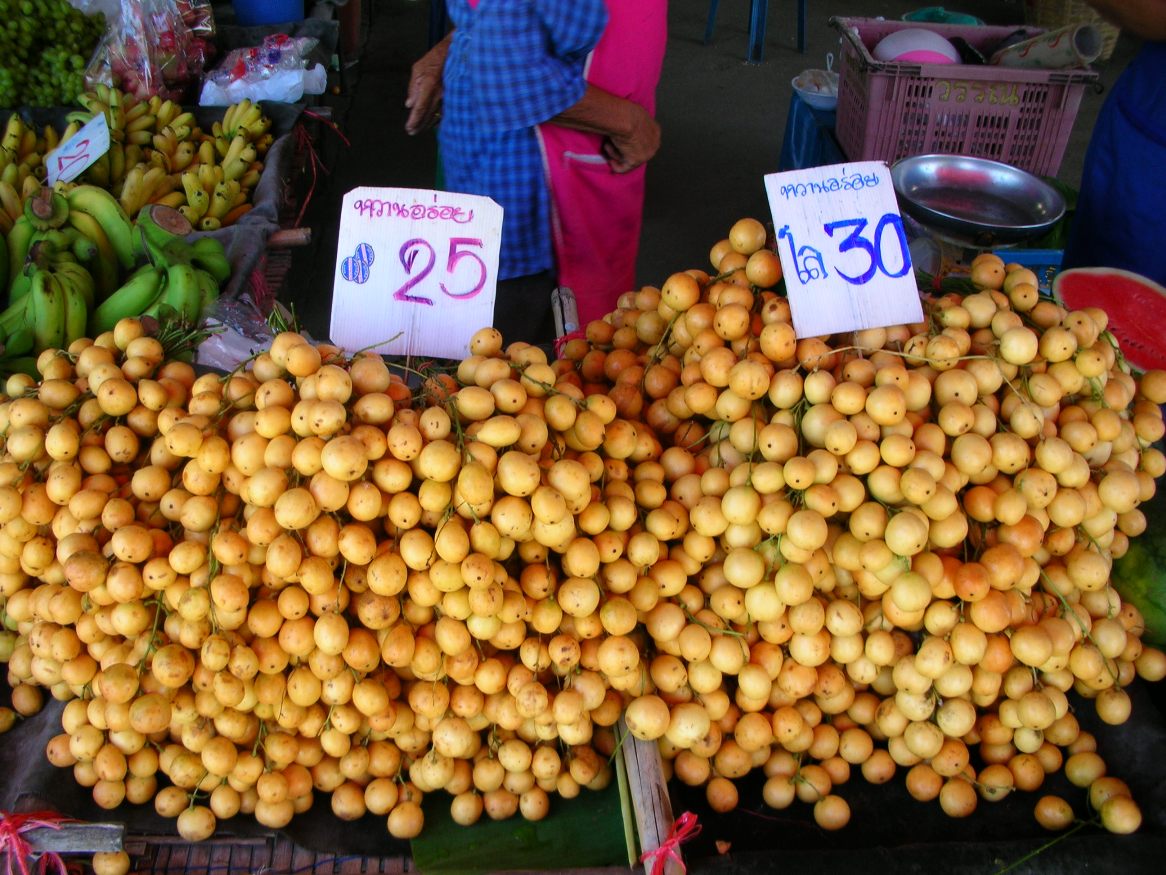
Photo: Afifa Afrin / Wikimedia Commons (CC BY-SA 3.0)
Sources: Jagonews24; The Daily Star Bangla; Prothom Alo; Bangladesh Sangbad Sangstha (BSS); IUCN Red List; Wikipedia
Comments
(0)