
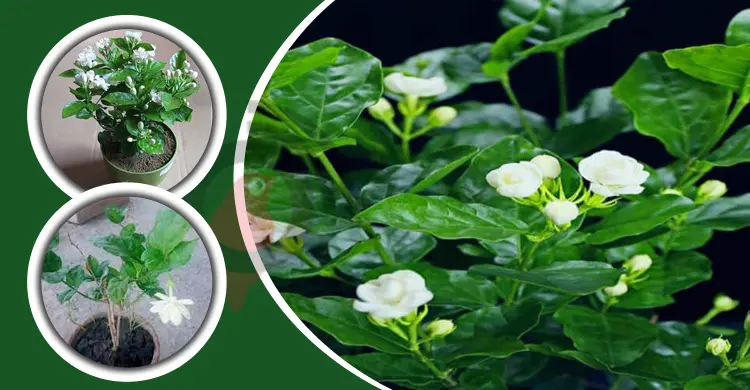
Beli is popular for its fragrance. In most festivals and ceremonies in our country, it is valued as a scented flower in bouquets and garlands. Beyond decoration, it is now considered a cash flower and is grown commercially in nurseries around the country.
Three types of beli are seen in our country: a single, strongly scented type; a medium-sized double type; and a large double type.
Propagation and land preparation
Beli is propagated by air layering (gooti kolom), ground layering (daba kolom) and stem cuttings. It can be grown in every soil except sandy soil and heavy clay. The land should have arrangements for irrigation and drainage.
Plough and ladder the land four or five times until it is fine and level. Apply organic manure, urea, phosphate and MP when preparing the land. Plant seedlings about 1 metre apart. After planting, apply urea and irrigate.
Beli grafts or seedlings can be prepared from the end of summer to the end of the monsoon. Plant-to-plant and row-to-row spacing should be 50 centimetres. Dig pits, let the soil sit in the sun, mix it with organic manure and wood ash and refill the pits, then set a beli graft in each pit. Planting grafts in the monsoon or towards its end is best, but with good irrigation grafts can also be made in spring.
Beli can also be grown in tubs using loam soil rich in organic matter, mixed with suitable amounts of urea, TSP and MP. The tubs can be kept on a veranda or a roof.
Caring for beli plants
Beli needs moisture in the soil at all times. Irrigate every 10-12 days in summer and every 15-20 days in winter, and in the monsoon give one or two irrigations, depending on the soil, if the rain does not come on time.
Keep an eye on weeds in a beli garden and clear them regularly from the field or tub. Spreading chopped straw over the soil reduces the need for irrigation and keeps weeds from growing much.
Beli plants should be pruned every year, in mid-winter, cutting them back to 30 centimetres above the soil surface. Apply fertiliser to the field or tub a few days after pruning.
Pests and disease
Harmful insects are rarely seen on beli, but mites can attack. They leave a white coating on the leaves, and affected leaves curl and roll up.
Mites can be controlled by spraying the leaves with sulphur powder or sulphur-based miticides such as Sultaf or Kelthane. A fungal disease that causes yellowish spots on beli leaves is also seen; it can be controlled with Agrosan or Tracel-2.
The plants flower from February to July. Usually, after five or six years, the plants are cut down and new seedlings planted.
Source: Jagonews24. First published in Bengali on The Agro News.
Comments
(0)