
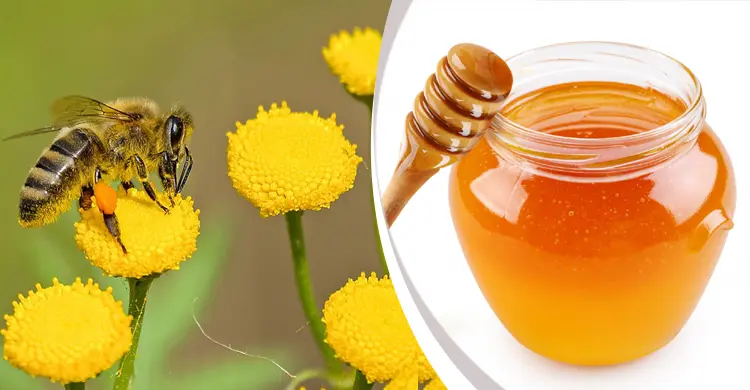
To produce one pound of honey, bees must collect nectar from about 20 lakh (two million) flowers, flying about 80,000 kilometres to do so. A single bee collects about a teaspoon of honey in its lifetime. The figures come from the Canadian Honey Council.
Dr Md Abdul Muyeed, director general of the Department of Agricultural Extension (DAE), said one third of the food we eat every day comes from bee pollination. Statistically, bees alone account for 80 percent of the pollination of plants pollinated by insects.
He said 70 percent of the fruit and vegetables people now depend on most for food are produced through bee pollination. The food produced worldwide each year through bee pollination is worth an estimated $220 billion, and the livelihoods of 1.4 billion people around the world are directly or indirectly tied to this economy.
Why bees matter
Feeding today's population requires more production, which is practically impossible without the help of bees. So if the lives of bees are threatened, people's normal lives will be threatened too. In a single day, the bees of one hive visit all the flowers blooming within four square kilometres around it, collecting nectar and helping pollination.
According to Dr Md Sakhawat Hossain, professor of entomology at Sher-e-Bangla Agricultural University, research has found that by pollinating flowers, bees raise crop production by 25 to 30 percent.
Beekeeping
Beekeeping essentially means bringing bees from their natural environment and rearing them by modern, scientific methods in conditions suited to a hive. A hive holds about 20,000 bees on average, usually of three kinds: the queen, which takes part in breeding, the drones or males, and the worker bees.
In 2019, 64.5 percent of honey was exported to Japan. Earnings from all honey exported worldwide came to US$15,342,000, and total spending on imports was US$119 million.
Wax, pollen and potential
Demand for beeswax in industry and handicrafts has risen many times over in domestic and international markets. A packet (600 grams) of pollen sells at retail for Tk 3,000 to 4,000. The market for royal jelly and bee venom has not yet developed in Bangladesh, although they are highly valued on the world market. Considering Bangladesh's field crops, crop cycles and seasons, it is possible to produce 40,000 to 50,000 metric tonnes of honey.
Source: Jagonews24. First published in Bengali on The Agro News.
Comments
(0)