
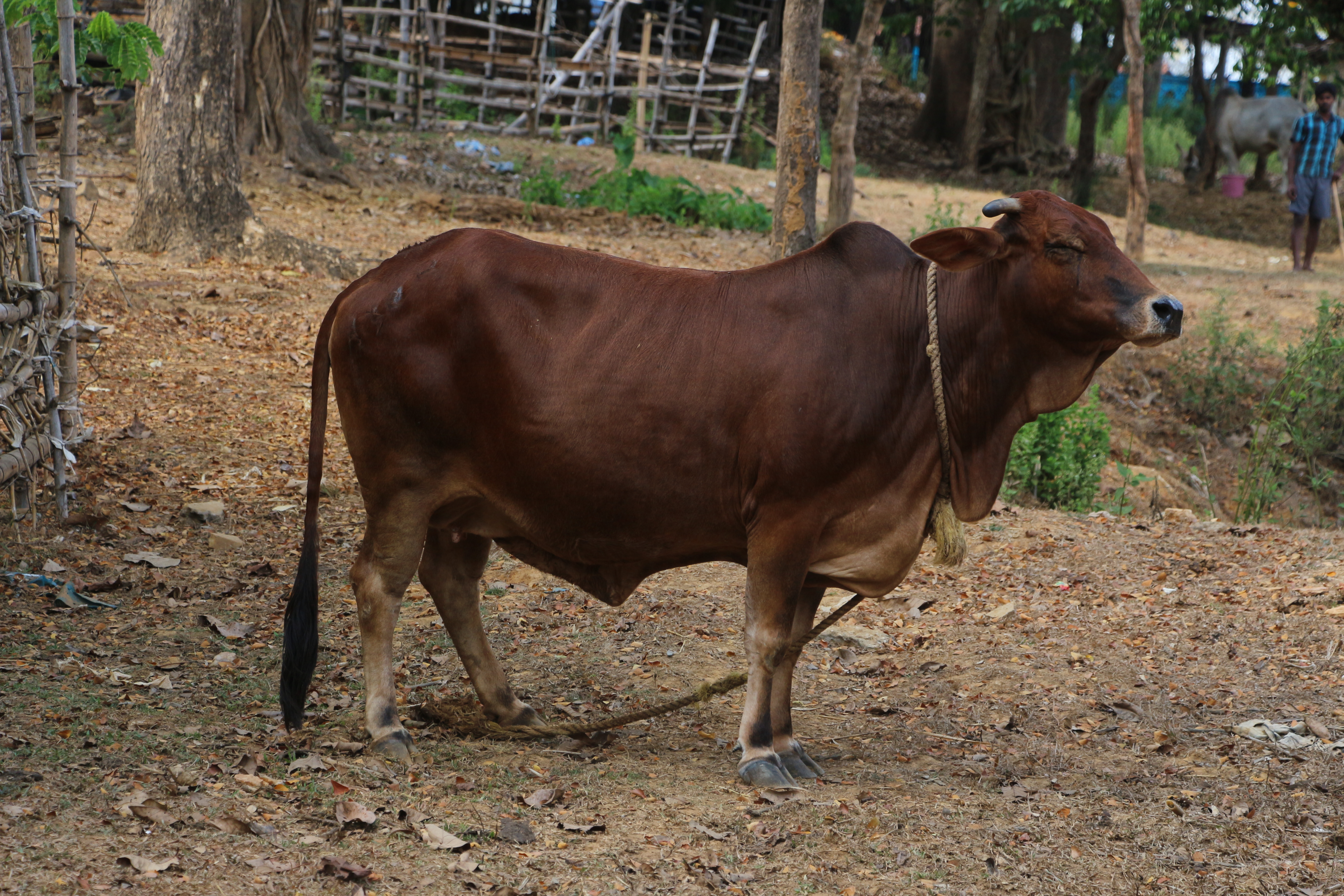
In early May 2026, ahead of the coming Eid-ul-Azha, a huge bull from Manikathi village in Babuganj upazila became the talk of Barishal's sacrificial cattle market. According to a Jagonews24 report, the Sahiwal bull, named "Lal Mia," weighed about 1 tonne 6 kg, or 1,006 kg, by the account of the farm owner and local people. At the time, crowds came every day from far and wide just to catch a glimpse of him. The bull was the biggest attraction of Bhai Bhai Dairy Farm, set up by Md Mamun Hossain, a young entrepreneur from Manikathi.
The story of Bhai Bhai Dairy Farm
Speaking to Jagonews24, farm owner Mamun Hossain said Lal Mia had been raised entirely by natural means over about four years and prepared for sacrifice. By his account, he left a private-sector job in Dhaka and started the farm in 2015 with only three cattle. Through steady hard work and family support, that small venture grew into a full-fledged farm. At the time the report was published, the farm had 26 cattle in all, including cows.
Mamun's elder brother, Latifur Rahman Liton, told Jagonews24 that the family had stood by Mamun from the start, and that his hard work and determination had brought him to where he was. The report noted that many local young people, after visiting the farm, were becoming interested in cattle rearing and the farming business. Mamun himself believes that if young people become entrepreneurs instead of waiting for jobs, they can contribute to society as well as to themselves. To many neighbours, the report said, Lal Mia was not just a bull but a symbol of Mamun Hossain's hard work, patience and dreams.
Raising a single bull for about four years is no small undertaking. Over that long period a farmer must bear the cost of regular feed, housing, health care and labour. That is why building up a large bull involves years of planning and investment, and the farmer hopes to recover his costs and make a profit by selling the animal in the sacrificial season.
Fattening cattle on natural feed
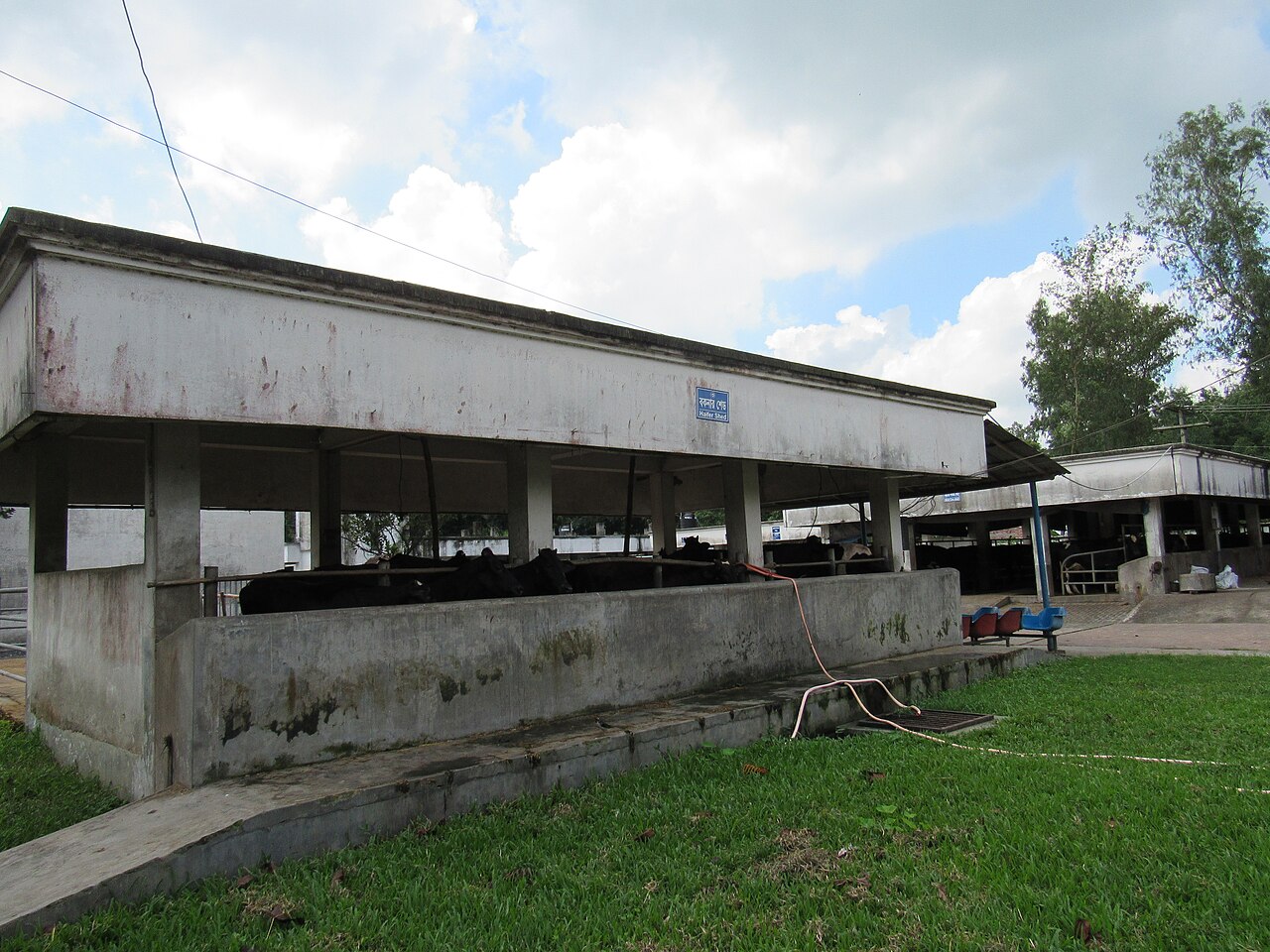
Mamun Hossain said Lal Mia had been raised on grass, bran and natural feed, without any harmful injections or artificial fattening. Cattle fattening is a familiar practice built around the Eid-ul-Azha season in Bangladesh. According to Banglapedia, although planned beef fattening is relatively uncommon in the country, farmers usually fatten yearling bull calves on conventional and non-conventional feeds such as green grass, bran and urea-molasses blocks, which can add up to about 1 kg of body weight a day.
Banglapedia also notes that the Bangladesh Livestock Research Institute's urea-molasses-straw technology gives local calves of about 98 kg a daily weight gain of roughly 450 g. Because cattle are brought on slowly through such natural and technology-based feeding, buyers at the Eid market generally prefer animals raised on natural feed. By the farmers' account, Lal Mia had been raised this way over about four years, which was one reason he had grown so large.
Keeping cattle healthy requires regular vaccination, deworming and balanced feed, and farmers usually take the advice of the local upazila livestock office and a veterinarian on these matters. For the type and dose of any medicine or vaccine it is safest to consult the upazila livestock officer, as wrong use can create risks for both animals and people.
According to the report, besides Lal Mia the farm had seven more bulls ready for sale, priced by the owner at between Tk 1 lakh and Tk 8 lakh, along with seven milch cows. In other words, the farm earned not only from sacrificial bulls but also from year-round milk production.
Local and improved cattle breeds in Bangladesh
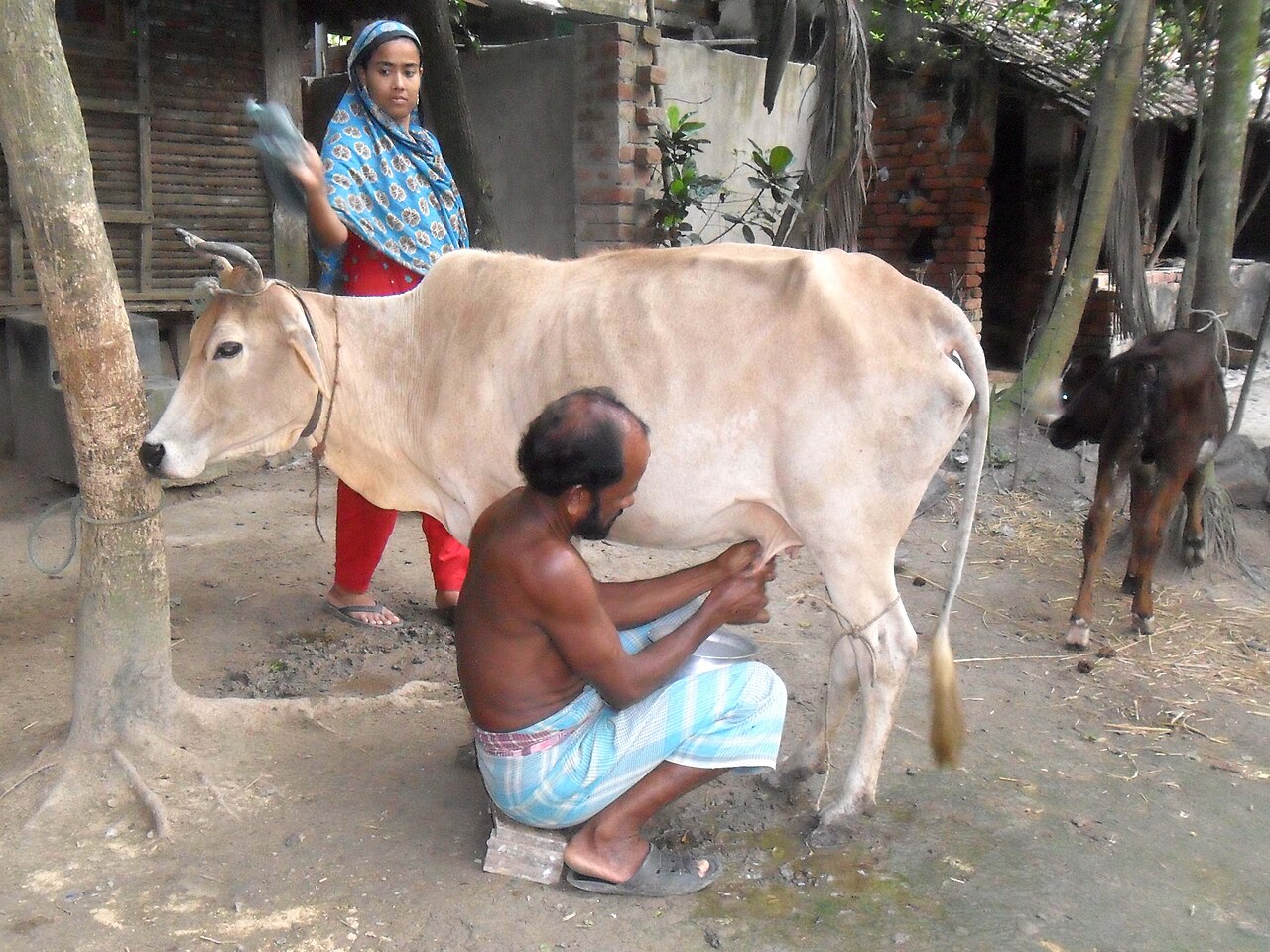
Most of Bangladesh's cattle are indigenous humped (zebu) animals, valued for disease resistance, heat tolerance and the ability to survive on low-quality roughage. According to Banglapedia, local cattle give an average of about 206 kg of milk per lactation, and a yearling local animal weighs about 98 kg on average. These cattle are used for ploughing, cartage, milk and meat production, and for dung that provides manure and fuel.
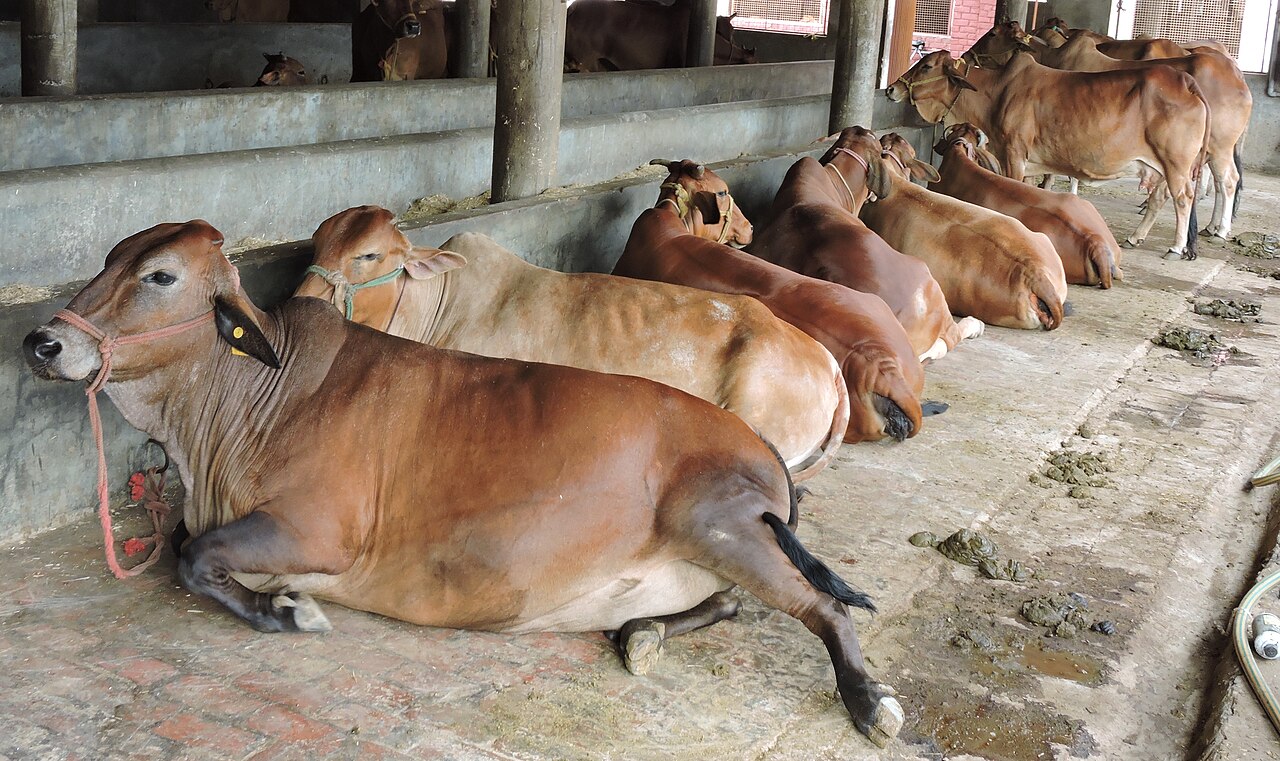
Improved indigenous breeds include the Pabna and the Red Chittagong. Banglapedia says Pabna cattle can give about 3 to 5 litres of milk a day, while Red Chittagong cattle give about 2 litres. Exotic breeds such as Sahiwal, Sindhi, Hariana, Jersey and Holstein-Friesian, and their crosses with local cattle, are also raised in the country. Because Sahiwal cattle like Lal Mia are comparatively large, they are especially prized at the sacrificial market.
Estimates cited in Banglapedia put the national herd at about 25.7 million cattle, 0.83 million buffalo, 14.8 million goats and 1.9 million sheep. This large livestock resource is the main basis of the country's milk, meat and hide supply, and the chief source for meeting sacrificial demand.
What the Sahiwal breed is
Lal Mia is a Sahiwal bull. The Sahiwal is a humped (zebu) cattle breed native to the Indian subcontinent, named after Sahiwal District in Pakistan's Punjab province. It is raised mainly in Pakistan's Punjab and in the Indian states of Punjab, Haryana and Rajasthan. Sahiwal cattle are usually reddish dun in colour, sometimes with white markings. The breed is known for its heat tolerance and is used for milk, meat and draught work, which is why it is called a triple-purpose breed.
According to data cited on Wikipedia, Sahiwal bulls in Pakistan average about 544 kg and cows about 408 kg, while in India cows are smaller, averaging about 327 kg. Bulls in Pakistan stand about 170 cm at the withers and cows about 130 cm. Lal Mia's roughly 1,006 kg is far above these averages, which the farmer attributed to long and careful fattening.
Wikipedia notes that the Sahiwal has spread to at least 27 countries on four continents, with a recent estimated world population of about 4.25 million, and that the breed is listed as not at risk by the UN Food and Agriculture Organization (FAO). In Bangladesh the Sahiwal is an introduced exotic breed; according to Banglapedia, Sahiwal-Pabna and Sahiwal-local crosses have been developed here, yielding about 1,240 and 728 litres of milk per lactation respectively.
Eid-ul-Azha and the sacrificial animal
Lal Mia was prepared for the Eid-ul-Azha sacrifice. Eid-ul-Azha is one of the two main religious festivals for Muslims. It begins on the 10th of Dhu'l-Hijja, the final month of the Islamic lunar calendar, and continues for the following few days. Because the calendar is lunar, its date in the Gregorian calendar moves earlier each year. During the festival, Muslims who can afford it sacrifice halal animals such as cattle, goats, sheep and camels; cattle sacrifice is especially widespread in Bangladesh, and temporary cattle markets spring up across the country before Eid.
A sacrificial animal is generally expected to be healthy and to meet certain age and quality standards. For that reason farmers rear their animals with care all year and try to bring healthy, sound cattle to market before Eid, which is why a large, healthy bull like Lal Mia draws special attention. The meat is traditionally divided into three shares: one for the family, one for relatives and friends, and one for the poor, so that everyone can share in the festival.
Babuganj and Barishal's farm economy
Lal Mia's farm is in Manikathi village of Babuganj upazila in Barishal district. According to Banglapedia, Babuganj upazila covers about 164.87 sq km and has a population of about 140,361. Agriculture is the main source of income here, accounting for about 50.58 percent of earnings, followed by service and commerce. Rivers such as the Arial Khan, Kalijira, Sugandha and Sandha flow through the upazila. The main crops are paddy, sugarcane, pulses, betel leaf and vegetables, while the chief fruits include mango, jackfruit, banana, coconut and betel nut.
Banglapedia records 630 fisheries and 136 poultry farms in Babuganj, a sign that the livestock and fisheries sectors matter here alongside crop farming. Babuganj is one of the ten upazilas of Barishal district. Banglapedia puts the district's area at about 2,784.52 sq km and its population at about 2.32 million. The Meghna, Arial Khan, Kirtankhola and Tentulia are among its main rivers, and agriculture provides close to half of the district's income. In this river-fed region, alongside farming, cattle rearing and small dairy farms are a source of extra income for many families, and during Eid-ul-Azha the cattle from such farms are sold at local and neighbouring-district markets.
The sacrificial cattle market and national demand
Eid-ul-Azha creates one of the largest cattle markets in Bangladesh. According to Banglapedia, about 1.8 million cattle are sacrificed in the country each year during the festival. In recent years, animals raised by local farmers have been able to meet much of the sacrificial demand. Banglapedia notes that the slaughter of young cattle during religious festivals is one reason the cattle population grows slowly; even so, rising output on domestic farms has kept the market supply steady.
The previous year's picture pointed the same way. A UNB report of 10 June 2025, citing the Department of Livestock Services, said that in Eid-ul-Azha 2025 a total of 9,136,734 animals were sacrificed across the country, of which about 4,705,106 were cattle and buffalo and about 4,430,668 were goats and sheep. With supply exceeding demand that year, about 3,310,603 animals went unsold.
Such figures show how many animals change hands at the Eid market each year, and how much demand there is for large, eye-catching cattle. The fact that this demand can now be met largely from within the country, thanks to rising output on domestic farms, is a positive sign for local farmers.
Why big bulls draw crowds
In the sacrificial season, large bulls always draw special interest. Many farmers give their biggest animal a name, and crowds gather around that animal at the market. It was the same with Lal Mia; Jagonews24 reported that people came to the farm every day to see the roughly 1,006 kg Sahiwal bull. For the coming Eid-ul-Azha, the owner had set his price at about Tk 10 lakh. That, however, was the owner's own asking price; the final sale price depends on bargaining between buyer and seller at the market.
One reality with big bulls is that, because of their weight, the pool of buyers is limited, and the costs of transport, feed and care are also higher. Farmers therefore expect comparatively high prices for such animals. Reports about big bulls appear every year in Bangladesh before Eid, both encouraging local farmers and drawing buyers' attention to animals raised on domestic farms rather than imports.
Young entrepreneurs and the livestock office
The report described Mamun Hossain's farm as an example that inspired local young people. Lal Mia's story carries the message that, rather than chasing jobs, it is possible to start a farm with modest capital and build it up step by step. Mamun himself said that if young people become entrepreneurs, they can contribute to society as well as to themselves. Such small and medium farms play an important role in rural employment and in meeting the demand for milk and meat.
The livestock sector also matters to the wider economy. According to Banglapedia, the sector contributes about 2.9 percent of national GDP and grows at an annual rate of about 5.5 percent. Besides supplying milk, meat and hides, it is a source of income for large numbers of people, especially rural women and young people. The success of entrepreneurs like Mamun Hossain highlights the sector's potential for fresh investment and employment.
Babuganj Upazila Livestock Officer Dr Prodip Kumar Sarkar told Jagonews24 that Mamun's farm was inspected regularly. By his account, the cattle were raised entirely on natural feed, a positive example for other farmers, and the owner was given all kinds of support in cattle rearing. The local offices of the Department of Livestock Services support farmers through vaccination, treatment and advisory services all year, and give special attention to animal health in the run-up to the sacrificial season.
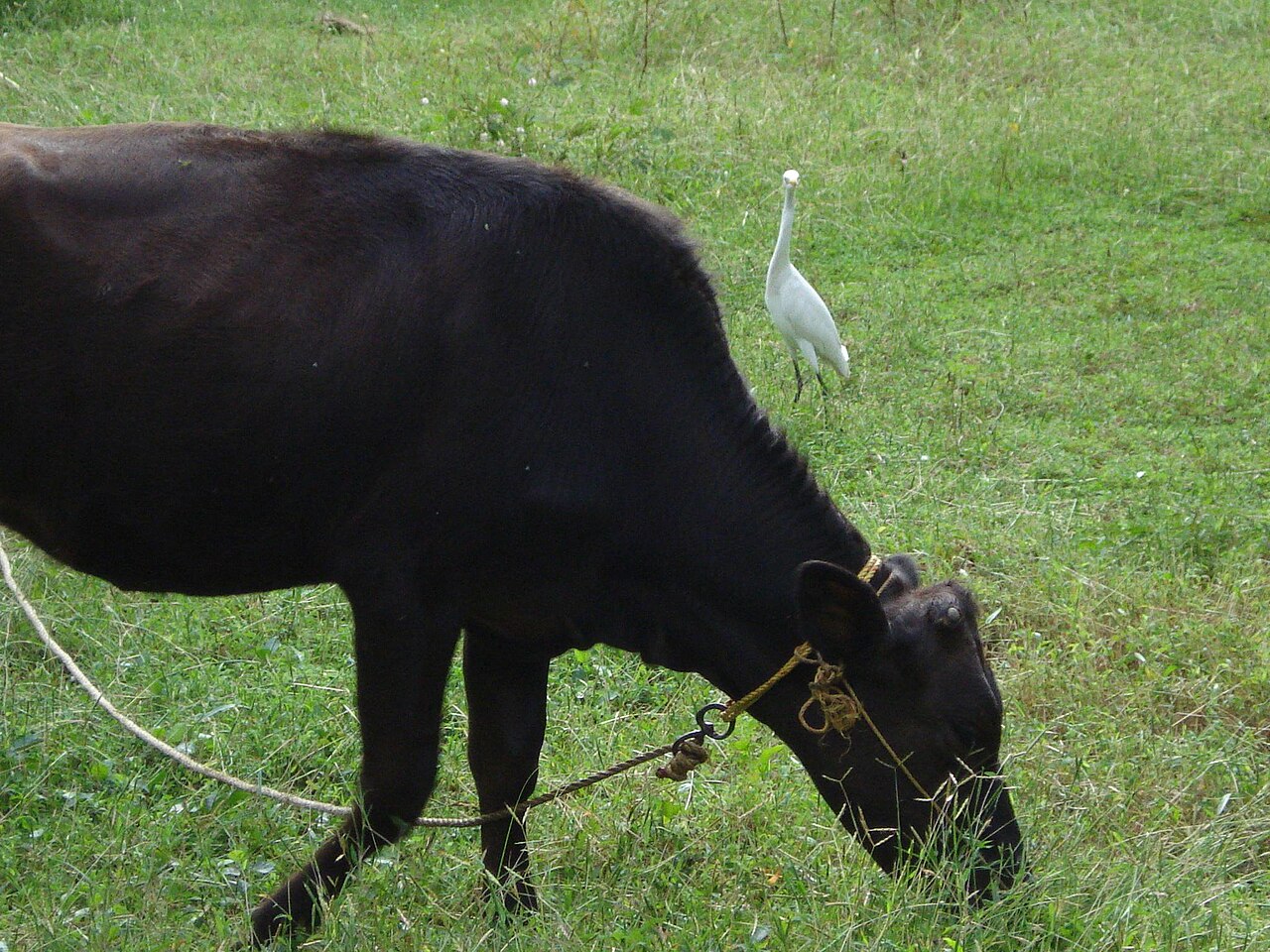
Photo: Pavanaja / Wikimedia Commons (CC BY-SA 3.0)
Sources: Jagonews24, Banglapedia, UNB, Wikipedia, Bangladesh Department of Livestock Services
Comments
(0)