
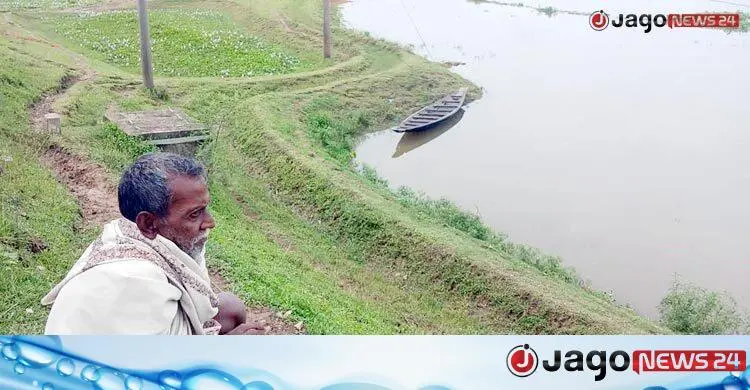
"All the paddy on my land is gone. There is no food to rely on for the family for the whole year. What little I cut has also started rotting on the khola (the paddy-drying yard). Nobody wants to buy wet paddy. When I think about how we will run the household and how I will repay people, I cannot bear it. Now I console myself that Allah gave the crop, and He has taken it."
That is how Fajar Ali, a farmer from Atukura village in Habiganj's Baniachong upazila, described watching his paddy being ruined before his eyes.
Paddy has been cut on less than one-third of the land in the district, and the paddy on the remaining two-thirds is still in the fields. Labourers cannot harvest because of rain, lightning and fear of leeches. With no sunshine, growers are also worried about drying the paddy already cut, and so they are losing interest in cutting the rest.
Official figures and farmers' estimates
According to the Department of Agricultural Extension (DAE), boro paddy was planted on 123,644 hectares in Habiganj this year, and the crop was a bumper one. But incessant rain and rising rivers damaged the boro before it ripened, and then water entered the haors and submerged it. Most of the land has still not been harvested: paddy on 84,857 hectares is still in the fields. The office gives 38,294 hectares as not harvested, while it gives the breakdown of the same figure, 27,465 hectares in haor areas and 10,829 hectares in non-haor areas, as harvested. Paddy on 8,000 hectares has already been submerged by rainwater.
The DAE says the heaviest damage from the rain is in Baniachong upazila, where about 2,690 hectares of paddy is submerged, with 1,720 hectares in Ajmiriganj and 1,350 hectares in Lakhai.
Local farmers say the real picture is worse: more than 10,000 to 11,000 hectares has already gone under, new areas are being submerged every day, and water has reached several thousand more hectares that are not yet fully under.
Borrowed money, ruined crops
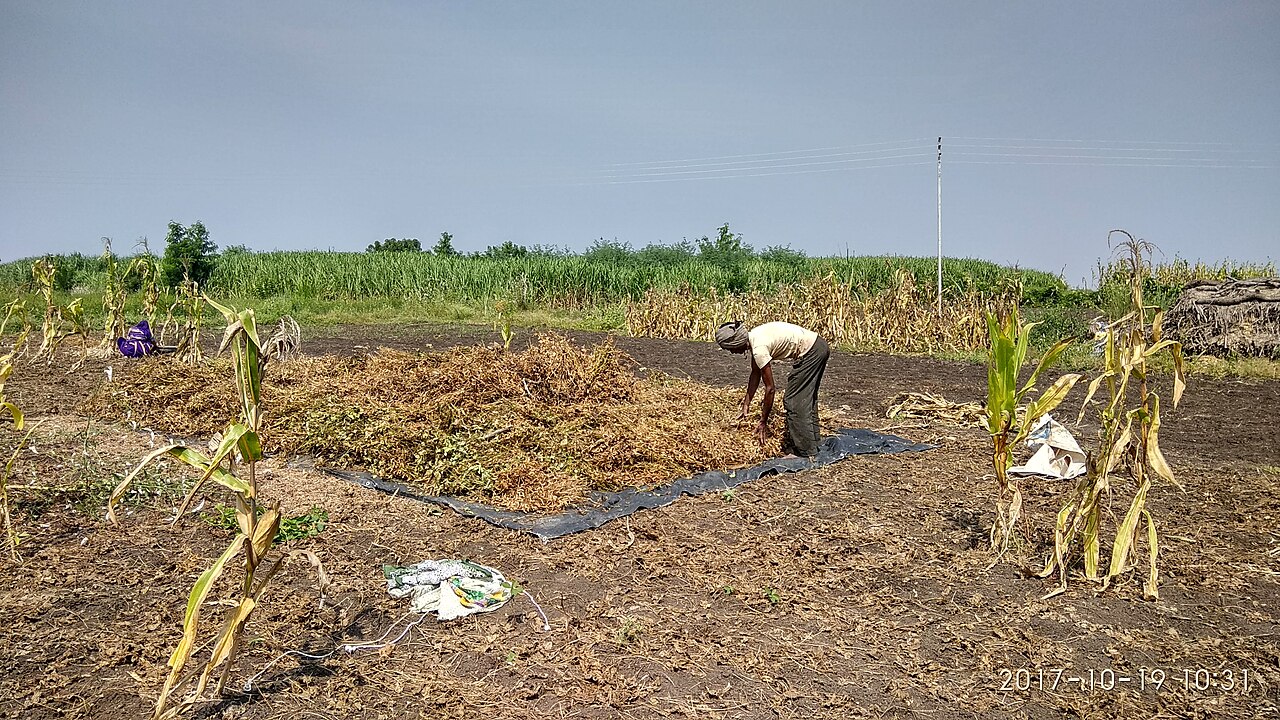
Fajar Ali said he had grown boro on 22 kedar (about 6.5 acres). Seeing water coming into the fields, he began cutting the paddy half-ripe, and cut 10 kedar in the rain. That paddy could not be dried; it was threshed somehow and brought to the khola. "I tried to sell the wet paddy but it was no use. Nobody wants to buy it. The paddy on the khola got soaked in the rain and has started to rot, and seedlings are sprouting in a lot of it. Now we have to fight to survive," he said.
Farmer Motabbir Mia said he borrowed to grow boro on 25 kedar (about 7.5 acres) this year. Because of the early rain he started cutting half-ripe, green paddy, but managed to bring only 7 kedar to the khola. The rest went under water, and the cut paddy has now started to rot too. "Forget repaying the loans; even feeding the family will be hard this year," he said.
Harendra Sarkar, a farmer from Subidpur village, said he spent Tk 50,000 to grow paddy on 4 bighas. "All the land went under in the rain. My dreams have drowned under the water. I can't think how the coming days will pass."
Shahab Uddin, a harvest labourer in Baniachong, said he had come to cut paddy for a wage of Tk 1,500 a day, but is afraid to go into the fields for fear of leeches and lightning.
Traders stuck with paddy
Rois Ali, a paddy trader at Atukura bazar, said that with no government price fixed, he had bought some paddy at Tk 550 to 700 a maund but can no longer sell it. "I have landed in trouble by buying this paddy. The millers don't want it, and it can't be kept long in the warehouse. After a while it will start to spoil. What use is buying paddy if I can't sell it?"
Agriculturist Dipak Kumar Paul, additional deputy director (horticulture) at the DAE in Habiganj, said that after a break of only one day, heavy rain resumed from Friday night. If it continues like this, it will be hard to prevent floods. About 5,000 hectares of new land went under in a single day, and new areas are being submerged every day, he said.
Habiganj deputy commissioner Dr GM Sarfaraz said it cannot be ruled out that an early flood will come if the rainfall increases. The overall situation is being monitored, and a helpline has already been opened to deal with the flood situation, which people can contact for any need.
Source: Jagonews24. First published in Bengali on The Agro News.
Comments
(0)