
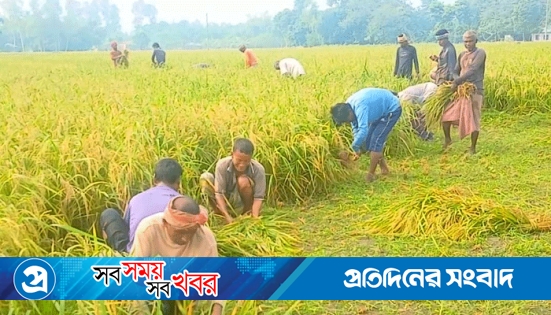
Rice production in Bangladesh has increased more than fourfold over the past 50 years, agriculture minister Dr Md Abdus Shahid has said.
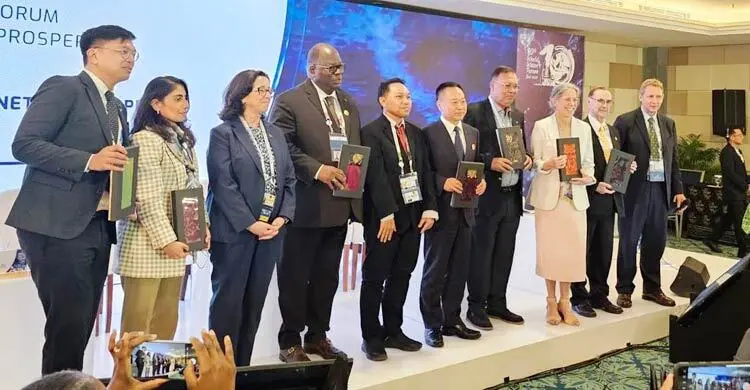
The minister said this on 21 May at a ministerial session titled "Rice for Planet and People" at the 10th World Water Forum under way in Bali, Indonesia. The session was jointly organised by the World Bank and the International Rice Research Institute.
The information was given in a press release from the Ministry of Agriculture.
"No rice shortage now"
At the session the agriculture minister said Prime Minister Sheikh Hasina has been taking and implementing groundbreaking steps for the welfare of the country's farmers and agriculture. She has increased farm subsidies, raised budget allocations for research, developed research infrastructure and expanded research opportunities, among other measures. These many-sided initiatives have made Bangladesh a role model in agricultural production in the world, and have helped greatly in particular in becoming and staying self-sufficient in rice.
He said rice production in Bangladesh has increased more than fourfold in the past 50 years. As a result there is now no rice shortage in the country, and demand is being met from domestic production. Without this achievement, lakhs of our people would have faced a food crisis, become food refugees, and a global crisis would have arisen. In reality, it was because of this achievement that Prime Minister Sheikh Hasina showed the courage to shelter and feed 12 lakh Rohingyas displaced from Myanmar.
The minister said sustainable food security must be ensured through everyone's coordinated efforts, and called on all countries and international organisations to take coordinated action.
At the session, the World Bank's country director for Indonesia, Carolyn Turk, presented the keynote paper. China's water resources minister Li Giuying, Indonesia's agriculture minister Andi Emran Sulaiman and the UAE's minister of climate change and environment Amna binte Abdullah Al Dahak were among the discussants.
World Bank global manager Michael J. Webster gave the opening speech. Members of the Bangladesh delegation present included Bangladesh's ambassador to Indonesia Md Tariqul Islam, Bangladesh Rice Research Institute (BRRI) director general Shahjahan Kabir and joint secretary Muhammad Jahangir Alam.
Participating delegates shared their countries' experiences at the session, and all pledged to work together to achieve food security and combat climate change.
Water for shared prosperity
At noon on the same day, the minister told a session titled "Water for Shared Prosperity" that safe water is very important for people, plants and every living thing. The world's population is growing while arable land is shrinking. Water is essential to sustainable development and to ensuring food security for all people. So everyone must manage water resources properly and make the most of every drop, which can be achieved only through regional and global cooperation among all stakeholders around the world.
The minister also outlined the Bangladesh government's various initiatives for proper management of water resources, more efficient irrigation in agriculture and water-saving use in rice cultivation. He said: "We are working to stop water wastage in agriculture and cut farmers' irrigation costs further. Irrigation through underground pipes and the alternate wetting and drying method in rice cultivation are being expanded."
Source: Jagonews24. First published in Bengali on The Agro News.
Comments
(0)