
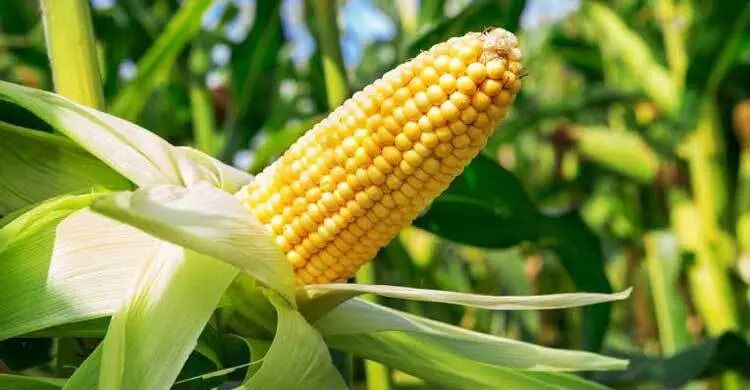
Two decades ago maize was not a very important crop in Bangladesh. It was grown for people and a little animal feed. In a short time Bangladesh has achieved great success with maize, and it has now become a leading crop second only to the main food grain.
Maize is now grown and traded commercially on a large scale. Rising production of poultry, fish and livestock feed is driving up demand, and a large share of animal feed now depends on maize. Several private companies are also investing in maize flour, oil and maize-based products.
According to the Department of Agricultural Extension (DAE), maize cultivation is rising to keep pace with demand, and there has been great success in yields. Maize production in the country has risen more than 11-fold in the past decade, the DAE says. Last year 56 lakh tonnes were produced, and this year's target is 58 lakh tonnes. In 2015 production was 27 lakh tonnes.
"Maize cultivation is rising to keep pace with demand, and there has been great success in yields too. Maize production has risen more than 11-fold in the past decade. Last year 56 lakh tonnes were produced; this year's target is 58 lakh tonnes." - Department of Agricultural Extension
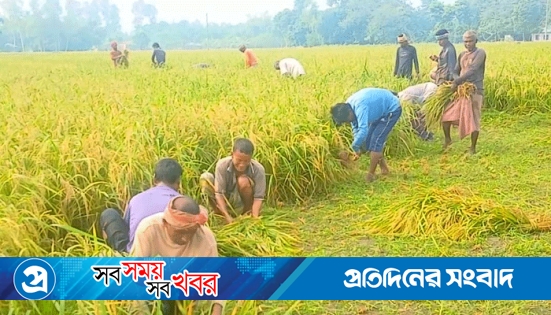
Harvest under way
The maize threshing season is now under way, with farmers busy harvesting, threshing and storing. Maize costs little to grow and needs little care, while profits are higher. Plenty of maize has been planted across the country again this year, and agriculture officials expect production to exceed the target.
Yields have risen quickly in recent years. Türkiye has the world's highest maize yield at 11 tonnes a hectare. Bangladesh's yield is 10 tonnes a hectare, third in the world. Five years ago (2018) it was 8 tonnes a hectare.
Annual demand for maize in the country is now over 60 lakh tonnes, so the shortfall still has to be met by imports. Last year 21 lakh tonnes were imported, down from 24 lakh tonnes three years earlier. No imports are needed during the harvest season, and imports are falling steadily.
Dr Salahuddin Ahmed, director of the Bangladesh Wheat and Maize Research Institute, told Jago News that demand for feed in the livestock and fisheries sectors grows every year, creating a large market for maize. Because of demand, cultivation is rising and yields have improved; with high-yielding seed, Bangladesh is on the way to top maize yields.
He said farmers have been getting good prices for several years because of demand, which increases their interest in growing it. If the trend continues, maize imports will no longer be needed in a few years.
"Demand for feed in the livestock and fisheries sectors grows every year, creating a large market for maize. Cultivation is rising and yields have improved. With high-yielding seed, Bangladesh is on the way to top maize yields." - Dr Salahuddin Ahmed
Where maize is grown
Maize is now grown on about five and a half lakh hectares. Half of production comes from Rangpur division, followed by Khulna and Rajshahi divisions. By district, Dinajpur, Chuadanga, Thakurgaon and Lalmonirhat produce the most.
Tajul Islam Patwary, director of the DAE's field services wing, told Jago News that maize land keeps growing, with farmers switching from wheat to maize. This rabi season the target was 5,42,000 hectares, and maize was grown on 2,000 hectares more, so production is expected to exceed the target. The harvest has begun and will continue until June, and farmers are getting good prices this year, he said.
Feed industry demand
Feed makers say the country's animal feed market is growing by 15 per cent a year. Poultry feed needs 55 per cent maize, cattle feed 30 per cent and fish feed 12-15 per cent. These three sectors need 50 to 55 lakh tonnes of maize a year. Demand for sweet corn for human consumption is also rising, as is the market for corn flour, starch and other maize products.
Rakibur Rahman, managing director of feed maker Nahar Agro, told Jago News that the maize market is now worth about Tk 12,000 crore, of which about Tk 8,000 to 9,000 crore is produced at home and the rest imported.
He said the animal feed market now depends heavily on maize. As production of fish, cattle and poultry rises, so does demand for maize-based feed. More than 300 companies make these feeds, and countless people are involved in growing maize, making food products, import-export, processing and storage. Altogether the maize market is getting bigger.
"The animal feed market now depends heavily on maize. More than 300 companies make these feeds, and countless people are involved in growing, import-export, processing and storing maize." - Nahar Agro MD Rakibur Rahman
Shamsul Arefin Khaled, president of the Feed Industries Association Bangladesh (FIAB), told Jago News that higher domestic maize production is making animal feed relatively cheaper. Buyers are also emerging in the hotel and restaurant sectors, and demand for maize by-products is rising.
New industrial uses
Nasir Group, one of the country's major industrial groups, is already making starch from maize, and another large group is reportedly preparing to build a factory. Alongside these two, various small and large companies are investing in human food made from maize.
Starch, ethanol, sugar and syrup are being made from maize, and the stalks, leaves and stems can be used to make paper, card or hardboard, plastic pipes and many other industrial products. These have not yet spread commercially, but the maize research institute is working on them.
Maize silage has recently become popular as cattle feed in place of grass. It can cut daily demand for concentrate feed by about 30 per cent.
Impact on farmers' lives
A research report by the International Food Policy Research Institute (IFPRI) last year found that over a decade (2009-19) maize contributed most to improving farmers' living standards in Bangladesh, followed by jute, meat and milk, then tuber crops, horticulture, pulses and oilseeds, and fish farming. Rice production had the least impact on farmers' living standards. Maize is also playing a major role in reducing rural poverty.
A report by the Food Ministry's Food Planning and Monitoring Unit (FPMU) says maize, being high-yielding, profitable and suited to the weather, is steadily taking the place of wheat. In 2019-20 and 2020-21 the area under maize grew by 4 per cent while wheat fell by 0.2 per cent. From 2019-20 to 2021-22 maize area grew at 2.5 per cent while wheat area fell at 0.1 per cent.
Source: Jagonews24. First published in Bengali on The Agro News.
Comments
(0)