
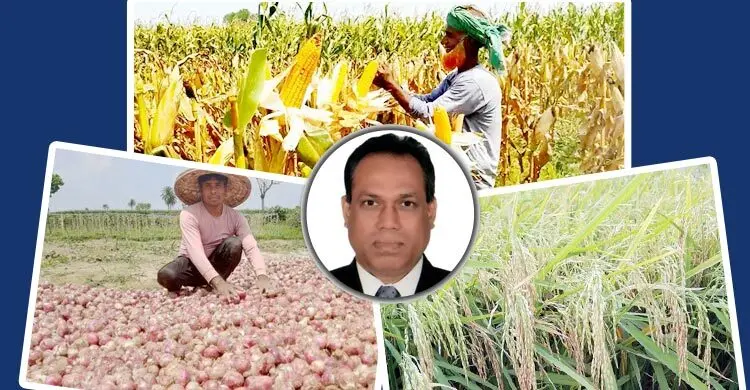
In the current fiscal year the agriculture sector was allocated Tk 33,698 crore, or 4.97 per cent of the total budget. For the next fiscal year it has been allocated Tk 35,374 crore, or 4.64 per cent. So although the amount has risen, agriculture's share of the sector-wise allocation has fallen by 0.33 percentage points.
What the budget offers
Although the farm subsidy has been raised in the new fiscal year, there is a plan to bring 2 crore farmers under the agricultural input assistance card, and the budget also plans smart cards for farmers. Money has been set aside to supply 51,300 farm machines with 70 per cent assistance for farmers in haor areas and 50 per cent for farmers elsewhere.
The budget proposes exempting imports of all kinds of farm machinery from advance tax. Cashew nut production and processing factories will be set up in the hill regions of Bangladesh. Tariffs on imports of fertiliser, seed, pesticide and other farm inputs are proposed to stay unchanged.
The finance minister said that to save agriculture and farmers in agrarian Bangladesh, production must be raised. To that end the government is working to supply fertiliser and pesticide at affordable prices, develop new varieties and ensure the use of technology, and the sector is being given top priority to build a food self-sufficient Bangladesh.
Rising costs for farmers
Right after the budget was announced, prices of daily essentials, including vegetables, fish, meat, eggs, rice and lentils, went up. Overall, the budget for agriculture looks very poor. In a country where about 70 to 80 per cent of people are involved in agriculture, such a low allocation is unthinkable. Experts believe that if agriculture cannot be developed, the country could face food famine.
In other words, little has been allocated to agriculture, and farmers' condition is very poor and getting worse by the day, because farm costs are rising: medicines, fertiliser and pesticides have become much more expensive. Medicines that used to cost Tk 500 now cost Tk 800 to Tk 900. A labourer who used to be available for Tk 300 cannot now be had even for Tk 500.
Farmers who add up their costs from start to harvest find they are making a loss. In this situation the government has again not raised the agriculture budget. If it does not, farmers' plight will continue, their finances will grow even worse, and they will be severely deprived.
There is still time to raise the allocation for agriculture; otherwise farmers will abandon cultivation and scramble for other ways to make a living. Farmers now have one demand: that the government raise the agriculture allocation satisfactorily. Agriculture experts believe that only then will farmers and their interests survive, and the government will truly live up to being farmer-friendly.
Source: Jagonews24. First published in Bengali on The Agro News.
Comments
(0)