
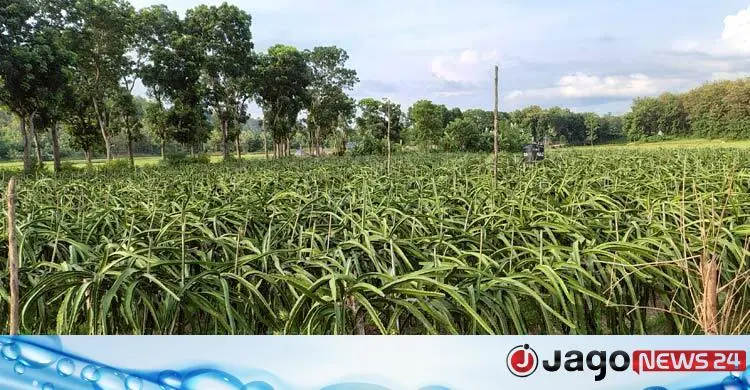
Jhum cultivation was once an inseparable part of the lives, livelihoods and culture of the hill communities of Bandarban. But that reality has changed over time. Higher profits, growing market demand and government support mean commercial orchards of local and foreign fruits are taking over jhum land. Not only farming methods but the hill economy, farmers' way of life and land use are changing. This shift in the Bandarban hills is now the story of a quiet revolution in agriculture.
Profitable crops such as mango, malta, dragon fruit, cashew and coffee have brought a quiet revolution to the hill economy and are making local farmers self-reliant.
Across wide hilly and flat areas of seven upazilas, including Sadar, Ruma, Rowangchhari, Thanchi, Lama, Alikadam and Naikhongchhari, orchards of cashew, coffee, mango, jackfruit, banana, pineapple, dragon fruit, avocado, malta, orange, lemon and guava are now a common sight. Where hillsides were cleared for jhum only a few years ago, rows of fruit trees now cover the slopes in green.
Local farmers say jhum depends entirely on nature, so the hoped-for yield is often not achieved. A fruit orchard, once established, can bring income for years, so many farmers are cutting back on jhum and turning to fruit.
Jhum shrinks as orchards grow
According to the Department of Agricultural Extension (DAE), in Bandarban Sadar upazila jhum covered 172 hectares in 2021-22 while fruit orchards covered 4,583 hectares. In 2022-23 jhum covered 163 hectares and fruit 4,984 hectares; in 2023-24 jhum 140 and fruit 5,007; in 2024-25 jhum 145 and fruit 5,114; and in 2025-26 jhum 155 hectares and fruit 5,302 hectares.
Upazila agriculture officer Md Rakibul Hasan said: "The hill climate and soil of Bandarban are very suitable for growing various fruits. Farmers are being given training, improved seedlings and regular technical support. As a result, fruit production and the area under fruit are growing every year." He said jhum farmers are also given advice and incentive support.
High-value commercial crops such as cashew, coffee, mango, plum and avocado in particular have opened new possibilities for farmers, and dragon fruit, malta and orange are also spreading fast. The fruit meets local demand and is also supplied to other parts of the country.
People involved in agriculture say the move from jhum to fruit-based farming is not only raising farmers' incomes but also helping to prevent soil erosion on the hills, protect the environment and build sustainable farming. In their view, if fruit farming is expanded in a planned way and storage and marketing are improved, Bandarban could become one of the country's main fruit-growing regions.
Farmers' stories
Ngoi Mro, an orchard farmer in the Chimbuk 12 Mile area, said that three years ago he grew jhum on 10 acres there. That land yielded 300 ari of paddy (10 kg per ari) along with other companion crops, worth about Tk 1.5 lakh. He later planted mango, pomelo and the Chandragiri variety of coffee on 3 acres of it, and now earns Tk 6-7 lakh a year from the fruit, which has brought his family much more comfort.
Diptimoy Tanchangya, an agricultural entrepreneur in Sadar upazila, said that two years ago he planted 950 Ball Sundari and Kashmiri plum seedlings on five acres of family land where only jhum had been grown before. Being grafted, they fruited in the first year, and he sold Tk 6 lakh worth of plums that year against a total cost of Tk 2.5 lakh. The next year he planted another 850 Ball Sundari seedlings, and the yield was four times that of the first year. The five acres now hold more than 1,800 plum trees, and he says he is earning several times more than from jhum.
Bajerung Tripura of Balipara union said he used to grow only jhum. Two years ago he planted 800 cashew trees on part of his jhum land, and received Tk 1.12 lakh from 20 maunds at Tk 6,000 a maund. The following year he sold 40 maunds.
Ringying Mro of Dingte Para in Thanchi upazila sadar said he planted about 1,500 cashew trees on 5 acres of jhum land in 2010. This year the orchard yielded about 150 maunds of cashew nuts, which has restored the family's financial wellbeing. Because fruit pays better than jhum, he now grows various orchards alongside jhum.
Iftekhar Selim Agni, owner of Dipto Agro, said he has planted malta, orange, avocado, year-round drumstick, cashew, chui jhal and other crops on 100 acres of leased land in the Jarulia area of Naikhongchhari upazila. Most of the trees, planted four years ago, have begun to bear fruit, and he expects good returns from the orchard in the future.
Abu Nayeem Mohammad Saifuddin, deputy director of the DAE in Bandarban district, was contacted on the matter but declined to give any information.
Source: Jagonews24. First published in Bengali on The Agro News.

Comments
(0)