
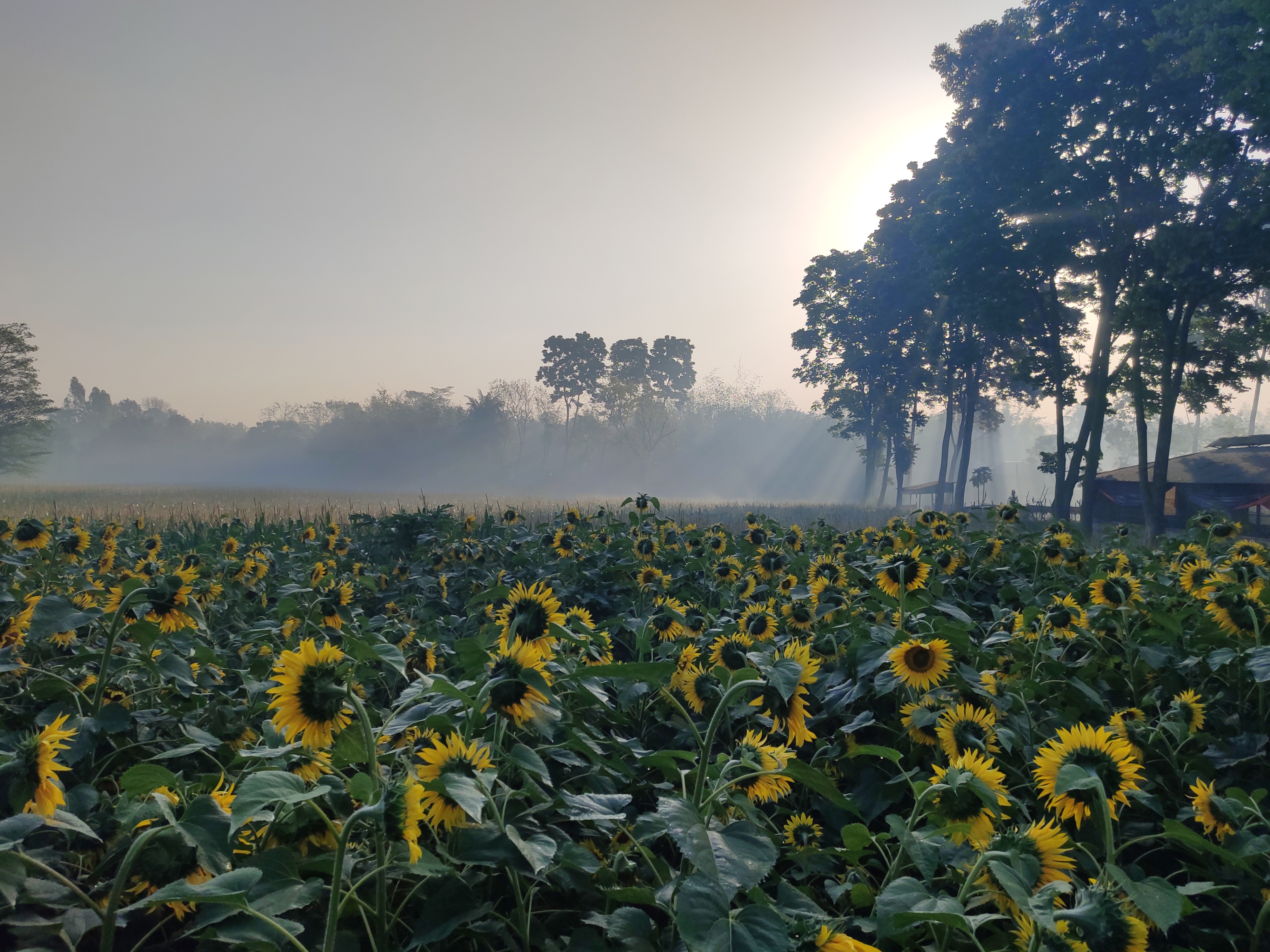
In all, 3,800 farmers were growing sunflower on 610 hectares in Bagerhat district in the season reported in mid-April 2026, according to the local agriculture office. Farmers said low production costs, a short growing period and better profit were drawing them to the crop. In Shyanpukuria village of Kachua upazila, sunflower covered a wide stretch of land, and visitors were coming to see the yellow fields.
The agriculture department said the crop's salt tolerance had helped it yield well in Bagerhat's soil, and that it was giving farmers seed and fertiliser free of charge along with advice. The district's deputy director of the Department of Agricultural Extension (DAE) said he wanted to carry the crop onto fallow land, the banks of shrimp enclosures and homesteads, so as to cut dependence on imported oil.
What the district figures show
The figures from the Bagerhat agriculture office were 610 hectares and 3,800 farmers. The original report's headline spoke of nearly 4,000 farmers, but the number the office gave was 3,800.
An earlier count points the same way on area. On 24 February 2026, Bangladesh Sangbad Sangstha (BSS) reported DAE figures showing 603 hectares in Bagerhat against a target of 538 hectares, or 112 percent of the target. In the same report the DAE's Khulna region, which covers Khulna, Bagerhat, Narail and Satkhira, had sunflower on 1,219 hectares, up from 1,108 hectares the year before. The target for 2025-26 was 2,945 tonnes from 1,319 hectares, and cultivation was about 92 percent complete on 23 February. District by district, BSS gave:
- Bagerhat: 603 hectares against a target of 538 hectares (112 percent)
- Satkhira: 228 hectares against 114 hectares (200 percent)
- Khulna: 197 hectares against 550 hectares (36 percent)
- Narail: 191 hectares against 117 hectares (163 percent)
Bagerhat therefore had the largest sunflower area of the four districts at that point in the season. The DAE's estimate for the whole region was about 11.80 lakh litres of edible oil.
Sown in December, cut in April: costs and returns
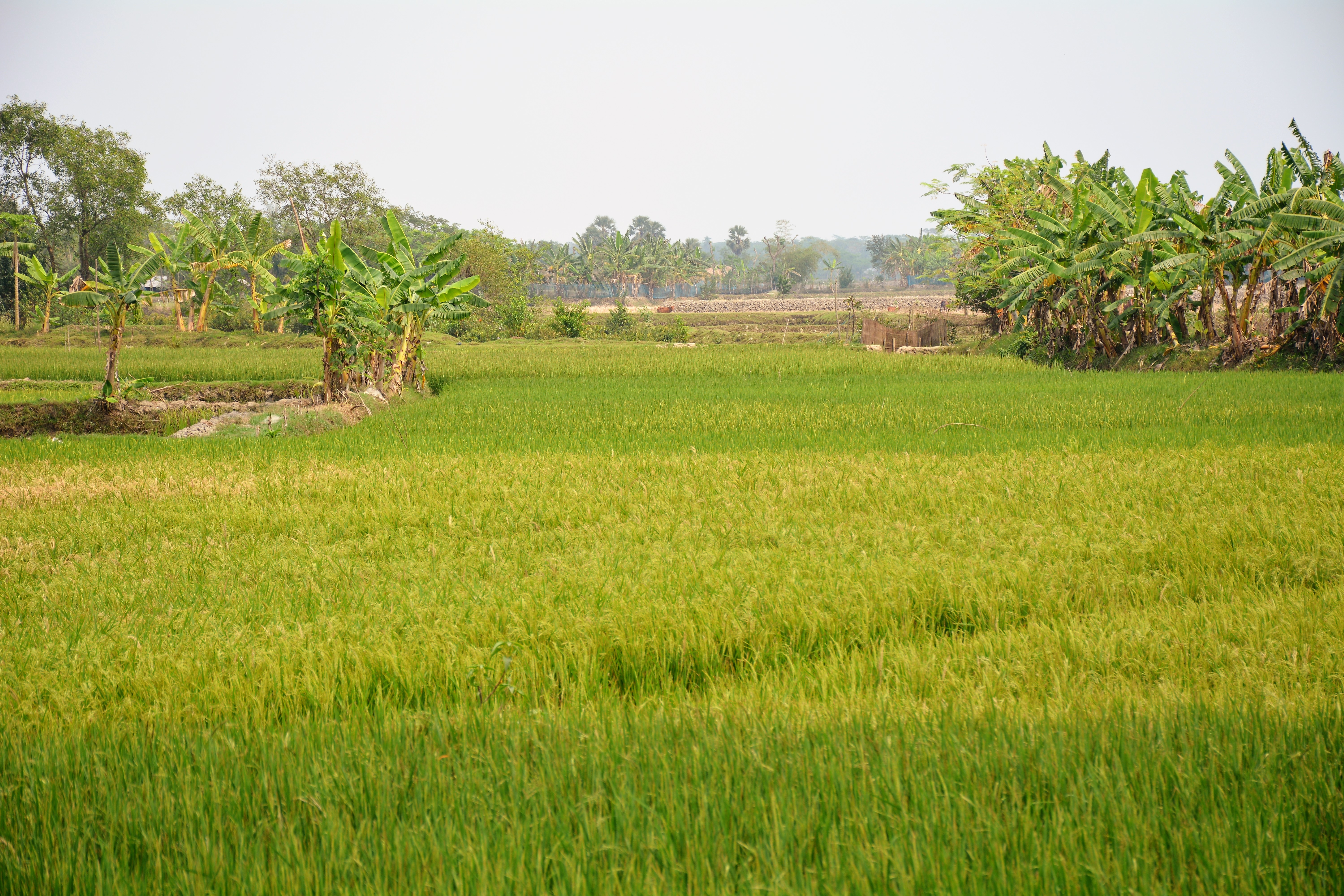
Farmers in Bagerhat said they began sowing in December and cut the crop in late April, about four months later, and that the yield was better than the year before. They put the cost at Tk 8,000 to 9,000 a bigha and said it was possible to earn Tk 20,000 to 25,000 a bigha. The oil sold at Tk 400 a kg.
Other reports from the region in the months and year before give a wider range. BSS quoted a farmer in February 2026 who estimated seven to ten maunds of seed a bigha, or 140 to 200 litres of oil, with oil selling for at least Tk 250 a litre and costs below Tk 3,500 a bigha. In Rupsha upazila of Khulna, BSS reported in May 2025 that a bigha cost about Tk 10,000 to 12,000 and brought in about Tk 30,000 to 35,000, with the oil at Tk 300 a litre. These are farmers' own estimates, and they differ from one report to the next.
Research has given more modest results. A BARI survey of 100 growers in Bogura and Satkhira, published in 2016, put the production cost at Tk 62,199 a hectare and the net return at Tk 10,863, a benefit-cost ratio of 1.18. A later trial at Exim Bank Agricultural University in Chapainawabganj, published in 2023, gave BARI Surjomukhi-3 a benefit-cost ratio of 2.52 and a hybrid, DS 275, a ratio of 3.03. The 2016 authors listed the main problems as lack of irrigation, late and costly seed, low demand and the absence of a local oil mill and market.
Timing matters too. The Agriculture Information Service (AIS) says sunflower sown in the Bengali month of Agrahayan, mid-November to mid-December, gives a good yield. A trial of BARI Surjomukhi-2 at research stations in Joydebpur and Hathazari in the 2012-13 rabi season found the best yield, about 2.5 tonnes a hectare, from sowing on 20 November, and the lowest, about 1.83 tonnes, from sowing on 20 December.
What the growers said
Local farmer Mohammad Sohag said: "Sunflower has yielded better than paddy, maize and mustard, and it costs less. I work on other crops in the fields. Because sunflower needs less labour, the women of the household can do all the work. My wife does most of the work on this sunflower crop."
Women's part in the crop has been noted before: in the 2016 BARI survey, about 18 percent of the growers were women.
Chhobi Mridha, a woman farmer, said: "We have been growing sunflower for three years. It yields well and we have made a good profit from it. We use this oil ourselves all year round, and we also sell it at Tk 400 a kg. There is a lot of demand for this oil. People buy it straight from our house."
Farmer Rabindranath Mridha said: "Sunflower costs much less to grow than paddy, so our income is higher. This crop also needs relatively little irrigation and care. From sunflower we get oil cake as well as oil, and we can feed the cake to our cows. We don't have to buy adulterated oil from outside. After meeting our own needs we can sell oil outside too."
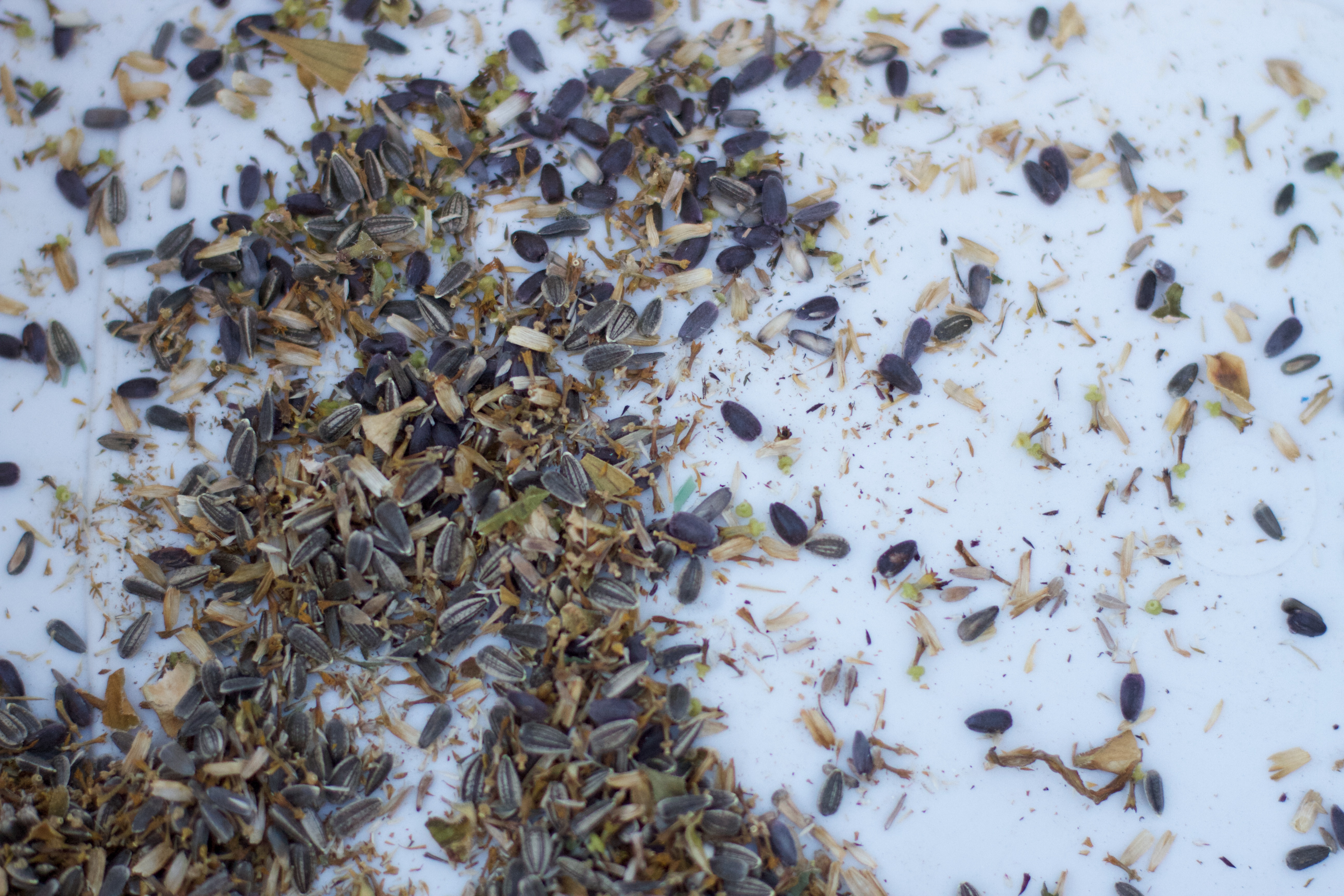
Selling oil from home in this way depends on having the seed pressed. In Rupsha, BSS reported in 2025 that oil extraction machines installed through a project let farmers sell oil locally rather than raw seed. AIS says a traditional ghani gets about 25 percent oil from the seed and an expeller 30 to 35 percent.
Seed, fertiliser and courtyard meetings
Md Motahar Hossain, deputy director of the DAE in Bagerhat, said: "Because sunflower is salt-tolerant, it has yielded well in Bagerhat. Through courtyard meetings we have been able to explain the benefits of sunflower cultivation to farmers. We are encouraging farmers with seed and fertiliser, and we are giving the necessary advice from sowing to harvest."
He added: "If sunflower can be grown on Bagerhat's fallow land, dependence on imported oil will fall considerably. With that in mind, seed of the BARI Sunflower-3 variety will be given to all farmers in future. By providing seed and fertiliser, we will encourage them to grow it on fallow land, on the embankments of shrimp enclosures and around homesteads. This is how we will expand sunflower cultivation."
BSS described the support across the Khulna region in February 2026. It said 10,650 farmers had received incentive support, with 2,13,000 kg of fertiliser and 10,650 kg of seed distributed. Each farmer received 10 kg of DAP, 10 kg of MOP and 1 kg of seed for two bighas. That is a government package, not a fertiliser recommendation. In addition, 240 farmers were showing the crop on 40 demonstration fields covering 80 acres under the PARTNER project, and the DAE's additional director for the region said those farmers had received BARI-3 seed, DAP and MOP fertiliser and pesticide from the government.
PARTNER, the Programme on Agricultural and Rural Transformation for Nutrition, Entrepreneurship and Resilience, is a Tk 6,910 crore programme led by the DAE and funded by the government, the World Bank and the International Fund for Agricultural Development. It was rolled out in October 2023, runs until June 2028 and covers 495 upazilas in all 64 districts. Expanding pulses and oilseeds on 2 lakh hectares is among its aims.
BARI Surjomukhi-3 and how the crop is grown
AIS describes BARI Surjomukhi-3, the variety the deputy director said would go to all farmers, as a short plant of 75 to 80 cm, with 410 to 829 seeds a head, a thousand-seed weight of 65 to 87 grams and 38 to 40 percent oil in the seed. In the Chapainawabganj trial it flowered 61 days after sowing and matured at 103 days, earlier than the hybrid, and yielded 6.83 maunds a bigha against 8.20 for the hybrid.
For the crop in general, AIS gives this guidance:
- Soil: it grows in all types, and loam suits it best.
- Sowing: in lines, 50 cm between rows and 25 cm between plants. Seed rate: 8 to 10 kg a hectare for ordinary varieties, and 12 to 15 kg for BARI Surjomukhi-2.
- Fertiliser per hectare: urea 180 to 200 kg, TSP 150 to 200 kg, MOP 120 to 150 kg, gypsum 120 to 170 kg and zinc sulphate 8 to 10 kg, with half the urea and all the rest at final ploughing. The other half of the urea goes on in two parts, 20 to 25 days and 40 to 45 days after the seedlings emerge.
- Thinning: 15 to 20 days after emergence, leave one healthy plant in each cluster.
- Irrigation and weeding: 30 days after sowing, before flowering; 50 days after, when the head forms; and 70 days after, before the seed fills.
- Harvest: when the leaves yellow, the head droops and the seed is black and hard, usually 90 to 100 days after sowing.
AIS gives the average yield as 1.7 to 1.9 tonnes a hectare. For leaf blight, root rot and hairy caterpillars, a farmer should take the advice of the upazila agriculture officer, who can also advise on fertiliser for local soil.
Why salt tolerance matters in Bagerhat
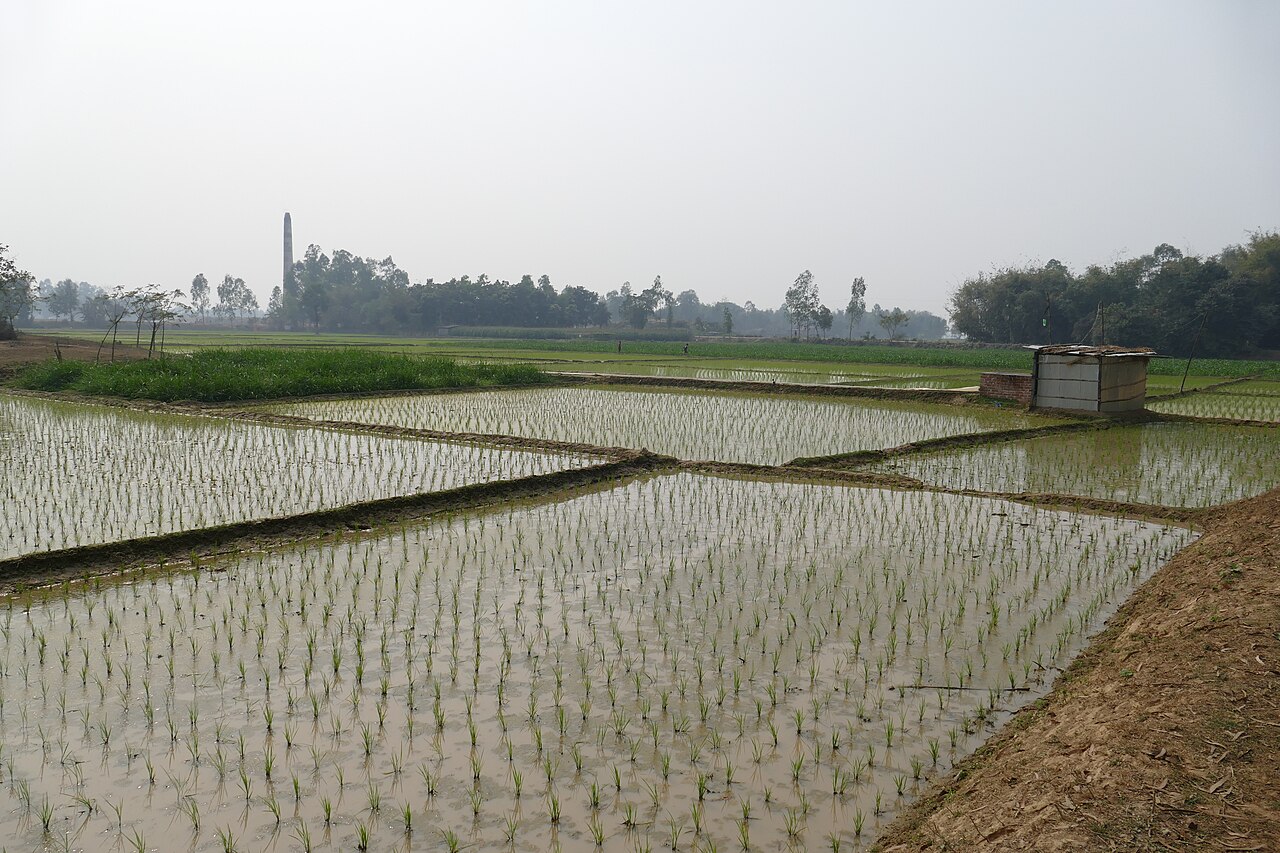
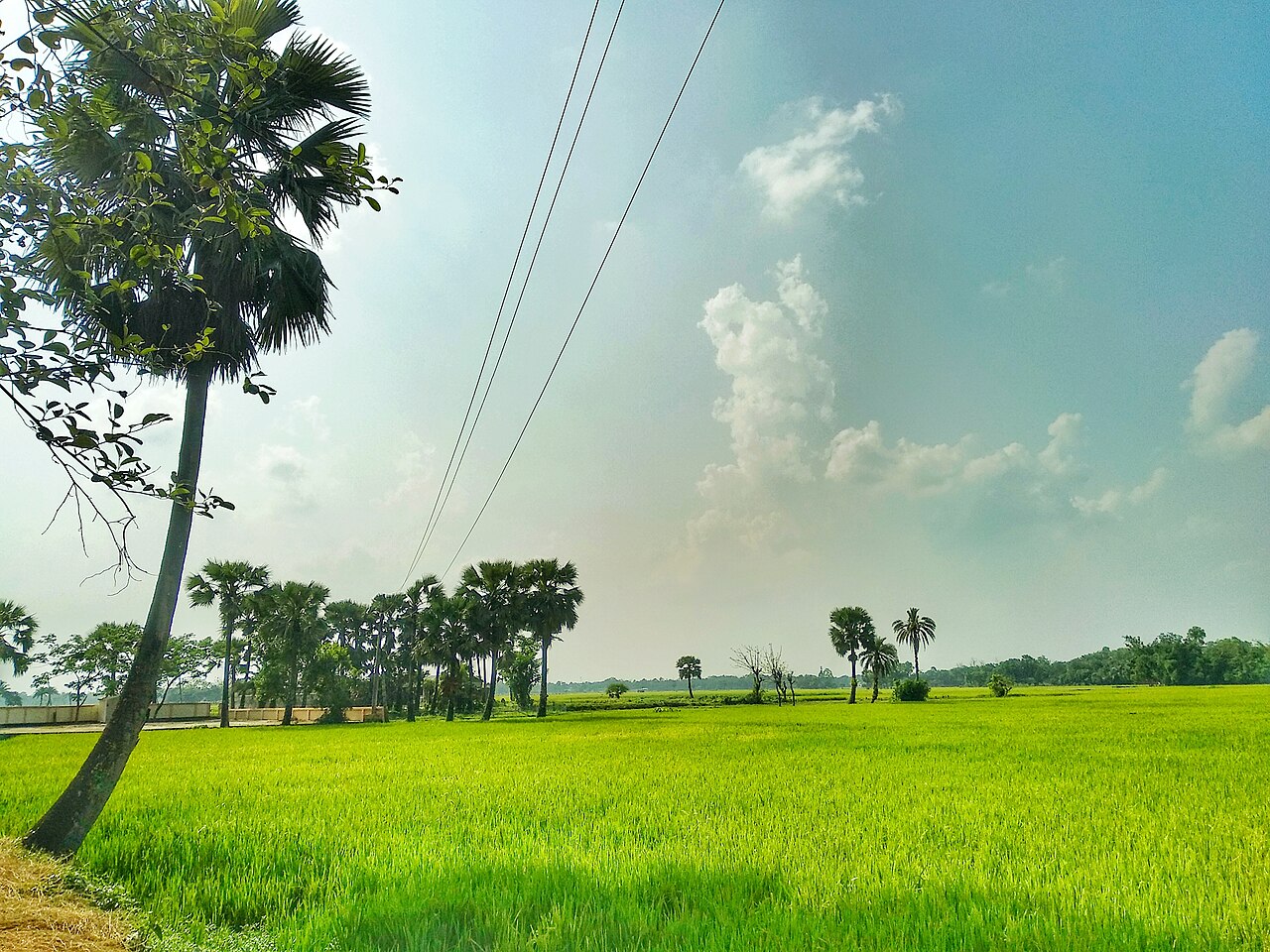
Bagerhat, in Khulna division, covers 3,959.11 square kilometres and had 1,476,090 people at the 2011 census, according to Banglapedia. It has nine upazilas, among them Mongla, Morrelganj and Sarankhola, and its rivers include the Pasur, Madhumati, Baleshwari and Bhola. Agriculture was the main source of income, at 54 percent. Kachua, the upazila of the Shyanpukuria fields, is the smallest of the nine at 131.63 square kilometres, with 97,011 people in 2011. Banglapedia lists its main crops as paddy, sugarcane, wheat, jute, cotton, betel leaf, pulses and vegetables.
The officials' stress on salt tolerance reflects the district's land. A survey by the Soil Resource Development Institute (SRDI) found about 10.56 lakh of the 16.89 lakh hectares of coastal land affected by salinity, up from 8.33 lakh hectares in 1973. New Age, reporting the survey in 2011, named Bagerhat with Khulna, Satkhira and Patuakhali among the worst-hit districts. A 2023 review of those data says salinity in Sharankhola of Bagerhat, Dumuria of Khulna and Shyamnagar of Satkhira rose from a range of 2.8 to 18.5 dS/m in 1973 to 4.0 to 42.8 dS/m in 2009. Banglapedia describes the Ganges Tidal Floodplain, in the country's southwest, as having large areas of salinity across most of the zone.
How much salt sunflower can bear has been measured. A two-year field study by Leland Francois, published in Agronomy Journal in 1996, found the seed yield of four hybrids unaffected up to a soil salinity of 4.8 dS/m, with a loss of 5 percent for each unit above that, and oil concentration largely unaffected up to 10.2 dS/m. It classed sunflower as moderately tolerant. An American extension manual from 1990 had called its salt tolerance low, so the crop is not immune, and the result depends on how salty a given field is.
Trials in the region have looked at how to manage this. On a farmer's field in Dacope, Khulna, over the 2018-19 and 2019-20 rabi seasons, sowing Hysun-33 on ridges and furrows lowered soil salinity, and the combination with 50 cm by 25 cm spacing had the lowest salinity, 4.01 dS/m, and the highest seed yield, 2,274 kg a hectare. The study was published in June 2024.
Earlier seasons in Bagerhat and the Khulna region
Sunflower is not new to the southwest, but its area has moved sharply from year to year. In Khulna district, officials reported 38 tonnes of seed from 19 hectares in 2016-17, then 9 tonnes from 5 hectares and 2 tonnes from 1 hectare in the next two years, and 32 tonnes from 14 hectares in 2019-20. In 2021, the chief scientific officer of the Salinity Management and Research Centre in Batiaghata said two irrigations could bring fallow saline land under the crop, and that the technology should spread across the south.
In March 2023, BSS reported 2,895 hectares across the region's districts against a project target of 320 hectares, with a yield of about 8 maunds of seed a bigha. In April 2023, Dhaka Tribune reported sunflower on 150 hectares of fallow land in Fakirhat upazila of Bagerhat, where the upazila office said 1,030 farmers had grown it under government incentives on 137 hectares.
In February 2024, BSS gave DAE figures for 2023-24 of 3,100 hectares in the four districts, against a target of 3,265, with Bagerhat at 1,048 hectares against a target of 986. The region's 1,108 hectares in the season before 2025-26, and Bagerhat's 603 hectares in February 2026, are well below those levels. So the farmers' account of rising interest sits beside official numbers that have gone both up and down. The reports read for this story do not explain the fall.
Sunflower, the oil and the oil cake
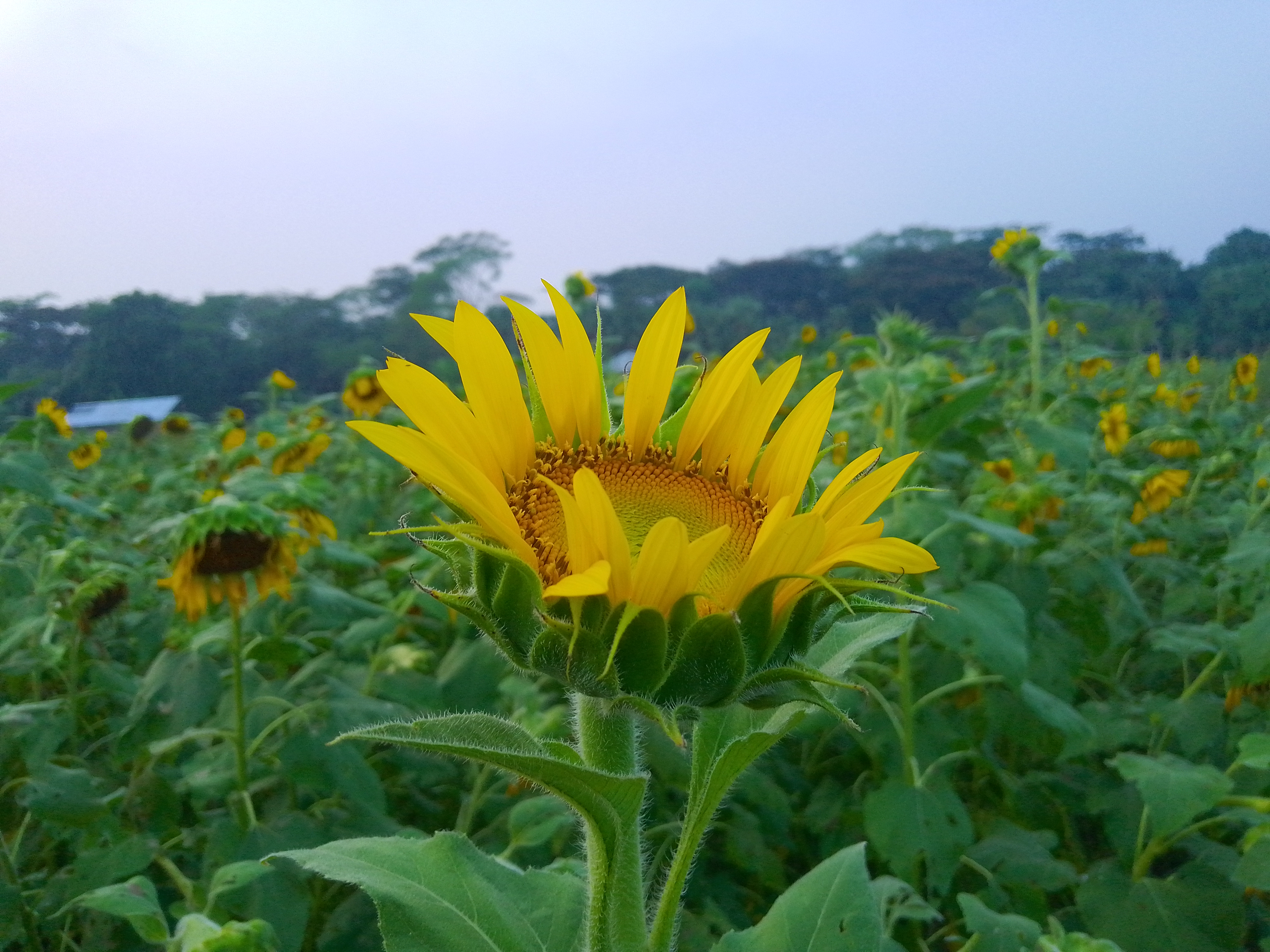
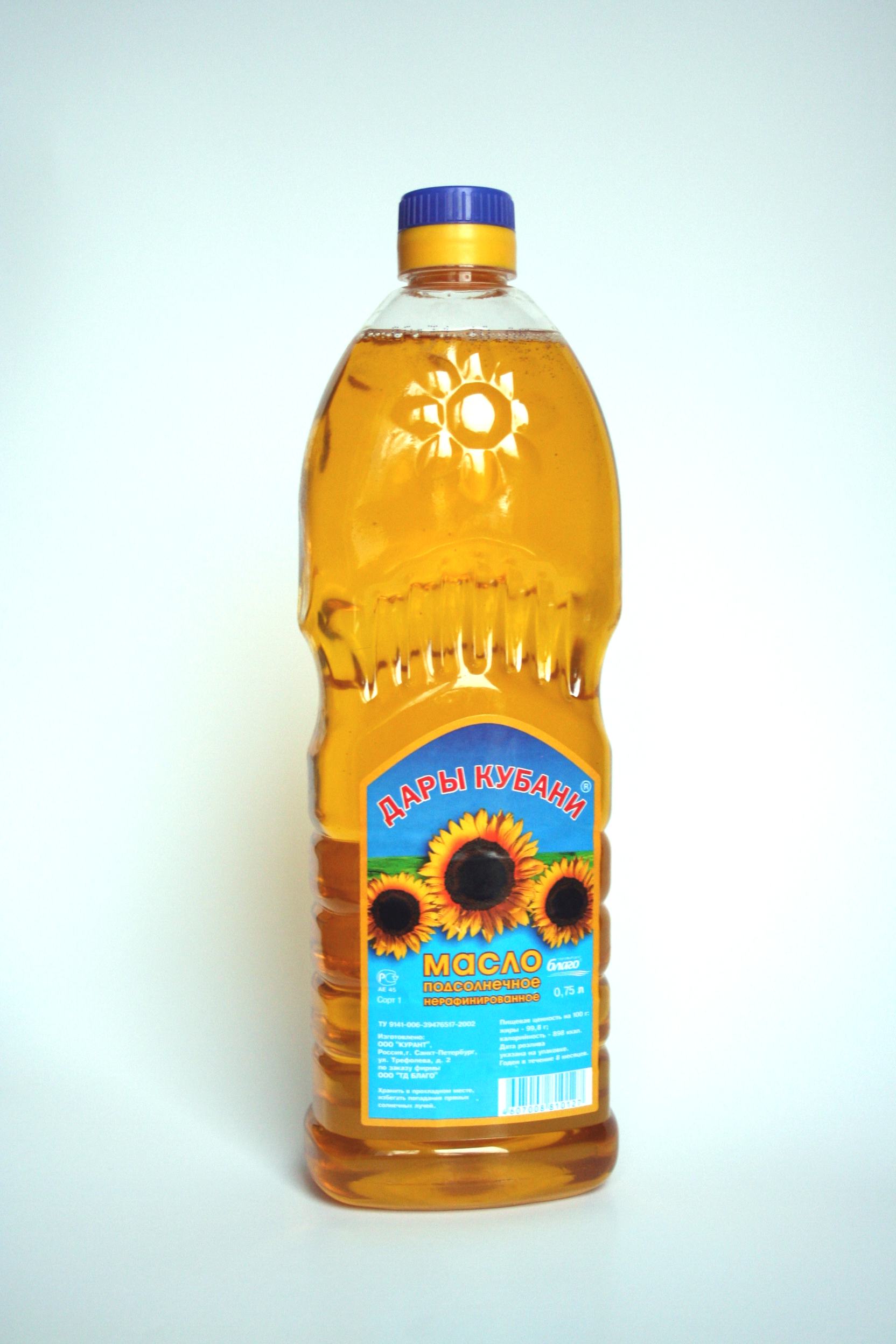
Sunflower, Helianthus annuus, is an annual plant native to North America and was domesticated there, possibly around 1000 BC. Banglapedia says the cultivated plant probably originated in Mexico and came to Bangladesh first as a garden plant, with dwarf varieties introduced as an oilseed crop in the 1980s. AIS says it has been grown in the country since 1975. The American manual says commercial varieties hold 39 to 49 percent oil, and that a head carries 1,000 to 2,000 flowers, with insect pollination helping the yield. AIS and reports from Khulna put linoleic acid in the seed at 40 to 45 percent.
Rabindranath Mridha's use of the oil cake has a basis in feed science. AIS says the cake is fed to cattle and buffalo. Feedipedia, an animal feed reference, says crude protein ranges from about 23 percent of dry matter in some mechanically pressed, non-dehulled meals to over 40 percent in highly dehulled ones, and that the meal can be the sole supplementary protein for dairy cows. It warns that batches vary and that poorly dried material can carry mycotoxins.
Imports and the case for home-grown oil
The deputy director's argument about imports rests on a wide gap. A US Department of Agriculture report of March 2025 said Bangladesh needs about 3.4 million tonnes of edible oil a year, with palm oil 50 percent of that and soybean oil 28 percent, and that domestic oilseeds meet about 15 percent of the requirement, with the rest imported as crude oil or oilseeds. A BARI senior scientific officer, writing in the Daily Observer on 14 March 2026, gave a lower requirement of 2.2 to 2.4 million tonnes, said mustard, sesame and sunflower meet only 12.5 to 13 percent of it, and put the yearly import cost at about Tk 25,000 to 28,000 crore. The estimates differ, but both show a country buying most of its cooking oil from abroad.
Sunflower is a small part of domestic output. The USDA report, drawing on DAE data, put it at about 15,000 hectares and 30,000 tonnes in 2023-24 and about 10,000 hectares and 20,000 tonnes in 2024-25, against more than a million hectares of mustard and rapeseed. The Daily Star had reported 15,403 hectares nationwide in 2021, with Patuakhali in the lead on 3,263 hectares. In Kalapara upazila of Patuakhali, The Business Standard reported about 1,950 hectares of sunflower in April 2024, in a story on the salt-tolerant variety Hysun-33.
The USDA report says the Ministry of Agriculture drew up a three-year plan in 2022 to produce 40 percent of the country's edible oil demand by 2025, bringing new coastal and haor land under cultivation, and that only mustard and sunflower among domestic oilseeds are crushed for edible oil.
Photo: Moheen Reeyad / Wikimedia Commons (CC BY-SA 4.0). The top picture shows a sunflower field at the Proshika HRDC campus in Saturia, Manikganj, as background.
Sources: Jagonews24, Bangladesh Sangbad Sangstha (BSS), Agriculture Information Service (AIS), US Department of Agriculture Foreign Agricultural Service (USDA FAS), Bangladesh Journal of Agricultural Research, EBAUB Journal, Bangladesh Agronomy Journal, Agronomy Journal, Journal of the Indian Society of Coastal Agricultural Research, Research in Agriculture Livestock and Fisheries, New Age, Dhaka Tribune, The Financial Express, United News of Bangladesh (UNB), The Daily Star, The Business Standard, Daily Observer, Banglapedia, Feedipedia, Alternative Field Crops Manual (Purdue University)
Comments
(0)