
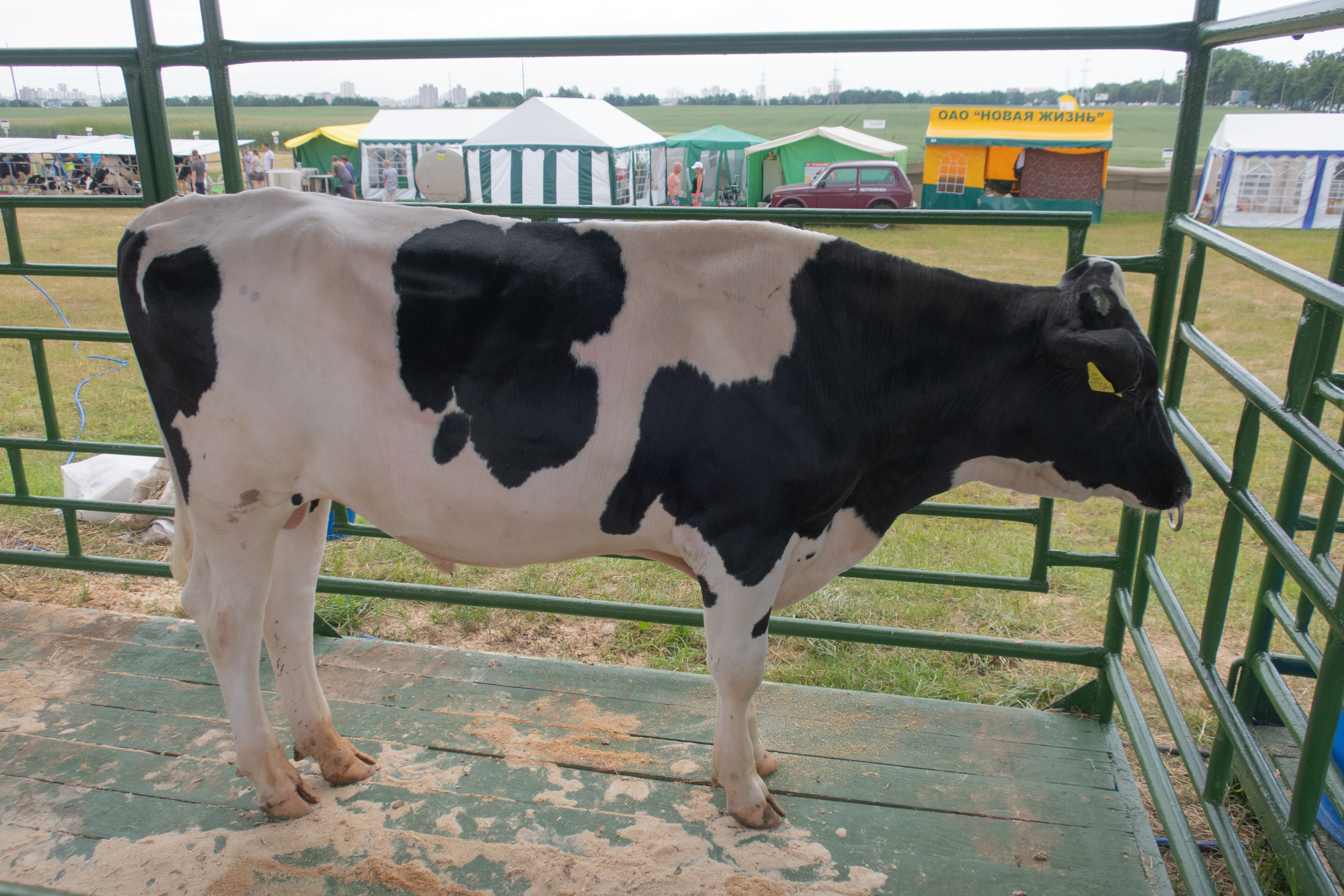
In mid-May 2026, with the sacrificial animal markets of Bagerhat starting to fill up ahead of Eid-ul-Azha, two very large bulls on a family farm in Bagerhat Sadar upazila were drawing visitors from far and near. Jagonews24 reported on 16 May 2026 that thousands of cattle, large and small, had been prepared on farms across the district, but that the animals catching everyone's eye were two bulls named Mama (uncle) and Bhagne (nephew), raised by a young farmer, Ibrahim Hossain.
The two Holstein Friesian bulls belong to Najma Dairy Farm in Hakimpur village of Khanpur union. According to the report, Mama weighed 1,100 kg and Bhagne 1,200 kg, and curious people came to the farm every day to see them. Bagerhat's livestock officer, Mohammad Saheb Ali, gave the same weights and told the paper that the two were the biggest cattle in the district.
Two bulls, their weights, ages and asking prices
Both bulls were born on Najma Dairy Farm itself, the report said, and by May 2026 they had become Bagerhat's biggest attraction. Mama was 2 years and 3 months old and Bhagne 2 years and 5 months. Each was about 10 feet long and 6 feet tall.
The farm spent Tk 1,200 to Tk 1,500 a day on their feed, according to the report, which said the bulls had been fattened entirely by natural means on straw, grass, bran, maize meal and other local feed. That description of the diet came from the farm; the district livestock officer said separately that farmers in the district were fattening cattle by natural methods as his office had advised.
The owner, Ibrahim Hossain, said he had been raising cattle on the farm for about 22 years and that this was the first time he had prepared two such large bulls for Qurbani. "Mama and Bhagne are the two biggest cattle in Bagerhat district," he said. Apart from these two, the farm had nine more cattle.
He had set an initial price of Tk 8 lakh for Mama and Tk 10 lakh for Bhagne, he said, and would sell them if he got a fair price. These were his asking prices on the farm, not the result of any sale.
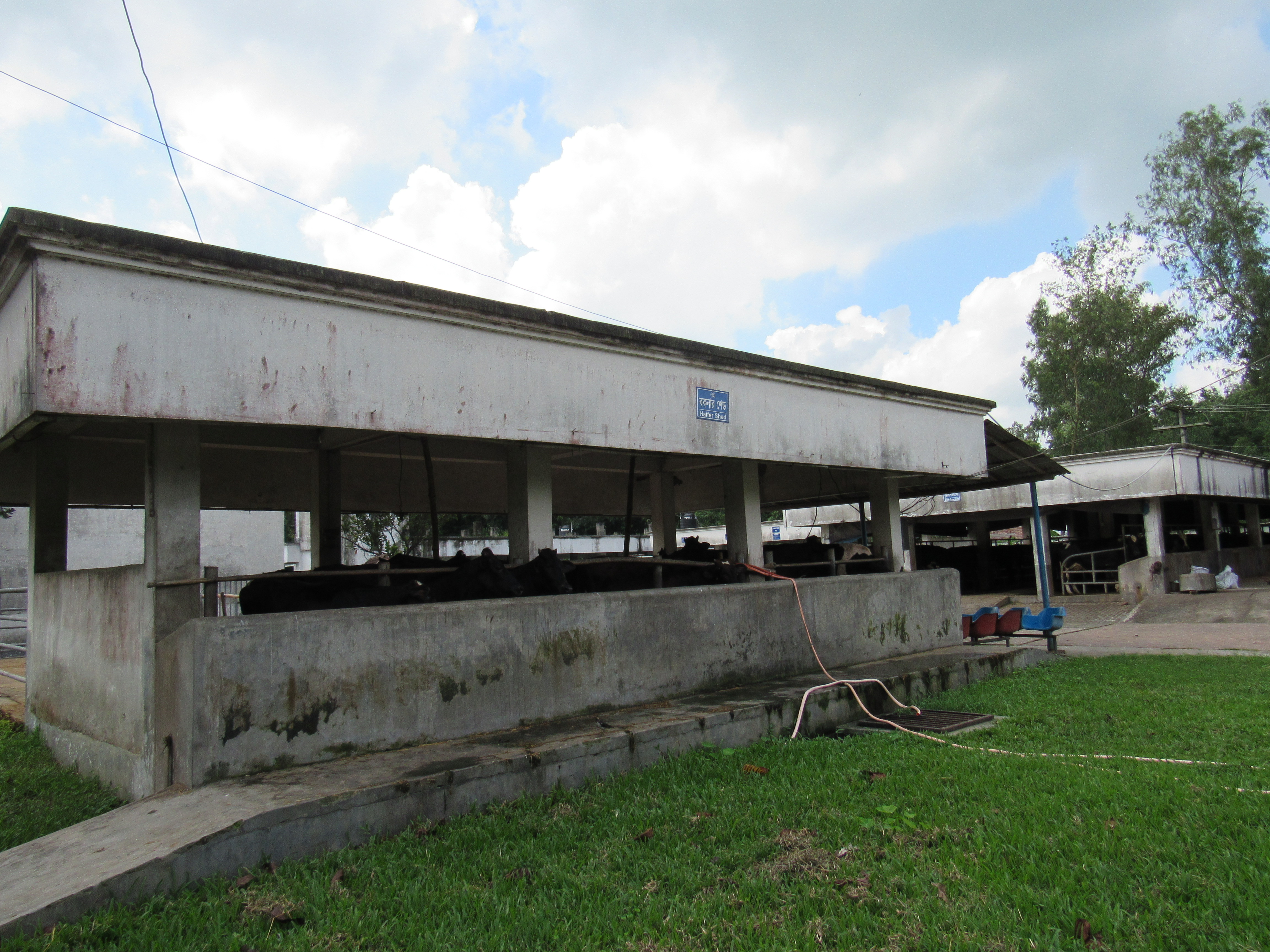
A farm that began with a single cow
The farm takes its name from the owner's mother, Najma Begum, who described how it grew. "My son started this farm with a single cow. Now there are 11 cattle in all, including the two big ones," she told Jagonews24.
She described the family's daily routine with the two bulls. Besides feeding them local fodder, she said, the family bathed them twice a day and kept them clean at all times, and in the hot weather fans were kept running for them. "The whole family raises them like our own children," she said.
A local resident, Munshi Faraji, said Ibrahim had raised cattle on the farm since he was young, starting with one cow and now owning 11. "He works very hard on the farm. This is the first time in my life I have seen such big cattle. He has succeeded with this farm," he said.
Bagerhat's livestock officer, Mohammad Saheb Ali, confirmed the farm's place in the district. "The two biggest cattle of the district are at Najma Dairy Farm in Hakimpur in Bagerhat. One is 1,100 kg and the other 1,200 kg," he said. "Farmers are fattening cattle by natural methods according to our instructions. We hope they will be able to sell the two cattle at a good price."
Why bathing, shade and fans matter for a heavy Holstein
The care the family described, with bathing twice a day and fans in hot weather, matches what animal scientists recommend for European dairy breeds kept in hot climates. A review published in Frontiers in Veterinary Science in July 2023, which pulled together studies on dairy cattle in tropical and sub-tropical countries, explains that cattle of zebu (Bos indicus) descent are highly efficient at controlling their body temperature, while taurine breeds such as the Holstein Friesian have a higher metabolic rate and higher feed requirements and are hit harder by heat.
The review lists the signs of heat stress that farmers can watch for: a rise in rectal temperature and in breathing rate, and panting, which researchers score on a scale of 0 to 4. It reports that feed intake in lactating Holstein cows begins to fall at air temperatures of 25 to 26 degrees Celsius and that at 40 degrees intake can drop by 40 per cent. Those figures were measured in milking cows, not fattening bulls, but they show how sensitive the breed is to hot, humid weather of the kind southern Bangladesh has before the monsoon.
Among the ways to reduce heat stress, the review names shade for animals exposed to the sun, cooling with fans and water spray, and wetting the animals, for example in rivers and ponds. In one study it cites, dairy cattle kept under shade and cooled by fans and spray gave 2 kg more milk a day. The review concludes that cooling technologies greatly reduce the harm done by a high temperature-humidity index.
What a Holstein Friesian is
The Holstein Friesian is a dairy breed that originated in the Netherlands and Germany. It is easily recognised by its black-and-white pied coat, though red-and-white animals also occur. The breed is now found all over the world and has one of the largest gene pools of any dairy breed. An average Holstein in the United States produces about 10,000 kg of milk a year. The breed was originally a dual-purpose animal, used for both milk and beef.
In Bangladesh, Holstein Friesian blood has long been used to improve local cattle. Banglapedia, the national encyclopedia, notes that efforts to cross local cattle with exotic breeds were made several times in the past, and that the breeds brought in include the Holstein Friesian, the Jersey and the Sahiwal. It records milk yields per lactation of 1,460 litres for Friesian-Pabna crosses and 1,800 litres for Friesian crosses, against about 2 litres a day for a Red Chittagong cow and 3 to 5 litres a day for a Pabna cow.
Banglapedia also describes how the country's beef supply has worked: beef mostly comes from old or unproductive animals and culled farm animals, and demand for beef cattle is seasonal because so many animals are bought for sacrifice at Eid-ul-Azha. Large Holstein-cross bulls like Mama and Bhagne, raised as show animals for the Qurbani market, are a product of that seasonal demand.
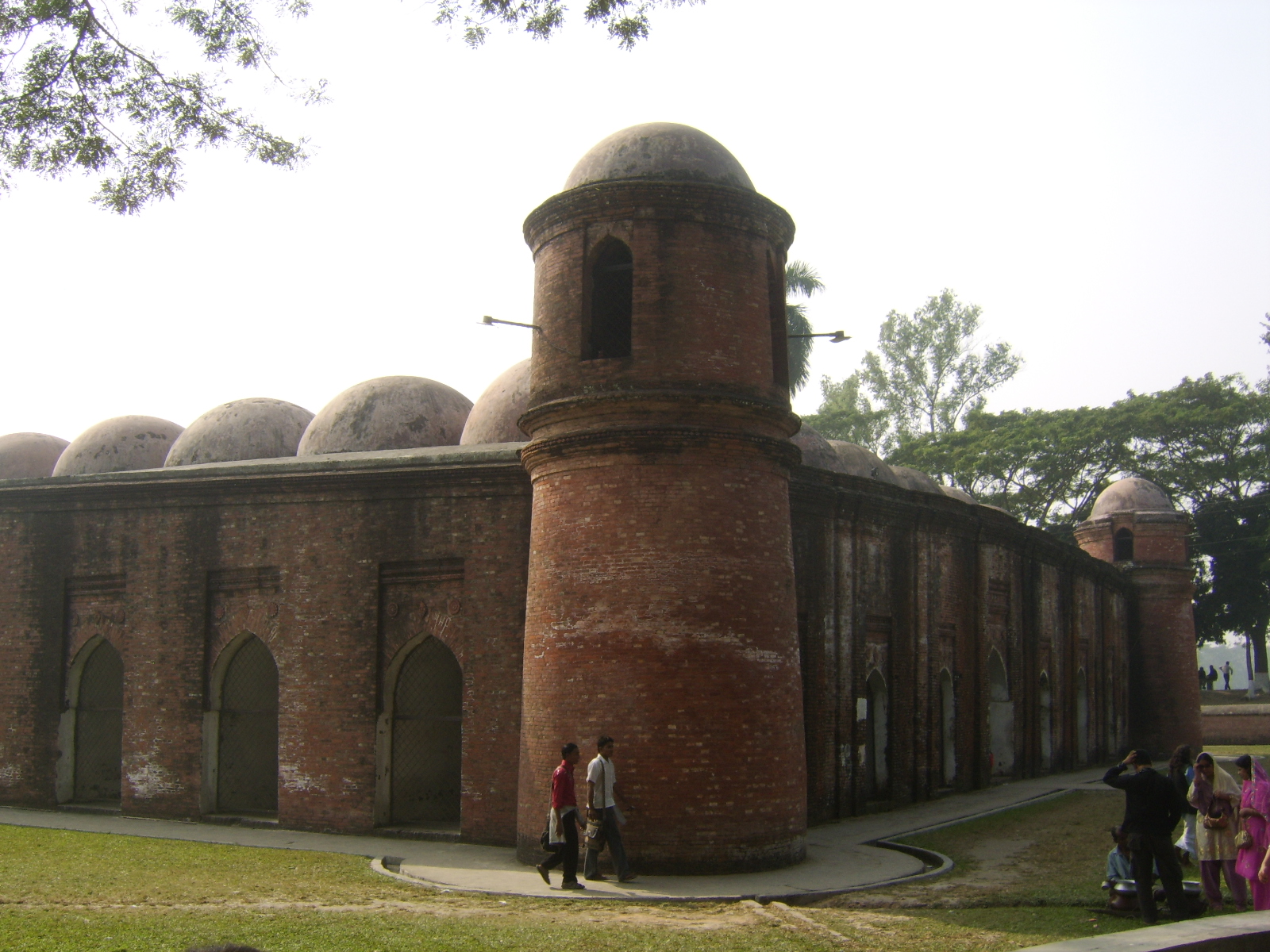
Bagerhat district and Sadar upazila
Bagerhat is a district of Khulna division in south-western Bangladesh. According to Banglapedia it covers 3,959.11 square km and is bounded by Gopalganj and Narail to the north, the Bay of Bengal to the south, Gopalganj, Pirojpur and Barguna to the east and Khulna to the west. Its main rivers include the Pasur, Madhumati, Baleshwari, Kaliganga, Haringhata, Bangra and Bhola. The district, formed in 1984, has 9 upazilas, 3 municipalities, 75 unions, 703 mouzas and 1,048 villages. The 2011 census counted 1,476,090 people there.
Agriculture is the district's main livelihood: Banglapedia puts it at 54 per cent of sources of income, followed by commerce at 17.28 per cent. Tourist spots listed for the district include the Shatgumbad Mosque, Karamjal in the Sundarbans, Hiron Point and the Sundarban Museum.
The farm in this story is in Khanpur, one of the 10 unions of Bagerhat Sadar upazila; the others are Kara Para, Gota Para, Dema, Barai Para, Bishnupur, Bemarta, Jatrapur, Rakhalgachhi and Shat Gambuj. The upazila covers 272.73 square km and had 266,389 people in 2011. The Bhairab, Chitra, Daudkhali and Taleswar rivers flow through it. Agriculture provides 42.01 per cent of income and commerce 21.31 per cent; the main crops are paddy, wheat, jute, sugarcane, potato, betel leaf, pulses and vegetables.
Livestock and fish farming are well established in the upazila. Banglapedia lists 10,461 shrimp enclosures (gher) for galda and bagda prawns, 42 dairies, 320 poultry farms and 10 hatcheries, along with 31 haats and bazaars, among them the Jatrapur, Barakpur, Babur and Katakhali haats.
Qurbani animals in 2026: the country, Khulna division and Bagerhat
The two bulls were one small part of a very large market. At a briefing at the Secretariat on 3 May 2026, the Ministry of Fisheries and Livestock put the estimated demand for sacrificial animals that year at 10,106,334 and the number of animals ready at 12,333,840: 5,695,878 cattle and buffalo, 6,632,307 goats and sheep and 5,655 other animals such as camels and dumbas. The ministry expected a surplus of 2,227,506 animals, said no animal imports would be needed and said border haats would not be held that year because, in the past, foreign animals had entered through some haats near the border and hurt local farmers.
The briefing said more than 3,600 cattle markets would be held across the country, including 27 in Dhaka, and that online sales would continue without any market levy (hasil) on online purchases. The government, the ministry said, would take a strict stand against extortion from trucks carrying sacrificial animals.
For Khulna division, the state news agency BSS reported on 3 May 2026, citing the divisional livestock office, that demand in the 10 districts was 1,079,449 animals against 1,446,809 available, a surplus of 367,360. The animals included 425,632 bulls, 32,027 bullocks and 82,302 cows, along with 4,089 buffalo, 851,370 goats and 51,173 sheep, raised by 130,042 farmers. In Bagerhat district, the same report said, demand was 77,889 animals, availability 84,967 and the surplus 7,078.
On 13 May 2026 BSS reported that 170 permanent and temporary cattle markets were being set up in the 10 districts of Khulna division, 29 of them in Bagerhat, and that 142 veterinary teams would work in them. The director of the divisional livestock office said the division's entire demand would be met with locally raised animals. Eid, BSS wrote, was then about two weeks away.
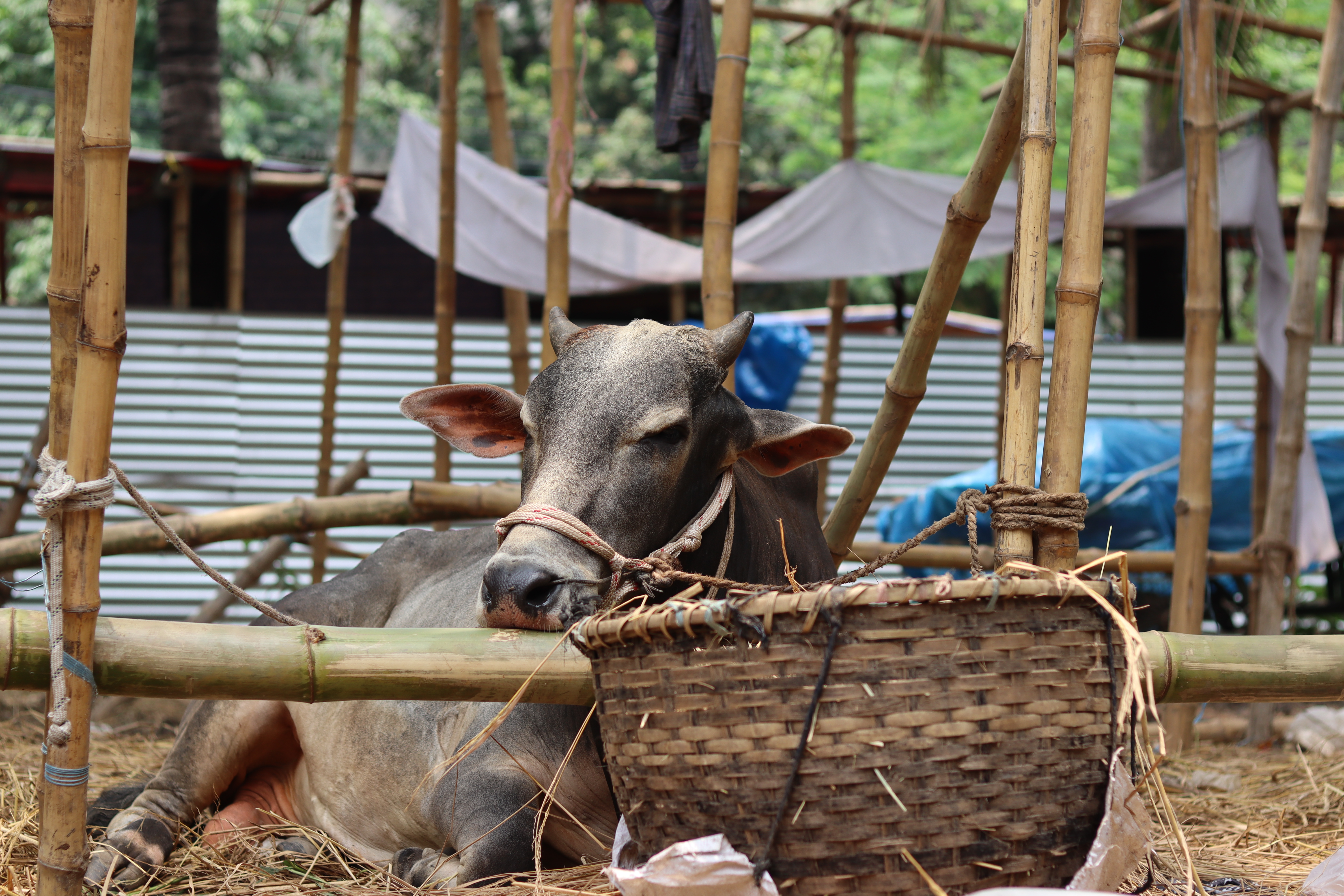
Big bulls draw crowds, but buyers are fewer
Very large bulls with names have become a familiar part of the pre-Eid season, and earlier reports from the same region show how they tend to fare. In June 2023, Prothom Alo reported from Khulna city's Joragate cattle market, run by the Khulna City Corporation, that a bull from Bagerhat named Shanto, a Sahiwal said to weigh 27 maunds, was being offered at Tk 10 lakh with a free goat for the buyer. Its seller said the highest bid had reached Tk 7 lakh. That morning, the paper wrote, people crowded round the two biggest cattle in the market but there were no buyers, and sellers said the strongest demand was for cattle priced from Tk 1 lakh to Tk 1.5 lakh.
Feed costs were a common worry among Khulna-region farmers in 2026. In the BSS report of 13 May, a cattle raiser from Dumuria upazila said rearing costs had risen compared with the previous year because feed prices had gone up noticeably, and a dairy farmer said higher feed prices could make cattle somewhat more expensive. A farm owner in Rupsa upazila had told BSS on 3 May that rising feed prices would push animal prices up somewhat that year.
Against that background, the daily feed bill of Tk 1,200 to Tk 1,500 that Najma Dairy Farm reported for its two bulls shows what it costs to raise animals of this size, and why the owner said he would sell only at a fair price.
Natural fattening and what the law says
The phrase the district livestock officer used, fattening "by natural methods", is aimed at a long-standing concern before every Eid: the use of steroids, growth hormones and other drugs to make cattle look heavier. Several laws in force in May 2026 dealt with it.
The Fish Feed and Animal Feed Act 2010 (Act No. 2 of 2010) bans the use of antibiotics, growth hormones, steroids, pesticides and other harmful chemicals in fish and animal feed in its section 14, and makes a breach an offence. Section 20 of the Act, as published on the government's laws portal, sets a penalty of up to one year's imprisonment, a fine of up to Tk 50,000, or both. In matters of animal feed the Act is administered by the Department of Livestock Services.
The Safe Food Act 2013 (Act No. 43 of 2013), under which the Bangladesh Food Safety Authority was set up, forbids in section 30 using or including in any food, beyond the prescribed limits, residues of veterinary drugs, hormones, antibiotics or growth promoters, and forbids storing, marketing or selling food that contains them.
The Animal Welfare Act 2019 (Act No. 12 of 2019, dated 10 July 2019), which replaced the Cruelty to Animals Act 1920, also applies to farm animals. Its authority is the director general of the Department of Livestock Services or a veterinary surgeon of the department he empowers. Section 4 makes every owner or keeper responsible for treating an animal humanely and refraining from cruelty without reasonable cause. Section 6(1) counts among acts of unnecessary cruelty:
- not giving an animal the food and water it needs, or forcing it to take excessive food and water;
- tying or confining an animal, or carrying it, in a way that does not let it stand, sit or lie down normally;
- deliberately and without cause giving an animal a drug or substance that is harmful or not meant for it, by mouth, by injection or by other routes;
- offering for sale, without arranging treatment, an animal suffering from injury, hunger, thirst or other cruelty.
Under section 16, such cruelty is punishable by up to six months' simple imprisonment, a fine of up to Tk 10,000, or both. Section 11 deals separately with knowingly feeding or giving an animal a poisonous or harmful drug or food that causes its death, permanent disability or loss of normal size and capacity, which carries up to two years' simple imprisonment, a fine of up to Tk 50,000, or both. Section 6(4) states that acts done while slaughtering an animal for food, or while sacrificing it for a religious purpose according to a person's own religious rites, are not counted as unnecessary cruelty.
Nothing in the Jagonews24 report suggested any problem with the two Bagerhat bulls: the owner and his mother described a diet of straw, grass, bran and maize meal, and the district livestock officer said farmers were following his office's advice on natural fattening.
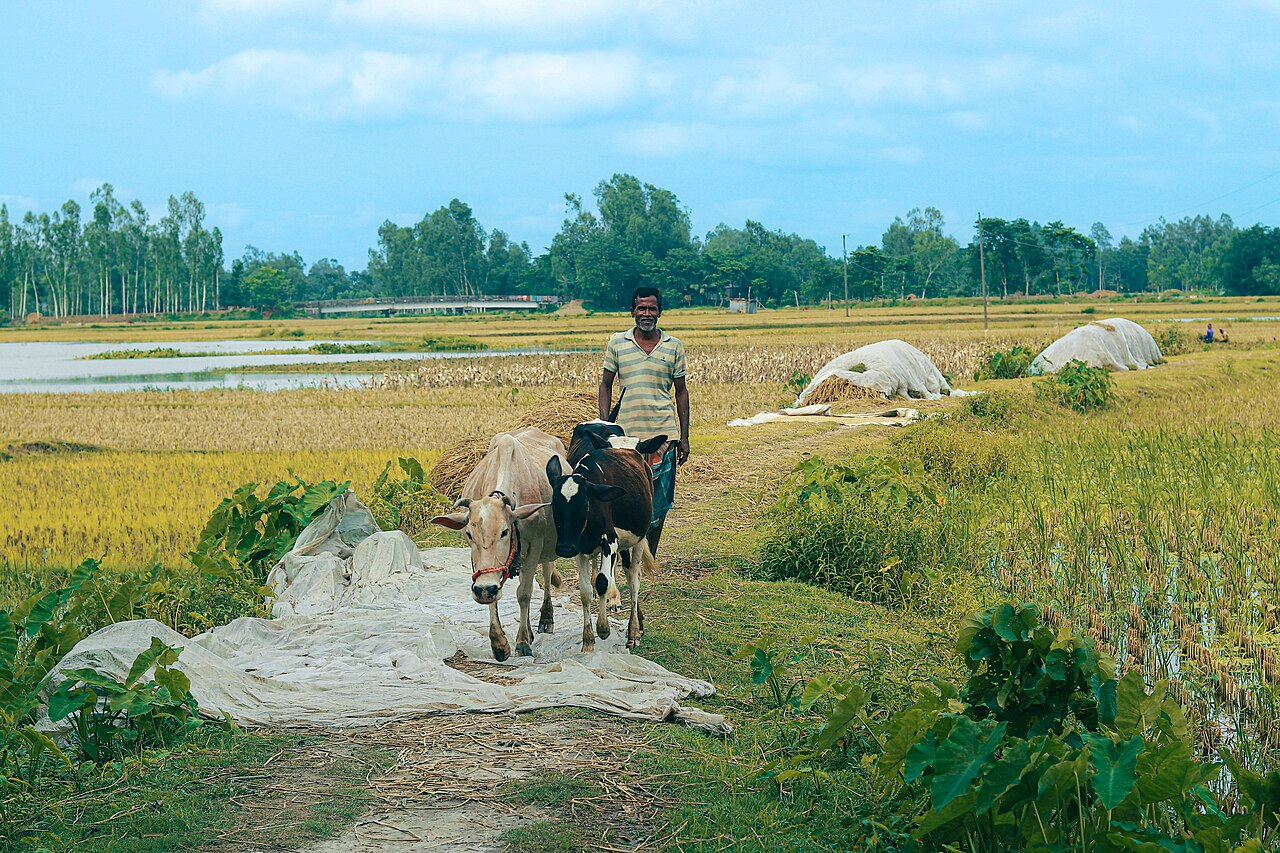
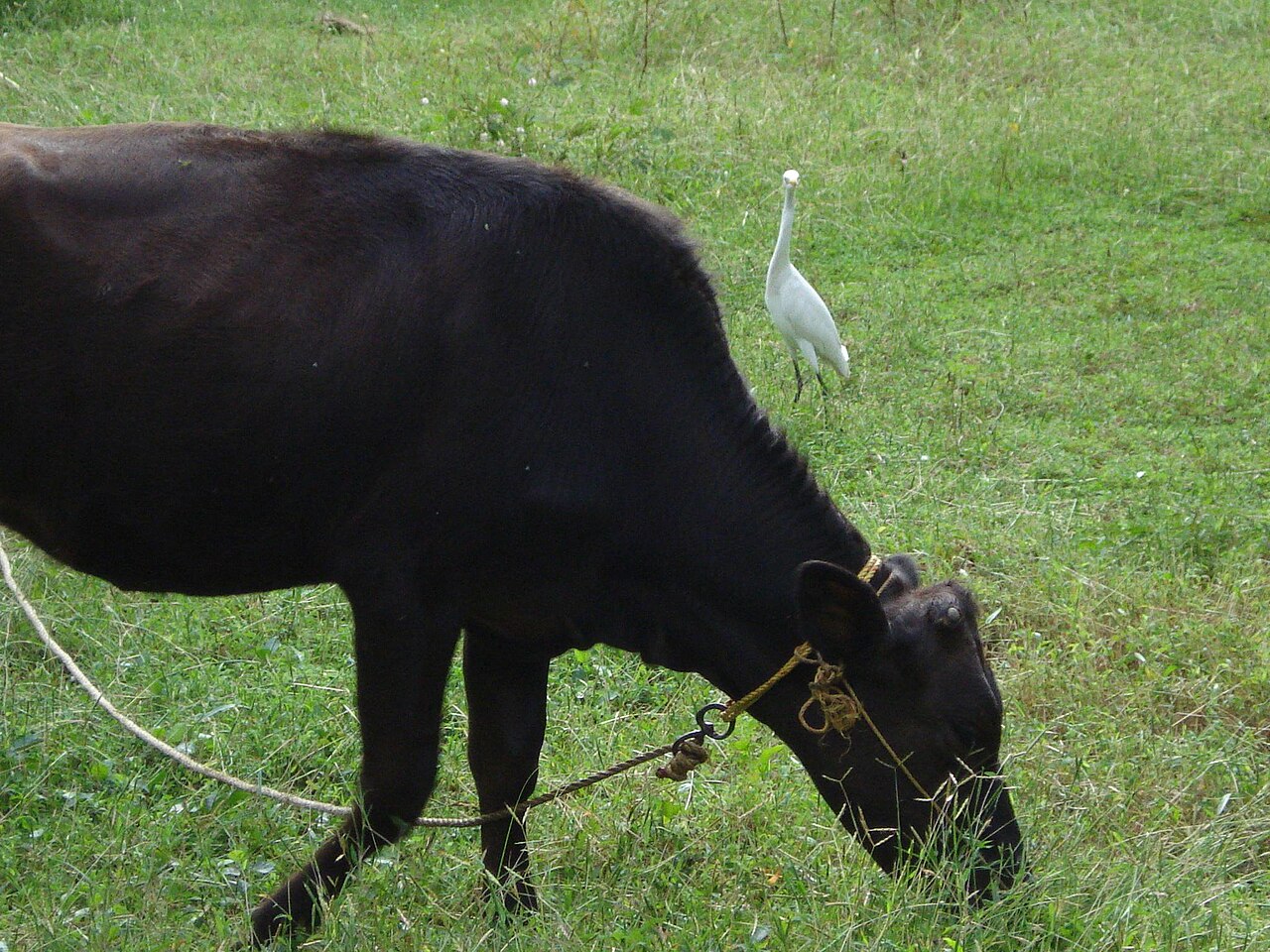
Photo: Homoatrox / Wikimedia Commons (CC BY-SA 3.0). The top picture shows a Holstein Friesian bull at an exhibition in Belarus in 2019, as background; it is not one of the Bagerhat bulls.
Sources: Jagonews24 (16 May 2026), BSS (3 and 13 May 2026), Bangla Tribune (3 May 2026), The Business Standard Bangla (3 May 2026), Prothom Alo (26 June 2023), Banglapedia (Bagerhat District, Bagerhat Sadar Upazila, Cattle), Wikipedia (Holstein Friesian), Frontiers in Veterinary Science (July 2023), Fish Feed and Animal Feed Act 2010, Safe Food Act 2013 and Animal Welfare Act 2019 (bdlaws)
Comments
(0)