
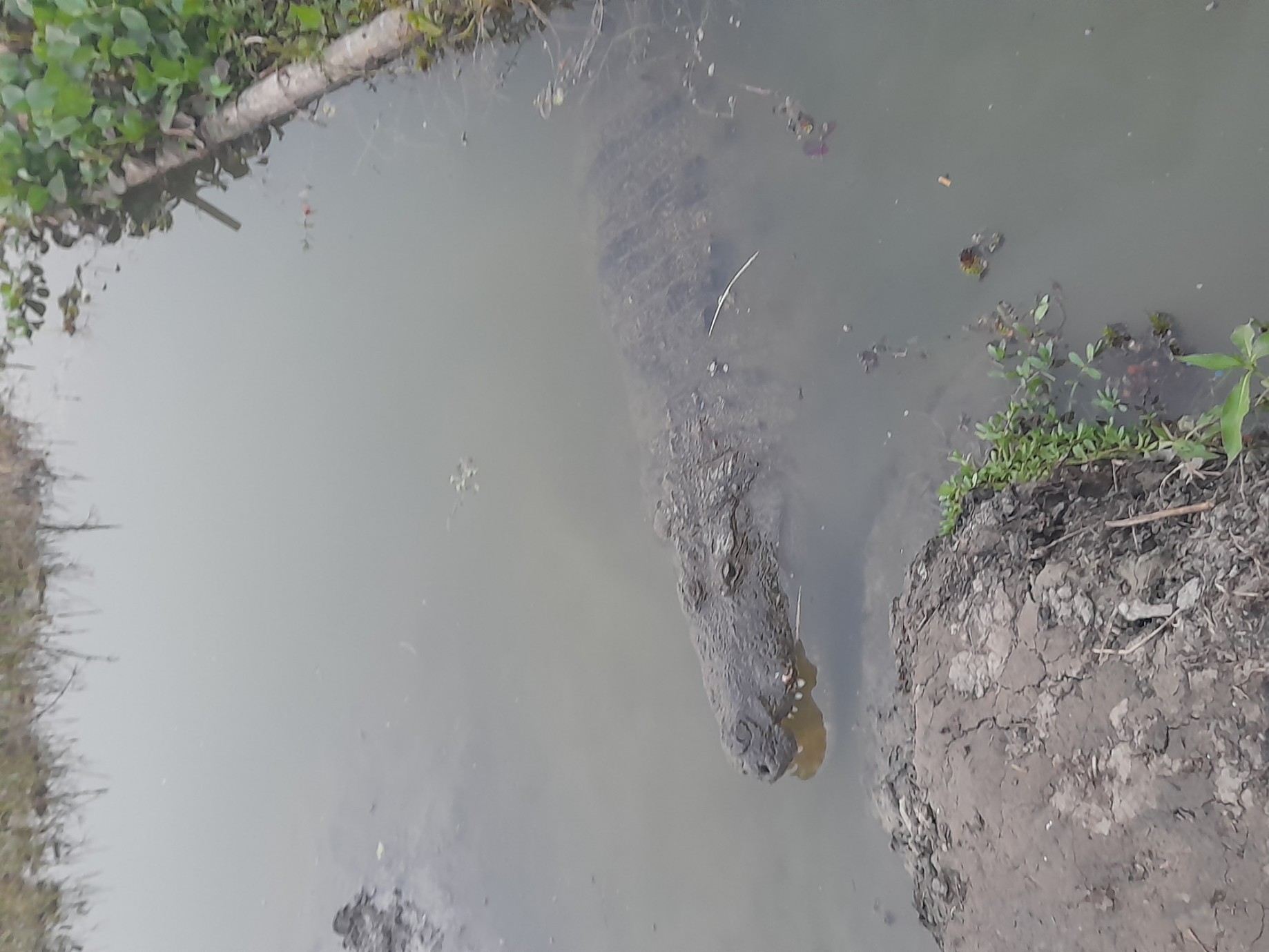
The large pond beside the shrine of Hazrat Khan Jahan Ali (RA) in Bagerhat had no crocodile in it in early June 2026. On Wednesday, 3 June, the Forest Department and the district administration caught the pond's only crocodile, a female, and took it to the wildlife rescue and rehabilitation centre in Khulna. The decision followed the death of an eight-year-old girl who was dragged into the water by the crocodile on the night of Monday, 1 June.
Jagonews24 reported on 4 June that the shrine's caretakers (khadems), shopkeepers around the ghats and local residents were unhappy at the loss of what they described as a tradition dating back to Khan Jahan Ali's own time. Caretakers and local people told the paper that crocodiles had lived in the pond for 600 years and that this was the first time it had been left without one. They demanded that the crocodile be brought back, with fencing or grilles at the ghats if necessary, and said they might launch a movement to get it returned.
From the attack to the removal
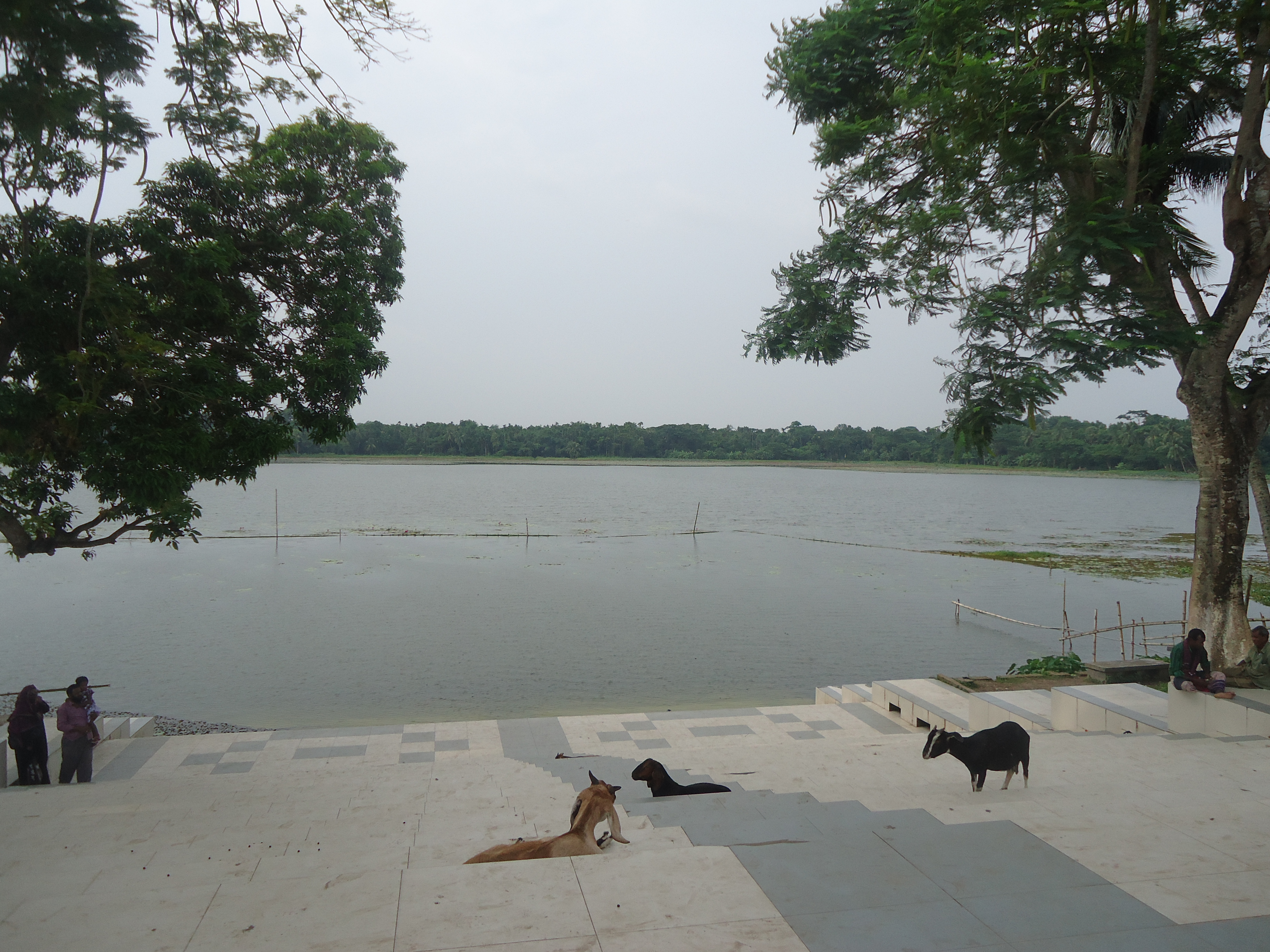
According to The Daily Star's Bangla edition, the attack happened at about 8:20 to 8:30 on Monday night at the women's ghat of the pond, when the girl went into the water with her mother to bathe. Prothom Alo, in its first report that night, put the time at about 8:15 and the girl's age at seven; The Daily Star, bdnews24.com, Desh Rupantor and The Daily Observer gave her age as eight. Bagerhat Deputy Commissioner Golam Mohammad Baten told The Daily Star that the crocodile attacked the girl and pulled her into deep water. Many visitors were at the shrine because of the Eid holiday, and local young men tried to reach her by boat, but the crocodile had already taken her into deep water.
Fire Service and Civil Defence teams, the Forest Department, the police and local volunteers searched the pond through the night with four boats. Superintendent of Police Hasan Mohammad Naser Rikabdar said darkness made the search difficult. Divers recovered the girl's body at about 4:45 on Tuesday morning, 2 June, The Daily Star reported; Desh Rupantor wrote that the body surfaced at the eastern end of the pond. The police prepared an inquest report. The shrine's chief khadem, Fakir Tariqul Islam, told The Daily Star that nobody had imagined such an accident could happen even though guards were posted.
On Tuesday night the district administration held an emergency meeting in the Deputy Commissioner's conference room. Prothom Alo reported that it was chaired by Deputy Commissioner Golam Mohammad Baten and attended by the administration, law enforcement agencies, the Forest Department, the Fire Service, the shrine's khadems, the Department of Archaeology and journalists. The meeting decided to remove the crocodile for public safety.
On Wednesday morning officers of the Forest Department and the administration gathered at the shrine. The Business Standard and bdnews24.com reported that the crocodile was seen on the eastern bank of the pond at about 10:30, and that at about noon the team lured it with food, tied it and lifted it into a Forest Department vehicle under tight security. The Business Standard wrote that it was caught in a small pond on the eastern side of the main pond, and that police kept back the crowds who had come to see it one last time. Bagerhat Sadar Upazila Nirbahi Officer Mosa. Atiya Khatun said the crocodile had been moved in the interest of public safety and that a decision on its future would be announced later.
The Daily Observer, citing Forest Department officials, described the animal as a female about 45 years old, weighing about 600 kilograms and measuring 9 feet 3 inches, and said it was healthy. The Business Standard reported that, once the crocodile had gone, visitors and residents were seen bathing again at the shrine's main ghat.
'We cannot accept it': caretakers and visitors
Jagonews24 spoke to people at the shrine on the day after the removal. Bina Akter, who keeps a shop beside the shrine's ghat, said: "I have seen crocodiles in the pond since I was born. The crocodiles lay eggs at our ghat. They come up on the bank and eat goats, ducks and chickens, and have bitten people at various times. But I have never seen in history that a crocodile would be taken away from the pond because someone died in an attack."
"There have been crocodiles in this pond for 600 years," she added. "Now there is no crocodile. We just cannot accept it. When people die in tiger attacks in the Sundarbans, the tigers are not caught and removed. So why was this crocodile taken away?"
Asma Akter, a visitor from Barishal, said she had seen the crocodile on earlier visits and had only learned on arrival that it had been taken away. "It attacked and killed a child, which is sad," she said. "I want the crocodile brought back while ensuring people's safety. It is the heritage of this shrine and pond."
Mehedi Hasan Topu, a local young man who had grown close to the crocodile, said he had handed it over to the Forest Department with his own hands. "It hurts a lot; it is heartbreaking for me," he said. "There have been crocodiles in this pond for 600 years, and this crocodile is Khan Jahan Ali's heritage. Today the pond feels empty. My appeal to the government is to bring back the pond's heritage, with fencing if necessary."
Khadem Jamal Hossain said: "Different shrines have different traditions, and the crocodile in the pond is the tradition of our Khan Jahan Ali. Because of an accident the crocodile has been taken from our shrine. We feel very bad that the pond is empty and demand that a crocodile be brought back. If necessary, we will put grilles on the ghats for safety."
The chief khadem, Fakir Tariqul Islam, told Jagonews24: "A few days ago a crocodile attacked and killed a child, and we are pained by this. The crocodile is a ferocious animal. Khan Jahan Ali released two crocodiles into the pond to protect its water, and there have been crocodiles here for 600 years. Our forefathers looked after them. This history and heritage belong to the people of Bagerhat. People of all faiths come to see the crocodile; during Eid about 3,000-4,000 people come every day. But we do not at all approve of the way the crocodile was taken away over one unwanted incident. We will take the necessary measures to ensure people's safety, and we want the government and administration to return the crocodile without delay."
What the administration and the Forest Department said
Prothom Alo reported that the emergency meeting also discussed commercial activity around the shrine, including business linked to the crocodile and the sale of amulets, and heard proposals to keep the crocodile in an enclosure at a fixed place, to build protective walls so that crocodiles could not reach the bathing ghats, and to bring the whole shrine area under the control of the administration and the Department of Archaeology. Deputy Commissioner Baten told the paper that the crocodile would stay in Forest Department custody until adequate safety arrangements and infrastructure were in place, after consultation with wildlife experts.
Speaking to The Daily Observer, the Deputy Commissioner said the crocodile had been the last one in the pond and that it could return if a secure enclosure were built on experts' advice. Md Rezaul Karim Chowdhury, Divisional Forest Officer of the Sundarbans East Division, told the paper that the crocodile was healthy and would remain at the rescue centre until a suitable protected facility was set up, and that it might be brought back in future, subject to expert opinion. Nirmal Kumar Paul, the Divisional Forest Officer in charge of the Khulna rescue centre, said the government would decide on the crocodile after four to seven days of close monitoring there.
Before the removal, the administration had also considered a temporary ban on bathing at the shrine's two main ghats, The Daily Star reported on 2 June. Sheikh Monjurul Haque Rahad, the member of parliament for Bagerhat-2, told the paper that barriers would be built quickly to keep crocodiles away from the ghats; a law and order committee had earlier decided to put up iron, cage-like barriers there, but the work had not been done. Desh Rupantor reported on 3 June that a fence was being arranged for visitors' safety.
Khan Jahan Ali and his great pond
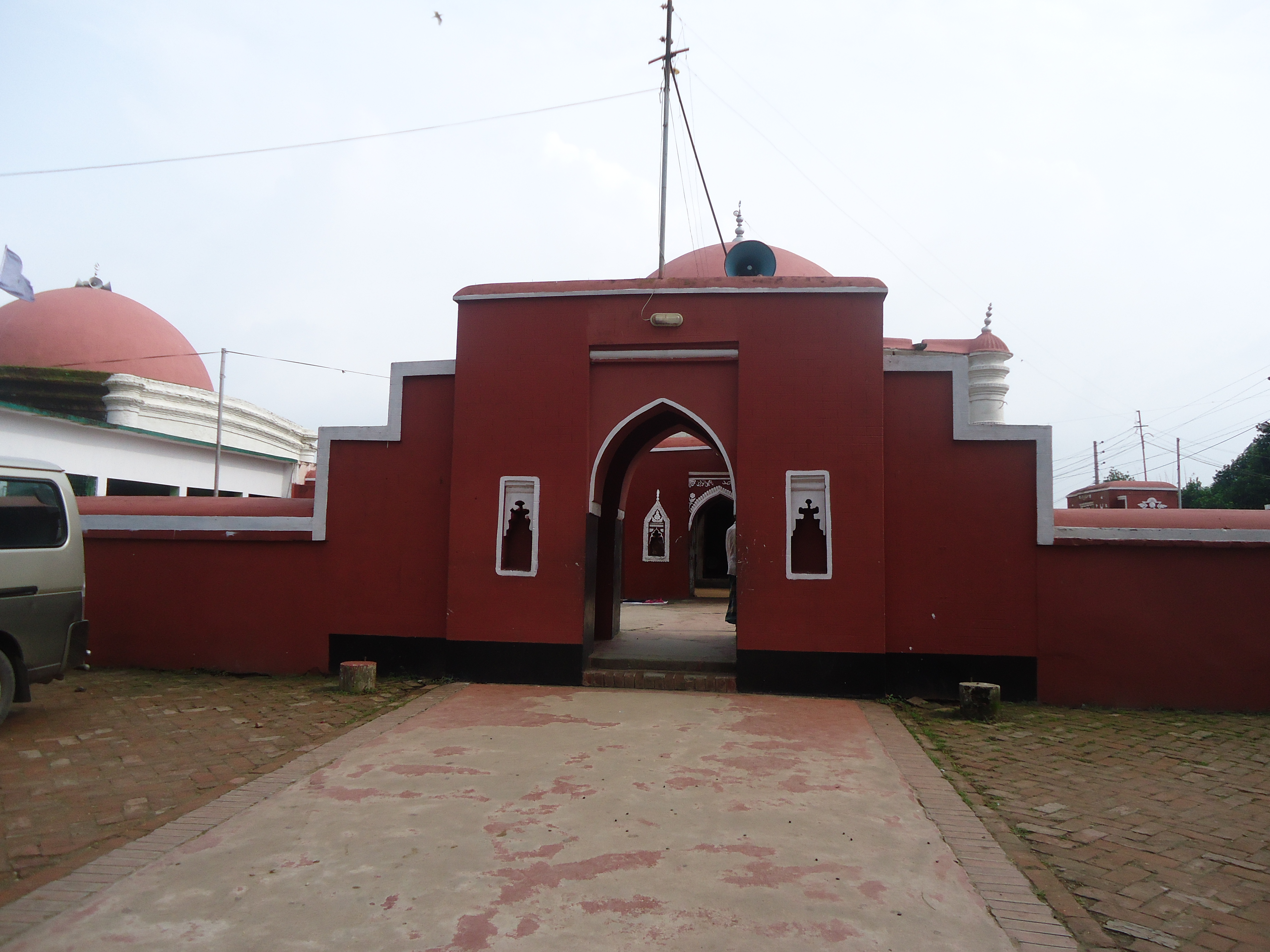
Khan Jahan, popularly known as Khan Jahan Ali, was a Sufi saint and the ruler of a territory covering parts of the old Jessore and Khulna districts, according to Banglapedia, the national encyclopedia published by the Asiatic Society of Bangladesh. He carried the titles Ulugh Khan and Khan-i-Azam and flourished at Khalifatabad, today's Bagerhat, in the first half of the 15th century, when Sultan Nasiruddin Mahmud Shah (1435-1459) ruled Bengal from Gaur. He cleared forest on the edge of the Sundarbans for settlement and built mosques, madrasas, roads and bridges.
Banglapedia records that he excavated a large number of dighis, or large ponds, the most notable being the Khanjali Dighi near his tomb, a corrupted form of Khan Jahan Ali Dighi, which it dates to 1450, and the Ghoradighi west of the Shatgumbad Mosque. Khan Jahan died on 25 October 1459 and was buried in the tomb he had built for himself. An annual urs and fair is held at the shrine in the Bangla month of Chaitra, and large numbers of people visit the tomb throughout the year.
The tomb and the Shatgumbad Mosque are the two centres of the Historic Mosque City of Bagerhat, which UNESCO inscribed on the World Heritage List in 1985. UNESCO describes the old city of Khalifatabad as extending over 50 square kilometres, with its monuments in two main zones 6.5 kilometres apart: one in the west around the Shait-Gumbad mosque and one in the east around Khan Jahan's mausoleum. More than 50 monuments have been catalogued, and the site is protected by the Department of Archaeology under the Antiquities Act, 1968. UNESCO lists the salinity of the soil and air as a threat to the brick monuments.
The pond lies in Bagerhat Sadar upazila, which covers 272.73 square kilometres and had a population of 266,389 at the 2011 census, according to Banglapedia. Bagerhat district, in Khulna division, covers 3,959.11 square kilometres and reaches south to the Bay of Bengal and the Sundarbans; its 2011 population was 1,476,090.
Six centuries of tradition and three decades of change
The story of the shrine's crocodiles rests on local tradition. As the people at the shrine tell it, Khan Jahan Ali himself released two crocodiles, Kala Pahar and Dhala Pahar, into the pond before his death in 1459, and the male and female crocodiles of later generations were called by the same names. The Dhaka Tribune reported in October 2023 that devotees regarded the crocodiles as symbols of faith and vowed offerings to them of ducks, chickens, goats and even cows.
The best documented description of the pond comes from a field visit on 4 March 2003 by officers of the Sundarban Biodiversity Conservation Project, published in the newsletter of the IUCN Crocodile Specialist Group. The team found a pond of about 60 hectares with a maximum depth of 6 metres, surrounded by a ridge of earth 3 to 9 metres high left from its excavation in the mid-15th century. It recorded, from the khadems' accounts, five crocodiles: three females, one male and a juvenile about 90 centimetres long. The khadems estimated the females' ages at 40 to 50 years and the male's at 60. In the wet season the crocodiles left the pond for nearby creeks and ponds and returned in the dry season. One to three nests were found each year, about 50 centimetres underground and holding 40 to 50 eggs each, but the last hatchlings had been seen in 2000. Fishing in the pond was prohibited, and dead crocodiles were buried because they were regarded as sacred.
To keep the tradition going, crocodiles were brought from India in 2005. According to the Crocodile Specialist Group's 2010 action plan, 40 captive adult muggers, 8 males and 32 females, were obtained from the Madras Crocodile Bank Trust in June 2005. The Daily Observer, citing Forest Department sources, reported that the Indian government gifted a group of freshwater crocodiles that year, that six were released into the shrine pond and that others went to the Dhaka Zoo and the Dulahazra Safari Park. In July 2011 The Daily Star reported four marsh crocodiles in the pond, three of them brought from Madras on 24 June 2005, which the report described as aggressive.
The same Daily Star report, of 28 July 2011, recorded that a 40-year-old woman died after two crocodiles attacked her while she was bathing on 26 June 2011, and that two more people were seriously injured on 18 July and treated at Khulna Medical College Hospital. One group of khadems then petitioned the Deputy Commissioner to move the three crocodiles from India, while a rival group petitioned against it; on 14 July 2011 the district administration decided the crocodiles would stay. In October 2011 the paper reported that a crocodile named Rocket, about 30 years old, had been found dead near the pond and buried on its bank after a post-mortem.
The Dhaka Tribune reported that the last descendants of Kala Pahar and Dhala Pahar died on 5 February 2015. Of the six crocodiles from India, four had died, leaving a male called Madras and a female called Pilpil; Pilpil laid eggs for several years, but none hatched. Madras, about 30 years old, was found dead in the pond on 19 October 2023, and local wildlife officials said a post-mortem would establish the cause. From then on only one crocodile, a female, remained. Prothom Alo noted that it was not a descendant of the historic crocodiles, and that in April 2026 a video of the same crocodile taking a dog had circulated, raising questions about keeping a crocodile among houses and crowds.
The mugger, Bangladesh's freshwater crocodile
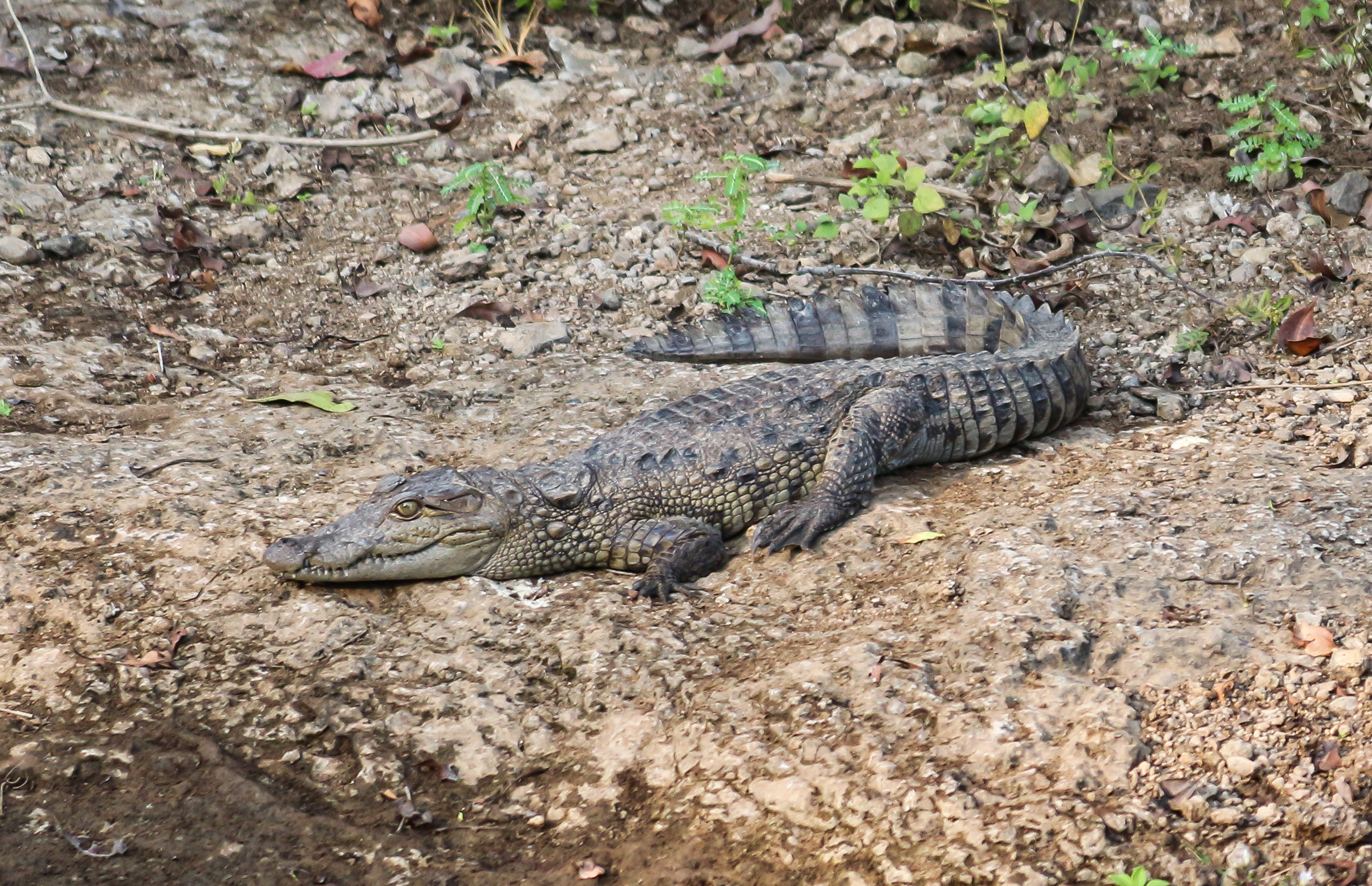
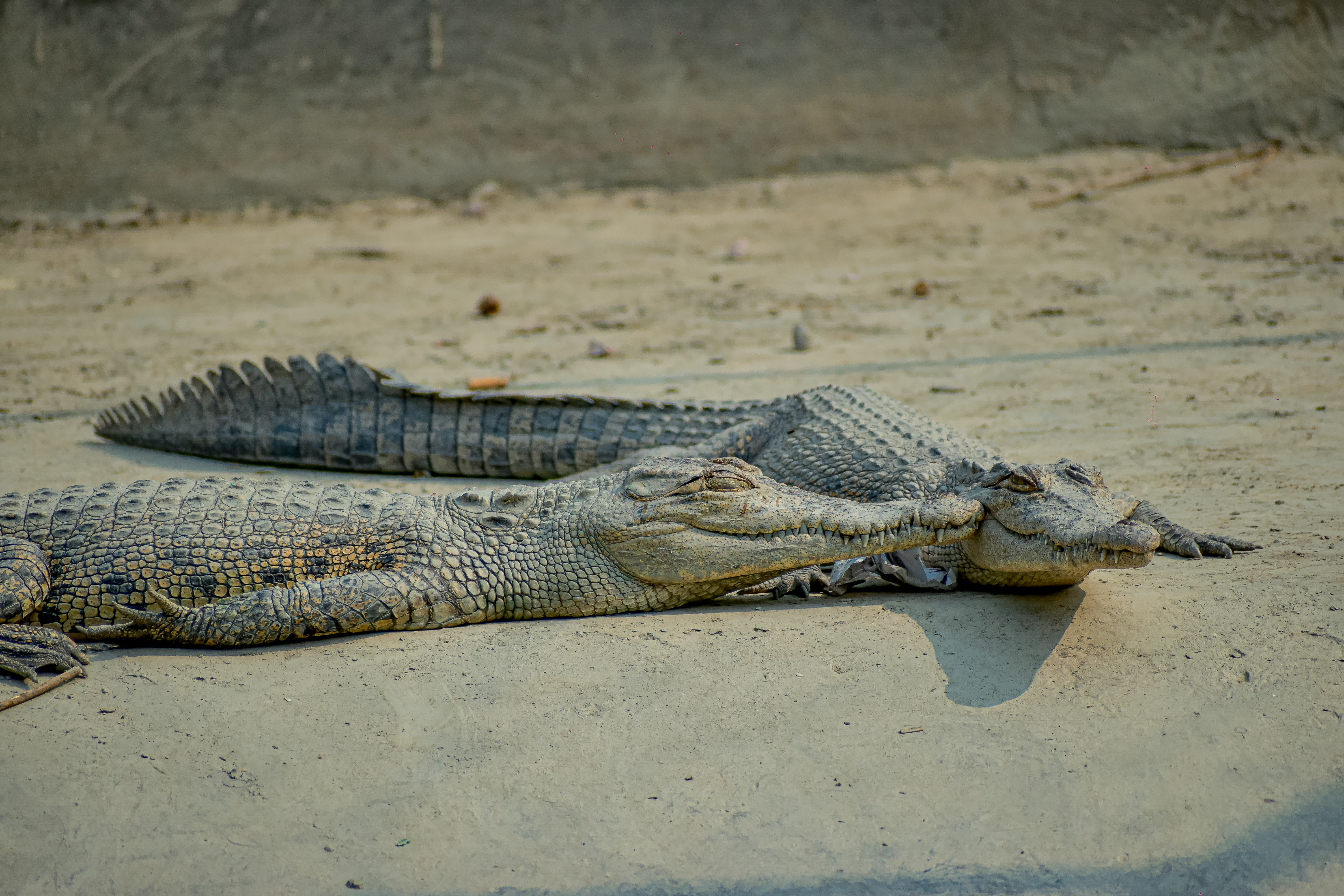
The crocodiles of the shrine pond are muggers, or marsh crocodiles (Crocodylus palustris), called freshwater crocodiles in Bangladesh. Banglapedia lists three crocodilians for the country: the gharial (Gavialis gangeticus), the estuarine or saltwater crocodile (Crocodylus porosus) and the marsh crocodile. It describes the saltwater crocodile, found in the estuaries and coasts of the Sundarbans, as critically endangered in Bangladesh, and the marsh crocodile as almost extinct in the wild, with only a few individuals surviving in the pond at Khan Jahan Ali's shrine. The two species look alike and are hard to tell apart in the wild.
The Crocodile Specialist Group's account of the species, by Anslem de Silva and Janaki Lenin (2010), describes the mugger as a medium-sized crocodile reaching a maximum length of 4 to 5 metres, with the broadest snout of any living member of its genus. It lives mainly in the Indian subcontinent, in rivers, lakes and marshes, and in India, Pakistan, Sri Lanka and Iran it has adapted to reservoirs, irrigation canals and man-made ponds. Muggers dig burrows to escape very high and very low temperatures, and they nest in holes, laying their eggs in the dry season. Females mature at about 1.8 to 2 metres and lay 25 to 30 eggs, which incubate for 55 to 75 days.
The species is listed in Appendix I of CITES, and the 2009 IUCN Red List, as cited in the action plan, classed it as Vulnerable. The 2010 action plan estimated the world's wild population at 5,400 to 7,100 animals other than hatchlings, and named habitat destruction and drowning in fishing nets as the main threats. It noted that human-mugger conflict had been reported in India, a sign of growing numbers or larger animals in some areas.
A species almost lost in the wild
The mugger had already vanished from the Sundarbans decades before 2003, the Sundarban Biodiversity Conservation Project wrote that year, leaving the last three or four in the Bagerhat pond. According to Mongabay's report of 27 December 2023, IUCN Bangladesh declared the mugger regionally extinct in the country in 2000, as recorded in its 2015 Red List of Bangladesh (Volume 4: Reptiles and Amphibians). The Crocodile Specialist Group's action plan noted that Bangladesh was a candidate for reintroduction using surplus captive stock from India.
Wild muggers still turned up occasionally. In October 2023 three were caught within days of one another, Mongabay reported: a male in the Bhubaneswar river in Faridpur on 17 October, an 80-kilogram female in a wetland in Sujanagar, Pabna, on 21 October and an adult female in the Mygram beel in Lohagara, Narail, on 28 October. All three were taken to the Forest Department's wildlife rescue and rehabilitation centre in Khulna, the same centre to which the shrine crocodile was taken in June 2026. Nirmal Kumar Paul, the divisional forest officer in Khulna, told Mongabay at the time that overfishing meant released muggers would probably not survive, and Jahangirnagar University zoologist Monirul H. Khan said muggers were not safe in open water.
The Forest Department's best-known crocodile facility is at Karamjal in the Sundarbans. The Crocodile Specialist Group newsletter recorded that a rearing station with room for 110 to 120 crocodiles was completed there in November 2002 and its stock moved in that December, and The Daily Star reported in May 2019 that the centre had been breeding saltwater crocodiles since 2002. Mongabay reported in 2023 that officials planned to breed freshwater crocodiles at the Khulna centre as well.
What the wildlife law says
On the date of the removal, crocodiles in Bangladesh were protected by the Wildlife (Conservation and Security) Act, 2026 (Act No. 86 of 2026), dated 10 April 2026 and in force from 7 January 2026. Its Schedule 1(kha) lists the mugger or freshwater crocodile, the saltwater crocodile and the gharial. The provisions that bear on the Bagerhat case include:
- Section 12: if a wild animal poses a threat to human life, the wildlife warden, with the approval of the chief wildlife warden or an empowered officer, is to take effective steps, stating the reasons, to remove, cull or, as the case may be, rehabilitate it, and must report the matter within 15 days to the advisory board and the scientific committee.
- Section 14: rescued, seized or captured wildlife is to be released in a suitable natural environment, but it may be kept in captivity if it risks spreading disease or needs care.
- Section 34: the Forest Department may set up rescue centres to give wild animals medical care, food, shelter and security.
- Section 10(3): all wildlife is regarded as the property of the government.
- Sections 41(3) and 44: hunting an animal listed in Schedule 1(kha) is punishable with up to three years in prison, a fine of up to Tk 3 lakh, or both, and a repeat offence with up to five years or Tk 5 lakh, or both.
Earlier crocodile protection went back a long way: the Crocodile Specialist Group noted in 2003 that all three of the country's crocodilians were fully protected under the Bangladesh Wildlife Act of 1974, and that the saltwater crocodile had been protected since 1973.
Photo: TanvirSdq / Wikimedia Commons (CC BY-SA 4.0)
Sources: Jagonews24, Prothom Alo, The Daily Star, bdnews24.com, The Business Standard, Desh Rupantor, The Daily Observer, Dhaka Tribune, Mongabay, Banglapedia (Asiatic Society of Bangladesh), UNESCO World Heritage Centre, IUCN Crocodile Specialist Group, Wildlife (Conservation and Security) Act, 2026 (Laws of Bangladesh)
Comments
(0)