
Sugarcane growers in Kachua upazila of Bagerhat said in November 2025 that this season's crop had been good and that they had got good prices, but that they were still paying off the losses of a disastrous previous year and were getting no help from the agriculture office. The district's Department of Agricultural Extension (DAE) office put the 2025 area at about 750 acres, with a production target of about 11,000 tonnes, and its deputy director said the office would recommend incentives for cane farmers, who at present receive none. Jagonews24 reported the story on 16 November 2025.
A year's loss, then a year's profit
For a decade Ali Akbar Sheikh of Fultala village in Kachua has made his living from land he sharecrops from others. He once grew paddy, but last year, hoping for extra profit, he planted sugarcane on one bigha. Natural disaster destroyed the crop and he lost Tk 60,000. The young farmer did not give up. He borrowed and planted cane again this year on a smaller area, and from 10 katha of land he made a profit of more than Tk 70,000 this season. In Bangladesh a bigha is 14,400 square feet and is divided into 20 katha.
The profit did not end his worries. "Last year the disaster was severe and most farmers in our area lost money," Ali Akbar said. "This year the yield is good and I got a good price. But I farm on borrowed money and have to repay the debt from last year's loss. I worry how I will feed my family of four through the year. Farmers get not even a little help from the agriculture office to get back on their feet."
Jagonews24's report does not say which disaster struck the crop. The record for 2024 shows how hard that year was on the district's farmers in general. The DAE's Khulna zone office reported in June 2024 that Cyclone Remal, which came ashore over southwestern Bangladesh in late May, had damaged crops on 12,611.50 hectares in Bagerhat, affecting 39,465 farmers, with losses of about Tk 97.36 crore. That was the largest money loss of the four districts in the zone's report, and sugarcane was among the crops the office listed as damaged across the zone.
Sugarcane grower Firoz Ahmed, from the same area, described the other half of the problem, the cost. "Sugarcane is very costly to grow," he said. "You have to apply phosphate, TSP and potash fertiliser, and spray five or six times. Their prices keep rising. No one looks at our troubles, and we get no fertiliser or pesticide from the agriculture office. But this time there is a bumper crop, and the market is lively every market day."
Cost figures from other districts show why a failed crop hurts so much. In Lalmonirhat, growers told The Daily Star in February 2024 that cane cost Tk 20,000 to 25,000 a bigha. In Cumilla in 2021, one grower told BSS that five bighas had cost him about Tk 90,000 and that he expected to sell the crop for more than Tk 200,000. Those are other districts and other years, and the Kachua growers gave no breakdown of their own costs, but both reports describe the same pattern: a large outlay that sits in the field for a year before any money comes back.
Badhal Bazar, where the cane is sold
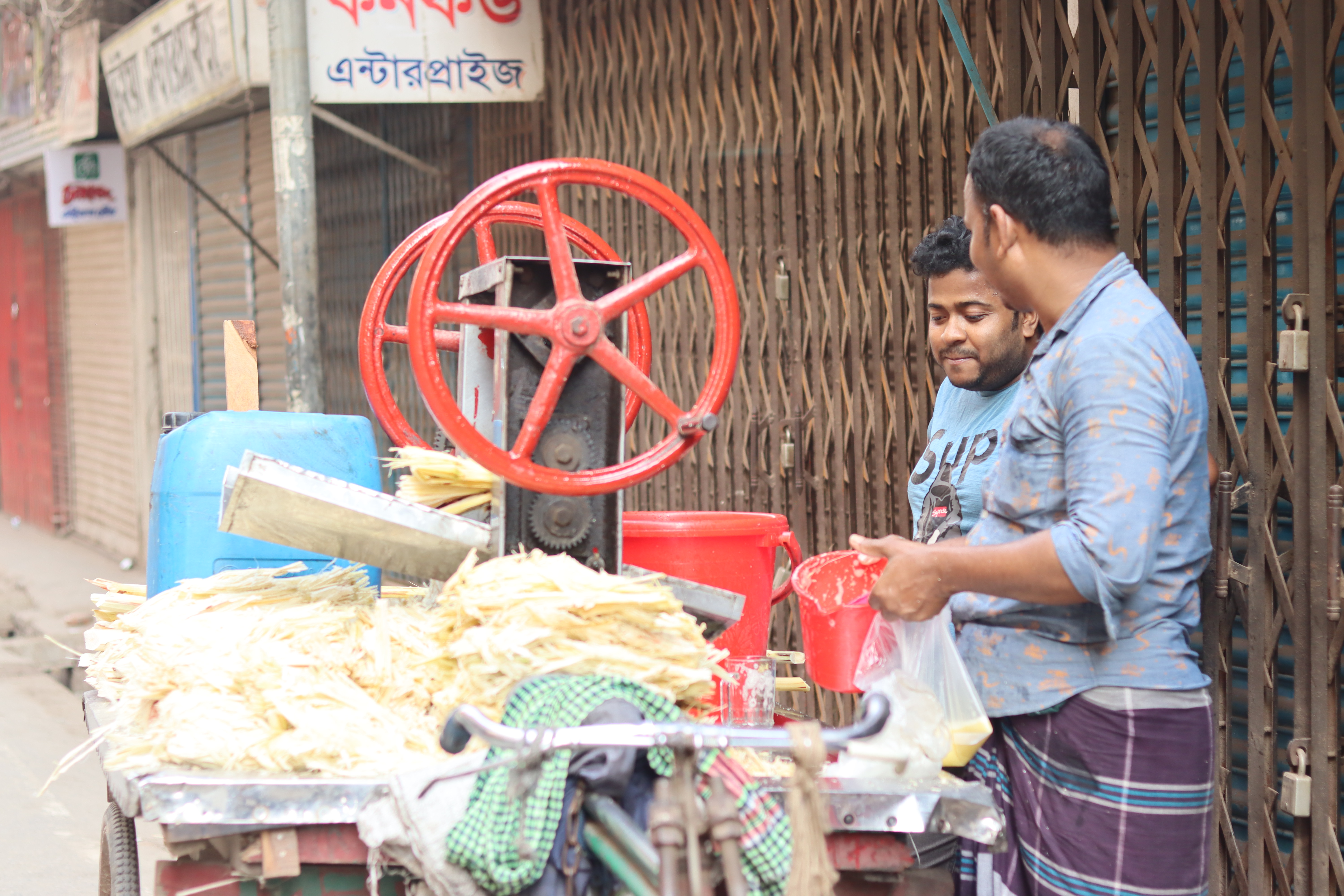
Much of this cane reaches buyers at Badhal Bazar in Kachua. The market fills with the shouts of buyers and sellers as soon as dawn breaks, and from early morning sugarcane brought by van, pickup and truck from different parts of the district is bought and sold.
The market committee says sugarcane worth Tk 15 to 20 lakh is sold there on Sundays and Thursdays. From farmers, through wholesalers, the cane goes to different parts of the country. Every hundred canes sell wholesale for Tk 3,000 to 5,000, depending on quality and size.
Local trader Al Amin gave a lower figure for sales. "I have traded sugarcane at this market for about 30 years," he said. "People come from Bhola, Patuakhali, Barguna, Jashore, Barishal and other areas to buy here. Sugarcane worth Tk 8 to 10 lakh is sold at Badhal Bazar on each market day, both retail and wholesale." The report does not explain the difference between his figure and the committee's.
Khan Shahiduzzaman Milton, the leaseholder of Badhal Bazar, said: "Sugarcane is grown on a large part of Kachua. Wholesalers come to Badhal Bazar from Satkhira, Khulna, Rangpur and other places. They are looked after carefully and given security, and no extra toll is charged, so they trade here comfortably."
The market was well known before this report for other goods. The Daily Star's Bangla edition described the Badhal hat in October 2023 as a Sunday and Thursday market, the same two days the committee named for cane, where vendors sold 450 to 500 bamboo fish traps, known as chai, on each market day to buyers from the surrounding villages. A few days later the same paper named Badhal, along with Kachua and Mazar, among the large hats where wholesale buyers from other parts of the country normally come for betel nut.
Kachua and Bagerhat, a farming district on the rivers of the southwest
Kachua is a small upazila of 131.63 square kilometres, with seven unions, Badhal among them, between Chitalmari to the north, Morrelganj to the south and Bagerhat Sadar to the west. Banglapedia names the Baleshwari, Taleswar and Bishkhali as its rivers. The 2011 census counted 97,011 people there and the 2022 census 107,423.
Farming is the main occupation. Banglapedia puts agriculture as the main source of income at 58.66 per cent, followed by commerce at 17.57 per cent. About 63.75 per cent of households own farmland and 36.25 per cent are landless. Sugarcane is on Banglapedia's list of the upazila's main crops, along with paddy, wheat, jute, cotton, betel leaf, pulses and vegetables, and the upazila has 14 hats and bazars.
Bagerhat district covers 3,959.11 square kilometres and nine upazilas, with a 2022 census population of 1,613,076. Agriculture is the largest source of household income, at 54 per cent in Banglapedia's entry. Cane shares the land with other cash crops: The Daily Star's Bangla edition reported 3,960 hectares of betel nut orchards in the district and output of 26,123 tonnes in 2022-23. Kachua's markets are busy with such produce. The same paper reported in July 2025 that about 2,500 to 3,000 coconuts left Sainboard Bazar in the upazila each day for destinations across the country, bought by traders who found transport easy to arrange there.
What the agriculture office's figures show
According to the agriculture office, sugarcane was grown on about 750 acres in Bagerhat in 2025, with a production target of about 11,000 tonnes. The office gave those figures as an area and a target, so they do not yet show what the crop actually produced.
The nearest earlier figure is from the Khulna division. The Bangladesh Post reported in September 2023 that Bagerhat had produced 10,847 tonnes from 285 hectares in 2022-23, the second-largest output in the division after Narail, which produced 32,480 tonnes from 580 hectares. Khulna district produced 3,060 tonnes from 68 hectares and Satkhira 4,560 tonnes from 95 hectares. The division as a whole grew cane on 1,028 hectares and produced 50,947 tonnes that year, and a DAE additional director said better profits had encouraged more farmers to grow it. Officials credited favourable weather, adequate irrigation and DAE support for that harvest, which is a different account from the one the Kachua growers gave in 2025. The figures do not by themselves establish a steady rise in the district: one is an achievement in hectares and the other a target in acres, two seasons apart.
Bagerhat's cane is not mill cane. The Bangladesh Sugarcrop Research Institute (BSRI), in its list of cane-growing areas last updated in January 2025, gives Bagerhat, Khulna and Satkhira under gur cane and chewing cane but not under cane for sugar. None of the 15 sugar mills on Banglapedia's list is in Bagerhat. The cane at Badhal, sold by the hundred stalks and carried to other districts by wholesalers, is therefore sold on the open market rather than to a mill. Jagonews24's report does not name the varieties grown in Kachua.
No incentive for cane, and a recommendation to come
Md Motahar Hossain, deputy director of the DAE in Bagerhat, answered the farmers' complaint directly. "The government gives incentives to paddy, mustard and sunflower farmers to encourage them," he said. "But there is no such incentive for sugarcane farmers."
He then made the case for one. "Molasses and sugar are made from sugarcane," he said. "Every year sugar has to be imported to meet demand. If we encourage farmers with incentives, sugarcane cultivation can be increased further. We will recommend to senior officials or the DAE that sugarcane farmers be given incentives."
Published details of earlier packages bear out his description of the winter programme. In October 2022 the agriculture ministry announced Tk 137 crore in seeds and fertiliser for 16.7 lakh farmers growing wheat, maize, mustard, sunflower, onions and pulses, for one bigha per farmer and one crop per family, distributed by the DAE on farmers' input cards. In September 2023 the package was Tk 188.49 crore for more than 19.53 lakh small and marginal farmers growing any one of 10 crops: wheat, onion, mustard, maize, sunflower, groundnut, soybean, mung, lentil and grass pea. Sugarcane was not on either list.
Growers in mill areas have had their own arrangements, and losing them has been costly. The Daily Star's Bangla edition reported in February 2024 that in the Rangpur region, once the mills stopped crushing, farmers lost both their main buyer and the incentives they had received, and that cane area there had fallen to 1,149 hectares from 36,500 hectares in 2020. A flood-hit grower in Tangail told The Daily Star in 2022 that he had received no help from the agriculture department after losing his crop.
A shrinking crop in a country that imports its sugar
The official's point about imports rests on large numbers. The Bangladesh Sugar Refiners Association puts annual demand at about 20 lakh tonnes, and The Daily Star gave 24 lakh tonnes in November 2024; the two figures differ, but both are many times what the country makes. Local mills produce only 30,000 to 35,000 tonnes, The Business Standard reported in July 2025, and raw and refined sugar imports in 2024-25 exceeded 12.17 lakh tonnes, worth more than Tk 8,000 crore.
State production has been falling for years. The government closed six of the 15 state mills in December 2020 to cut losses, leaving nine at work. Their output fell to 21,000 tonnes in 2022-23, the lowest on record, and rose to about 31,000 tonnes the year after; for 2024-25 the corporation set a target of 45,000 tonnes, on 7.5 lakh tonnes of cane. Consumers in Dhaka were paying at least Tk 135 a kilogram at that time, and the mills' losses had reached Tk 571 crore in 2023-24.
Cane itself has been retreating from the land. According to the Bangladesh Economic Review 2022, as reported by The Daily Star, production fell from 67.42 lakh tonnes in 2000-01 to 33.33 lakh tonnes in 2020-21, and the area fell from more than 4.17 lakh acres to 1.92 lakh acres over the same period. The reasons growers gave in Tangail were an unsteady profit, flood losses and a move to maize, paddy and vegetables. In Lalmonirhat, they added that cane holds the land for a year while other farmers take three or four crops from it.
It was not always so. Banglapedia records that Bengal was known for quality sugar in the 16th century, and that East India Company exports rose from 820,186 maunds in 1795 to 3,324,168 maunds in 1805, before beet sugar and later the turn to jute cut the trade down. In 2011-12, it says, cane was grown on 169,000 acres, yielding about 40 lakh tonnes, of which about 10 lakh tonnes were set aside as chewing and seed cane. Much of the crop has long gone to gur rather than to the mills, because of the high market price of gur and the difficulty of getting paid by the mills.
How BSRI says cane should be grown
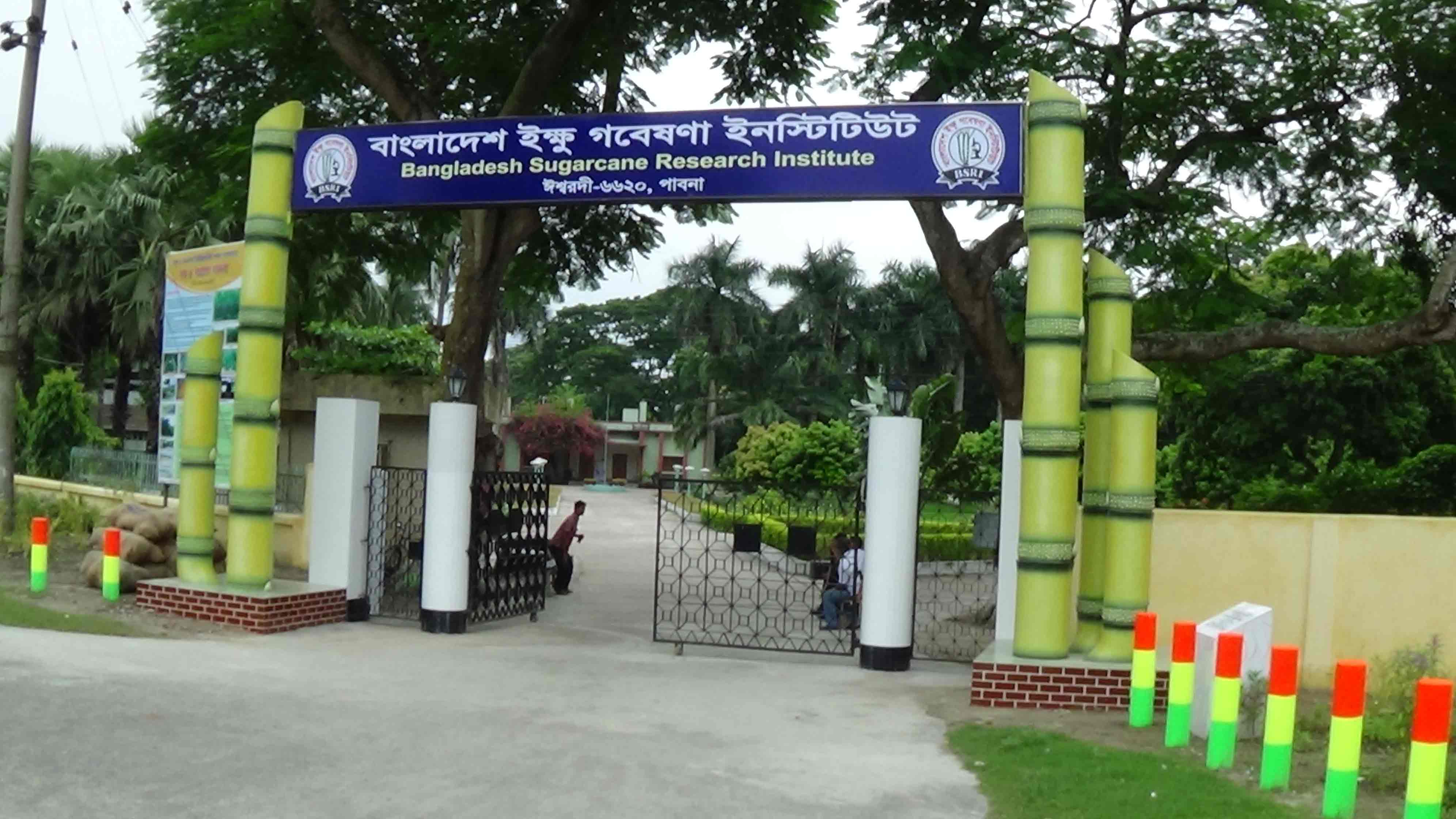
BSRI, based at Ishurdi in Pabna, is the national body for this crop. Its roots lie in a seedling testing laboratory set up at Manipuri Farm in Dhaka in 1933 and a research centre founded at Ishurdi in 1951. Parliament made it an autonomous institute in 1996, and it took its present name on 9 November 2015. Its Sugarcane Technology Handbook of June 2012 remains a useful guide to what the crop demands, and it explains why growers like those in Kachua carry so much risk: cane stands 12 to 14 months from planting to harvest, through drought, flood, tidal surge and every pest and disease of the year.
Cane is a tall perennial grass, normally planted from stem cuttings. After harvest the stubble can send up a second, ratoon crop, which, Banglapedia notes, matures earlier but yields less and suffers more disease. It will grow on soils from sandy loam to clay, does best on well-drained clay loam with a pH of 6 to 7.5, and is harmed by waterlogging. Harvest runs from October to March, which is why Badhal's trade was in full swing in mid-November.
The handbook gives these planting windows and methods:
- Early planting, August to September, gives more shoots and more millable cane. The handbook says early-planted cane yields 30 to 50 per cent more and makes room for an intercrop.
- Mid-season planting, October to December, works best by the transplanting method.
- Late planting, February to April, is also possible with transplanted seedlings.
- Transplanting, or the ropa method, raises seedlings in bags or beds and sets them out at fixed spacing. The handbook says it saves seed cane and that a taka spent returns Tk 2.25, and BSRI says it needs about a quarter of the seed cane of conventional planting.
- Intercrops such as potato, onion, garlic, wheat, mung or vegetables bring in money while the cane grows. Growers in Cumilla told BSS in 2021 that such companion crops help to cover the cost of the cane.
On chewing cane, which the handbook treats as a commercial crop in its own right, it says that grown with care it can earn more than any other crop, and that it suits limited patches of fertile land around homesteads. It names Rangbilas as the most popular single variety in most chewing-cane areas, with an attractive colour, plenty of juice and early maturity. Banpara Gendari, the more profitable one around Natore, is very soft and sweet. Amrit yields much more but its colour appeals less to buyers, so it earns less than Rangbilas. Banglapedia adds that the local varieties Mishrimala and Gendari are the main chewing canes, and that cane from the south and east is generally softer and thicker, about 5 centimetres across. BSRI also lists saline areas among those where gur cane is grown, and its variety Isd 39, released in 2009, is described as tolerant of flood, drought, waterlogging and salinity, and resistant to red rot, though the handbook does not name Bagerhat among the districts recommended for it.
Fertiliser, pests and the gur made from the crop
Firoz Ahmed's list of inputs matches what the research body asks of a grower. The handbook places Bagerhat in the Low Ganges River Floodplain, one of the agro-ecological zones for which it sets fertiliser rates. For a target of about 100 tonnes a hectare in that zone it recommends, per hectare:
- 300 kg of urea
- 180 kg of TSP
- 130 kg of muriate of potash
- 195 kg of gypsum
- 10 kg of zinc sulphate
On clay soil, half the urea and potash and all the other fertilisers go into the furrow before planting, and the rest follows while the shoots are forming, within 120 to 150 days. These 2012 figures are the institute's general recommendation, not a prescription for a field in Kachua, and a grower should check them with the upazila agriculture officer. TSP supplies phosphorus and muriate of potash supplies potassium, two of the primary plant nutrients that, as Banglapedia notes, the country's soils supply in limited amounts.
Pests are a real threat to the crop, though the handbook puts insecticide last. It says insects cost cane about 20 per cent of its production and 15 per cent of its sugar recovery each year, with about 70 pests identified in the country, seven or eight of them very harmful. Its order of control is tolerant varieties, cultivation practice, mechanical control, biological control and only then chemicals. Against the top shoot borer it advises collecting moths and egg masses by hand from January to June and cutting attacked plants at the base and destroying them with the grub inside. Red rot is the most damaging disease: a fungus, carried first in seed cane and then by rain and floodwater, borers and wind, which in a severe attack can destroy an entire field. Growers are told to use resistant varieties and healthy seed cane, since no single method controls it. Pesticide choice and dose are matters for the upazila agriculture officer.
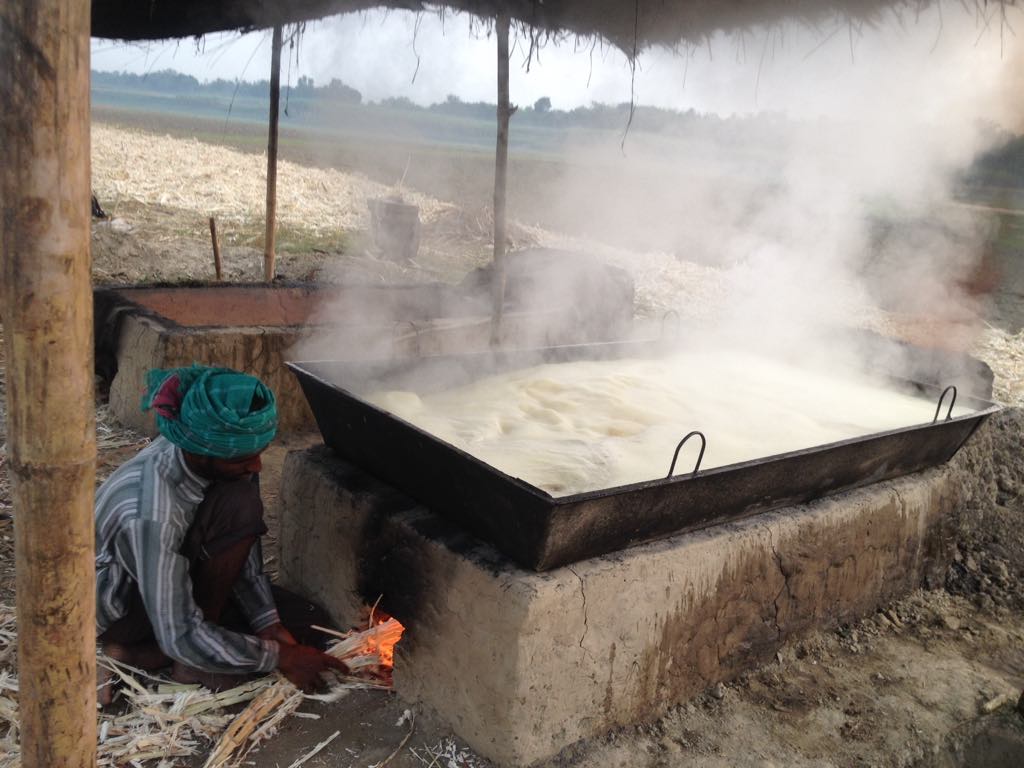
Gur, the molasses the deputy director mentioned, is the other use of this cane, and BSRI lists Bagerhat among the gur cane districts. Banglapedia describes the process: the cane is crushed, once in cattle-driven mills and now mostly by machine, and the juice is boiled, skimmed and thickened until it sets. The BSRI handbook counts gur alongside sugar in the country's supply, and The Daily Star's report from Lalmonirhat gave a sense of the yield, with a bigha giving 5,500 to 6,000 kilograms of cane and 460 to 500 kilograms of gur.
BSRI's technology notes also suggest a modest protection for areas exposed to floods and cyclones: planting chewing-cane cuttings around the homestead, so that a family has cane to hand after a flood or cyclone.
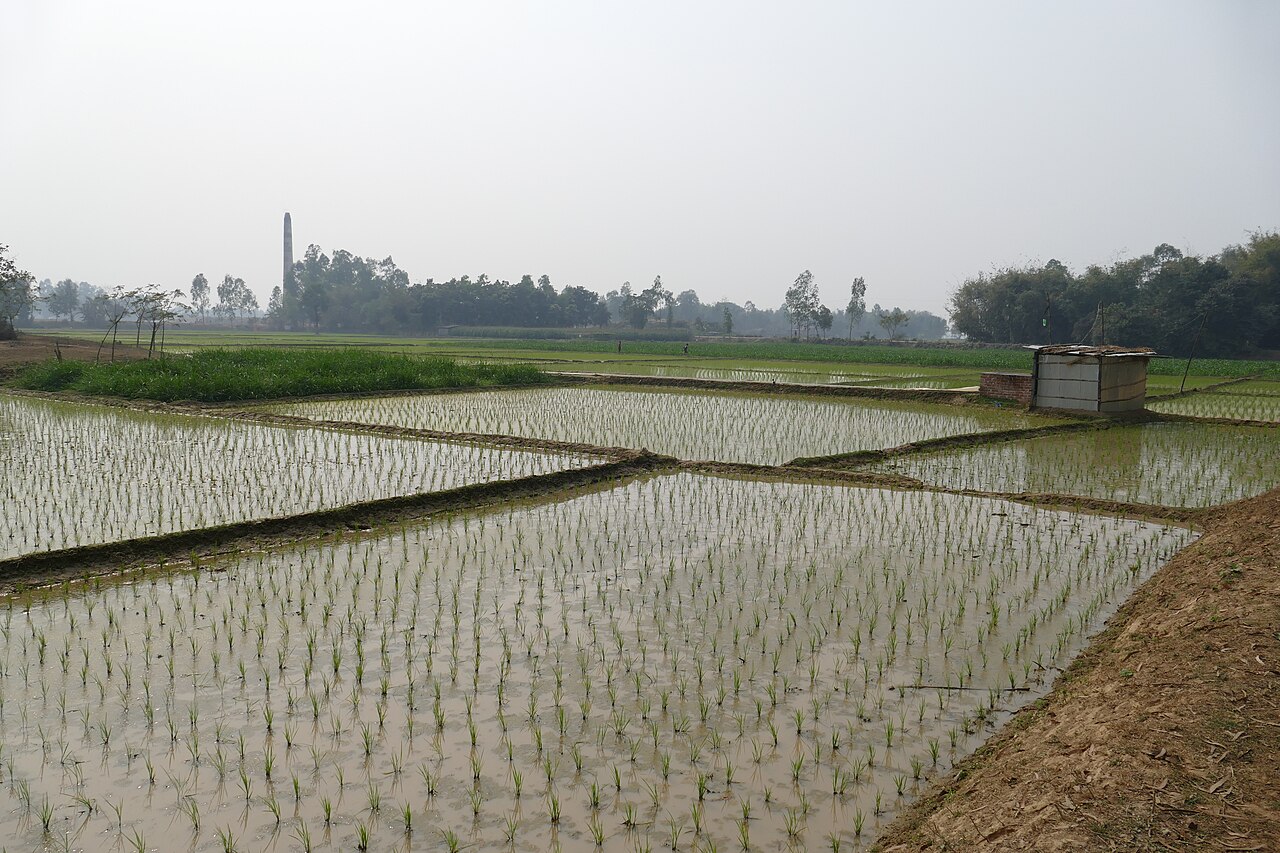
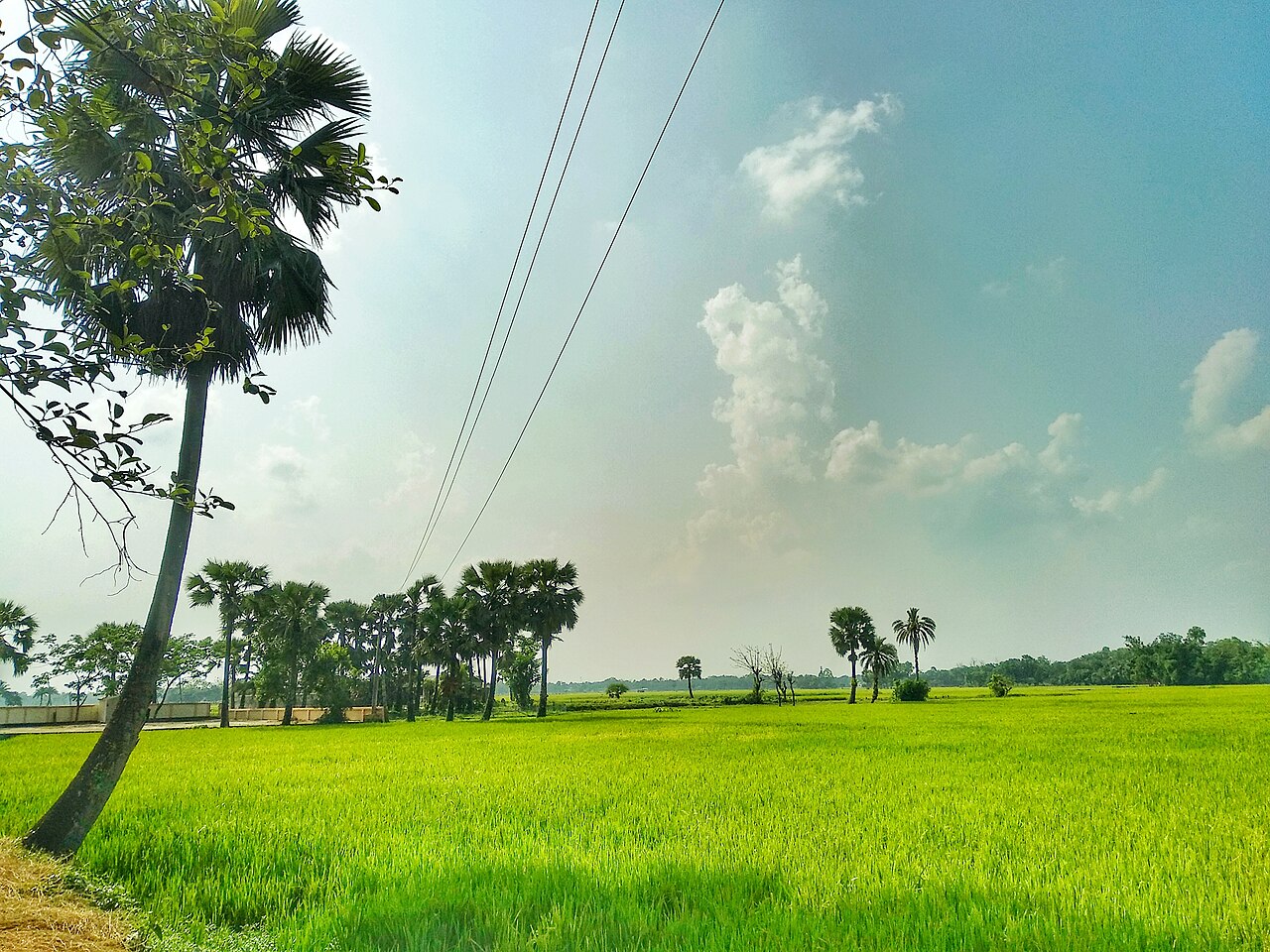
Photo: Plague / Wikimedia Commons (CC BY-SA 4.0). The top picture shows sugarcane growing at the Bangladesh Sugarcrop Research Institute, not in Bagerhat, as background.
Sources: Jagonews24, The Bangladesh Post, The Daily Star, The Daily Star Bangla, The Business Standard, BSS, Bangladesh Sugarcrop Research Institute, Banglapedia, Wikipedia
Comments
(0)