
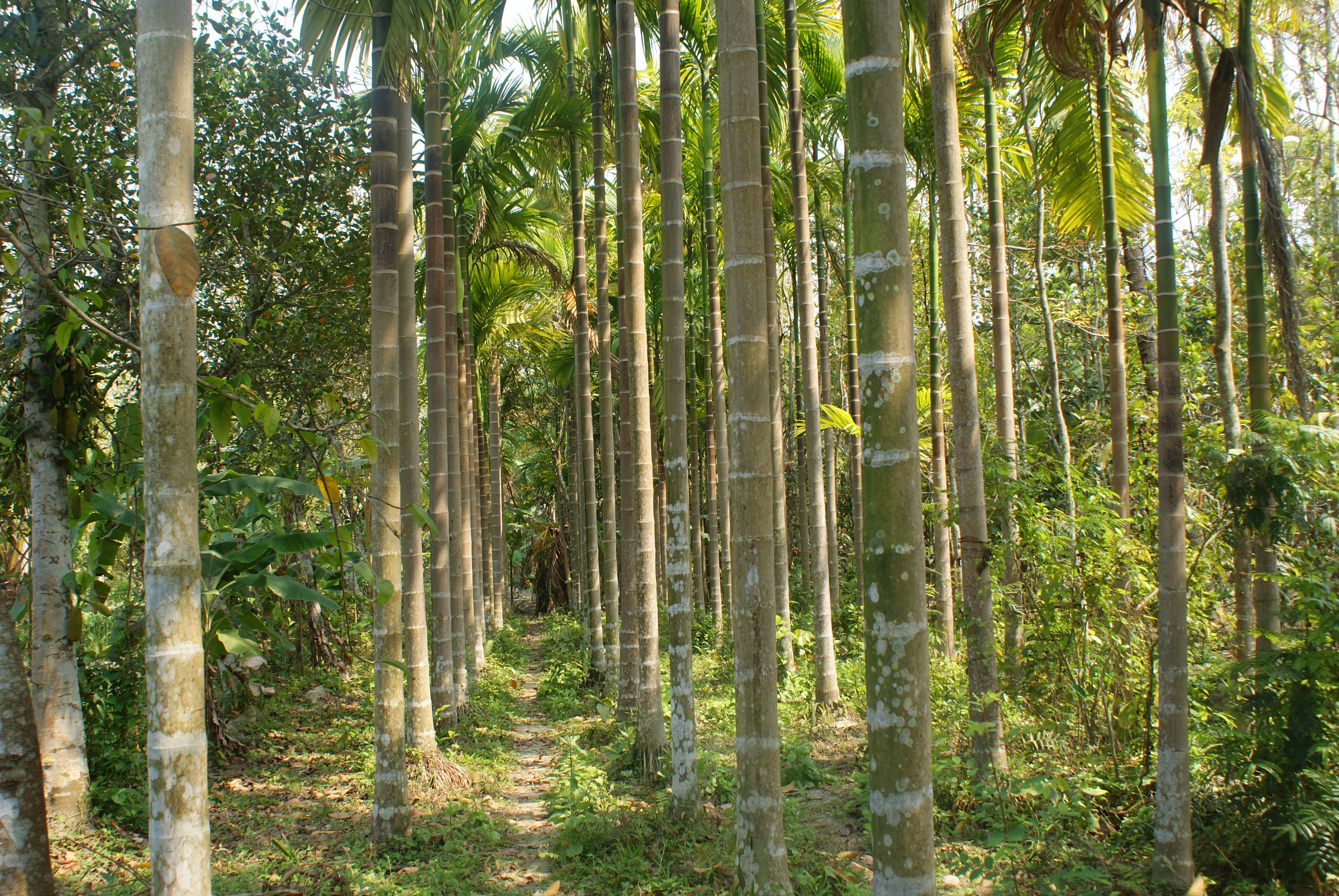
Betel nut growers in Bagerhat brought in a heavy crop in the autumn of 2025 and found the market paying less for it. Jagonews24 reported on 1 November 2025 that the district had a bumper crop this year, while prices had fallen by Tk 150 to Tk 300 a kuri, depending on quality. A kuri, the local trading unit, was counted as 210 nuts and was selling for Tk 300 to Tk 700. Growers said the lower price had put them in difficulty despite the higher yield. Traders said prices had eased somewhat because demand was weak at the big wholesale markets, known as mokams.
Badhal Bazar, a twice-weekly betel nut market in Kachua
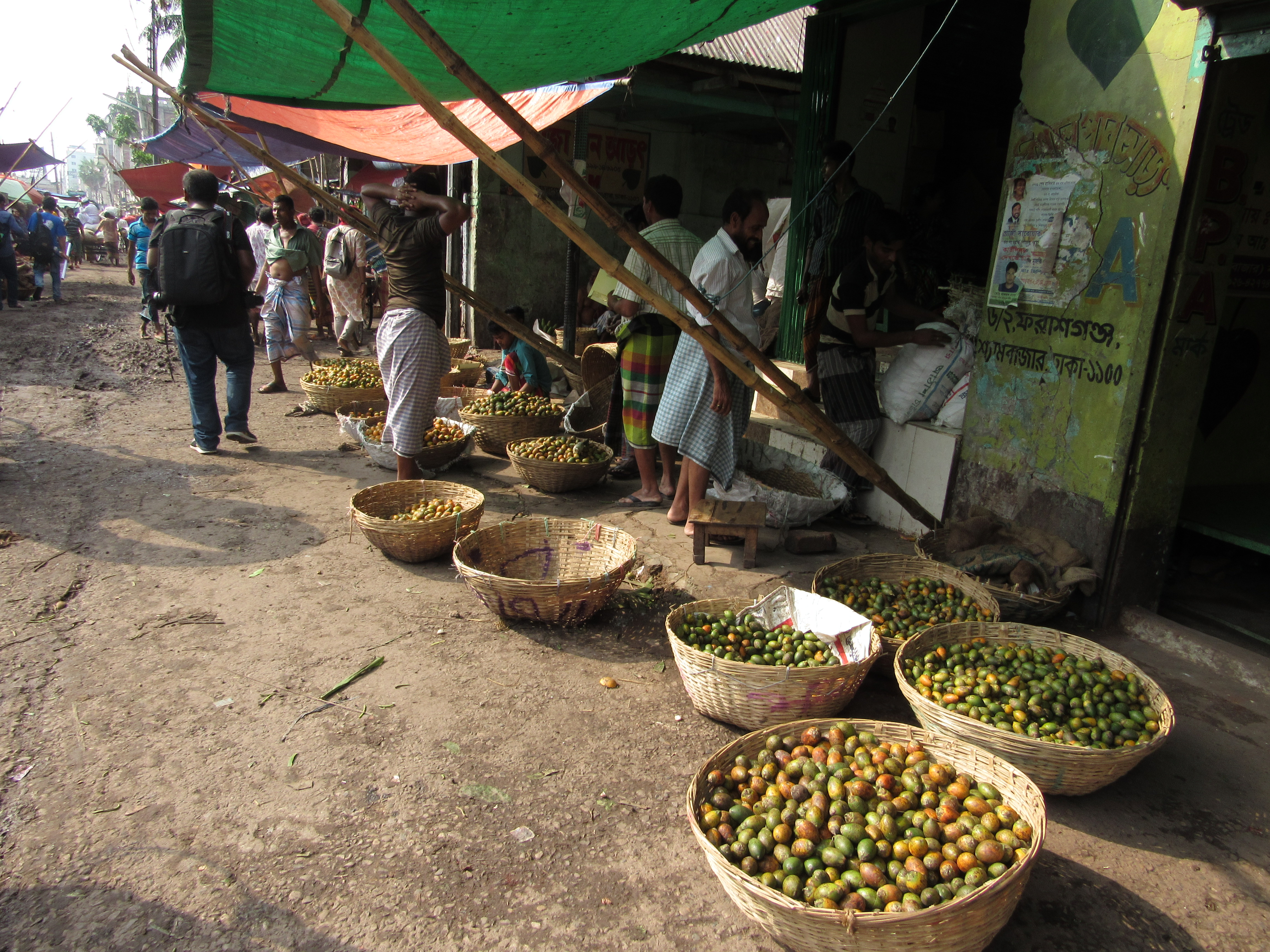
One of the district's biggest betel nut markets is Badhal Bazar in Kachua upazila. It sits twice a week, on Sundays and Thursdays. From first light the market fills with the calls of buyers and sellers. Nuts are brought from different parts of the district in baskets, bags and sacks, and they are bargained over and sold until about noon.
On a market day, Tk 1 crore to Tk 1.5 crore worth of betel nuts change hands, the report said. Through wholesalers the nuts then travel to Chattogram, Rangpur, Cumilla and other parts of the country.
The trade also supports a working crowd behind the stalls. More than 500 workers make a living from betel nut at Badhal Bazar, sorting, counting, bagging and loading the nuts onto trucks. They earn Tk 1,000 to Tk 2,000 a day.
What the wholesaler, the grower and the market lessee said
Wholesale buyer Md Niyam Gazi explained the fall simply. "I have been in this trade for 18 years. The yield is much higher this year, so prices are a little lower than last year," he said.
Jibon Dakua, a grower who had come from Ramchandrapur in Kachua, gave a more mixed picture. He expected his takings to hold up because of the bigger crop. "We will not earn less this year than last year, because the yield is good. The price is about Tk 150 a kuri lower than last year. If prices had stayed as they were, we growers would have profited more," he said.
Khan Shahiduzzaman Milton, the lessee of Badhal Bazar, said free trading had been arranged at the market to ensure growers' security and fair prices. He called it a century-old market and said no toll was taken from growers, in order to increase trade. He also pointed to its main limit. "The market is short of space, which makes movement a little difficult for buyers and sellers. If adjoining land were acquired and the market enlarged, there would be more buyers and sellers," he said.
The acreage, the target and the agriculture office's view
According to the agriculture office, betel nut was grown on 10,000 acres in Bagerhat this year, with a production target of about 27,000 tonnes. The report gave a target, not a final harvest figure.
Those figures can be set beside earlier ones from the same office. In a report of 13 October 2023, The Daily Star quoted the Bagerhat District Agriculture Extension Office as putting betel nut gardens at 3,960 hectares and production in fiscal 2022-23 at 26,123 tonnes, and as saying that output in 2023 was higher.
Md Motahar Hossain, deputy director of the Department of Agricultural Extension (DAE) in Bagerhat, said the crop could do better still. "Bagerhat's soil and climate are very suitable for betel nut, but farmers do not look after the trees properly. With regular care, yields would rise further. Farmers are being given advice and training for that," he said.
Banglapedia, the national encyclopedia, says the palm is grown in homestead gardens in towns and villages alike. The official did not list which tasks farmers were neglecting, and the report gave no details of the training.
How the price compares with earlier seasons
Betel nut prices in this district have swung before. Two years earlier, The Daily Star's Bagerhat report described a good crop and a slump in prices. Farmers said then that a kuri had sold for Tk 800 the year before and was selling for Tk 250 to Tk 500, close to half. Garden owners said prices were high at the start of that season and fell steadily over several weeks.
In that 2023 report, farmers alleged that syndicates at the markets were hurting small traders and growers, and said that outside wholesalers had not yet come to the big haats of Badhal, Kachua and Mazar, which left them selling to local wholesalers at low prices. A trader quoted in the same report said arrivals were high, which kept prices low, and that he saw no syndicate. The deputy director at the time made no comment on prices or syndicates when asked. The November 2025 report does not carry that allegation. The people it quotes put the fall down to a larger crop and to weak demand at the mokams.
Lower supply can work the other way. The Business Standard reported from Lakshmipur in December 2024 that production that season was lower than the year before and prices had risen. One farmer there said heavy rain had cut his yield but better prices had made up for it.
Comparing prices across these reports needs care, because the count behind a kuri differs. Jagonews24 and The Business Standard used 210 nuts in 2025, while The Daily Star's 2023 report from Bagerhat gave 231. Markets in the north and in Lakshmipur quote by the pon, 80 nuts, so their prices cannot be set directly beside these. The kuri prices reported from the southern markets were:
- October 2023, Bagerhat: Tk 250 to Tk 500 a kuri, against Tk 800 a year earlier, as farmers told The Daily Star (kuri counted as 231 nuts).
- 19 October 2025, Panchpara Bazar, Pirojpur: Tk 300 to Tk 500 a kuri, depending on quality, lower than the previous year, The Business Standard reported.
- 23 October 2025, Jhalakathi: Tk 220 to Tk 250 a kuri, Jagonews24 reported.
- 1 November 2025, Bagerhat: Tk 300 to Tk 700 a kuri, which was Tk 150 to Tk 300 below last season and below the early part of this season, Jagonews24 reported.
The same pattern across the southern districts in October 2025
Bagerhat was not alone. Reports from nearby districts in the weeks before described a large crop and soft prices across the south.
In Pirojpur, The Business Standard reported on 19 October 2025 that Panchpara Bazar in the Sadar upazila, locally called the 'Kingdom of Betel Nut', was trading more than Tk 1 crore on each of its two market days, Monday and Thursday. Hundreds of labourers sorted, counted and bagged the nuts, which were sold on to nearly 20 districts, including Dhaka, Chattogram, Rangpur, Saidpur, Dinajpur, Natore and Gaibandha. The DAE's deputy director in Pirojpur said cultivation had expanded to about 4,600 hectares, with projected output of 53,205 tonnes worth Tk 425 crore. He said production was high and the price comparatively low, and that farmers could make up for the lower price through increased yield.
In Jhalakathi, Jagonews24 reported on 23 October 2025 that 700 hectares were under betel nut this season. The DAE's deputy director there said favourable weather and rainfall had produced a very good yield, and that the market price was a little lower because the yield was higher. The agriculture department in Rajapur upazila described a bumper crop on 300 hectares of commercial gardens in 54 villages and claimed the yield was the highest in 12 years. Growers there said the crop carried less risk and lower production costs than other crops, while one garden owner said prices were much lower than in other years.
Bumper seasons elsewhere have not always meant bad prices. In January 2016 The Daily Star reported a bumper crop in Ukhia and Teknaf in Cox's Bazar with fair prices that pleased growers, and in November 2020 The Business Standard reported that Lakshmipur farmers expected a lucrative year after bumper production, with farmers and traders satisfied with prices. Noakhali showed a different problem in March 2021: the DAE counted about 5,500 tonnes on 1,085 hectares, down from 5,850 tonnes on about 1,100 hectares the year before, and wholesalers said gardens were being cleared for new houses.
Bagerhat and Kachua: the place behind the crop
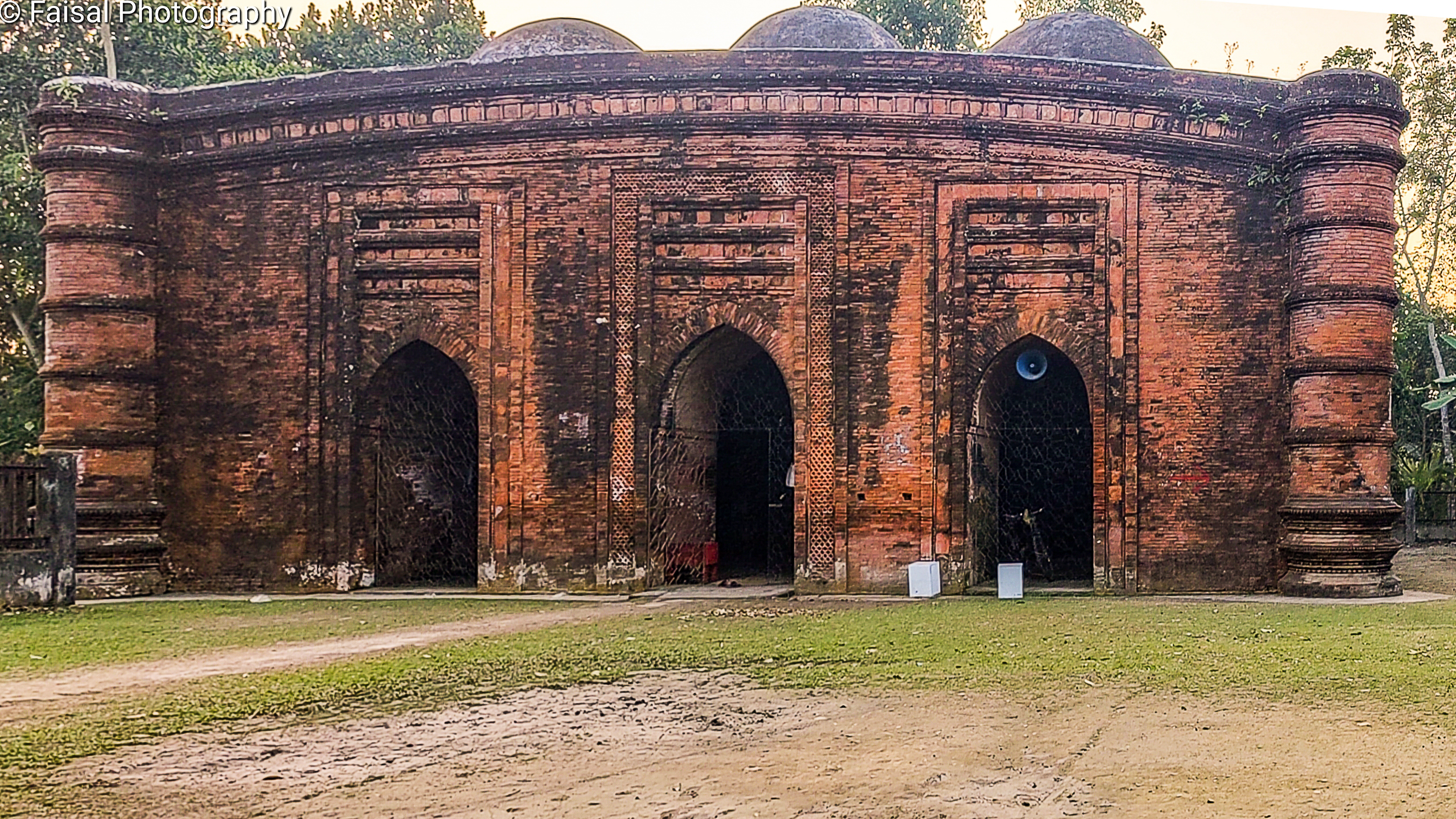
Bagerhat is a district in Khulna Division with an area of about 3,959 square kilometres. It reaches from Gopalganj and Narail in the north to the Bay of Bengal in the south, and it has nine upazilas: Kachua, Chitalmari, Fakirhat, Bagerhat Sadar, Mongla, Morrelganj, Mollahat, Rampal and Sarankhola. Banglapedia names the Pasur, Madhumati, Baleshwari, Kaliganga, Haringhata, Bangra and Bhola among its rivers. The 2022 census counted 1,613,076 people. Agriculture is the largest source of income, Banglapedia says, at 54 percent, and rice, betel leaf, betel nut and coconut are among the crops named for the district. Rampal and Fakirhat are known for shrimp.
Kachua, home of Badhal Bazar, is a small upazila of about 131.63 square kilometres, with Bagerhat Sadar to its west and Pirojpur Sadar and Nazirpur to its east. It has seven unions, Badhal among them, and the 2022 census counted 107,423 people. Banglapedia lists betel nut among the upazila's main fruits, with coconut, banana, sapodilla, watermelon and palm, and among its exports, with coconut, banana and palm molasses. The upazila has 14 hats and bazars. The Baleshwari, Taleswar and Bishkhali are its rivers.
Kachua's markets carry more than one trade. In October 2025 The Daily Star named Sainboard Bazar in Kachua as one of four big wholesale fish markets in the district.
How the areca palm grows and how the nuts are sold
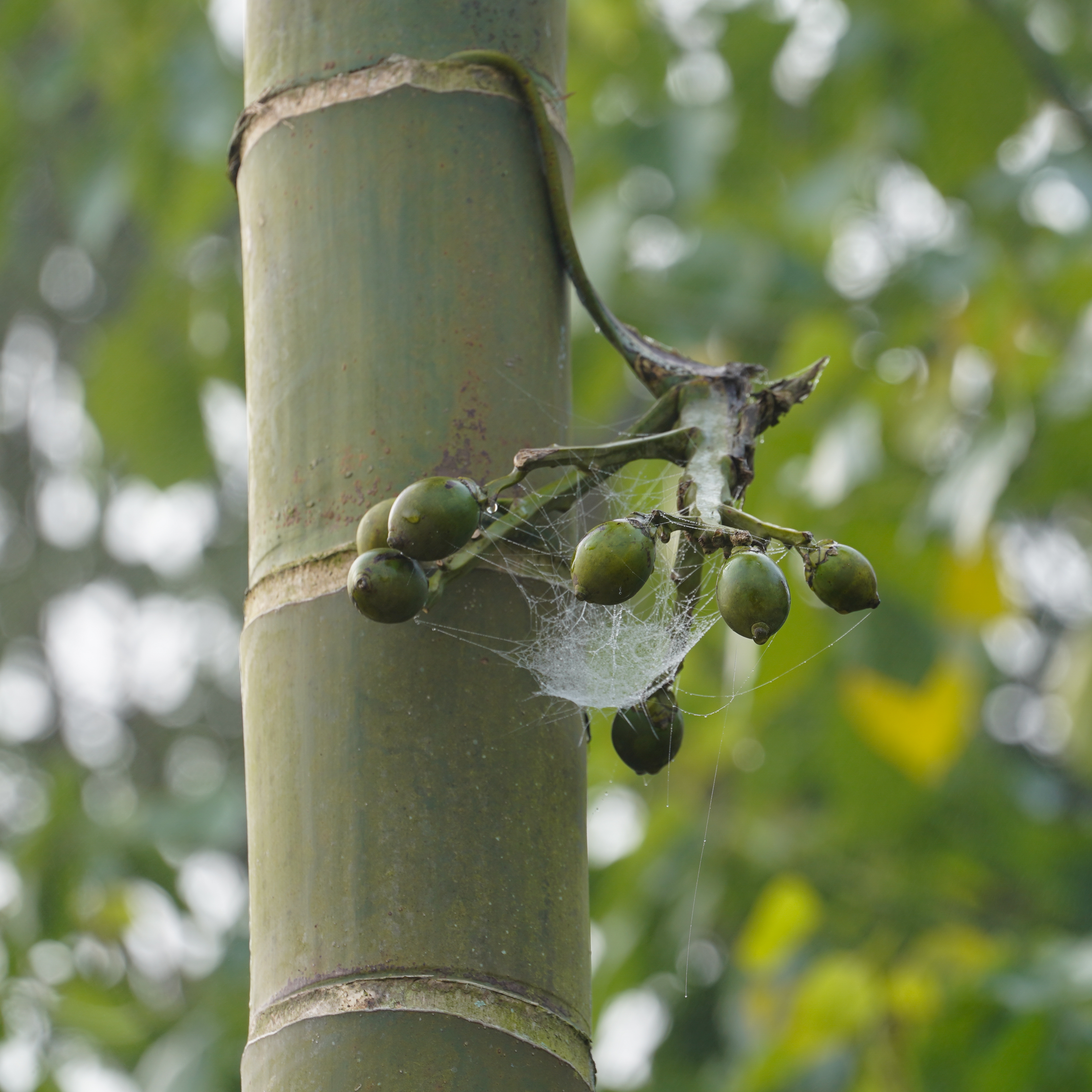
Betel nut, supari in Bengali, is the seed of the areca palm, Areca catechu. It is a slim palm with a smooth, unbranched trunk and a crown of large leaves. Botanical descriptions by Kew and the Flora of China give a height of about 20 metres, and Banglapedia says it can reach 30 metres. The fruit is an orange oval drupe up to 5 cm long when ripe, with a fibrous layer around one hard seed.
Banglapedia says the climate suits the palm across Bangladesh and that nearly every district grows some, with most of the crop coming from Barishal, Rangamati and Khulna. The palm is very sensitive to drought and needs irrigation where annual rainfall is below about 1,250 mm. It grows on many soils but does best on clay loam. The tree fruits through the year, with the heaviest crop in the Bengali months of Poush and Magh, roughly December to February. Plants usually sprout from seed and are transplanted later, and young ones are shaded by other trees. Other crops are often grown alongside: a Kurigram farmer with 500 trees told The Daily Star in 2022 that he grew turmeric and ginger between them. Mites, nematodes and caterpillars can damage the palm, and collar rot and stem rot are among its diseases, though Jhalakathi growers said in 2025 that pest and disease attack was low.
Accounts of the palm's working life differ. A DAE additional director told The Business Standard in 2024 that trees start bearing within three to four years and can produce for 40 to 50 years. The Daily Star's 2022 report from the Rangpur region said bearing starts after six to seven years and lasts 15 to 20 years. Banglapedia gives the tree a life of about 50 to 60 years.
The selling season runs from early autumn into winter. In Lakshmipur it was reported as September to December, and in Noakhali as October to mid-February. Harvesting costs money before any nut reaches a market: a Bagerhat farmer told The Daily Star in 2023 that it cost Tk 10 to pick one bunch, and Lakshmipur farmers paid Tk 10 a tree in 2024.
The nuts reach buyers in several forms. Traders in Lakshmipur named three in 2024: raw green-skinned, ripe yellow, and soaked, with raw nuts in highest demand and soaked nuts next. Soaked or 'wet' nuts are kept in water so that they last, and dried nuts sell by the kilogram. Storage affects prices too. A trader in Kurigram told The Daily Star in 2022 that he stored nuts in clay pits and that the previous year's stock, still in store, was making buyers less eager.
Where the nuts go and how much the country grows
Rangpur, one of the destinations for Bagerhat's crop, also grows its own. A Kachua trader told The Daily Star in 2023 that he bought nuts and sent them to different places in Rangpur. The same paper reported in April 2022 that about 50 lakh palms stood in Lalmonirhat, Kurigram, Gaibandha, Nilphamari and Rangpur, producing about 200 crore nuts a year, and that a good crop had pushed prices in Lalmonirhat and Kurigram to less than half of the previous year's.
Some of the country's crop goes abroad. In the Jagonews24 report of 23 October 2025, people in the Jhalakathi trade said traders from Jashore and Benapole bought nuts there for India, while Chattogram traders exported to China and Thailand. Traders told The Business Standard in 2020 that Lakshmipur nuts went to the Middle East, including the UAE and Oman. The Bagerhat report mentions only domestic buyers.
National figures are less tidy. The Business Standard, citing the Bangladesh Bureau of Statistics' Agricultural Statistics Yearbook 2023, reported that Lakshmipur led the country in 2022-23 with 113,931 tonnes, ahead of Cox's Bazar with 59,293 tonnes, Chandpur with 23,743 tonnes and Bhola with 14,334 tonnes. In 2020, however, a DAE official in Lakshmipur had put that district's annual production at about 13,000 tonnes on 6,876 hectares, so counts for one district can differ widely. The same 2024 article, citing Tridge, ranked Bangladesh the world's second-largest producer with 333.7 million kg, behind India's 1.7 billion kg and ahead of Myanmar's 236 million kg.
A cash crop with a health warning
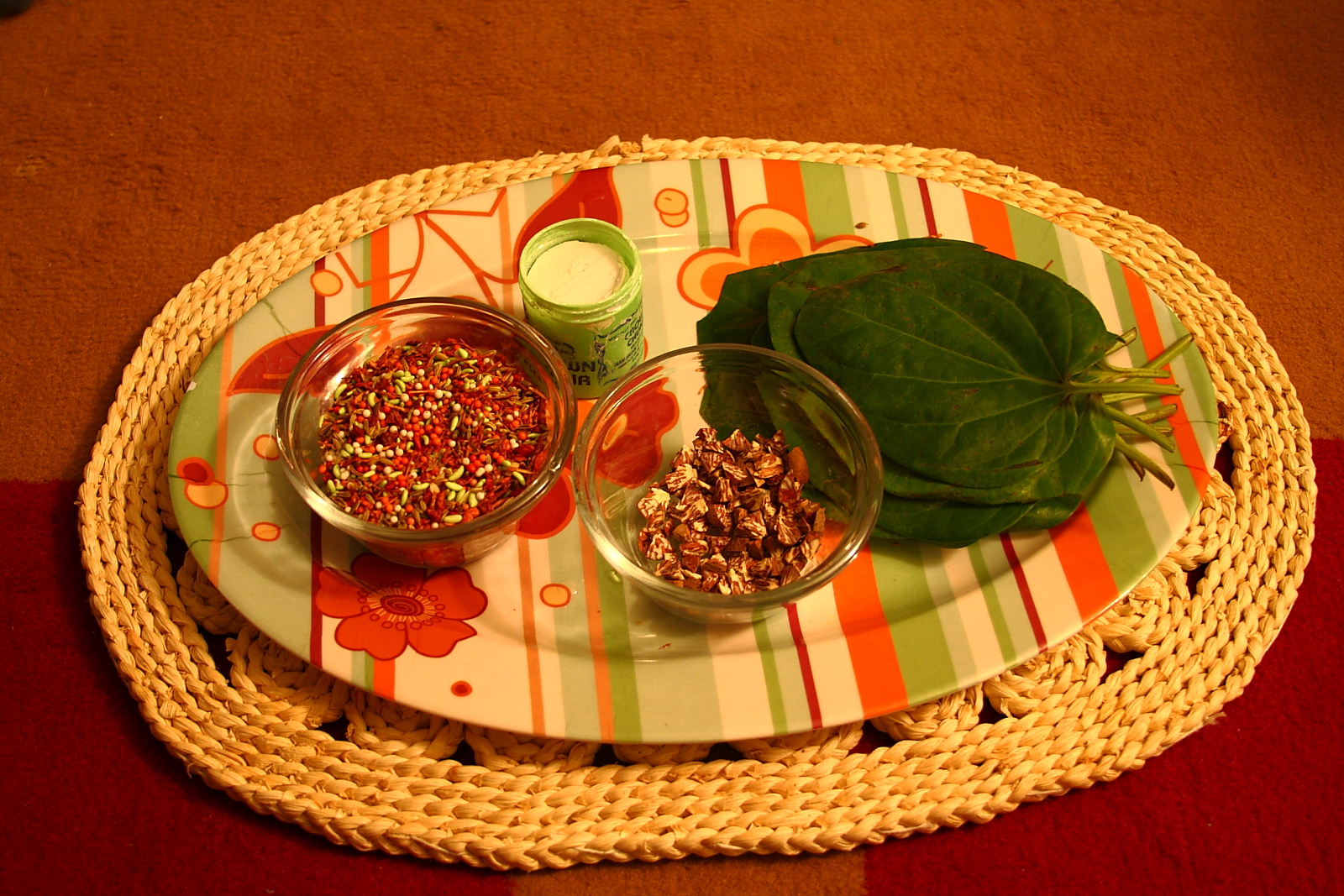
The income betel nut brings to growers and workers comes with a risk for those who chew it. Banglapedia describes the usual habit: the nut is wrapped in betel leaf with lime and chewed after meals and on special occasions.
The World Health Organization says tobacco, alcohol and areca nut (betel quid) use are among the leading causes of oral cancer, and it lists stopping all forms of tobacco, including chewing of areca nuts, among the steps for prevention. WHO estimates 389,846 new cases of cancers of the lip and oral cavity and 188,438 deaths worldwide in 2022. The UK's National Health Service also lists chewing betel nut or paan among the things that can raise the chance of mouth cancer, and it advises people to try to quit. Anyone worried about their mouth health should see a doctor.
Photo: Nazmulhuqrussell / Wikimedia Commons (CC BY-SA 4.0). The top picture shows a row of betel nut palms in a garden in Barishal, as background.
Sources: Jagonews24 (1 November 2025; 23 October 2025), The Business Standard (19 October 2025; 1 December 2024; 8 April 2023; 20 March 2021; 6 November 2020), The Daily Star (20 October 2025; 13 October 2023; 16 April 2022; 5 January 2016), Banglapedia (Betel Nut, Bagerhat District, Kachua Upazila), World Health Organization (Oral health, 17 March 2025), National Health Service (Causes of mouth cancer), Wikipedia (Areca catechu, Bagerhat District, Kachua Upazila).
Comments
(0)