
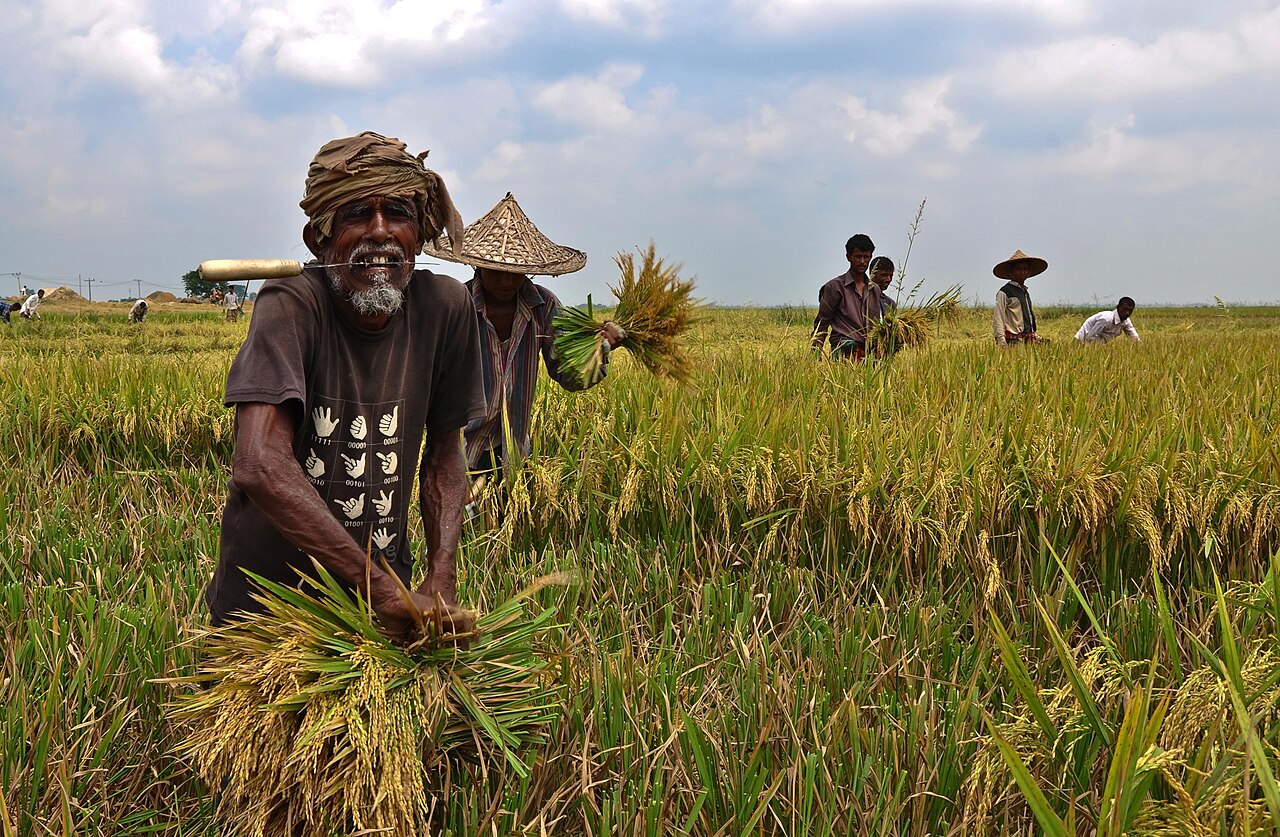
Agriculture's share of Bangladesh's gross domestic product has fallen by more than three quarters since independence: from 49.8 percent in 1972 to a projected 11.42 percent in 2025. The figures come from a report recently published by the Asiatic Society of Bangladesh, Amar Desh reports.
The report, Bangladesh's Balance Sheet (1972-2025): The Path of the Economy over Five Decades, was presented by Dr Muhammad Abdul Majid, a former secretary and former chairman of the National Board of Revenue (NBR).
By its count agriculture's share was 44.2 percent in 1980, 24.1 percent in 2000 and 12.8 percent in 2020. Over the same period industry's share rose from 9 percent in 1972 to 25.2 percent in 2000 and 34.03 percent in 2025. Manufacturing contributed 3.1 percent in 1972 and 21.89 percent in 2021.
The report's view is that agriculture matters no less for its smaller share. Most of the country's land is farmed and a very large number of people depend on the sector for a living. It calls self-sufficiency in food grains, higher farm productivity and the growth of agro-based industry important for the economy.
Dr Majid stressed credit on easy terms for farmers, the supply of better seed and fertiliser, and a fair market price for what they grow.
The report also points to weak revenue collection. The tax-to-GDP ratio has hovered at about 8 to 10 percent for years and is shown at 6.6 percent for 2025, against at least 15 to 16 percent in many countries. Average annual growth was 2.96 percent in 1972-1980 and 6.43 percent in 2011-2020, and has slowed since 2021, after the pandemic.
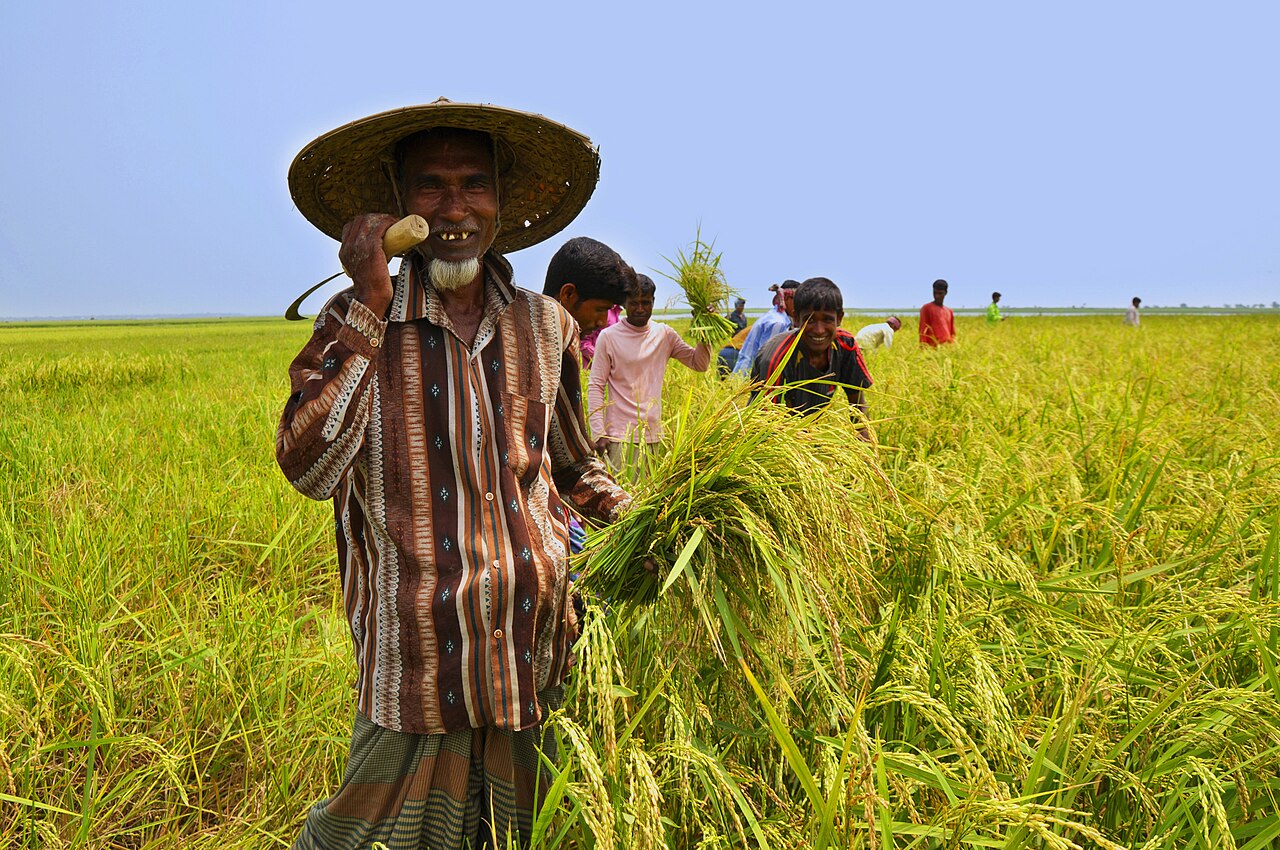
Photo: Harvesting paddy in a haor in Sunamganj, Balaram Mahalder / Wikimedia Commons (CC BY-SA 3.0)
Source: Amar Desh

Comments
(0)