
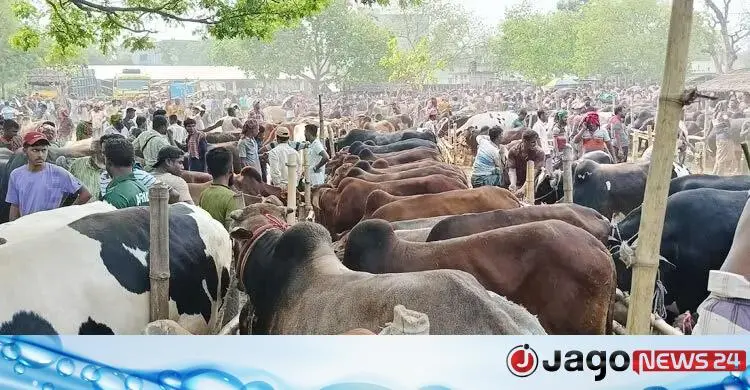
With Eid-ul-Azha approaching, cattle markets across the country have begun to fill up. Experts, however, have voiced added concern about anthrax, a deadly zoonotic disease spread through livestock.
They say that if an infected animal enters a market, the disease can spread quickly from there to people and other animals, and could even take the form of an epidemic.
The warning comes from Prof Dr Md Amimul Ehsan of the Department of Medicine at Bangladesh Agricultural University (BAU).
How the disease spreads
"Anthrax was detected in Rangpur and Gaibandha a short while ago. Infected people showed skin lesions, swollen eyes and other symptoms," he said. "Anthrax is a very dangerous zoonotic disease that can pass to humans through contact with the blood, meat or other body parts of an infected animal. If there is an infected animal at a sacrificial cattle market, there is a risk of the disease spreading quickly from there to people and other animals."
He added: "Animals with anthrax often die before showing symptoms. When symptoms do appear, body temperature can rise to 104 to 105 degrees Fahrenheit and the animal dies within a short time. After death, tar-like black blood comes out of the nose, mouth and anus. When this blood is exposed to air, the bacterium forms spores that can survive in the environment for a long time and keep spreading infection."
To identify an infected animal, he said, dark or white spots and blisters may be seen on the tongue, nose or throat. Behavioural changes such as unusual excitement or excessive calmness may also be noticed.
Vaccination and market checks
Stressing regular vaccination to prevent the disease, Prof Amimul said the risk of infection could be greatly reduced if expert teams checked the health of animals at market entrances.
Urging buyers at the markets to be careful, he said people should avoid touching animals that appear sick. Any wound or cut on the body should be covered before going to a market, because anthrax bacteria can easily enter through a wound. Hands and feet should be washed thoroughly with soap or sanitiser after contact with animals.
He also said the blood and waste of sacrificed animals must not be left lying around, but buried in a safe place, and that if a suspicious animal is seen at a market, a livestock officer or veterinarian should be consulted quickly.
Source: Jagonews24. First published in Bengali on The Agro News.

Comments
(0)