
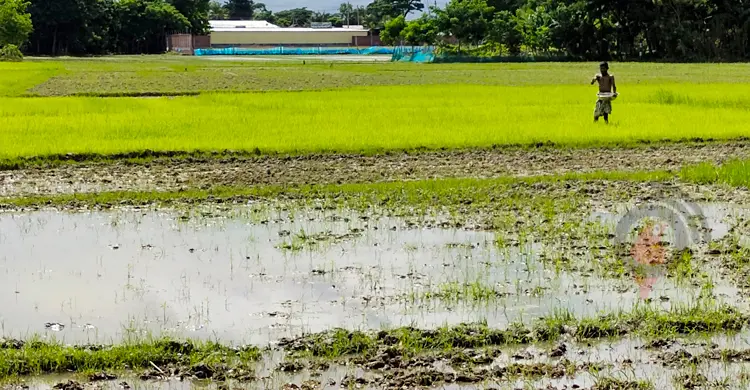
Aus production last season fell about 5 lakh tonnes short of target, and as the days pass, fears are growing over the aman crop in the fields. Although 1.49 crore tonnes of aman were produced last year, the planting target has not yet been met this year because of fertiliser and irrigation shortages. Analysts therefore fear aman output this season could fall by 15-20 lakh tonnes.
Data show that about 55 per cent of the country's total rice demand is met by boro, and the remaining 45 per cent by aus and aman: 36 to 38 per cent from aman and 6 to 7 per cent from aus.
According to the agriculture ministry, this year's aman target is 59.05 lakh hectares, and so far aman has been planted on 56.74 lakh hectares.
Last aus season the production target was 30 lakh tonnes, but actual output did not exceed 25 lakh tonnes. Aus was grown on about 11.5 lakh hectares in 2021-22, and this year the area fell by about one lakh hectares. Yields also fell because of drought and lack of rain, so output will be below target, though the final aus production report has not yet been prepared.
Economist's warning
Agricultural economist Dr Jahangir Alam Khan told Jagonews that the planting target has not been met this year. More important, irrigation was disrupted by the long drought, and higher fertiliser and fuel prices have raised costs and created a crisis that will hurt overall aman production.
He said that when production costs rise, farmers cannot apply inputs properly, and yields fall. Second, aman planting was late this year, which is another major reason for lower yields.
He said the planted area will fall by 10 per cent this year and output will fall at the same rate. That suggests a fall of 15-20 lakh tonnes, meaning total output will not exceed 1.35 crore tonnes. Various government quarters, however, claim aman production will not be hit and will instead exceed the target, saying aman planting is already 96 per cent complete and the rest will be done within the next week.
DAE: target will be exceeded
Habibur Rahman Chowdhury, director of the Field Services Wing of the Department of Agricultural Extension (DAE), told Jagonews that planting is running late in some areas because of floods but will exceed the target within days. Although the aman season runs from mid-July to mid-August, planting can continue until the end of August. The target will be met on time, so there is no chance of output falling, he said. Farmers are being advised to plant aman using electric motors, shallow machines, BADC irrigation projects, deep tube wells and the Barind irrigation project in place of rainwater.
At the same time there are fertiliser shortages in various parts of the country, and irrigation costs have risen with fuel prices. Agriculture Minister Dr Md Abdur Razzaque, however, said at a recent event that diesel would be subsidised.
Farmers worried too
Like the experts, farmers in the field are also voicing fears. In Naogaon, one of the country's main paddy-growing districts, aman planting was delayed by the lack of rain, so farmers planted with supplementary irrigation. The area did not fall, but late planting has raised fears of lower output there.
Moynul Islam, a farmer from Gobindapur village in Feni Sadar upazila, said he has planted aman on two bighas using water from a shallow machine because there was no rain, and is still irrigating the same way. Because of late planting and not enough water, the yield will be lower.
Ebadul Karim, a farmer from the Birchandranagar area of Parshuram in Feni, said he used to apply a good amount of fertiliser at planting and before mid-season, which he cannot do properly this year. A bag of urea and TSP now costs Tk 850 more than before, and fuel for each irrigation has risen by Tk 450 per bigha. After all this spending, he is also worried about getting the crop home safely through disease at the end of the season.
Source: Jagonews24. First published in Bengali on The Agro News.
Comments
(0)