
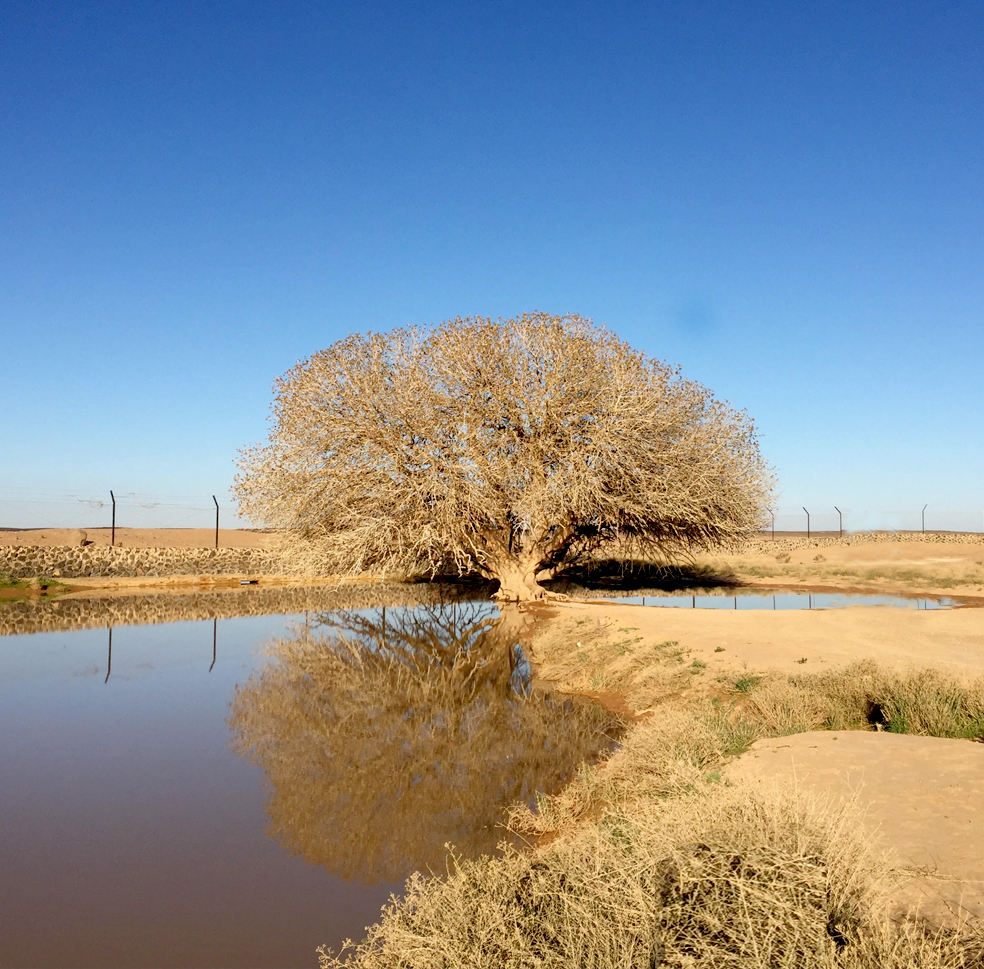
At the age of 12, Muhammad (peace be upon him) travelled with his uncle Abu Talib in a Quraysh trade caravan bound for Sham. Hadith 3620 of Sunan al-Tirmidhi describes how on that journey they met the monk Bahira, and how the shade of a tree leaned towards the boy. In Prothom Alo's Islam section, Muhammad Tazammul Haque traces the journey and the history of the tree.
Arabs used Sham for the lands to the left of someone in the Hijaz facing east: today's Syria, Jordan and Lebanon. The Prophet's great-grandfather Hashim ibn Abd Manaf started the Quraysh custom of trading in Yemen in winter and Sham in summer, which the Quran calls the ilaf of Quraysh (Surah Quraysh, verses 1-2). Most summer caravans headed for Busra and Gaza.
According to the Tirmidhi account, when the caravan camped near his monastery the monk came out, took the boy by the hand and said he would be sent as a mercy to the worlds. When the others had already taken the shade of a tree and the boy arrived, the monk pointed out that its shade had bent towards him, and, fearing the Romans would recognise and harm him, urged that he not be taken further. Abu Talib sent him back, so on that journey he never reached Busra.
The article says the tree stands at Al-Buqayawiyya, between the towns of Al-Azraq and Al-Safawi, 150 km from Amman and 90 km from Mafraq. It is the only large living tree in a wide stretch of desert, its shade reaching 50 metres, 11 metres tall and covering 283 square metres. Ruins nearby are thought to be the monk Bahira's church.
Quoting the travelogue Jahan-e-Deedah by the Pakistani scholar Mufti Taqi Usmani, the writer recounts that in September 2010 he visited the site with several scholars led by Prince Ghazi bin Muhammad, adviser to Jordan's king. Prince Ghazi told them he had found mention of the tree in documents probably preserved since Ottoman times and traced the site from them.
Reporting: from an article by Muhammad Tazammul Haque, Prothom Alo.
Photo: Dinalahmad / Wikimedia Commons (CC BY-SA 4.0)
Source: Prothom Alo

Comments
(0)