
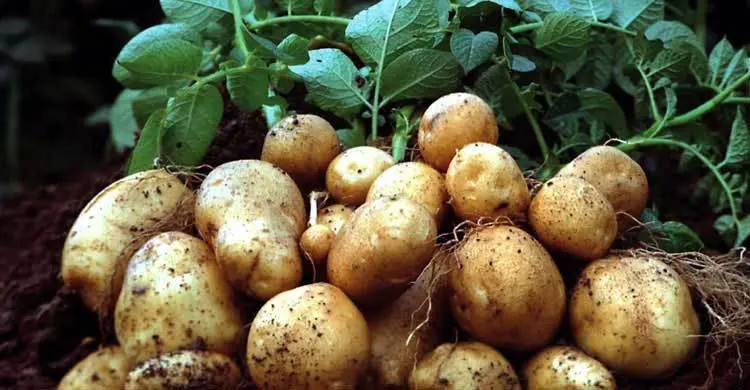
Sometimes many potatoes are lost because of a cold storage crisis, and rising prices of fertiliser, pesticides and other inputs have multiplied the cost of cultivation. But there is a way to grow potatoes at lower cost, and it can bring much fallow land under cultivation too.
Where and why
You can grow potatoes without tillage in low-lying areas where monsoon water is slow to recede.
The method costs less because water hyacinth used as mulch keeps the soil moist at all times. Irrigation costs can be kept to a minimum, much less chemical fertiliser is needed, and there are fewer weeds. The potatoes taste better and grow much bigger.
Choosing land and timing
Choose land where water does not stand after rain. Usually there is a chance to grow potatoes as soon as the land is cleared after harvesting high-yielding or local rice varieties. There must be a source of water hyacinth in a nearby river or pond.
The end of November is the right time for this crop, though potatoes can be grown by the no-tillage method until 10 December.
Seed and planting
Approved varieties such as Cardinal and Diamond kept in cold storage can be used. Each decimal needs 6 to 8 kg of seed. Small potatoes weighing 25 to 30 grams, or cut pieces of large potatoes with at least two eyes, make the best seed. Ash can be applied to the cut surfaces.
It is best to treat the seed with an approved fungicide before planting. Press each seed into the soil with a finger at 10-inch spacing in rows 20 inches apart. If the soil is somewhat hard, draw a hand plough to make a 10 cm furrow, set the seed in it and cover it with soil.
Fertiliser and mulch
Before planting, apply 1.3 kg of urea and half a kg of TSP per decimal. The day before, mix potash with cow dung and broadcast it on the field. Make sure no chemical fertiliser touches the seed when it is applied.
Water hyacinth, straw and stubble can be used as mulch. Water hyacinth taken from a river or canal and left to drain and dry makes good mulch. Using straw or stubble may increase rat attacks. Cover the seed potatoes with a 4 to 6-inch layer of mulch right after planting. The seed potatoes must be completely covered, or green marks harmful to people will form on the potatoes. But too much mulch makes it hard for the plants to emerge.
Pests
Cutworms cut and bore seedlings, damaging the crop. They hide under the soil by day. If the infestation is light, dig around the cut plants to collect and kill the grubs. If it is heavy, mix chlorpyrifos 20 EC at 5 ml and spray the base of the plants and the soil until soaked. This should be done 30 to 40 days after planting. In potatoes stored at home, the potato tuber moth bores long tunnels and then spreads to other potatoes.
When storing potatoes at home, cover them with ash, husk or sawdust, and sort out and discard infested potatoes first. Aphids suck the sap of the plant and spread virus diseases; spray 10 ml of malathion 57 EC mixed in 10 litres of water every 7 days. Mole crickets come out of their holes at night and eat roots and stems; kill them using poison bait or by driving them out of their holes.
Late blight
With late blight, small wet spots first appear on leaves, shoots and stems and then grow to cover the whole plant. When relative humidity is high, the disease spreads through the whole field within two or three days, and the affected field smells burnt, as if the crop had been set on fire. To prevent it, apply balanced fertiliser and irrigate on time. As soon as the disease appears, spray Rovral or Dithane M-45 at 20 grams in 10 litres of water every 7 to 10 days.
Expected yield
Grown this way and protected from pests and disease, potatoes can yield 25 to 30 tonnes a hectare. Compared with conventional potato farming, the no-tillage method brings the cost down to about three quarters.
Source: Jagonews24. First published in Bengali on The Agro News.
Comments
(0)