
A class 12 college student in Khetlal, Joypurhat, was farming about three acres of potatoes, cucumber and bitter gourd in early February 2026, Jagonews24 reported on 3 February. He had taken up vegetables while still at school, against his family's first wishes and through the mockery of some neighbours and classmates, and the report said he had become known locally as a farm entrepreneur within a short time.
The student is the only son of a farmer, and he told the paper that he had learned much of what he knew about farming from his father. He had chosen farming so that he would not have to chase a job after finishing his studies. His story, as he told it to the reporter, runs from a single bitter gourd plot to plans for a seedling nursery and a livestock farm.
From a rice and potato family to vegetables
His father grew only rice and potatoes, the student said, but he had wanted to grow vegetables since childhood. The family said no. He was too young to run a farm properly, they told him, and there was little money to spare.
"My father mainly grew rice and potatoes," the student said. "But since childhood I wanted to grow vegetables. My family did not agree. When I was in class ten, with my uncle's help I convinced my father and started farming for the first time. I began growing vegetables with bitter gourd on the land my father had leased, where rice used to be grown."
The family then sent him to the city. "Later my family admitted me to the first year of the higher secondary course at Rajshahi Government Shaheed Kamaruzzaman College," the student said. "The bitter gourd project was still running then, but I had to leave it and go to the city to study. My heart was not in it there. Drawn back by farming and my own work, I returned to the village and enrolled at a local college. Since then I have been even more committed to farming. Now my family supports me fully." Rajshahi, the seat of the division that includes Joypurhat, is a city on the north bank of the Padma so full of schools and colleges that it is known as the "Education City".
His father, seeing the work and its results, came round and began to help, and with that help the farming gathered pace, the report said.
The move from rice to vegetables on one small plot matches a wider change. The Financial Express reported on 14 September 2025 that, according to the Bangladesh Bureau of Statistics (BBS), vegetable output had reached an estimated 17.09 million tonnes in 2024-25, from 14.82 million tonnes in 2020-21. Farmers were growing around 100 types of vegetables on nearly one million hectares, and the FAO ranked the country third in the world after China and India. Agricultural economist MA Sattar Mandol told the paper that vegetables had become a cash crop. Rice and other cereals still occupied more than 75 percent of the country's 8.5 million hectares of arable land.
Three acres on scarce and costly leased land
At the time of the report the student was farming three acres, of which two acres were under potatoes and 65 decimals under cucumber and bitter gourd. The family's own land was small, so he had to lease more. Land to lease was hard to find in his area, he said, and when it did come up the rent was fairly high.
Figures from other reports show how common that position is. A report of the International Food Policy Research Institute (IFPRI), described by the Dhaka Tribune on 26 December 2024, found that about 40 percent of farm households in Bangladesh were pure tenants who owned none of the land they farmed, and that 23 percent farmed both their own and rented land. Sharecropping was the most common arrangement; about 16 percent of farmers held land on a cash lease. The same report said 56 percent of rural households were landless, and that farmers with little land rely heavily on high-value crops such as vegetables to raise their incomes.
Rent is a line in the farming bill in Joypurhat. When Dhaka Post worked through the cost of a bigha of early potatoes in the district in January 2025, it said that many growers had leased or rented their land and had paid from Tk 7,000 to Tk 13,000 for it, depending on the area, within a total cost of Tk 40,000 to Tk 55,000 a bigha.
According to the Jagonews24 report, the student's total income the previous year had been more than Tk 10 lakh, leaving a profit of Tk 5 lakh after costs, and it could be higher with a good harvest and a favourable market. The paper said farming had changed his family's finances. Asked about income himself, the student said: "Alhamdulillah, I earn well by the end of the year. But my biggest success is winning over my family and the people of the area." He said the farm was supporting his household and building capital for the future, and that he believed a time would come, Inshallah, when even two or four government employees together could not match him financially. These figures and views come from his account in that one report; no other source for them was found.
What mulching does in a Joypurhat vegetable bed
The student grew vegetables both in their main season and early, and he used the mulching method, which the report said gave a good yield and better produce that sold at a good price. The report does not say what material he laid.
A mulch is any covering spread over the ground to keep moisture in, regulate temperature and hold weeds down. It can be straw, leaves or compost, or thin plastic sheeting with holes through which the plants grow. Plastic film blocks the light that weeds need and slows evaporation, so less irrigation is required. Dark and clear films warm the soil and can allow earlier planting, and fruit kept off the ground stays cleaner and is less likely to rot.
Those last points help explain why the method suits early vegetables, and why it may matter on the student's land. The BBS Yearbook of Agricultural Statistics 2024, published in June 2025, lists Joypurhat among the districts of the Level Barind Tract, an almost level landscape whose soils it describes as low in available moisture-holding capacity, very low in organic matter and short of most nutrients. A soil table in the same yearbook, from the Soil Resource Development Institute, names Khetlal among the upazilas with grey terrace soils.
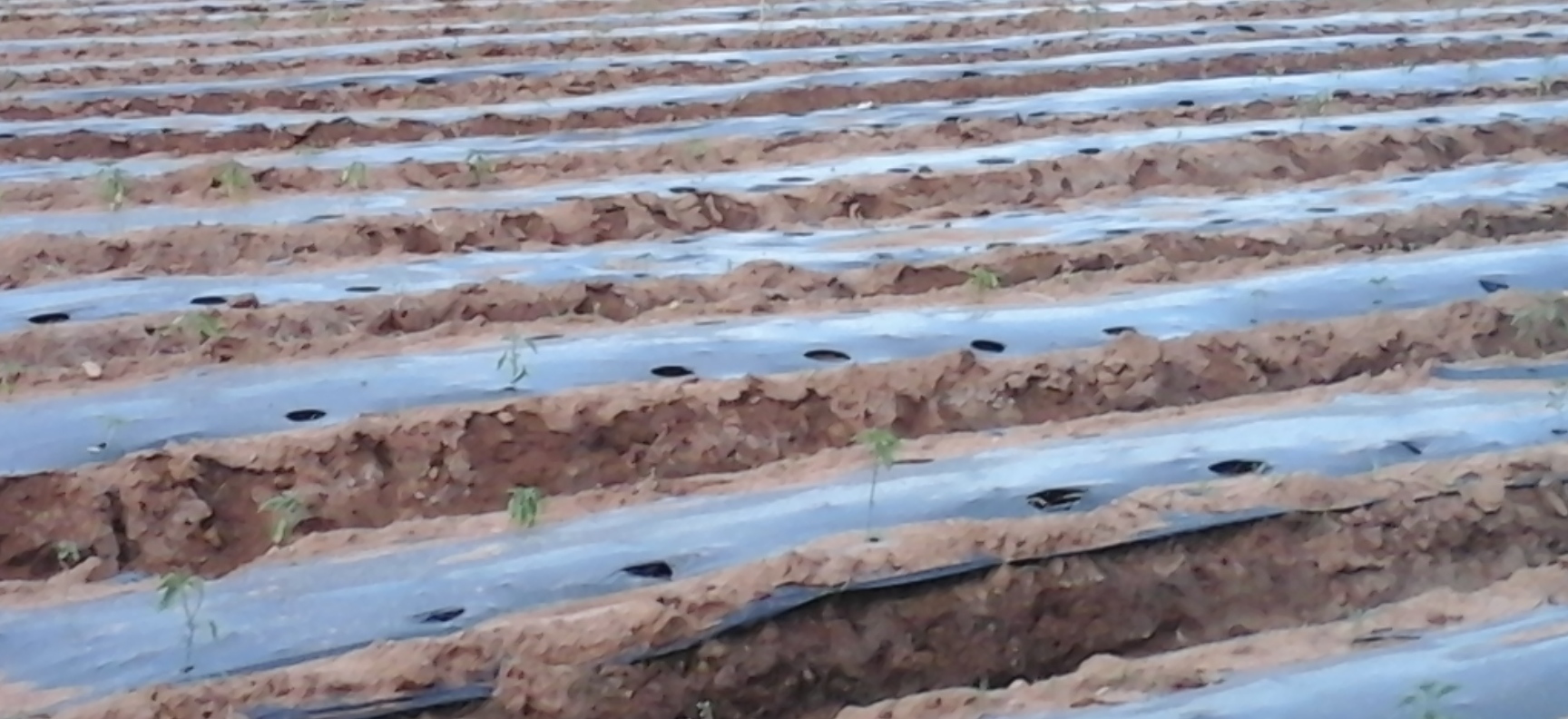
Farmers in the district had been trying it for several years. On 19 November 2022 the state news agency BSS reported on a demonstration by JAKS Foundation, a local development organisation, in which a farmer in Joypurhat Sadar grew the Jhalak variety of bitter gourd under what the report called eco-friendly mulching paper on 33 decimals. Seed sown on 27 August had begun to bear in the first week of November. He told BSS the crop had cost Tk 26,700, that he had sold Tk 8,190 worth on the first day and Tk 30,000 worth so far, and that mulching was doubling his yield. A JAKS agriculture officer told the agency that the paper protected plants from excess heat and heavy rain, cut fertiliser waste, kept weeds down and held soil moisture. A district official of the Department of Agricultural Extension (DAE) said the use of mulching paper for bitter gourd was growing in Joypurhat day by day.
The method has a cost. Film has to be bought, laid and later lifted, and conventional polyethylene tends to build up in the soil because removing and disposing of it is difficult, which can reduce yields and harm soil life. Biodegradable materials have been proposed as an alternative.
Bitter gourd and cucumber in the district's fields
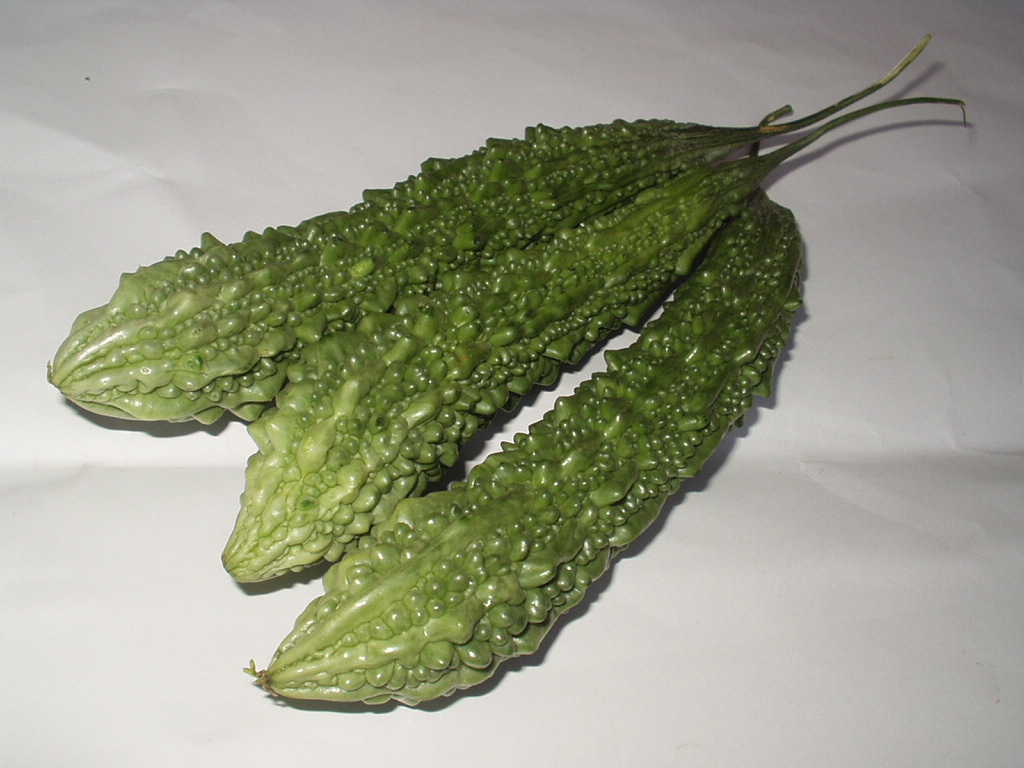
Bitter gourd, called korola or uchche in Bengali, is a climbing vine of the gourd family, Momordica charantia, that bears a warty, hollow fruit eaten green. Banglapedia lists it among the country's main summer vegetables. In Bengali kitchens it is boiled and mashed with salt and mustard oil, fried, added to dal or used in shukto.
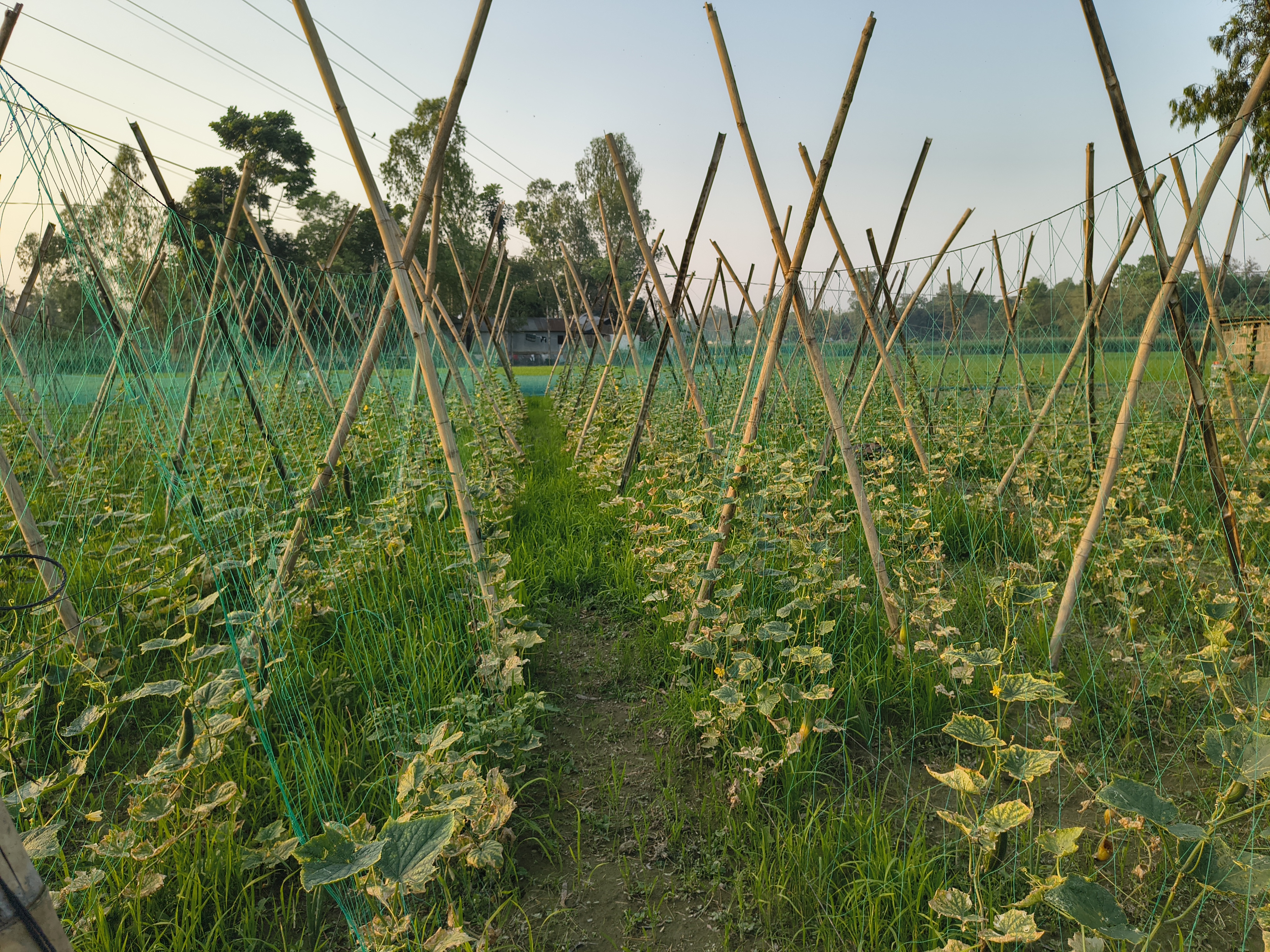
Cucumber, Cucumis sativus, belongs to the same family. It is a creeping vine that climbs a trellis with its tendrils or sprawls on the ground, and it comes from a part of Asia that includes Bangladesh and India. The fruit is about 95 percent water.
Neither is a large crop in Joypurhat beside potatoes, but both were well established. The BBS yearbook put bitter gourd in the district at 440 acres and 1,057 tonnes in 2023-24, up from 410 acres and 838 tonnes in 2021-22. Its cucumber table gave 704 acres and 4,319 tonnes in 2023-24. In the BSS report of 2022, the DAE official said high-yielding bitter gourd covered 105 hectares in the 2022-23 season, listing four upazilas: Joypurhat Sadar, Panchbibi, Kalai and Akkelpur. Khetlal was not on that list.
All vegetables in the district together were grown on 8,985 hectares, according to DAE figures reported by The Business Standard on 25 October 2024.
Potatoes, Joypurhat's best-known crop, and a falling market
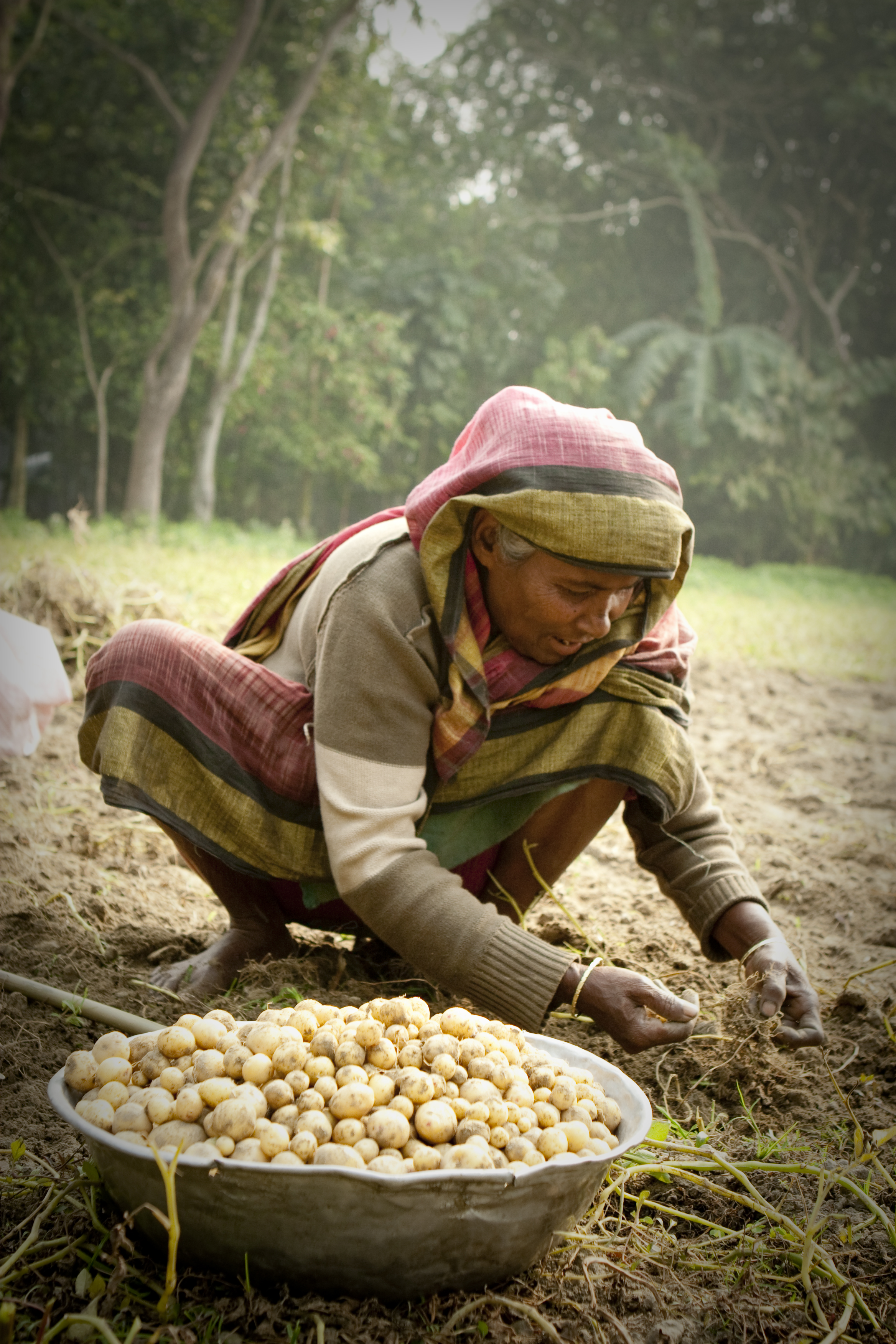
The two acres of potatoes put the student in his district's best-known crop. BSS called Joypurhat a potato-surplus district in November 2023, and Dhaka Post called it one of the country's top producers. In the 2024-25 season, according to DAE figures reported by Dhaka Post on 26 January 2025, potatoes covered 43,470 hectares in the district against a target of 40,000, a record for at least five years. Khetlal alone had 9,220 hectares, second among the five upazilas after Kalai with 10,905.
Prothom Alo reported on 5 November 2025 that the district's 2024-25 crop reached 1,061,000 tonnes and that its 21 cold stores had taken in 3,445,000 sacks. National output hit an all-time high of 11.57 million tonnes that year, the BBS figure reported by The Financial Express on 15 August 2025, against 10.60 million tonnes the year before. Prices went the other way. The Department of Agricultural Marketing put harvest prices at Tk 7 to Tk 8 a kilogram, after retail prices of Tk 75 to Tk 85 in late 2024.
In Joypurhat, Prothom Alo reported, growing and storing potatoes had cost farmers and traders Tk 24 to Tk 25 a kilogram, while the sale price was Tk 9 to Tk 10. The government's floor price of Tk 22 was not being paid in the market, and the paper estimated losses in the district at about Tk 293 crore. The district's deputy director of agricultural extension said production the year before had run ahead of demand. Banglapedia gives the usual potato calendar: planting in the first half of November, or in October for an early crop in the northwest, and lifting in February and March.
Khetlal, a small upazila that lives by farming
Khetlal covers 142.61 square kilometres, with Joypurhat Sadar to the north and Akkelpur and Dhupchanchia to the south. Its rivers are the Tulsiganga and the Harabati. It has five unions and 155 villages. Banglapedia, citing the 2011 census, gives a population of 108,326, of whom 96,615 were rural. Agriculture was the main occupation for 77.60 percent of households, and 35.15 percent were landless, which fits the shortage of land the student described.
The same entry names paddy, jute, wheat, potato and mustard as the main crops and potato and paddy as the main exports from the upazila. Vegetables are not on that list. Across the district, Banglapedia gives agriculture as the main income source for 69.51 percent of households.
Taunts, and a choice against a salaried job
Because he farmed while at college, some people in the area and some classmates mocked him, and many took a dim view of the work. Coming back to a village to farm instead of staying at a good college in a good city was not well regarded, he said. Some would sneer: "The son is doing what the father did, so what was the point of studying?" He said he never took such words to heart. As he prospered, the report said, the same people began to praise him. Getting to this point as a student had not been easy at all, he said.
His reasons were simple. He said he had never wanted a life that depended on a job. Education, in his view, was a personal academic and moral achievement, and studying carried no obligation to take a job. He believed his skills would be best used in business or enterprise, that farming was where his interest and ability lay, and that through it he could do well and also contribute to the economy.
The official numbers of the period give that argument some context. The BBS Labour Force Survey 2023, reported by The Financial Express on 4 December 2024, put unemployment at 3.35 percent, or 2.46 million people, with agriculture employing 44.42 percent of the labour force, more than any other sector. The final report, the Dhaka Tribune said on 23 December 2024, counted about 1.94 million unemployed young people aged 15 to 29, of whom 31.5 percent had completed higher education. A white paper on the economy, reported by The Daily Star on 1 December 2024, found that unemployment among tertiary graduates had risen from 4.9 percent in 2010 to 12 percent in 2022, and said many graduates were ill-prepared for the labour market.
Learning pest control from a Facebook group
At first, the student said, he was not very good at controlling pests and diseases. That changed after he joined a Facebook group called "Krishoker Pran Krishi Poribar". When a problem appeared he posted a photograph, and experienced growers in the group advised him. His knowledge and experience of farming had grown a good deal as a result, he said.
Gourd crops give a new grower plenty to learn. Banglapedia lists powdery mildew, downy mildew and cottony leak among the diseases of cucurbits, and the melon fruit fly as a pest. The melon fly, Zeugodacus cucurbitae, is regarded across the Indomalayan region as the most destructive pest of melons and related crops, and bitter gourd and cucumber are among its major hosts. Control methods described for it include baited traps, wrapping the developing fruit and destroying infested fruit and crop residue. Doses of any spray are for the upazila agriculture office to advise.
Advice from fellow growers fills a gap. IFPRI's report, as summarised by the Dhaka Tribune, said only 23 percent of farmers received agricultural extension support. Official help does exist outside the upazila office: the Agriculture Information Service (AIS) describes its Krishi Call Centre, on the short code 16123, as a toll-free line for farm advice, answered by staff who include graduates in agriculture, veterinary science and fisheries.
New crops, a nursery and a livestock farm
In February 2026 the student was growing potatoes, bitter gourd and cucumber. He planned to add aubergine, pointed gourd, bottle gourd and chilli in June and July, and rice would be grown on the family's own land in the Iri season, the dry-season boro crop that the BBS yearbook calls the single largest crop in the country.
"After finishing my studies I want to take farming forward on a bigger scale," the student said. "Leased land is hard to get in the area, but I keep trying. Within the land I have, I am trying to add new vegetables each season. From this year I plan to grow aubergine, chilli, bottle gourd, onion and snake gourd. In future I want to set up a nursery for modern seedlings and a livestock farm, which will create jobs for unemployed young people in the area."
Some of these crops were already grown around him. The BBS yearbook recorded 406 acres of snake gourd, 368 acres of pointed gourd and 3,785 acres of onion in Joypurhat in 2023-24. Most of them need particular handling:
- Pointed gourd is a climbing vine with separate male and female plants, usually raised from cuttings and not from seed, and it needs a trellis. In Bangladesh it is grown in nearly every district as a key summer vegetable.
- Snake gourd is a tendril-climbing annual whose long, narrow fruit is cooked young, mainly in curries and stews.
- Bottle gourd, a climber of the same family, is picked young and cooked; Banglapedia lists it among the winter vegetables.
- Aubergine is grown in both seasons, and chilli can be grown in summer and winter.
His nursery idea has a real market behind it. The Business Standard reported in October 2024 that Joypurhat's vegetable fields needed about 100 million seedlings, while the district produced only 6 million and growers brought in the rest from other districts. A Panchbibi farmer told the paper that he used to fetch seedlings from Bogura until seedlings raised in cocopeat, a growing medium made from coconut husk, became available locally about two years earlier. Banglapedia describes a nursery as a place where plants are propagated, produced and distributed for transplanting or sale, and lists vegetables among the seedlings produced in Bangladesh, including tomato, cabbage, cauliflower, capsicum, cucurbits and brinjal.
Livestock would also fit the upazila, where Banglapedia counts 75 dairies and 79 poultry farms.
The student ended by asking people to pray that he could do well in farming. He believed that educated young people must come into agriculture for the country's economic development, and that only then would the country move further ahead.
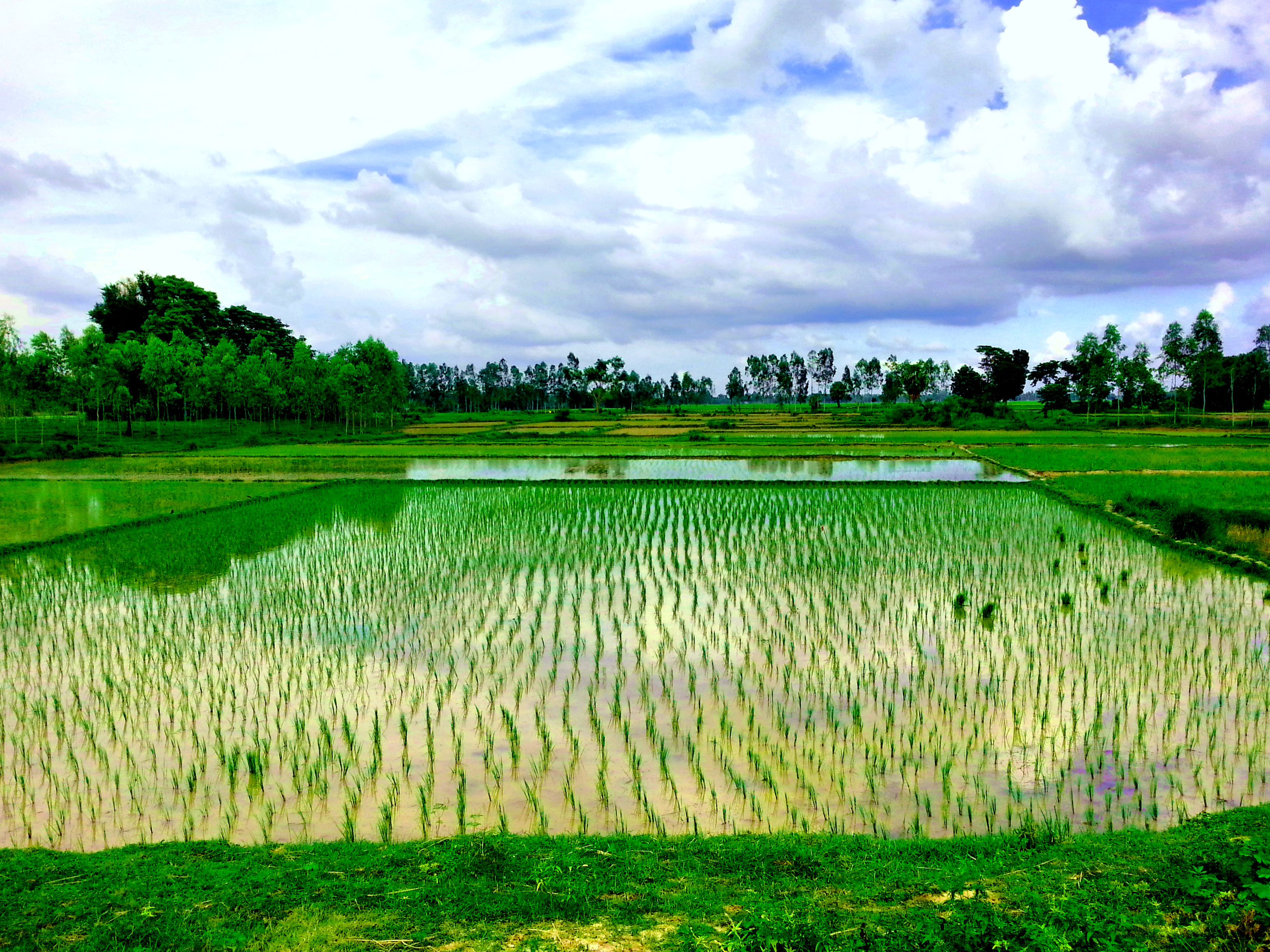
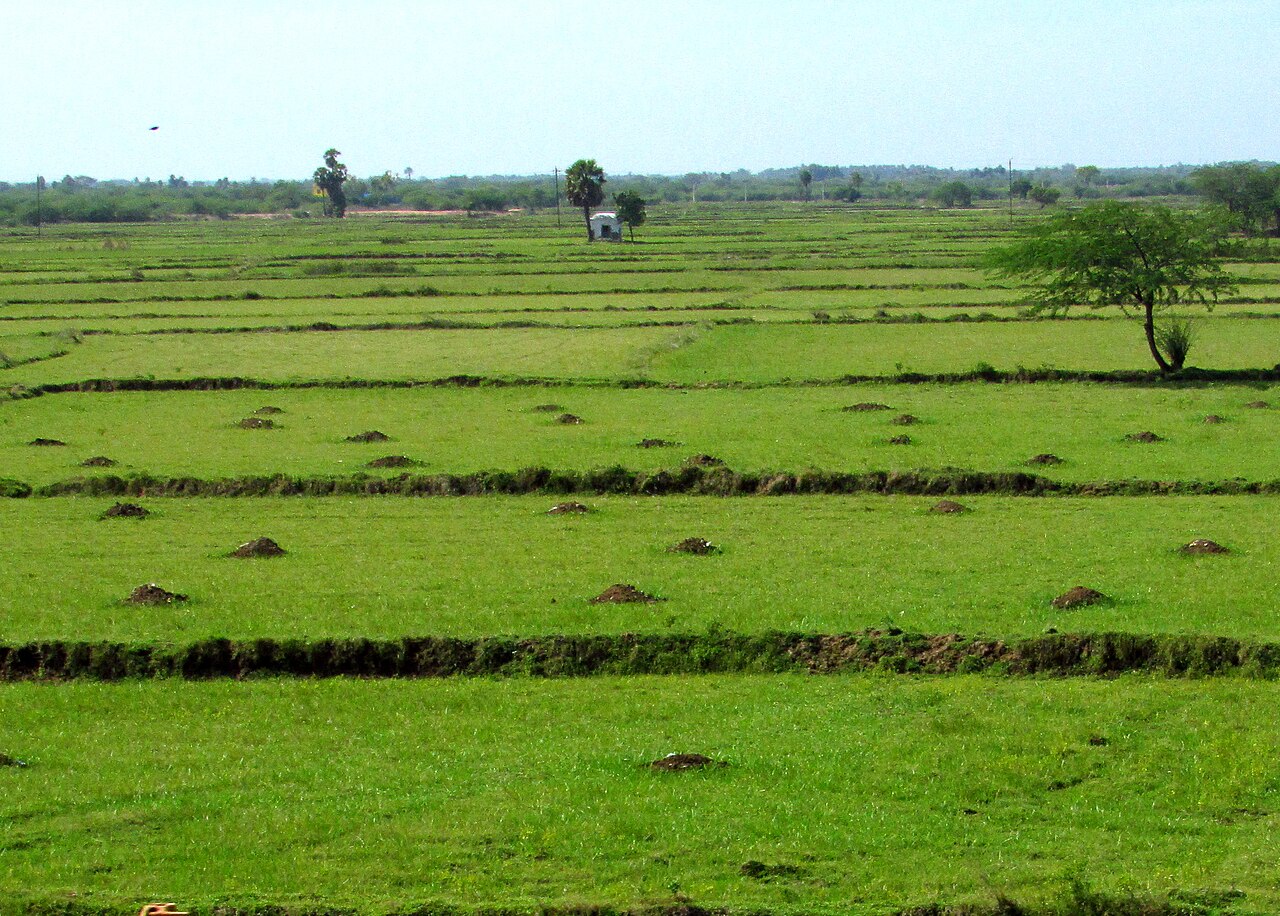
Photo: Bappybayazid / Wikimedia Commons (CC BY-SA 4.0). The top picture shows young paddy in farmland at Royair in Khetlal, Joypurhat, as background; it is not the student's farm.
Sources: Jagonews24 (3 February 2026), BSS (19 November 2022, 15 November 2023), Dhaka Post (26 January 2025), Prothom Alo (5 November 2025), The Financial Express (4 December 2024, 15 August 2025, 14 September 2025), The Business Standard (25 October 2024), Dhaka Tribune (23 and 26 December 2024), The Daily Star (1 December 2024), Bangladesh Bureau of Statistics (Yearbook of Agricultural Statistics 2024), Agriculture Information Service, Banglapedia, Wikipedia
Comments
(0)