
WorldFish Cambodia brought together about 30 participants in Kampong Thom Province on 15-16 September to validate aquatic food business models meant to raise incomes and improve nutrition for small farming households while protecting rivers and biodiversity, the research centre says in a blog post.
The workshop, under the CGIAR Multifunctional Landscapes Program, drew officials of the Ministry of Agriculture, Forestry and Fisheries and its General Directorate of Fisheries, banks, conservation groups, community fisheries, traders and farmers, many of them from the 3S region of the Sesan, Srepok and Sekong river basins in the Lower Mekong.
Five models were put forward, among them collective community fisheries enterprises, vegetable production integrated with rice-field fish ponds, and ecotourism built on rivers, forests, fisheries and local culture. Participants scored each one against the political, economic, social, technological, environmental and legal conditions of their provinces.
On field visits, they saw rice-prawn farms and discussed investment costs, profit margins, harvest schedules and where to buy commercial feed and juvenile prawns. One practice drew particular interest: feeding invasive golden apple snails, a rice pest, to prawns, which farmers said cuts costs and reliance on expensive commercial feed. Integrated rice-fish-vegetable farms used locally available insects as fish feed.
Agricultural cooperatives that supply fish, rice, vegetables and eggs to Cambodia's National School Meal Program described how they organise producers, meet quality standards and get finance. Participants discussed how such groups could supply schools in remote areas the programme has not yet reached, including in the 3S region.
"These approaches complement rather than conflict with environmental conservation objectives," said Yuy Nang Noy, programme manager of the 3S River Protection Network in Ratanakiri Province, adding that she saw many value-chain opportunities for women and young people.
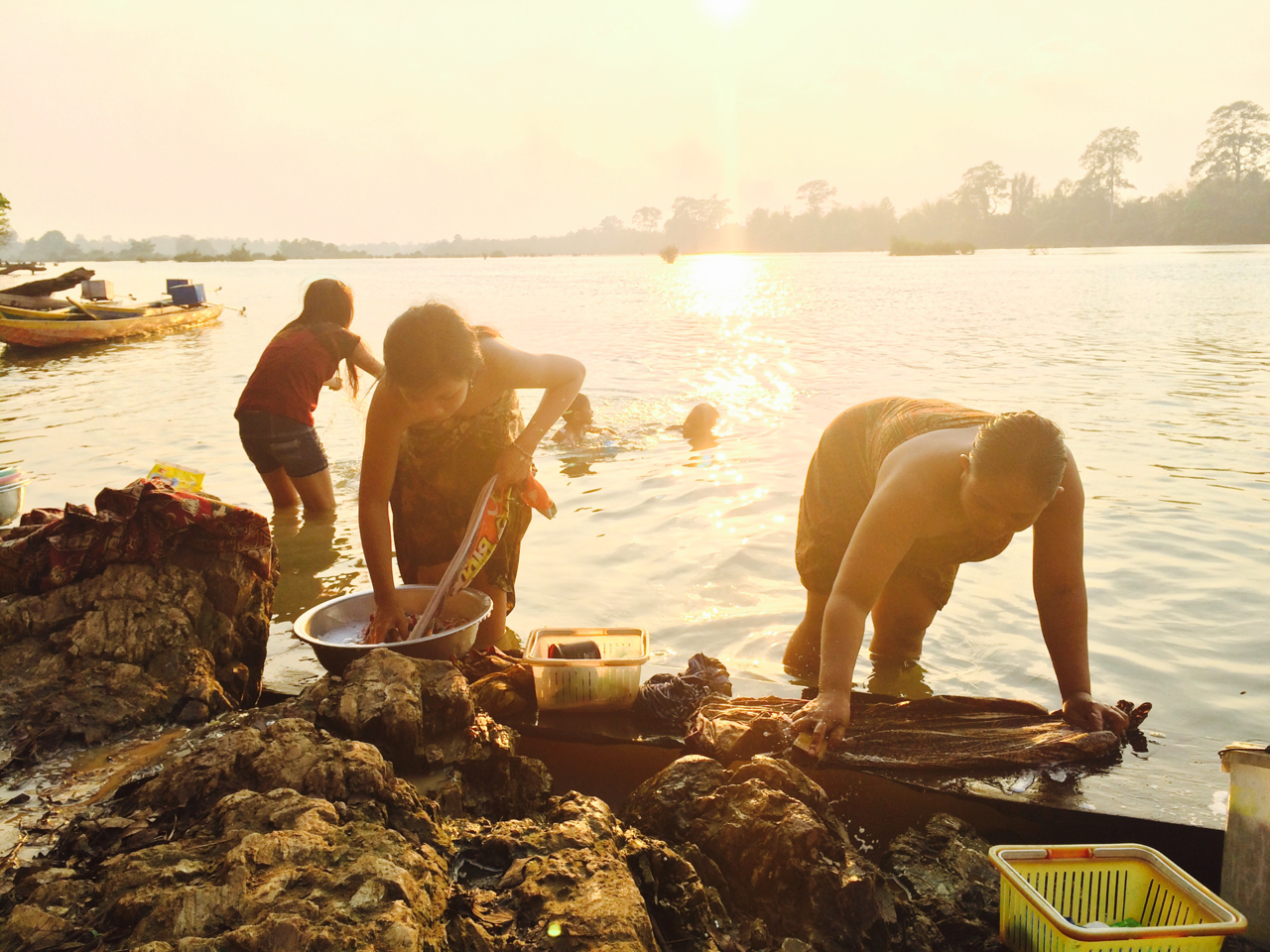
Photo: Anilakeo / Wikimedia Commons (CC BY-SA 4.0)
Source: WorldFish

Comments
(0)