
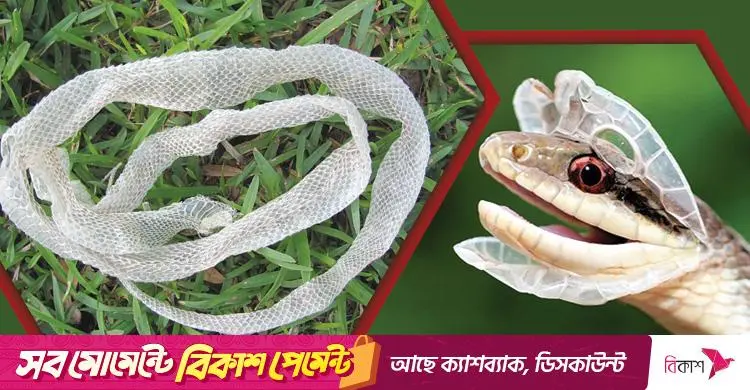
Now and then you may find a shed snake skin lying around the corners of a house, or many of us saw one as children. City dwellers may not witness it, but people living in villages still come across snake skins. But do you know why snakes shed their skin? Many tales about it circulate by word of mouth in rural Bengal.
At various stages of life, snakes shed their old skin and grow a new one so they can be more comfortable. Snakes shed their skin two to four times a year, a process called ecdysis. It allows the body to grow, removes parasites and causes no pain. Many other animals go through the same process.
Why the skin has to go
Like all animals, a snake's bones, muscles and internal organs grow through life, but its skin does not grow at the same rate. The snake gradually finds its old skin too small, and a new skin forms beneath it. The snake then sheds the old skin; scientifically this is called ecdysis. Another benefit is that harmful parasites hiding in the skin are removed.
How does a snake shed its skin? Some days before shedding, the snake's colour turns dull and its eyes look cloudy or grey, and its eyesight becomes even weaker. The snake then usually rubs its head against a rock to crack the old skin, and shedding begins from there.
While shedding, snakes feel very weak, so they usually hide in burrows or safe places. That is why it is very hard to see a snake shedding in the wild.
The process is not painful for the snake, however. A natural fluid forms between the old and new skin that helps the snake shed easily and comfortably. Snakes usually do this two to four times a year.
Colour, and other animals that moult
Although snakes are often brightly coloured, the old skin shows little colour, because the snake sheds only the outer keratin layer (the substance our nails are made of), while the inner coloured layer stays. Snakes use their colours and patterns to blend into their surroundings, to attract prey or to frighten enemies.
Many animals besides snakes shed their outer layer, such as spiders, insects and crabs. Tarantula spiders shed their exoskeleton every year so their growth is not hindered. Grasshoppers do it only as nymphs, not once grown. Crabs, like snakes, shed to get rid of parasites and their old covering.
Shedding is not just a physical process. It is a sign of defence, freedom from parasites and new growth. In this cycle of nature lie animals' own strategies for safety and survival, which many animals use to survive.
Source: Jagonews24. First published in Bengali on The Agro News.

Comments
(0)