
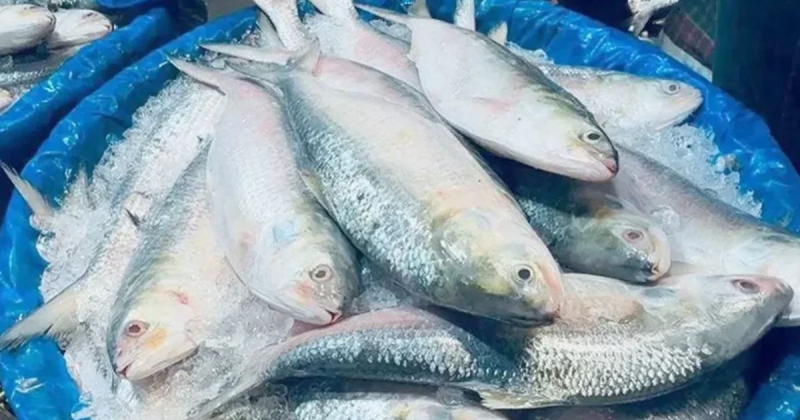
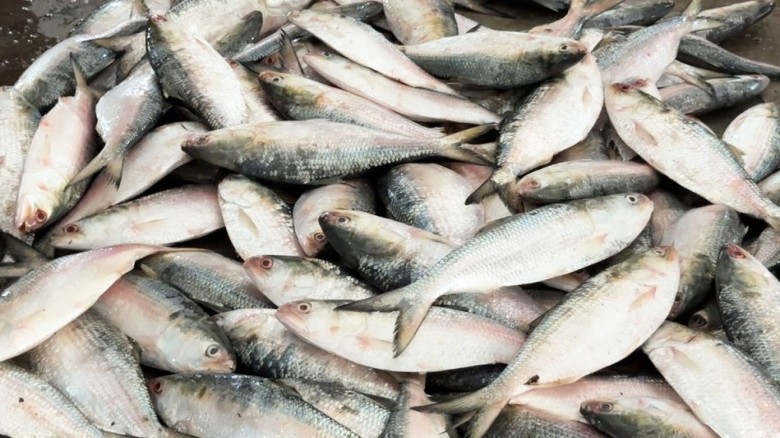
Hilsa production is falling in Bangladesh and in India's West Bengal, yet the same fish is now being caught in large numbers in Gujarat's Narmada River. Experts attribute the shift to environmental change and a favourable monsoon: the mix of fresh and salt water that forms in the lower Narmada near Bharuch has become suitable for the migratory fish, which spends most of its life at sea and moves into rivers to spawn. R B Vala and A M Parmar, assistant professors at the College of Fisheries Science of Kamdhenu University, say such ecological changes can redirect hilsa migration.
According to the Department of Fisheries, Bangladesh produced 199,000 tonnes of hilsa in 2002-03 and output grew almost every year until 2022-23, when it reached 571,000 tonnes and then began to slip: 529,000 tonnes in 2023-24 and 504,000 tonnes in 2024-25. No official figure is yet available for 2025-26, but officials expect it to be under 500,000 tonnes. The Bangladesh Fisheries Research Institute puts hilsa at about 12 per cent of the country's total fish output and about 60 per cent of the world's hilsa; the fisheries ministry claims 70-80 per cent.
Experts say the Ganges-Hooghly-Padma system was once the fish's main spawning ground, but the Farakka Barrage altered natural flows, construction in the rivers increased, depths fell in places, and pollution and climate change are affecting movement and breeding — conditions under which hilsa are being pushed away from their traditional grounds.
Gujarat fisheries commissioner Vijay Kharadi said the state's hilsa output was 14,198.98 tonnes in 2022-23, fell to 8,209.48 tonnes in 2023-24 and 8,535.75 tonnes in 2024-25, and rose to a four-year high of 14,587.72 tonnes in 2025-26. Most of the increase came from inland waters, where the catch leapt from 123.62 tonnes in 2024-25 to 4,645.99 tonnes in 2025-26; Bharuch district alone produced 7,410.9 tonnes, of which 2,949.76 tonnes were marine.
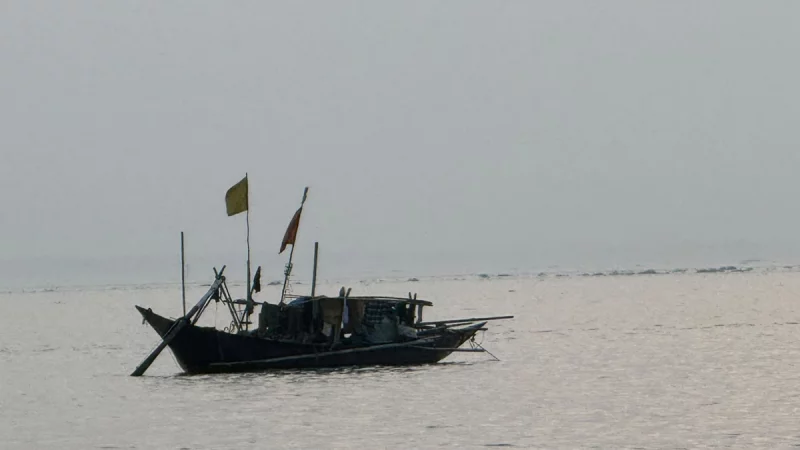
More than 25,000 fishermen along the Narmada depend on the fish. Dhaval Machhi of Bhadbhut village said the four-month monsoon hilsa season is the key earning period and that catches at Hansot, Dahej and Bhadbhut have been good this year; Ramesh Machhi of Bharuch said he had never seen so much hilsa in the river. With little local demand in Gujarat, much of the catch goes to West Bengal — traders estimate about 250 tonnes sent from Bharuch to the Kolkata and Howrah markets this season — and Gujarati hilsa is reaching Bangladesh too.
The Narmada's hilsa, the report concludes, is more than a fishing story: it signals change in river ecology and in the fish's migratory behaviour, and how flow, salinity, pollution and climate will shape hilsa movement over the long term needs more research. The report is by Janakantha.
Source: Daily Janakantha
Comments
(0)