
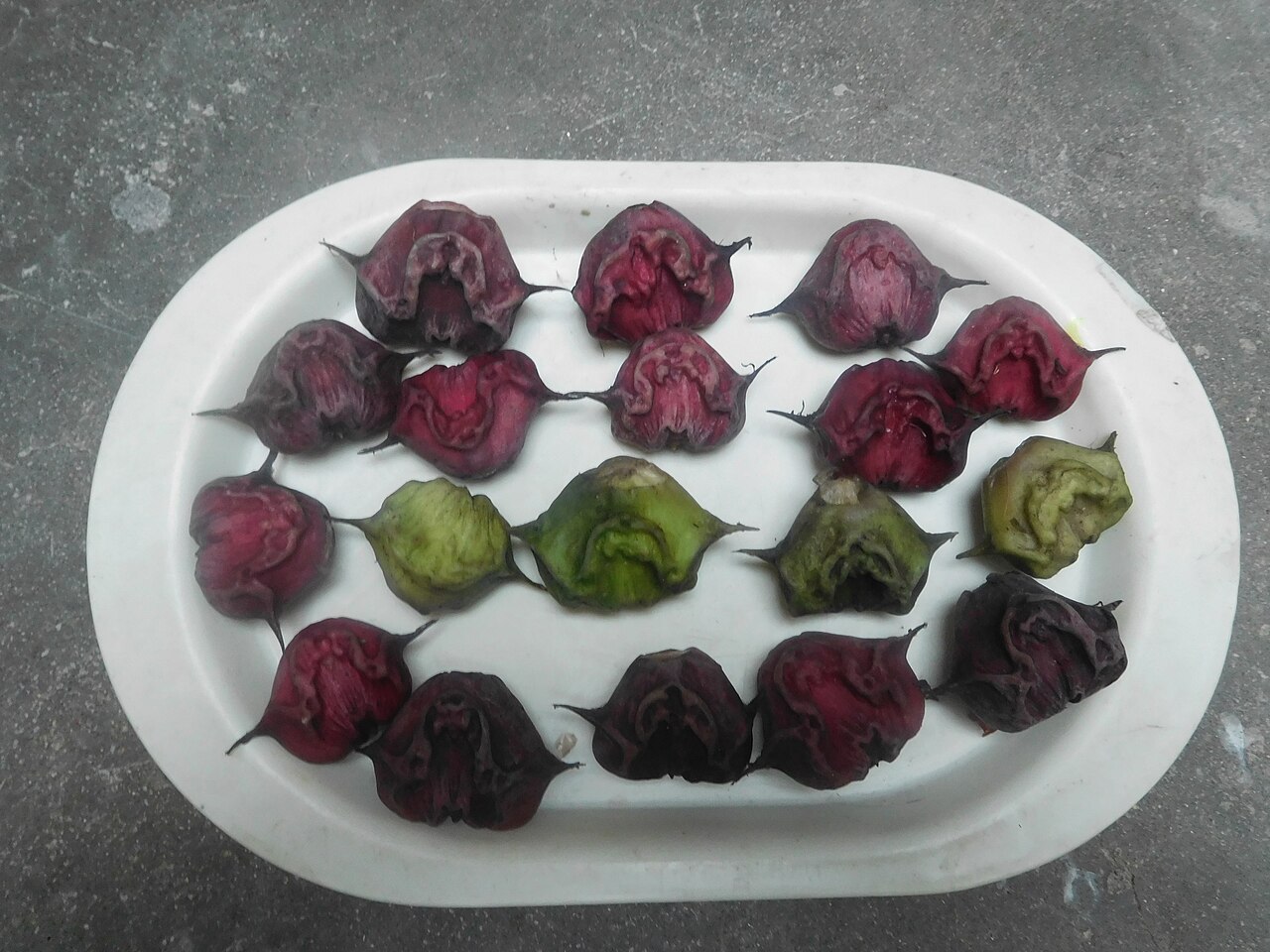
Waterlogged land in Satkhira that once grew nothing is now earning farmers money from water chestnut, and giving village women work. Because the fruit looks like a samosa, locals call it the 'water singara'. It pays better than aman rice, so planting is growing, and if the weather holds, trade in the district this season could reach about Tk 25 crore.
On the morning of 12 November at Sakhipur in Debhata upazila, wetlands, ponds and ditches were covered with the crop, looking from afar like a mat of water hyacinth. Farmers with buckets and basins picked the fruit from among the leaves while others cleaned and sorted it on the bank. Planting is also spreading in Kalaroa and Sadar upazilas. The crop is planted in Bhadra-Ashwin and picked in Agrahayan-Poush; young fruit is red and green and turns dark when ripe, and the white kernel is usually eaten raw.
At Gopinathpur in Kalaroa, Nazira Khatun, 41, was selling fruit from her own plot by the road: Tk 60 a kilo early in the season, Tk 25 now. Amjad Hossain from the same area spent about Tk 10,000 on a bigha and a half and picks more than a maund a day; wholesalers buy from the field at Tk 20 a kilo, and he expects to sell about Tk 70,000 worth this season.
Mukul Sardar has planted 10 bighas because waterlogging rules out other crops on his land. At about Tk 12,000 a bigha in costs, he hopes to clear more than Tk 20,000 a bigha. Kawsar Ali of Sakhipur has grown water chestnut for about 25 years and has 15 bighas this year; rice will not grow there, he said, and the land used to lie idle.
Trader Asadul Islam in Satkhira Sadar buys at Tk 20 a kilo and sells at Tk 25, more than 100 kilograms a day, and pays farmers in advance for whole plots before sending the fruit to Dhaka, Khulna and elsewhere. Women workers in Kulia and Sakhipur in Debhata earn Tk 200 to 300 a day tending the crop and picking and sorting fruit.
Agricultural entrepreneur Md Rahat Hossain of Satkhira Sadar told Prothom Alo that waterlogged land was once a byword for hardship for farmers, and the same water is now a source of income for many.
Photo: Teacher1943 / Wikimedia Commons (CC BY-SA 4.0)
Source: Prothom Alo

Comments
(0)